2026 Gift Guide: Choosing the Perfect Garnet Beaded Necklace
Discover the perfect garnet beaded necklace for every occasion in our 2026 gift guide. Learn about bead grades, stringing, and styling.

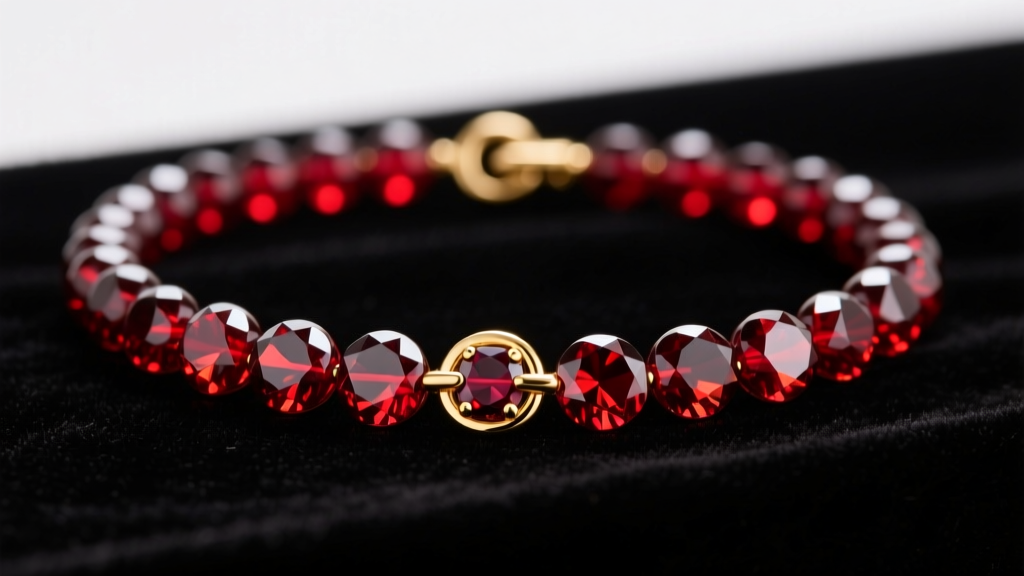
Gifting fine jewelry requires a delicate balance of personal taste, material quality, and situational appropriateness. As we navigate the 2026 jewelry market, the garnet beaded necklace has emerged as a standout choice for milestone celebrations, January birthdays, and second-anniversary gifts. Unlike faceted pendants that draw the eye to a single point, a beaded strand offers a continuous, luminous ribbon of color that flatters the décolletage and provides incredible styling versatility. However, not all garnet strands are created equal. This comprehensive guide will walk you through the gemological nuances, structural hardware, and occasion-matching frameworks necessary to select a flawless garnet beaded necklace.
The Enduring Appeal of Garnet in Modern Jewelry
Garnet is not a single mineral, but rather a group of silicate minerals that share a common crystal structure. While the deep, burgundy-red Almandine and Mozambique varieties are the most traditional choices for bead cutting, the gemological family also includes the purplish-red Rhodolite and the vibrant green Tsavorite. For beaded necklaces, Mozambique and Almandine garnets are preferred due to their durability, rich saturation, and ability to hide natural inclusions within the spherical or faceted bead cuts.
According to the Gemological Institute of America (GIA), garnets possess a refractive index ranging from 1.714 to 1.888, giving them a subtle, velvety brilliance that is distinctly different from the sharp sparkle of a diamond. This optical property makes a garnet beaded necklace incredibly forgiving in low-light environments, such as evening dinners or winter galas, where the beads seem to glow from within rather than merely reflecting surface light.
Decoding Garnet Grades: A, AA, and AAA
When shopping for a garnet beaded necklace, you will encounter commercial grading scales. Unlike diamonds, colored gemstones do not have a universally standardized grading system, but reputable jewelers generally adhere to a three-tier framework:
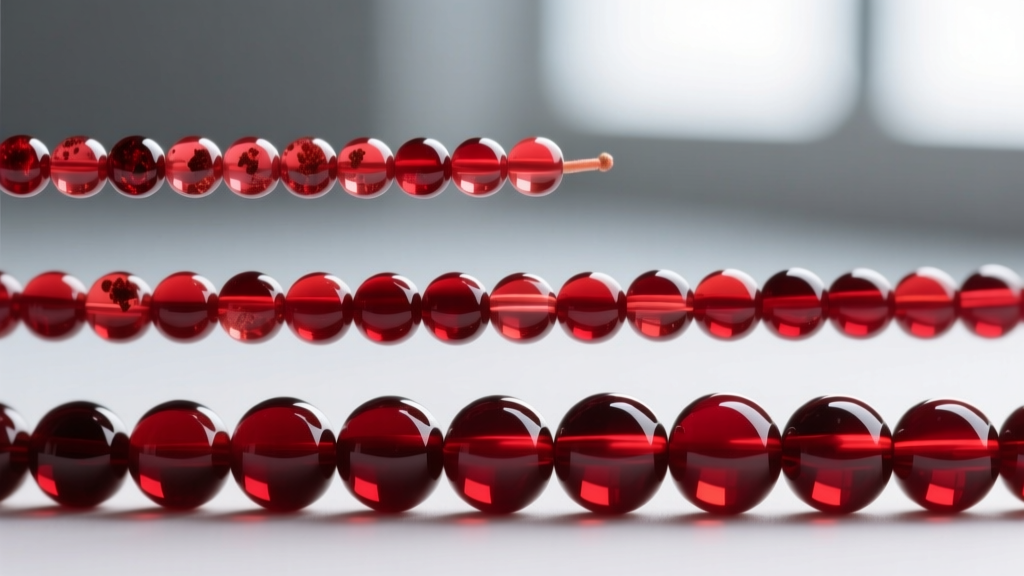
- A-Grade (Commercial): These beads are heavily included, often appearing cloudy or dark brownish-red. They are typically opaque and heavily discounted. While suitable for casual bohemian layering, they lack the optical fire required for fine jewelry gifting.
- AA-Grade (Good to Fine): The sweet spot for most buyers. AA-grade garnet beads are eye-clean with minor internal fracturing that is only visible under 10x magnification. The color is a saturated, medium-dark red. A 16-inch strand of 6mm AA-grade beads typically retails between $120 and $250.
- AAA-Grade (Gem Quality): Exceptionally rare in bead form. AAA beads are completely eye-clean, highly transparent, and exhibit a vivid, pure red or slightly purplish-red hue (often Rhodolite). Because cutting perfectly matched, flawless beads yields massive rough wastage, a genuine AAA-grade garnet beaded necklace is a luxury investment, often exceeding $800 for larger millimeter sizes.
The Anatomy of a High-Quality Strand: Stringing and Hardware
The longevity of a garnet beaded necklace is dictated not just by the stones, but by the engineering of the string and clasp. Garnet ranks between 6.5 and 7.5 on the Mohs hardness scale, meaning the beads can abrade softer stringing materials over time if not properly buffered.
Stringing Materials
Historically, silk thread was the standard for knotting pearls and gemstones. However, silk stretches and degrades with moisture. In 2026, the industry standard for high-end beaded strands is Soft Flex or Beader's Secret—micro-woven stainless steel or high-tensile nylon cables. These materials prevent the dreaded "necklace stretch" that causes unsightly gaps between the beads over time. If the necklace is knotted between each bead (French knotting), it protects the beads from grinding against one another and prevents total loss if the strand breaks.
Clasp Hardware
A heavy 10mm garnet strand requires robust hardware. Avoid standard spring-ring clasps, which are prone to mechanical failure under the weight of dense gemstone beads. Instead, look for:
- Solid Lobster Clasps: Ideal for strands up to 30 grams. Ensure the jump rings are soldered closed.
- Toggle Clasps: Excellent for heavier, statement-sized beads (8mm and above). The T-bar must be at least 1.5 times the width of the receiving ring to prevent accidental unclasping.
- Magnetic Box Clasps: Featuring a silicone-lined friction fit and a secondary figure-eight safety latch, these are perfect for recipients with limited dexterity or arthritis.
Occasion Matching Guide: Lengths, Sizes, and Styling
Selecting the right millimeter size and length is crucial for matching the necklace to the recipient's lifestyle and the intended occasion. Use the data table below as a decision-making framework.
| Occasion / Use Case | Bead Size (mm) | Length (inches) | Clasp Type | Estimated Price Range |
|---|---|---|---|---|
| Everyday Office Wear | 4mm - 5mm | 18" (Princess) | Small Lobster | $60 - $150 |
| Date Night / Dinner | 6mm - 7mm | 16" (Choker) | Toggle or Box | $150 - $350 |
| Formal Gala / Black Tie | 8mm - 10mm | 20" (Matinee) | Heavy Toggle | $400 - $900+ |
| Boho / Casual Layering | 3mm (Faceted) | 24" - 30" | Lobster w/ Extender | $80 - $200 |

Layering Frameworks for 2026
If your recipient favors contemporary styling, consider gifting a set of two garnet beaded necklaces designed for layering. The golden rule of layering is a minimum two-inch length differential to prevent the strands from tangling and to allow each bead size to be distinctly visible. Pair a delicate 4mm faceted garnet strand at 16 inches with a bolder 8mm round bead strand at 18 inches. Interspersing small 14k gold vermeil spacer beads between the garnets can elevate the set and tie it into mixed-metal jewelry collections.
Care, Maintenance, and Storage
Garnets are relatively durable, but they require specific care to maintain their polish. The American Gem Trade Association (AGTA) advises against using ultrasonic cleaners for garnets, especially those with surface-reaching fractures or liquid inclusions, as the high-frequency vibrations can cause the beads to shatter.
To clean a garnet beaded necklace, use a soft, lint-free microfiber cloth and a mild solution of warm water and dish soap. Avoid harsh chemical dips, which can dull the polish of the beads and degrade the stringing wire's nylon coating. When storing, always lay the necklace flat or hang it. Coiling a beaded strand tightly can put stress on the stringing material, leading to premature stretching or snapping.
Final Thoughts on Gifting Garnet
A garnet beaded necklace is more than just a birthstone obligation; it is a versatile, historically rich accessory that bridges the gap between vintage elegance and modern minimalism. By paying close attention to the bead grading, the structural integrity of the stringing material, and the millimeter-to-occasion ratio, you can select a piece of jewelry that will be cherished and worn for decades. Whether you opt for a subtle 4mm layering strand or a commanding 10mm statement piece, the deep, romantic fire of garnet remains an undeniable testament to thoughtful gifting.


