Red Branch Coral Necklace Buying Guide: What to Look For
Discover how to authenticate, grade, and ethically source a genuine red branch coral necklace. Expert tips on CITES rules, color grades, and pricing.

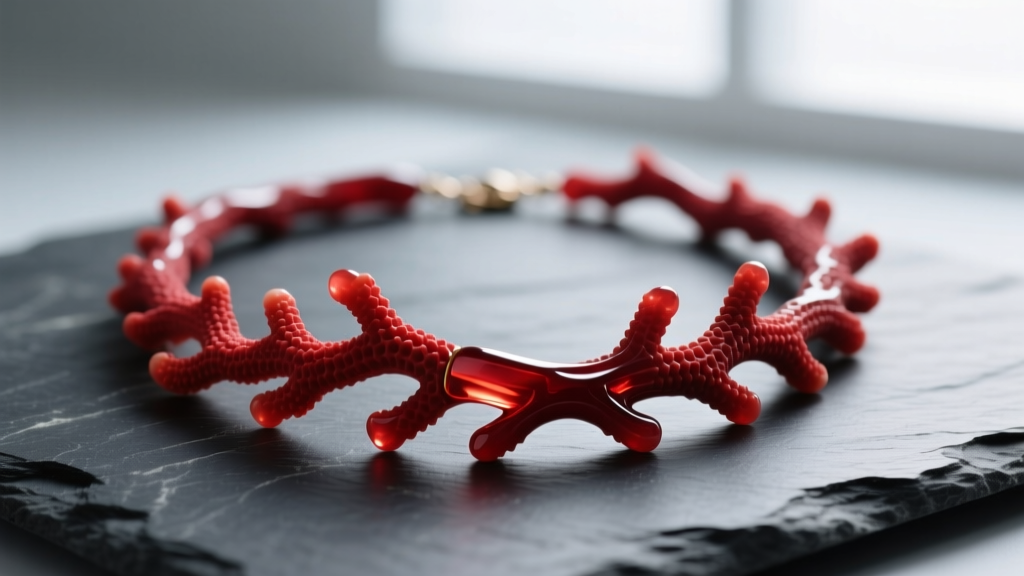
The Allure and Organic Legacy of Red Coral
Unlike mined gemstones, a genuine red branch coral necklace is born from the ocean, constructed by living polyps over decades. Composed primarily of calcium carbonate and a protein called conchiolin, red coral (primarily Corallium rubrum and Corallium japonicum) possesses a unique organic warmth that synthetic stones simply cannot replicate. With a Mohs hardness of 3.5 to 4, it is relatively soft, demanding expert cutting, drilling, and meticulous care. As we navigate the luxury jewelry market in 2026, acquiring a high-quality red coral piece requires far more than an appreciation for its vibrant color; it demands a rigorous understanding of gemological grading, international conservation laws, and advanced treatment detection.
Decoding Coral Color Grades: From Moro to Oxblood
The value of a red branch coral necklace is inextricably linked to its color saturation, uniformity, and origin. The gemological community categorizes Mediterranean and Pacific red corals into distinct commercial grades. When evaluating a strand, always examine the beads under natural daylight or a high-CRI (Color Rendering Index) LED lamp to accurately assess undertones.
| Color Grade | Visual Profile | Primary Origin | Est. Market Value (16-inch, 6mm strand) |
|---|---|---|---|
| Oxblood (Sanguine) | Deep, saturated dark red with minimal brown/orange undertones | Mediterranean / Pacific | $1,500 – $4,500+ |
| Moro | Medium-dark red, often with slight brownish or purplish hints | Pacific (Japan) | $600 – $1,200 |
| Sarde / Rosato | Salmon-red, orange-red, or light pinkish-red | Mediterranean (Italy) | $300 – $800 |
| Angel Skin | Pale pink to white with a delicate blush (not strictly red) | Pacific | $800 – $2,000 |
Uniformity is the second critical pricing factor. A 16-inch necklace requires dozens of perfectly matched beads. Because red coral branches are naturally small and riddled with internal fissures, finding enough flawless material to create a uniform Oxblood strand is exceptionally rare, driving premium pricing into the thousands.
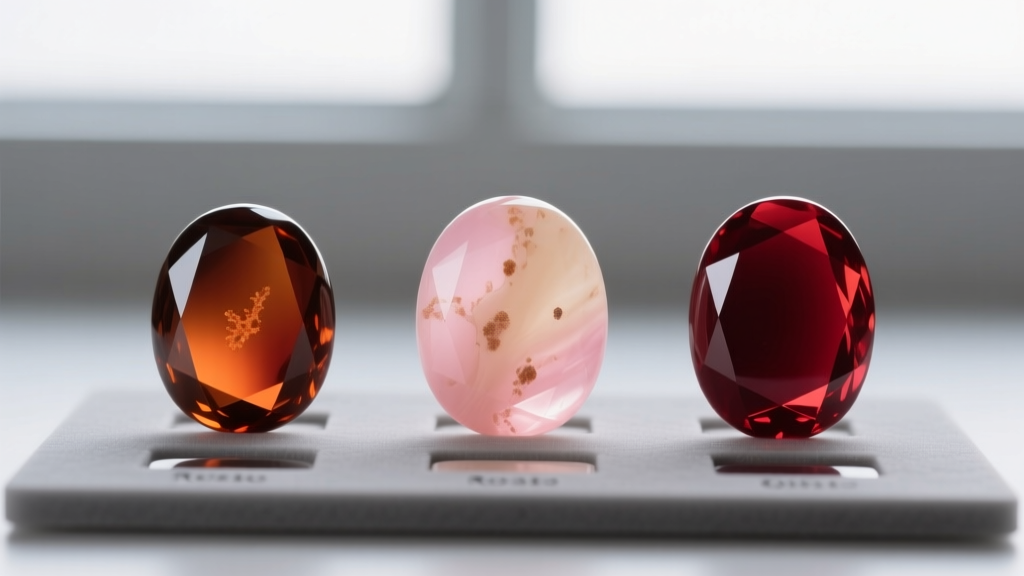
Branch, Cabochon, or Carved: Choosing Your Silhouette
Red coral jewelry generally falls into three structural categories, each presenting unique buying considerations:
- Branch Coral: Left in its natural, twig-like formation and simply polished. This style appeals to collectors seeking an organic, bohemian aesthetic. Ensure the branch is securely wire-wrapped or capped, as the tips are fragile and prone to snapping.
- Cabochon and Beads: The most common form for fine jewelry. High-quality cabochons should exhibit a smooth, glass-like polish without visible pitting, chalky spots, or internal fractures. Beads must be perfectly round (or intentionally faceted) with clean drill holes.
- Carved Coral (Cammei): Historically centered in Torre del Greco, Italy, carved coral cameos or floral motifs require immense skill. Look for deep relief, sharp tooling lines, and a lack of white chalky core exposure on the back of the carving.
CITES, Sustainability, and Legal Sourcing in 2026
You cannot discuss buying red coral without addressing global conservation. Due to overharvesting and ocean acidification, several species of precious coral are heavily regulated. The CITES Appendices strictly govern the international trade of Corallium species.
If you are purchasing a newly manufactured red branch coral necklace that crosses international borders, the seller must provide valid CITES export and import permits. For vintage or antique pieces (pre-1976), you must obtain a CITES Pre-Convention Certificate to legally transport the necklace across borders. Always request a provenance document or a gemological report that explicitly states the coral species and confirms legal harvesting. Buying undocumented coral not only risks confiscation at customs but also fuels destructive, illegal dredging practices that decimate deep-sea marine ecosystems.
Authentication: Spotting Dyes, Glass, and Plastic Fakes
The high market value of Oxblood coral has spawned a massive industry of imitations and enhancements. As a buyer, you must be equipped to identify these treatments. According to the Gemological Institute of America (GIA), common simulants include dyed howlite, red glass, and reconstructed coral powder bound in plastic.
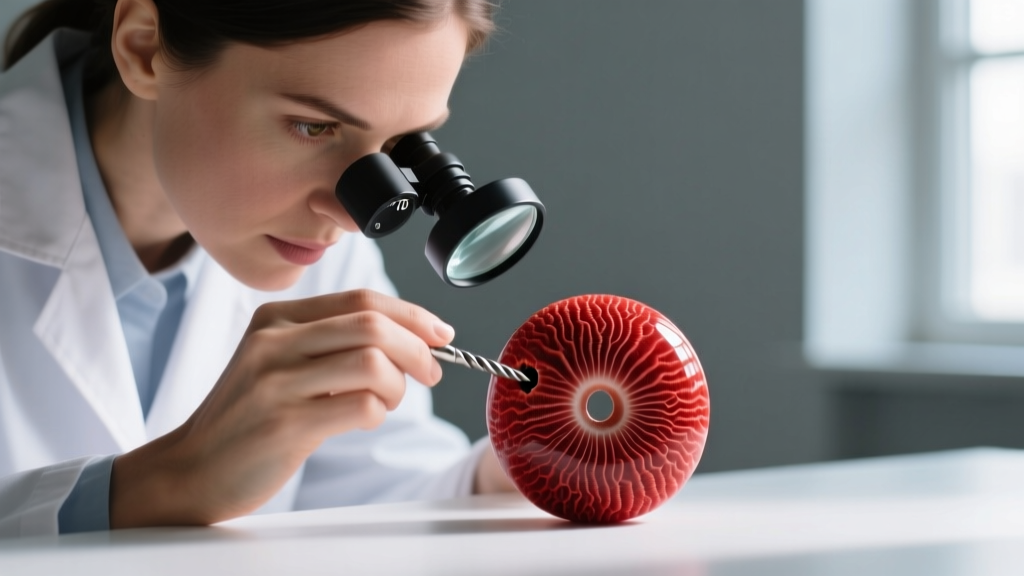
The Acetone and Magnification Tests
Surface dyeing is the most prevalent treatment used to pass off pale Sarde coral as premium Oxblood. To test for dye, gently rub a cotton swab dipped in pure acetone (nail polish remover) over an inconspicuous area, such as near the drill hole or the clasp. If the swab picks up red pigment, the coral is dyed.
Next, use a 10x triplet loupe to examine the surface. Genuine red coral will display subtle, parallel growth lines and a faint, waxy luster. Glass imitations will reveal swirl marks, spherical gas bubbles, and a vitreous (glassy) luster. Plastic imitations will feel unnaturally light and may show mold lines along the bead's equator.
Understanding the Zachery Treatment
Developed in the late 20th century, the Zachery treatment is a sophisticated stabilization process that impregnates porous coral with a proprietary polymer. Unlike traditional dyeing, it enhances the coral's natural color and durability without adding foreign pigments. While accepted in some trade circles if disclosed, it significantly lowers the value compared to untreated, natural coral. The Zachery treatment cannot be detected with acetone; it requires advanced FTIR (Fourier Transform Infrared) spectroscopy or EDXRF (Energy Dispersive X-Ray Fluorescence) testing in a professional gemological laboratory to detect elevated levels of potassium and chlorine.
Evaluating Craftsmanship and Necklace Construction
The longevity of a red branch coral necklace depends heavily on how it is strung. Because calcium carbonate is relatively soft, coral beads rubbing against one another will gradually wear down, creating flat spots and destroying their value. Silk knotting is mandatory for any high-value coral strand. Inspect the spaces between the beads: the knots should be tight, uniform, and snug against the bead, leaving no gaps where the silk can stretch and weaken.
Additionally, examine the drill holes. High-quality coral beads feature precise, cylindrical drill holes. If you notice chipping, micro-fractures, or a "blowout" at the exit point of the drill hole, it indicates rushed manufacturing and structural weakness. The clasp should ideally be 14k or 18k gold, as base metals can oxidize and stain the porous coral over time.
Care and Maintenance for Organic Gemstones
Red coral is highly sensitive to acids, heat, and harsh chemicals. Its porous nature means it will readily absorb oils, perfumes, and cosmetics, which can permanently dull its polish and alter its color.
- The Golden Rule: Always put your coral necklace on after applying makeup, hairspray, and perfume.
- Cleaning: Never use ultrasonic cleaners, steamers, or commercial jewelry dips. Simply wipe the beads gently with a soft, slightly damp microfiber cloth after each wear to remove skin oils and acidity.
- Storage: Store the necklace flat in a soft pouch, away from direct sunlight and extreme heat, which can cause the conchiolin protein to dehydrate and the coral to crack.
By prioritizing untreated stones, demanding CITES documentation, and scrutinizing the stringing quality, you can confidently invest in a red branch coral necklace that is as ethically sound as it is visually breathtaking.


