Men's Seashell Necklace Anatomy: Shell Types & Cord Tech
Explore the technical anatomy of a men's seashell necklace. Compare shell hardness, cord materials, knotting methods, and care for lasting wear.

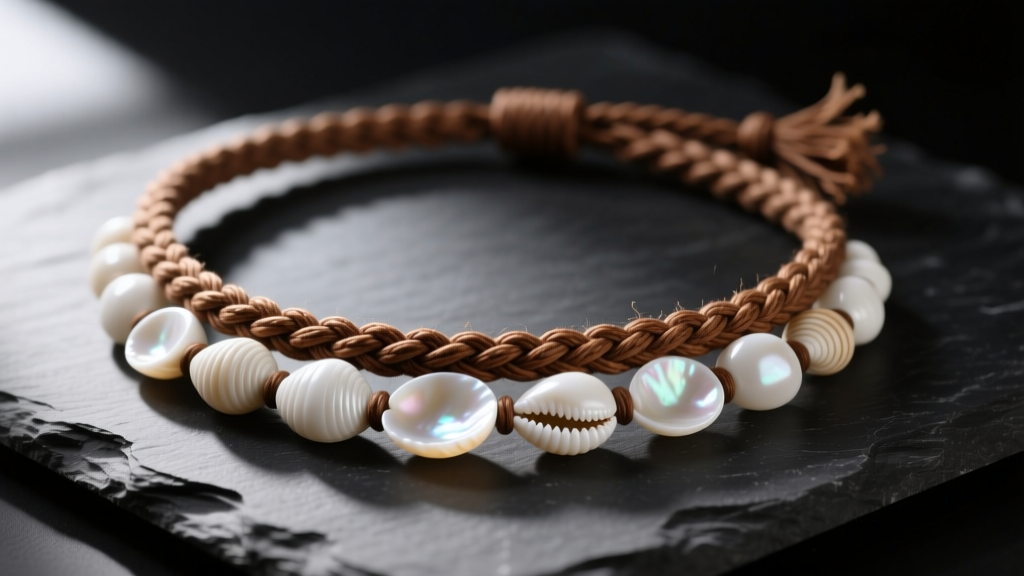
The Mineralogy of Men's Shell Jewelry: Beyond Basic Puka
The men's seashell necklace has evolved far beyond cheap tourist souvenirs into a staple of high-end streetwear and surf-luxe aesthetics. However, beneath the visual appeal lies a complex interplay of organic mineralogy and material engineering. To select a piece that withstands daily wear, one must understand the crystalline structure of the materials involved. According to the Gemological Institute of America (GIA), organic gems like shells are primarily composed of calcium carbonate, existing in two distinct crystalline forms: aragonite and calcite.
Most commercial shells fall between 2.5 and 3.0 on the Mohs hardness scale. This makes them significantly softer than quartz (7.0) or sapphire (9.0), meaning they are highly susceptible to scratching and chemical degradation. Yet, hardness is only one metric of durability; structural toughness is equally critical. For instance, the Queen Conch shell exhibits a cross-lamellar structure—a natural plywood-like layering of calcium carbonate crystals that makes it remarkably impact-resistant despite its low Mohs rating. Conversely, Mother of Pearl (nacre) is highly iridescent but structurally brittle, prone to chipping if subjected to blunt force.
| Shell Type | Primary Mineral | Mohs Hardness | Structural Trait | Best Use Case |
|---|---|---|---|---|
| Puka (Cone Shell) | Aragonite | 2.5 - 3.0 | Naturally rounded, thick apex | Heavy layering, casual wear |
| Cowrie | Aragonite/Calcite | 2.5 - 3.5 | Enamel-like dorsal mantle finish | Statement pendants, single strand |
| Queen Conch | Aragonite | 3.0 | Cross-lamellar (impact resistant) | Carved pendants, chunky beads |
| Mother of Pearl | Aragonite (Nacre) | 2.5 | Microscopic platelet layering | Formal inlay, delicate centerpieces |
Suspension Systems: Cord vs. Chain Engineering
A common failure point in mass-produced shell jewelry is the suspension system. Shells are typically drilled using diamond-tipped core drills to prevent blowouts and micro-fissures. However, the interior of a drilled shell hole, even when tumbled, retains microscopic abrasive edges. When threaded onto a standard sterling silver or gold box chain, the metal links act like a jeweler's saw against the 2.5 Mohs shell. Over months of friction, the chain will literally carve through the calcium carbonate, leading to catastrophic pendant loss.
Waxed Cotton & Hemp: The Friction Advantage
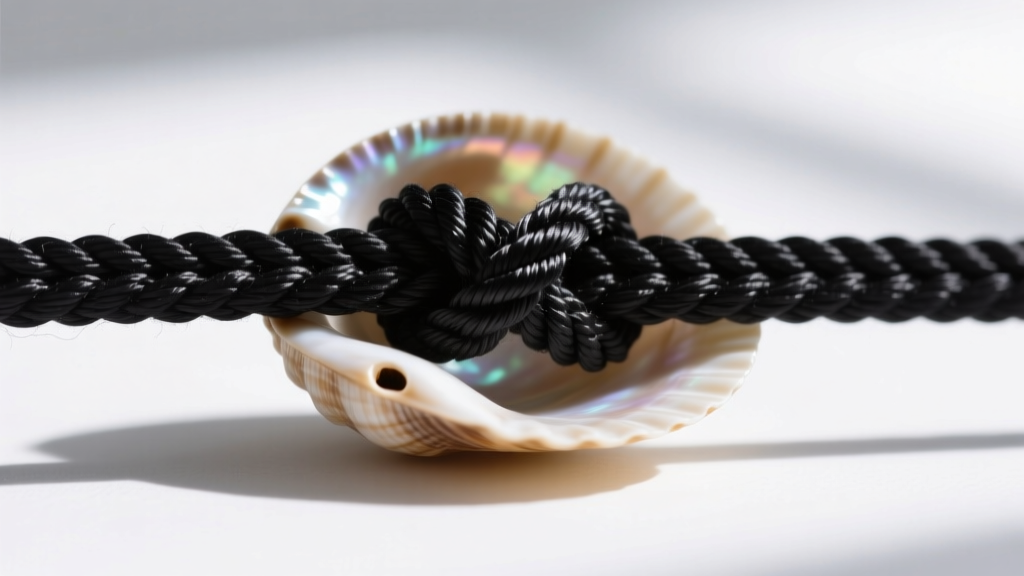
For structural integrity, organic fibers are vastly superior to metal chains for shell suspension. A 1.5mm to 2.0mm braided waxed cotton cord provides the ideal balance of tensile strength and flexibility. The wax coating (typically beeswax or paraffin) serves two purposes: it waterproofs the natural cotton fibers against sweat, and it creates a high-friction surface that grips the interior of the shell hole, preventing the shell from sliding and striking adjacent beads or hardware.
Titanium and Surgical Steel Alternatives
If a metal chain is aesthetically required, grade 23 titanium (Ti-6Al-4V) or 316L surgical steel should be utilized, but only with a protective buffer. Expert jewelers will thread a microscopic silicone or Teflon tube through the shell's drill hole before passing the chain through. This isolates the soft organic gem from the hard metal alloy, eliminating abrasive wear while maintaining a heavy, industrial chain aesthetic.
Sizing Frameworks for Men's Necklines
The visual impact of a men's seashell necklace is entirely dependent on the drop length relative to the wearer's neckline and garment choice. Unlike women's jewelry, which often features highly specific collar or opera lengths, men's shell necklaces rely on three primary anchor points to complement modern menswear silhouettes.
- 18-Inch Drop (The Collarbone Anchor): Sits directly on the lower collarbone. This length is engineered for open-collar garments, such as camp-collar shirts, Cuban guayaberas, or deep V-necks. It keeps the shells visible without tangling in fabric.
- 20-Inch Drop (The Standard Crew): Rests just below the clavicle, perfectly framing the neckline of a standard crewneck t-shirt. This is the most versatile length for a single-strand puka or cowrie necklace, allowing the shells to act as a textural border against cotton or linen.
- 22 to 24-Inch Drop (The Streetwear Layer): Falls to the upper sternum. This length is mandatory for layering over hoodies, heavy flannels, or oversized streetwear knits. At this length, the necklace must feature larger, heavier shells (like chunky conch or thick puka) to prevent the piece from looking visually lost against bulky fabrics.
Degradation Mechanics & Preventative Care
The greatest threat to a men's seashell necklace is not physical impact, but chemical degradation. Human sweat is a complex fluid containing water, salts, urea, and lactic acid, with a pH that typically ranges from 4.5 to 7.0. Because calcium carbonate is highly reactive to acids, prolonged exposure to acidic sweat will slowly dissolve the surface of the shell, stripping away the natural luster of cowrie enamel and leaving puka shells looking chalky and brittle.
Expert Maintenance Protocol: Never use ultrasonic cleaners or commercial jewelry dips on organic shell materials. The high-frequency cavitation will shatter micro-fissures, and the acidic chemicals will etch the surface. After heavy wear, rinse the necklace briefly in distilled water (not tap water, which contains chlorine and fluoride) and pat dry with a microfiber cloth.

For long-term storage, shell necklaces should be kept in a breathable cotton pouch rather than an airtight plastic bag. Organic materials require slight ambient humidity to prevent the natural proteins within the shell matrix from drying out and cracking, a phenomenon well-documented by conservationists at Lang Antiques University.
Ethical Sourcing and CITES Regulations
As the demand for high-quality men's shell jewelry has surged, so has the pressure on marine ecosystems. The Queen Conch (Strombus gigas), prized for its pink hues and structural density, is heavily regulated. It is listed under Appendix II of the CITES species database, meaning international trade requires strict export permits to ensure harvesting does not threaten the species' survival.
When sourcing a premium men's seashell necklace, buyers must look for transparency regarding the harvest method. Ethical brands utilize 'bycatch' shells—those naturally discarded on beaches or collected as a byproduct of the sustainable food trade—rather than commissioning live dredging. Cowrie shells, historically used as currency and deeply embedded in various cultural heritages, should be sourced from regulated aquaculture or verified sustainable wild-harvesting cooperatives to ensure the local marine benthic zones remain undisturbed. Understanding these supply chain mechanics separates a disposable fashion accessory from a responsibly crafted, enduring piece of organic jewelry.


