Material Guide: Choosing the Best Chain of Necklace Types
Compare gold, platinum, silver, and titanium necklace chains. Discover metal hardness, failure modes, and pricing to choose the right chain of necklace.

The Metallurgy of Necklace Chains: Beyond the Shine
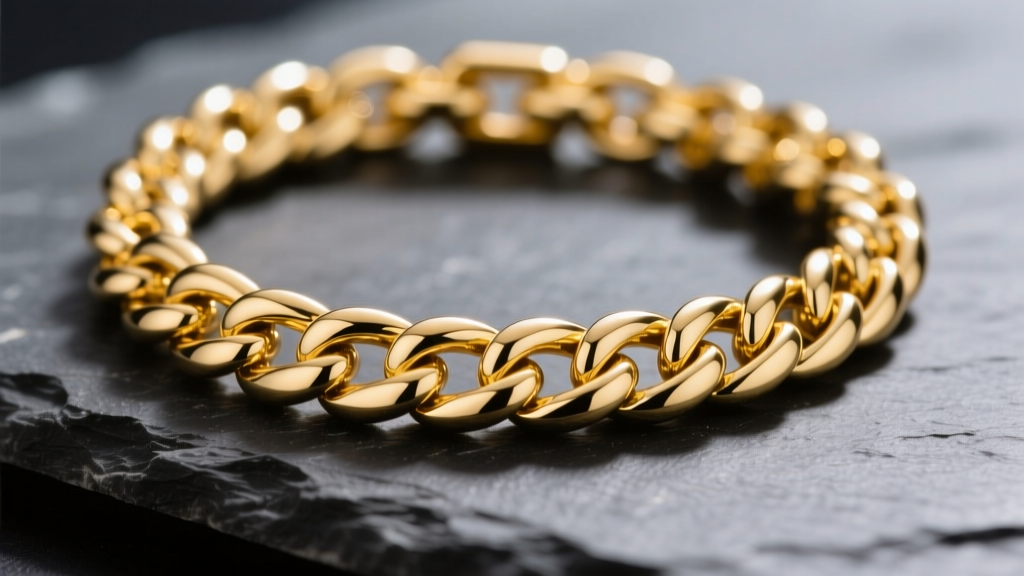
When evaluating the structural integrity and longevity of jewelry, the metal alloy is far more critical than the link pattern. A beautifully crafted cable or curb link will quickly fail if the underlying metallurgy cannot withstand daily tensile stress. The phrase chain of necklace designs encompasses a vast array of engineering choices, from the soft malleability of pure precious metals to the rigid durability of aerospace-grade alloys. Understanding the Vickers Hardness (HV) and tensile strength of these materials is the first step in making an informed purchase.
According to the Federal Trade Commission Jewelry Guides, metal purity stamps must accurately reflect the alloy composition, but they do not tell the whole story regarding durability. A 24-karat gold chain, while incredibly valuable, possesses a Vickers Hardness of roughly 25 HV, making it entirely unsuitable for supporting heavy pendants or resisting the friction of daily wear. To achieve the necessary rigidity, jewelers alloy precious metals with elements like copper, zinc, and nickel, fundamentally altering the metal's crystalline structure and failure points.
Precious Metals: Gold, Platinum, and Silver Alloys
Karat Gold (14k vs. 18k) and Link Integrity
Gold remains the most popular choice for fine jewelry, but the karat weight dictates its mechanical limits. 18k gold (75% pure gold) offers a rich, saturated color but sits at approximately 120 HV. While suitable for standard wear, an 18k gold snake chain or omega chain thinner than 1.5mm is highly susceptible to permanent stretching and kinking. Conversely, 14k gold (58.3% pure gold) is alloyed heavily with copper and silver, pushing its hardness to roughly 140 HV. As noted in the GIA Gold Quality Factors guide, this increased hardness makes 14k gold vastly superior for intricate, interlocking link patterns like the Cuban or Figaro, where individual links experience high localized friction.
Platinum and Palladium: The Dense Heavyweights
Platinum (typically stamped Pt950, meaning 95% pure platinum alloyed with 5% ruthenium or cobalt) behaves entirely differently than gold. While its Vickers Hardness is relatively low (~110 HV), its tensile strength is exceptional. When a platinum chain of necklace links is scratched or bent, the metal displaces rather than wearing away. This phenomenon, known as work-hardening, means a platinum chain will develop a patina over time but will rarely snap under sudden tension. The trade-off is density; an 18-inch, 2mm platinum curb chain will weigh nearly 60% more than its 14k gold equivalent, resulting in a significantly higher price point and a heavier feel on the neck.
Sterling Silver (925) and the Tarnish Factor
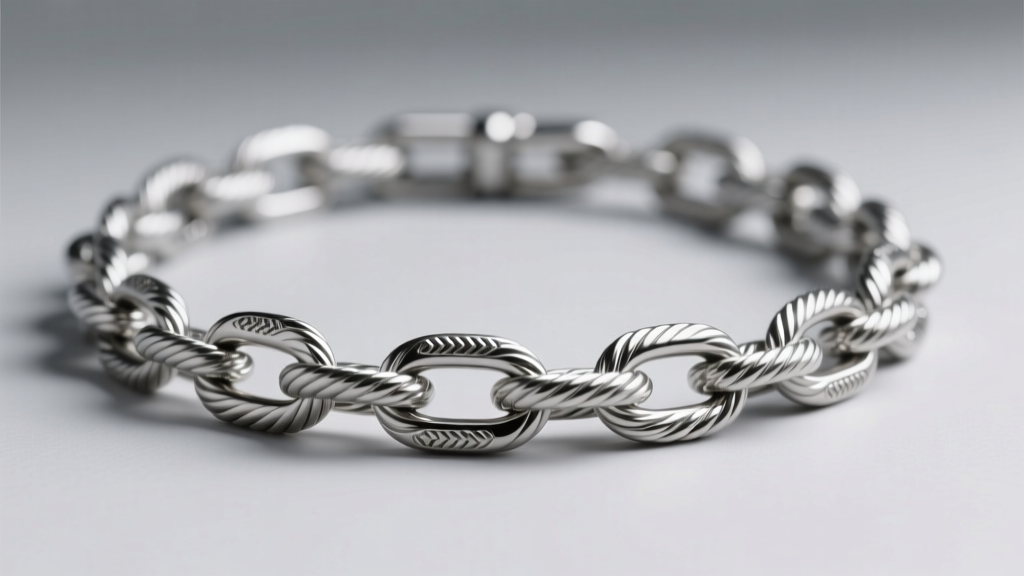
Sterling silver is an alloy of 92.5% silver and 7.5% copper. The Silver Institute highlights that while pure silver is highly resistant to oxidation, the copper additive is highly reactive to sulfur and moisture in the air and human sweat. This results in the familiar black tarnish. For those seeking the look of silver without the maintenance, Argentium silver (which replaces some copper with germanium) offers superior tarnish resistance and a slightly higher hardness, making it an excellent, albeit niche, choice for everyday silver chains.
Alternative & Industrial Metals: Titanium and Stainless Steel
Titanium: Aerospace Meets Jewelry
Titanium is celebrated for its incredible strength-to-weight ratio and hypoallergenic properties. However, not all titanium chains are created equal. Commercially pure Grade 2 titanium is relatively soft and easily scratched. High-end jewelry manufacturers utilize Grade 5 titanium (Ti-6Al-4V), an alloy containing 6% aluminum and 4% vanadium. Grade 5 is exceptionally hard and virtually impossible to scratch with everyday objects. The critical drawback of a titanium chain of necklace links is emergency removal; standard jewelry cutters cannot snap titanium, requiring specialized bolt cutters or diamond-tipped saws in medical emergencies.
Stainless Steel: The 316L Standard
When shopping for steel jewelry, always look for the 316L designation. This specific grade of surgical stainless steel includes 2-3% molybdenum, which drastically increases its resistance to chloride corrosion (i.e., sweat and seawater). A 316L stainless steel chain offers immense tensile strength, meaning it will not stretch or pull apart under the weight of heavy steel pendants. However, steel chains are notoriously difficult to repair. If a link weld fails, standard jewelers' torches cannot easily solder stainless steel without leaving dark, brittle oxidation marks, often requiring laser welding equipment.
Comparative Data: Hardness, Weight, and Pricing
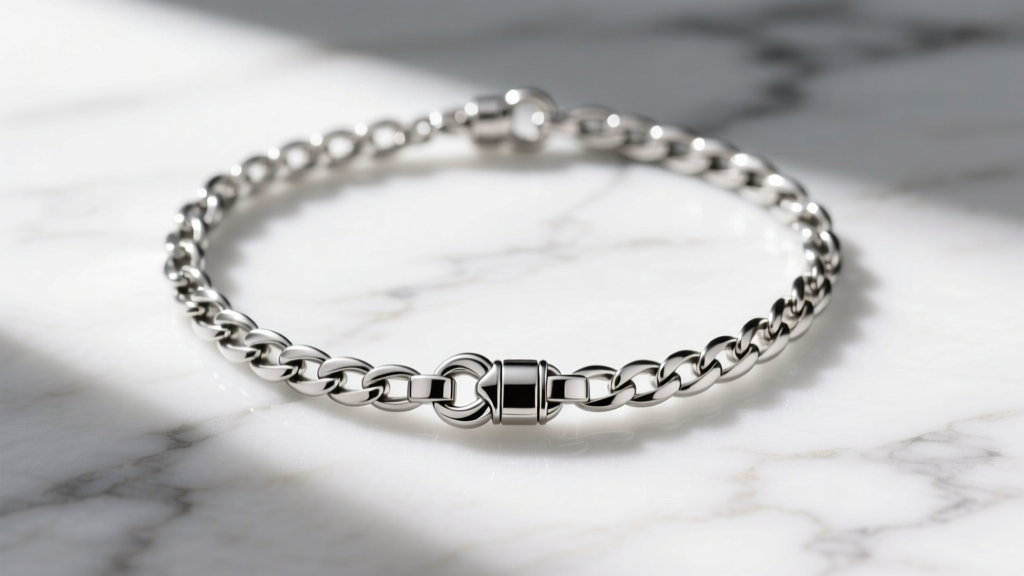
To visualize how these materials stack up against one another, refer to the metallurgical and market data below. Prices reflect the approximate retail cost for a standard 18-inch, 2mm width cable or curb chain in the current market.
| Material | Vickers Hardness (HV) | Tarnish Resistance | Repairability | Avg. Price (18" 2mm) |
|---|---|---|---|---|
| 14k Yellow Gold | ~140 | Excellent | Easy (Solder) | $350 - $600 |
| 18k Yellow Gold | ~120 | Excellent | Easy (Solder) | $500 - $900 |
| Platinum (Pt950) | ~110 (High Tensile) | Excellent | Moderate (Laser/Heat) | $1,200 - $2,500 |
| Sterling Silver (925) | ~65 | Poor (Oxidizes) | Easy (Solder) | $40 - $90 |
| Titanium (Grade 5) | ~350 | Excellent | Nearly Impossible | $80 - $150 |
| Stainless Steel (316L) | ~220 | Excellent | Difficult (Laser) | $25 - $60 |
Failure Modes: Why Necklace Chains Break
Understanding how chains fail is crucial for long-term wear. The most common point of failure is not the chain itself, but the clasp assembly.
Expert Insight: The internal spring mechanism of a standard lobster claw or spring-ring clasp is almost never made of the same precious metal as the chain. Gold and silver lack the "spring memory" required to snap back into place repeatedly. Therefore, the internal spring is typically made of steel or a base metal alloy. Over time, moisture trapped inside the clasp housing causes this base metal spring to corrode and snap, rendering the precious metal chain unwearable until the clasp is replaced.
- Link Stretching: Common in 18k gold and sterling silver snake chains. The continuous interlocking rings act like a spring; when pulled, the metal yields and permanently elongates.
- Galvanic Corrosion: Wearing a sterling silver chain with a stainless steel pendant in a high-sweat environment creates a galvanic cell. The silver (acting as the anode) will corrode and degrade at an accelerated rate where the two dissimilar metals touch.
- Abrasive Wear: Dirt, sand, and cosmetic powders act as micro-abrasives. Over years of wear, these particles grind away the metal at the friction points where the inner links rub together, eventually thinning the wire until it snaps.
Expert Verdict: Matching Material to Lifestyle
Choosing the correct chain of necklace materials requires an honest assessment of your daily habits. If you work in a physical environment, handle chemicals, or refuse to remove your jewelry in the shower, 316L Stainless Steel or Grade 5 Titanium are your only viable options; precious metals will scratch, and silver will tarnish rapidly.
For office environments and occasional evening wear where the chain will support a valuable diamond or gemstone pendant, Platinum (Pt950) or 14k White/Yellow Gold provides the necessary security. Platinum's tensile strength ensures that the links holding a heavy pendant will never pull apart, while 14k gold offers a balance of scratch resistance and traditional prestige. Reserve 18k Gold and Sterling Silver for lighter, fashion-forward pieces that will be handled with care and removed before physical exertion.


