Infant Amber Necklace Guide: Safety, Sizing, and Facts
Learn the facts about infant amber necklaces. Discover safety standards, proper sizing, knotting techniques, and Baltic amber grading for babies.

What Is an Infant Amber Necklace?
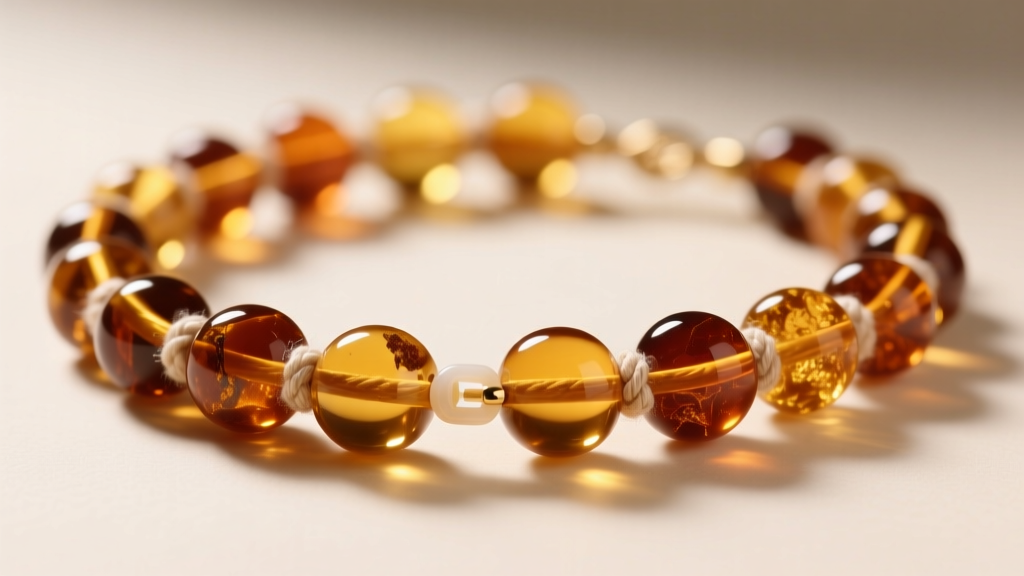
An infant amber necklace is a specialized piece of jewelry designed for babies, typically marketed as a natural remedy for teething pain. Unlike standard fashion necklaces, these are crafted from Baltic amber—a fossilized tree resin originating from the forests that covered Northern Europe over 40 million years ago. The primary region for harvesting this material is the Kaliningrad Oblast, which accounts for roughly 80% of the world's known Baltic amber supply.
The theoretical mechanism behind these necklaces revolves around succinic acid, a naturally occurring compound found in Baltic amber (also known as succinite). Proponents claim that when the amber is warmed by the infant's body heat, trace amounts of succinic acid are released into the skin, acting as a mild, natural analgesic and anti-inflammatory agent. While this is the prevailing marketing narrative, understanding the material science, safety engineering, and medical consensus is critical for any parent considering this accessory.
The Medical Consensus and Harm Reduction
As a domain expert in jewelry materials and safety, it is imperative to address the medical community's stance on teething jewelry. Major pediatric and regulatory organizations strongly advise against the use of any necklaces for infants due to the inherent risks of strangulation and choking. The U.S. Food and Drug Administration (FDA) has issued explicit warnings regarding teething jewelry, noting that the risks of bead detachment and cord entanglement outweigh any unproven benefits. Similarly, the American Academy of Pediatrics (AAP) recommends against any wearable teething remedies.
Harm Reduction Approach: While the medical consensus is a definitive 'no,' market data shows that millions of parents still purchase these items. Therefore, our role shifts to harm reduction. If you choose to use an infant amber necklace, you must strictly adhere to safety engineering standards, supervise the infant at all times, and never allow the child to sleep with the necklace on.
Anatomy of a Safe Infant Amber Necklace
Not all amber necklaces are created equal. The difference between a hazardous trinket and a responsibly manufactured product lies in the micro-details of its construction. When evaluating an infant amber necklace, you must inspect four critical components:
1. Bead Dimensions and Shape
Authentic infant necklaces utilize small, uniformly sized beads, typically ranging from 4mm to 6mm in diameter. These dimensions are chosen to minimize the choking hazard volume if a single bead were to detach. The beads should be highly polished (often referred to as 'baroque' or 'round' polished) to prevent any sharp edges from scratching the infant's delicate skin. Avoid necklaces with large, irregular, or raw, unpolished amber chunks, as these pose a higher laceration and choking risk.
2. Individual Knotting Technique
This is the most vital safety feature. A compliant infant amber necklace must be individually knotted. This means there is a distinct, tight knot tied in the stringing material between every single bead. If the strand snaps, individual knotting ensures that only one bead is released, rather than a cascade of dozens of beads spilling onto the floor (or into the infant's mouth). Inspect the strand closely: if you can slide multiple beads along the thread without resistance, the necklace fails the safety test.
3. Stringing Material
High-quality necklaces are strung on natural cotton or silk threads. These materials are chosen because they lack the extreme tensile strength and elasticity of synthetic nylons. In the event of a sudden pull, a cotton thread is more likely to snap cleanly, whereas a nylon cord might stretch, hold firm, and cause severe neck trauma.
4. The Clasp Mechanism
The clasp must be a specialized safety breakaway clasp, typically made of BPA-free, non-toxic plastic. These clasps are engineered with a specific release threshold—usually designed to pop open when subjected to roughly 15 to 20 pounds of tensile force. Avoid traditional metal jewelry clasps (like lobster or spring-ring clasps) and screw-barrel clasps, as these will not release under pressure and transform the necklace into a severe strangulation hazard.
How to Authenticate Genuine Baltic Amber
The market is unfortunately saturated with counterfeit amber. The most common imposters are Copal (a much younger, immature tree resin) and molded plastics (like Bakelite or celluloid). The International Amber Association sets strict guidelines for what constitutes genuine Baltic amber. Here is how you can verify your infant necklace using non-destructive and destructive testing frameworks:
| Test Method | Genuine Baltic Amber | Copal (Immature Resin) | Plastic / Synthetic |
|---|---|---|---|
| Saltwater Float Test | Floats in saturated saltwater (1 part salt to 3 parts water) | Floats in saturated saltwater | Sinks in saltwater |
| UV Fluorescence | Glows a bright, pale blue or fluorescent green under UV light | Shows a dull or milky white glow under UV light | No fluorescence; appears dark or purple |
| Acetone / Solvent Test | Unaffected by acetone; surface remains hard | Becomes tacky and sticky when acetone is applied | Unaffected or melts depending on plastic type |
| Hot Needle Test (Destructive) | Emits a pleasant, piney, incense-like smoke | Smells sweet, sharp, and slightly acidic | Smells like burning chemicals or melting plastic |
Note: For an infant necklace, rely primarily on the UV and Saltwater tests, as you do not want to damage the beads or expose the child to chemical residues from the acetone or hot needle tests.
Proper Sizing: The Two-Finger Rule
Sizing an infant amber necklace is a precise science. A necklace that is too long can easily slip over the baby's chin, creating an immediate choking and entanglement hazard. A necklace that is too tight can restrict blood flow or cause skin irritation.
The standard length for an infant amber necklace is between 32 cm and 33 cm (approximately 12.5 to 13 inches). To ensure a proper fit, utilize the Two-Finger Rule. When the necklace is fastened around the infant's neck, you should be able to comfortably slide exactly two adult fingers between the amber beads and the baby's collarbone. If you can fit three or more fingers, the necklace is dangerously long and must be returned or replaced. If you cannot fit two fingers, it is too tight.

Supervision and Tucking Techniques
Even with a perfectly sized, individually knotted, and authentically sourced Baltic amber necklace, the golden rule of pediatric jewelry is constant supervision. Many experienced parents utilize the 'tuck method' when the infant is awake and supervised. This involves tucking the necklace securely under the baby's onesie or shirt. This prevents the infant from grabbing the beads, putting them in their mouth, or catching the strand on crib slats, car seat straps, or play gym equipment.
Care, Maintenance, and When to Retire
Baltic amber is relatively soft, rating between 2.0 and 2.5 on the Mohs hardness scale. This makes it highly susceptible to scratching and chemical degradation. To maintain the integrity of the infant amber necklace:
- Cleaning: Wipe the beads gently with a soft, lint-free cloth dampened with warm water. Never use soaps, detergents, or jewelry polishing chemicals, as these can strip the natural oils and alter the surface porosity of the amber.
- Bathing and Swimming: Always remove the necklace before the infant enters a bath, pool, or hot tub. Prolonged exposure to water weakens the cotton stringing material and can cause the knots to loosen over time.
- Inspection Schedule: Inspect the necklace weekly. Gently pull on the thread between the beads to ensure the knots are tight and the cotton is not fraying. Check the plastic breakaway clasp for micro-cracks.
- Retirement: An infant amber necklace is not an heirloom piece. Due to the degradation of natural fibers and the wear on the safety clasp, you should retire and replace the necklace every 6 to 8 months, or immediately if you notice any fraying, loose knots, or clasp stiffness.
By prioritizing structural safety, authenticating the Baltic origin, and adhering to strict sizing and supervision protocols, you can make an informed, harm-reduction-focused decision regarding infant amber jewelry.


