Ultimate Care Guide for a Silver Barbed Wire Necklace
Learn how to safely clean, polish, and store your silver barbed wire necklace without damaging the intricate barbs or stripping the finish.

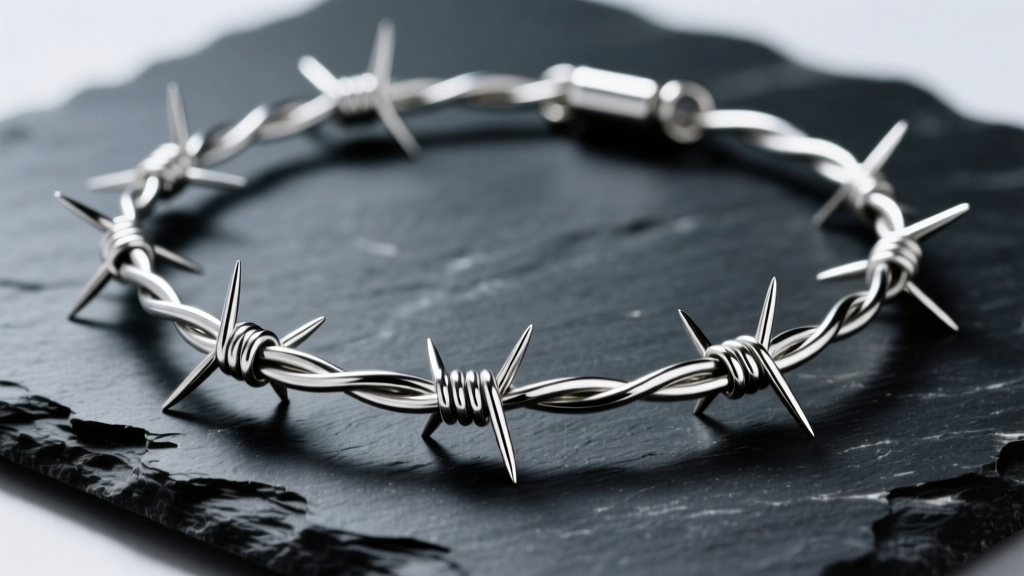
The silver barbed wire necklace is a striking staple in Western, alternative, and edgy fashion. However, its complex topology—characterized by tightly wound wrap wires, sharp protrusions, and deep crevices—makes it one of the most challenging silver pieces to maintain. Unlike a standard cable chain or flat pendant, the structural nuances of barbed wire jewelry require a highly specific approach to cleaning and storage. Using the wrong methods can permanently strip intentional oxidation, loosen delicate solder joints, or warp the core wire.
This comprehensive guide breaks down the metallurgy, structural vulnerabilities, and exact cleaning protocols required to keep your 925 sterling silver barbed wire necklace in pristine condition for decades.
The Anatomy and Vulnerabilities of Barbed Wire Jewelry
To properly care for this piece, you must first understand how it is constructed. A high-quality silver barbed wire necklace typically features a core wire (usually 14 to 16 gauge) that is twisted or woven, with a finer wrap wire (20 to 24 gauge) tightly coiled around it at regular intervals to simulate the 'barbs'.
The Tarnish Trap: Crevices and Sebum
Sterling silver (92.5% silver, 7.5% copper) tarnishes when the copper reacts with hydrogen sulfide and moisture in the environment. According to The Silver Institute, human skin oils, lotions, and environmental pollutants accelerate this reaction. In a barbed wire design, the microscopic gaps between the wrap wire and the core wire act as traps for dead skin cells, sebum, and sulfur-rich cosmetics. This localized buildup not only causes rapid, uneven tarnishing but can also lead to a hardened, cement-like grime that is difficult to dislodge.
Structural Failure Modes
The 'barbs' are either mechanically tension-wrapped or silver-soldered to the core. Mechanical wraps are highly susceptible to loosening if subjected to high-frequency vibrations (like ultrasonic cleaners) or aggressive brushing. Soldered barbs are more secure, but the solder joints can fatigue and snap if the necklace is repeatedly bent or caught on clothing.
Cleaning Methods: What to Avoid at All Costs
Before reaching for your usual silver polishing kit, you must eliminate methods that will ruin the piece's aesthetic and structural integrity.
- Chemical Silver Dips (Thiourea-based): Most barbed wire necklaces rely on 'antiquing' or intentional oxidation (using liver of sulfur) to darken the crevices, making the silver barbs pop in high contrast. Liquid dips will instantly strip this oxidation, leaving the piece a flat, blinding white and destroying its depth.
- Ultrasonic Cleaners: The 40kHz+ vibrations in ultrasonic baths can easily rattle tension-wrapped barbs loose or fracture brittle, oxidized solder joints.
- Hard-Bristle Brushes (Toothbrushes): Standard nylon toothbrushes are often too stiff and can leave micro-scratches on the high-polish points of the silver wire.
Step-by-Step Dry Cleaning Protocol
For routine maintenance, a dry-cleaning approach is the safest way to remove daily oils and dust without risking water spots or chemical stripping.
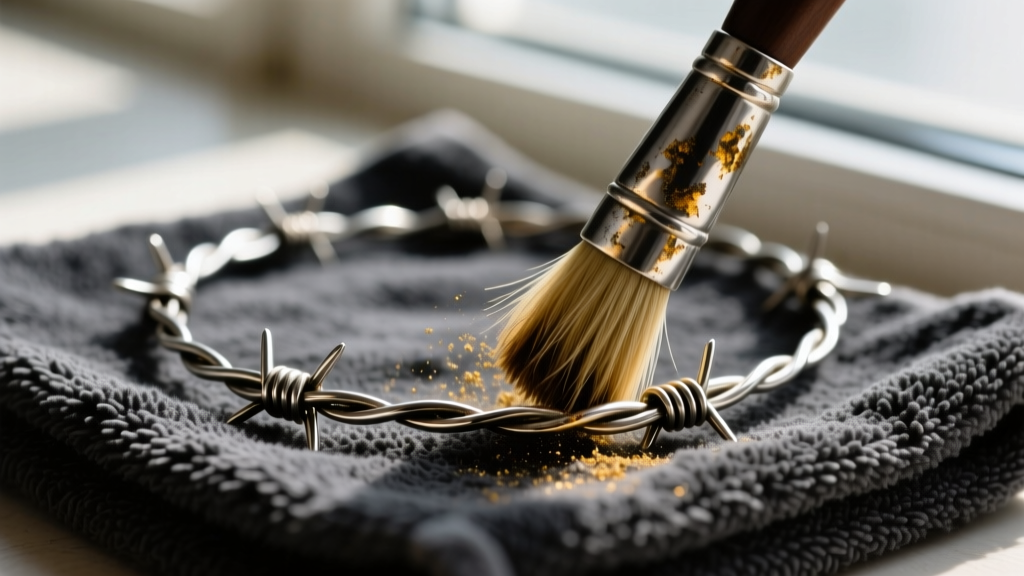
Step 1: The Horsehair Brush Sweep
Use a clean, soft-bristled horsehair detailing brush or a dedicated jewelry brush. Gently sweep along the grain of the twisted core wire. The natural softness of horsehair will dislodge trapped dust and dried sebum from the tight crevices around the barbs without scratching the silver or catching on the sharp points.
Step 2: Targeted High-Point Polishing
Use a treated polishing cloth, such as a Sunshine Cloth. Crucial technique: Do not wrap the cloth around the necklace and pull back and forth. This will catch the barbs, fray the cloth, and potentially pull the wrap wire loose. Instead, pinch the high points of the wire and barbs gently between your thumb and forefinger through the cloth, polishing only the raised areas while intentionally avoiding the darkened crevices.
Step 3: The Q-Tip Method for Stubborn Grime
If skin oils have hardened in the gaps, dip a wooden cotton swab in a tiny amount of isopropyl alcohol (90% or higher). Swab the crevices carefully to dissolve the oils. The alcohol evaporates quickly without leaving moisture behind, preventing further copper oxidation.
Comparing Cleaning Agents for Silver Barbed Wire
| Cleaning Method | Best Used For | Risk to Barbs/Wraps | Risk to Oxidation |
|---|---|---|---|
| Horsehair Brush (Dry) | Daily dust and loose skin | None | None |
| Treated Polishing Cloth | Surface tarnish on high points | Low (if pinch-polished) | Low (if crevices avoided) |
| Mild Soap & Distilled Water | Heavy lotion/sunscreen buildup | None | Moderate (prolonged soaking) |
| Chemical Liquid Dips | Never use on barbed wire | None | Extreme (strips entirely) |
| Ultrasonic Cleaner | Never use on barbed wire | Extreme (loosens wraps) | High |
Preventing Snags and Structural Warping
The most common cause of catastrophic failure for a silver barbed wire necklace is the 'catch and tear' incident. The sharp barbs easily hook onto knitwear, lace, silk, and even loose hair. When a barb snags, the sudden kinetic force can permanently warp the collar shape of the core wire or snap the delicate wrap wire entirely.
Always follow the 'Last On, First Off' rule. Put your necklace on only after you have fully dressed, styled your hair, and applied all perfumes or hairsprays. Remove it immediately upon returning home before changing clothes. When pulling shirts over your head, gather the shirt in your hands and pull it over the necklace carefully to avoid dragging fabric across the barbs.
Proper Storage and Environmental Control
How you store your necklace is just as important as how you clean it. Tossing a barbed wire necklace into a standard jewelry box guarantees it will tangle, bend, and tarnish rapidly.
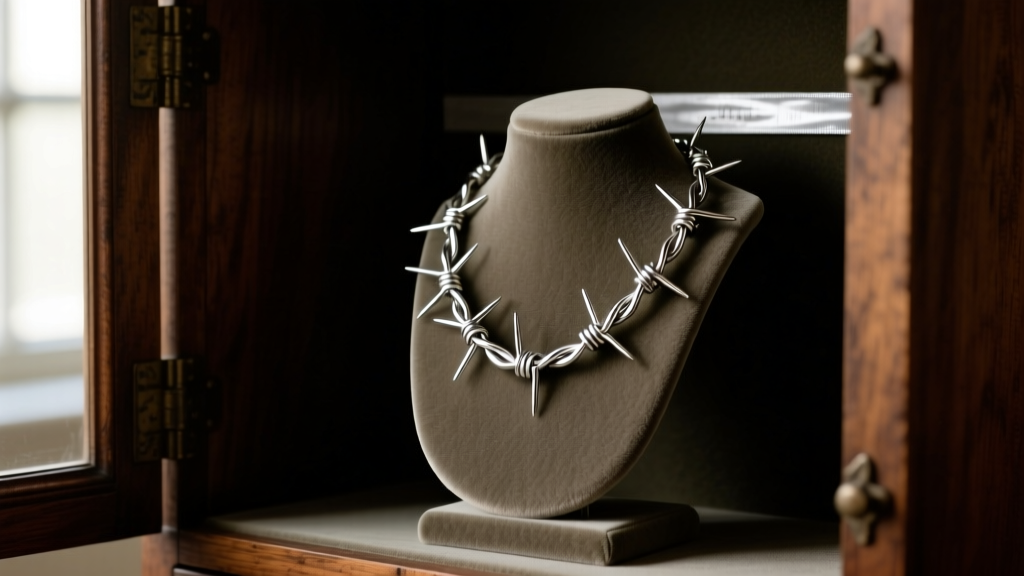
The Hanging Mandrel Method
Because barbed wire necklaces are often semi-rigid or shaped like a collar, they should be stored hanging on a velvet-lined jewelry stand or a padded neck form. Laying them flat in a drawer invites pressure that can kink the core wire, while hanging them on standard hooks can cause the clasp area to bear too much weight. A padded, wide-neck bust is ideal.
Atmospheric Tarnish Prevention
The Gemological Institute of America (GIA) recommends storing silver in airtight environments to limit exposure to sulfur-bearing gases. Place your hanging necklace inside a breathable Pacific Silvercloth bag, or store it in a closed cabinet alongside 3M anti-tarnish strips. These strips absorb airborne sulfides before they can reach the copper alloy in your sterling silver, effectively pausing the tarnishing process for up to 6 months.
When to Seek Professional Restoration
If you have accidentally stripped the antiquing from your necklace using a chemical dip, or if a barb has become loose, do not attempt DIY repairs with superglue or hardware store chemicals. Take the piece to a professional bench jeweler. They can re-solder loose wraps using precision laser or torch soldering, and they can re-apply a uniform layer of oxidation using a controlled Liver of Sulfur bath, followed by a professional tumble-polish to restore the high-contrast finish that makes the barbed wire design so visually striking.


