Expert Care and Cleaning Guide for a Lightning Necklace
Learn expert cleaning and maintenance tips for your lightning necklace. Protect sharp points, restore shine, and prevent enamel damage with our guide.


The Unique Vulnerabilities of Lightning Bolt Pendants
A lightning necklace is a striking, high-impact piece of jewelry, but its distinct geometric design introduces specific maintenance challenges that standard pendants do not face. The acute angles of a lightning bolt—typically cut between 30 and 45 degrees—create deep inner crevices that act as traps for sebum, dead skin cells, lotions, and cosmetic powders. Over time, this buildup not only dulls the metal's reflectivity but can also degrade the structural integrity of delicate pave settings or cause enamel to discolor.
Furthermore, the sharp terminal points of the lightning bolt act as natural levers. If the tip catches on a knit sweater or a towel, the kinetic force is transferred directly to the bail (the loop connecting the pendant to the chain) and the solder joints. According to Jewelers of America, asymmetric stress on pendant bails is one of the leading causes of chain detachment and metal fatigue. Understanding these vulnerabilities is the first step in preserving the bold aesthetic of your lightning necklace for decades.
Step-by-Step Cleaning Protocols by Material
Because lightning necklaces are crafted from a variety of metals and finishes, a one-size-fits-all cleaning approach can cause irreversible damage. Below are the material-specific protocols recommended by jewelry conservators.
Sterling Silver and Solid White Gold
Sterling silver (925) is highly susceptible to tarnishing due to the copper alloy mixed with the silver. When tarnish settles into the sharp inner corners of a lightning bolt, it creates a dark, unpolished shadow that ruins the crisp contrast of the design.
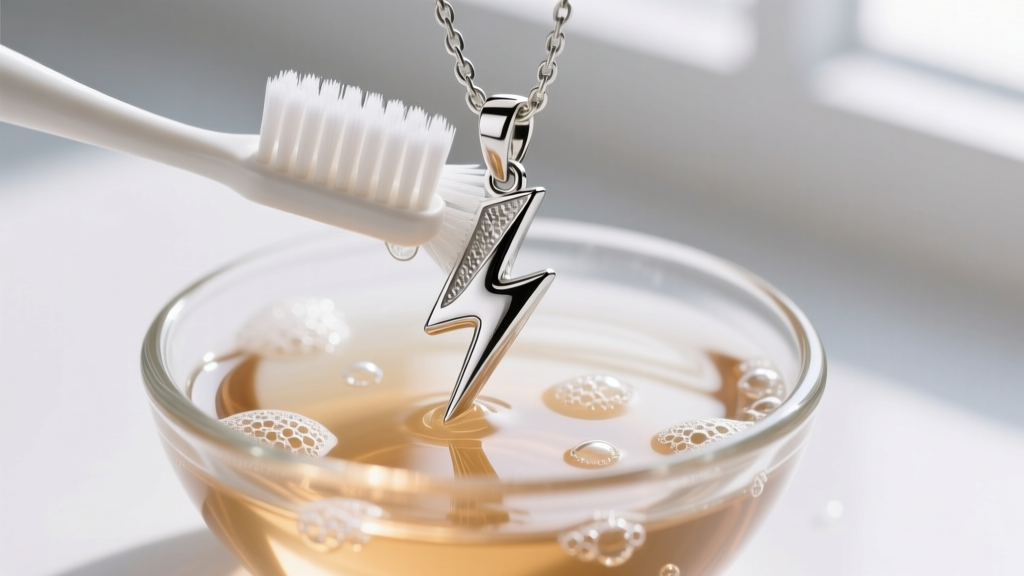
- The Wash: Mix a few drops of mild, phosphate-free dish soap (like Dawn) into a bowl of lukewarm distilled water. Submerge the necklace for 3 to 5 minutes.
- The Agitation: Use an ultra-soft baby toothbrush to gently sweep the bristles into the acute angles of the bolt. Never use a standard adult toothbrush, as the stiff nylon bristles can leave micro-scratches on high-polish silver.
- The Polish: For stubborn tarnish, use a treated polishing cloth, such as a Sunshine Cloth. Fold the cloth to create a sharp edge, allowing you to floss the cloth into the inner crevices of the lightning bolt without rounding off the sharp geometric points.
Gold Vermeil and Gold-Plated Pieces
Gold vermeil requires a minimum of 2.5 microns of gold plating over a sterling silver base. The sharp edges of a lightning pendant are high-friction areas where plating naturally wears away faster than on flat surfaces.
- Avoid Ultrasonics: Never place gold vermeil or plated lightning necklaces in an ultrasonic cleaner. The high-frequency vibrations can cause microscopic flaking of the gold layer, especially along the sharp, stressed edges of the bolt.
- Gentle Wiping: Clean vermeil pieces using only a lint-free microfiber cloth dampened with warm water. Dry immediately to prevent water spots, which can etch into the porous gold layer over time.
Enamel and Pave-Set Lightning Necklaces
Many modern lightning necklaces feature black or white enamel inlays, or pave-set cubic zirconia and diamonds tracing the zig-zag perimeter. The Gemological Institute of America (GIA) warns that harsh chemicals can dissolve the adhesives used in pave settings and crack vitreous enamel.
- Enamel Care: Wipe enamel sections with a damp cloth only. Avoid any ammonia-based cleaners, which can cause the enamel to cloud or craze (develop fine surface cracks).
- Pave Care: Soak the piece in a specialized, non-ammoniated gemstone jewelry dip. Use a wooden cuticle stick—never metal—to gently dislodge debris from between the tiny prongs holding the stones along the lightning bolt's edge.
Structural Maintenance: Protecting Points and Bails
The longevity of a lightning necklace relies heavily on its structural hardware. The bail of a lightning pendant experiences uneven weight distribution because the pendant is top-heavy and asymmetrical.
Bail and Jump Ring Inspection
Every three months, inspect the jump ring (the small circular wire connecting the bail to the chain). Because the lightning bolt swings and pivots sharply, the jump ring can slowly twist open. Use two pairs of flat-nose jewelry pliers to ensure the jump ring remains perfectly closed, twisting it laterally rather than pulling it apart, which weakens the metal's temper.
Prong Tightening for Pave Bolts
If your lightning necklace features pave stones along its perimeter, the prongs are highly exposed. The sharp points of the lightning bolt are the first to impact surfaces if dropped. Have a professional jeweler inspect the prongs under a loupe annually. They will use a beading tool to push the metal securely back over the girdle of each microscopic stone, preventing catastrophic stone loss.
Chain Selection and Friction Management
The chain you pair with your lightning pendant drastically affects its wear-and-tear profile. The bail rubs against the chain links continuously, acting like a microscopic file.
| Chain Type | Interaction with Lightning Bail | Maintenance Requirement |
|---|---|---|
| Box Chain | High friction; square edges can wear down soft gold bails rapidly. | Inspect bail for thinning every 6 months. |
| Cable Chain | Moderate friction; oval links provide a smooth gliding surface. | Standard annual inspection. |
| Snake Chain | Low friction, but prone to kinking if the heavy lightning bolt pulls it. | Store perfectly flat; never pull through tangles. |
| Rope Chain | High friction; twisted links act as an abrasive against the bail. | Requires frequent bail polishing and thickness checks. |
Storage Solutions to Prevent Snagging and Bending
Improper storage is the primary reason lightning necklaces suffer bent points and broken chains. The protruding angles of the bolt will easily pierce fabric pouches or tangle irreparably with other delicate chains.
The Flat-Lay Mandate
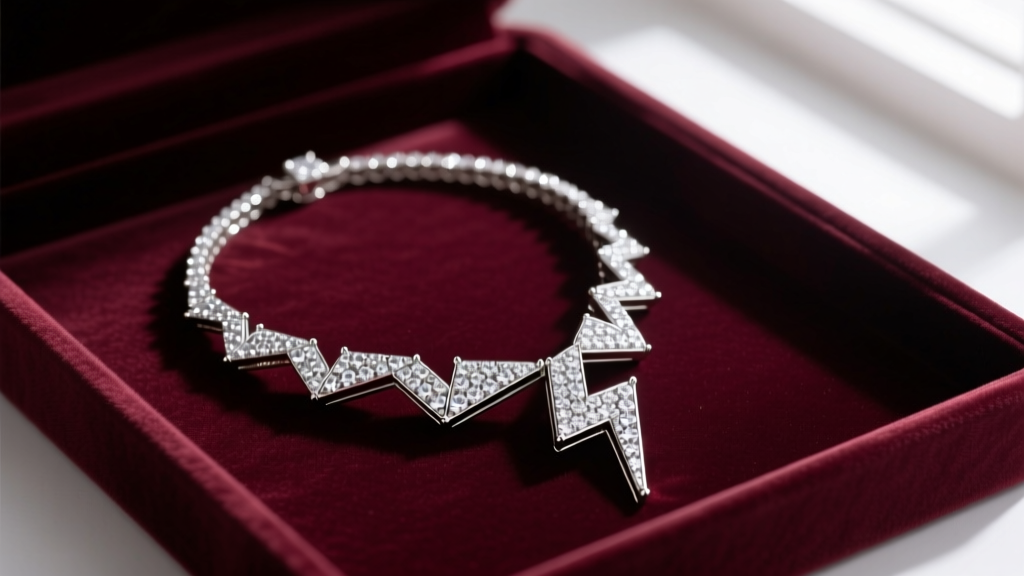
Never hang a heavy lightning pendant on a standard jewelry tree. The gravitational pull on the sharp bottom point can slowly warp the metal if it rests against a hard surface. Instead, utilize a flat, velvet-lined tray. Lay the chain out in a wide circle or figure-eight pattern to prevent the links from knotting, and ensure the lightning bolt lies completely flat against the velvet, with its sharp points facing away from other jewelry.
Anti-Tarnish Strips
If you must store the necklace in a sealed box or drawer, place a 3M anti-tarnish strip in the compartment. These strips absorb sulfur compounds in the air, preventing the sterling silver base from oxidizing, which is especially crucial for the hard-to-reach inner angles of the lightning bolt design.
What to Avoid: Common Cleaning Mistakes
When attempting to restore the brilliance of a dull lightning necklace, well-meaning owners often resort to household hacks that cause permanent damage.
- Never Use Toothpaste: Toothpaste contains hydrated silica, an abrasive that will scratch high-polish gold and silver, leaving a matte, cloudy finish on the flat planes of the lightning bolt.
- Avoid Chlorine Exposure: Never wear your necklace in a swimming pool or hot tub. Chlorine reacts catastrophically with the copper and zinc alloys in 14k gold and sterling silver, causing a phenomenon called 'stress corrosion cracking,' which can cause the bail to snap cleanly off.
- Steer Clear of Baking Soda Paste: While popular on social media, baking soda is highly alkaline and abrasive. It can strip the rhodium plating off white gold lightning necklaces and permanently dull the surface luster.
Conclusion
A lightning necklace is a dynamic, eye-catching accessory that demands a specialized approach to care. By respecting the acute geometry of the design, utilizing material-specific cleaning agents, and storing the piece flat to protect its vulnerable points, you can maintain its striking silhouette and brilliant shine for a lifetime. Regular inspections of the bail and pave settings will ensure that your necklace remains as structurally sound as it is visually electrifying.


