Gold Prada Necklace Guide: 2026 Authenticity & Care
An expert technical analysis of the gold Prada necklace, covering metallurgy, hallmark authentication, enamel care, and 2026 buying advice.

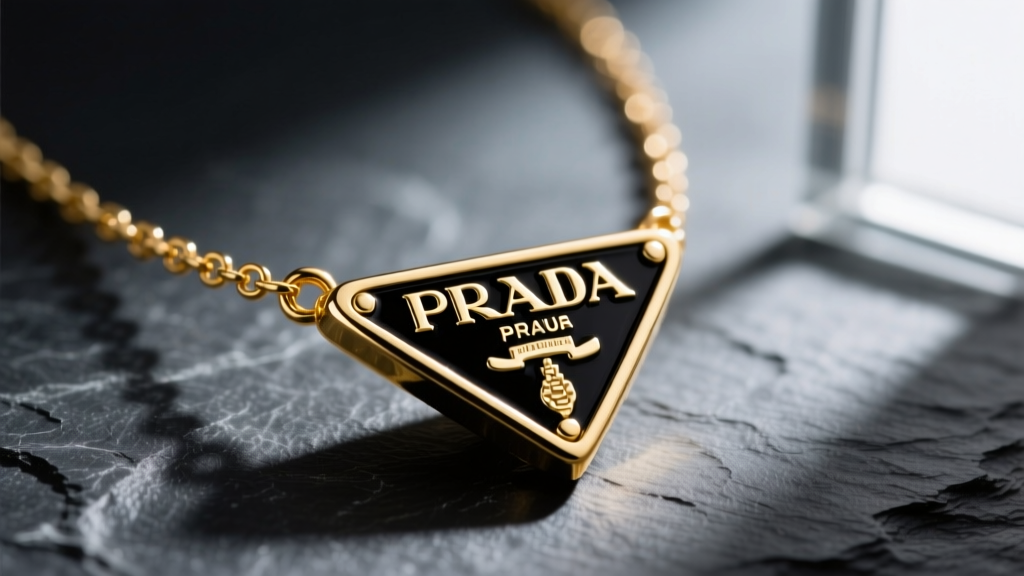
The gold Prada necklace remains one of the most recognizable and highly sought-after luxury accessories in contemporary fashion. However, beneath the surface of the iconic triangle logo and sleek chain architectures lies a complex world of metallurgy, manufacturing tolerances, and material science. As we navigate the luxury secondary market and boutique offerings in 2026, understanding the technical specifications of these pieces is no longer optional for serious collectors and style enthusiasts—it is essential.
This expert deep dive deconstructs the anatomy of Prada's gold necklaces, differentiating between their high-fashion plated lines and their fine jewelry collections, while providing a rigorous framework for authentication and long-term material preservation.
Decoding the Metallurgy: Plated Brass vs. Solid Gold
To accurately assess a gold Prada necklace, one must first identify which manufacturing tier the piece belongs to. Prada operates two distinct jewelry categories, each with vastly different material compositions and structural lifespans.
The Fashion Jewelry Line (Gold-Plated Brass)
The vast majority of viral and boutique Prada necklaces fall into the fashion jewelry category. The base metal is typically ottone (Italian for brass), an alloy of copper and zinc chosen for its excellent malleability, satisfying weight, and ability to hold high-polish finishes. Because brass is highly reactive and prone to oxidation, Prada employs a multi-stage electroplating process.
- Barrier Layer: A micro-thin layer of palladium or rhodium is applied first. This prevents the copper and zinc ions from migrating to the surface, which would otherwise cause the gold layer to tarnish or turn the wearer's skin green.
- Gold Layer: The final layer is typically an 18-karat gold tone plating, ranging from 0.5 to 1.5 microns in thickness. While more generous than standard 'flash' plating (which is often under 0.1 microns), it remains a surface treatment subject to friction wear.
The Fine Jewelry Line (Eternal Gold)
Introduced to cater to the high jewelry market, Prada's fine jewelry collections utilize solid 18k gold. In 2026, these pieces are heavily marketed under the 'Eternal Gold' banner, utilizing 100% certified recycled gold. These pieces carry a completely different weight profile, intrinsic melt value, and hallmarking standard.
| Specification | Fashion Jewelry (Iconic Line) | Fine Jewelry (Eternal Gold) |
|---|---|---|
| Base Material | Brass (Ottone) | Solid 18k Gold |
| Gold Purity | Surface Plating (18k tone) | 75% Pure Gold (750) |
| Plating Thickness | 0.5 - 1.5 Microns | N/A (Solid throughout) |
| Primary Hallmark | PRADA, MADE IN IT, CE | PRADA, 750, Maker's Mark |
| Approx. Retail Range | $450 - $1,200 USD | $2,500 - $15,000+ USD |
Technical Authentication: Hallmarks, Clasps, and Enamel
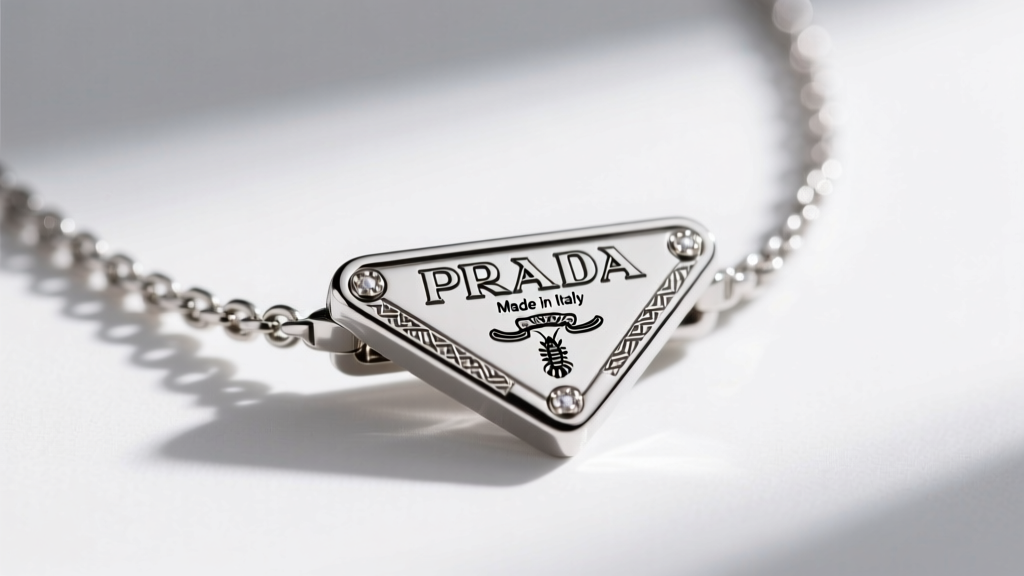
The proliferation of high-quality counterfeits requires a forensic approach to authentication. A genuine gold Prada necklace will exhibit specific manufacturing signatures that are economically unviable for counterfeiters to replicate perfectly.
The Triangle Logo and Enamel Application
The quintessential Prada pendant features the iconic inverted triangle. On authentic fashion necklaces, the black or red fill is not vitreous (fired glass) enamel, but rather a high-grade, cold-cured epoxy resin. This epoxy is precision-dispensed into the metal bezel and cured. Under a 10x jeweler's loupe, authentic epoxy will appear perfectly level with the metal bezel or exhibit a microscopic, uniform meniscus. Counterfeits often show uneven pooling, micro-bubbles trapped in the resin, or溢出 (overflow) onto the gold-plated bezel.
Stamping and Laser Engraving Tolerances
According to Prada's official material guidelines, all hardware must bear specific origin and material stamps. On the lobster clasp and the small oval tag near the closure, look for:
- Font Consistency: Authentic PRADA stamping uses a proprietary, sharply defined serif font. The 'R' has a distinct, slightly curved descending leg.
- Depth and Clarity: Genuine stamps are either deeply die-struck or precision laser-engraved. Fakes often exhibit shallow, muddy, or dot-matrix-style laser burns.
- The 'CE' Mark: For pieces manufactured for or sold within the European market, the CE mark (indicating compliance with nickel-release regulations) must be present and perfectly proportioned.
Chain Architecture and Clasp Engineering
The structural integrity of a gold Prada necklace relies heavily on its chain links and clasp mechanics. Prada frequently utilizes cable chains and paperclip chains for their pendant necklaces.
Authentic Prada chains feature machine-stamped links with seamless laser soldering at the joints. If you run your fingernail along the side of an authentic link, it should feel completely smooth. Counterfeit chains often feature mechanical crimps or visible solder blobs at the link seams, which catch on fabrics and hair. Furthermore, the lobster clasp on a genuine piece features a high-tension internal spring. The actuation lever should require deliberate, firm pressure to open, snapping back with a sharp, metallic click. A sluggish or loose clasp lever is an immediate indicator of a replica or a heavily worn, compromised piece.
2026 Care Protocols for Plated and Enameled Pieces
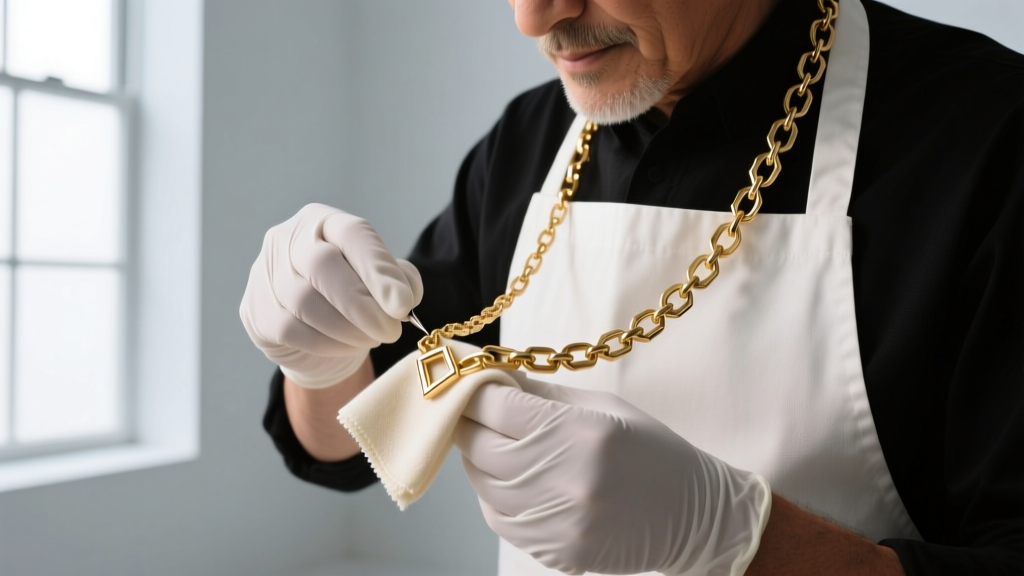
Maintaining the gold finish and epoxy enamel of a fashion-tier Prada necklace requires strict adherence to material science principles. Because the gold is a micro-thin layer over brass, the primary goal is to prevent friction and chemical corrosion.
The Dangers of Ultrasonic Cleaners
Never place an enameled Prada triangle pendant in an ultrasonic jewelry cleaner. The high-frequency cavitation bubbles generated by ultrasonic waves can easily fracture the cold-cured epoxy resin, causing it to crack, cloud, or detach entirely from the brass bezel. Furthermore, the Gemological Institute of America (GIA) warns that harsh chemical dips used in some cleaning machines will strip gold plating down to the base metal in a matter of seconds.
Daily Wear and Chemical Exposure
The most aggressive enemy of gold-plated brass is human sweat, which contains lactic acid and urea. Over time, acidic sweat will eat through the 1.5-micron gold layer and the palladium barrier, causing the underlying copper to oxidize. To maximize the lifespan of your necklace:
- Order of Operations: Always apply perfumes, hairsprays, and lotions at least 15 minutes before putting on the necklace. Alcohol and volatile organic compounds (VOCs) in cosmetics can degrade the epoxy enamel's gloss finish.
- Friction Management: Avoid wearing the necklace during exercise or while wearing rough, abrasive textiles like raw denim or heavy wool directly against the skin.
- Proper Storage: Store the piece in its original flannel pouch or an anti-tarnish ziplock bag. Do not toss it loosely into a jewelry box where the brass links can scratch the gold plating of adjacent pieces.
Expert Verdict: A gold Prada necklace is a triumph of modern luxury branding and precision electroplating. By understanding the distinction between its brass-core fashion pieces and solid gold fine jewelry, and by treating the cold enamel and micro-plating with chemical respect, collectors can preserve the structural and aesthetic integrity of these iconic pieces for decades.


