Garnet and Ruby Necklace Trends: Styling Deep Reds in 2026
Discover 2026 trends for the garnet and ruby necklace. Learn gemological differences, styling tips for deep red jewels, and pricing guides.

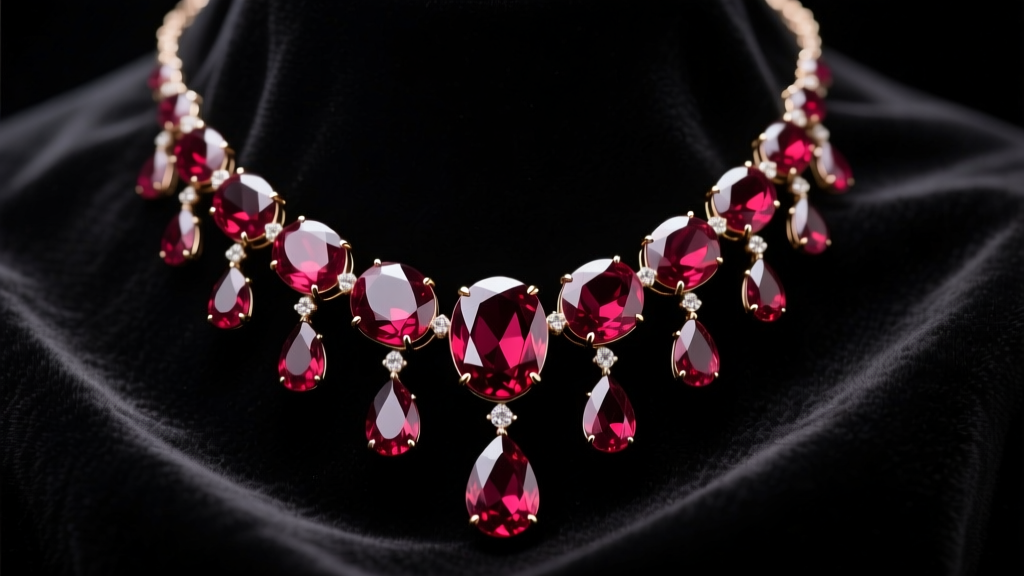
The jewelry landscape in 2026 has seen a definitive shift away from the minimalist, barely-there aesthetics of the early 2020s, embracing instead a bold, moody revival of "dark romance" and gothic-inspired luxury. At the absolute center of this movement is the garnet and ruby necklace. No longer relegated to vintage estate sales or January/July birthstone clichés, these deep red gemstones are being reimagined by contemporary designers who mix faceted rubies with smooth cabochon garnets to create striking, textural contrasts. Whether you are a collector seeking investment-grade corundum or a style enthusiast looking for the perfect statement piece, understanding the nuances of these two crimson stones is essential.
The Resurgence of Deep Red: Why Garnet and Ruby Necklaces Dominate 2026
This year's runway trends and high jewelry releases highlight a fascination with blood-red hues, oxidized metals, and layered silhouettes. The modern garnet and ruby necklace often features asymmetric designs, pairing the high-voltage brilliance of a faceted ruby with the sultry, light-absorbing depth of a cabochon garnet. This juxtaposition speaks to the 2026 consumer's desire for jewelry that feels both historically rich and fiercely modern. Designers are increasingly setting these stones in blackened sterling silver or unpolished 18k yellow gold, allowing the natural inclusions and color zoning of the gems to take center stage rather than hiding them behind flawless, clinical settings.
Gemological Breakdown: Garnet vs. Ruby
While they may share a similar color palette to the naked eye, ruby and garnet belong to entirely different mineral families. Confusing them can lead to disastrous purchasing decisions, especially regarding durability and pricing. Below is a technical comparison to help you evaluate any garnet and ruby necklace you encounter.
| Property | Ruby (Corundum) | Garnet (Silicate Group) |
|---|---|---|
| Chemical Composition | Aluminum Oxide (Al2O3) | Nesosilicates (e.g., Mg3Al2Si3O12) |
| Mohs Hardness | 9.0 (Exceptional durability) | 6.5 to 7.5 (Varies by species) |
| Refractive Index (RI) | 1.762 - 1.770 | 1.714 - 1.888 (Highly variable) |
| Cleavage | None (But has parting) | None |
| Primary Red Varieties | Burmese, Mozambican, Thai | Almandine, Pyrope, Rhodolite |
According to the Gemological Institute of America (GIA), ruby's superior hardness makes it ideal for everyday wear, whereas garnet requires slightly more care to prevent abrasion, especially when layered with harder materials.
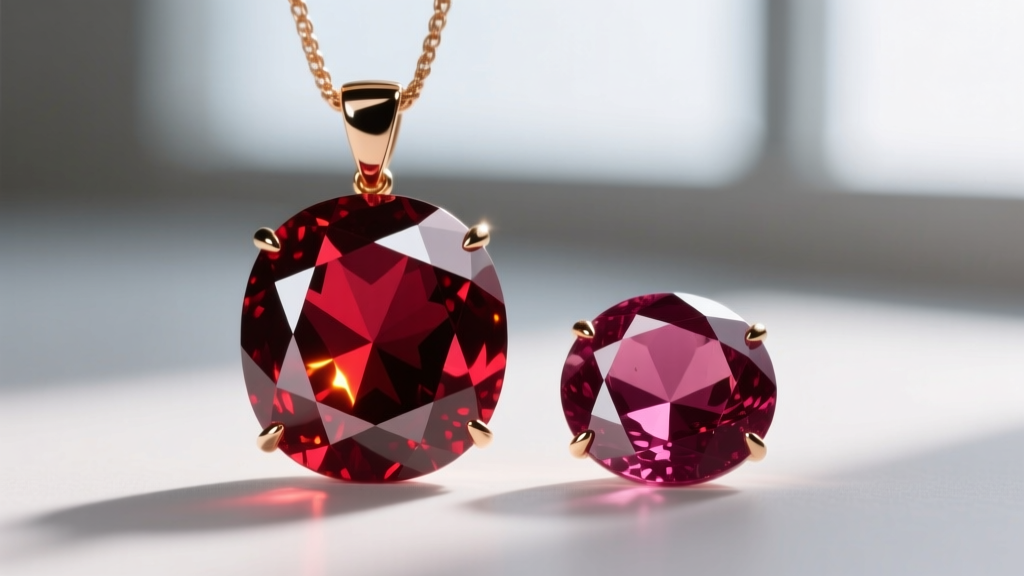
Sourcing, Treatments, and the "Untreated" Premium
The most critical factor in evaluating a garnet and ruby necklace is understanding how the stones have been treated. The market is currently flooded with heavily treated stones disguised as natural, making gemological literacy your best defense.
The Ruby Treatment Minefield
Nearly all rubies on the market are heat-treated to improve color and clarity—a standard, accepted practice that does not destroy the stone's value. However, the 2026 market is still battling the prevalence of lead-glass filled rubies. These are low-grade, heavily fractured rubies infused with a high-lead-content glass to make them appear transparent.
Warning: Glass-filled rubies are extremely fragile. Exposure to mild acids (even lemon juice or household cleaners) can etch the glass, and the heat from a jeweler's torch during a simple ring resizing or clasp repair can melt the filling, destroying the stone. Always demand a lab report for any ruby priced over $500.
Garnet: The Untreated Advantage
One of the most compelling reasons to invest in garnet jewelry is its purity. As noted in the GIA Gem Encyclopedia, garnets are almost never treated. The color you see is entirely natural, born from trace elements like iron, chromium, or manganese. When shopping for a red garnet, seek out Rhodolite (a purplish-red pyrope-almandine mix) over standard Almandine. Almandine is often cut too thick to retain carat weight, resulting in "extinction"—a dark, lifeless center where light cannot escape. Rhodolite offers superior brilliance and a vibrant raspberry-red hue that pairs beautifully with the deeper crimson of ruby.
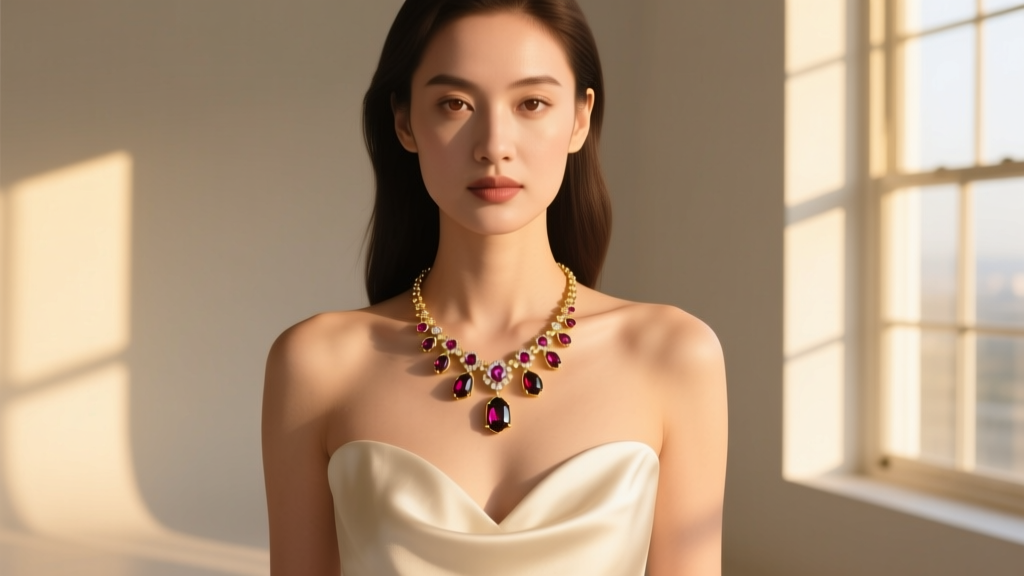
Styling Frameworks: Necklines, Metals, and Chain Gauges
Styling a dual-gemstone necklace requires balancing the visual weight of the stones with your wardrobe. Here is a practical framework for wearing your garnet and ruby necklace in 2026:
- The Sweetheart Neckline: A 16-inch choker-length necklace featuring a central ruby drop flanked by smaller garnet accents perfectly mirrors the curve of a sweetheart neckline, drawing the eye to the collarbone.
- The Deep V-Neck: Opt for an 18 to 20-inch pendant style. A heavy, bezel-set rhodolite garnet pendant with a hidden ruby bail creates a striking vertical line that elongates the torso.
- Metal Pairings: While platinum and white gold offer a crisp, modern contrast, 18k yellow gold and rose gold amplify the warm, secondary hues in both stones. For an edgier, avant-garde look, oxidized blackened silver is the top trend for gothic-revival pieces this year.
- Chain Selection: Never hang heavy cabochon garnets on a delicate 0.8mm chain. Use a minimum 1.5mm rope chain or a 2.0mm box chain with a soldered jump ring and a secure lobster clasp to prevent catastrophic loss.
Investment and Pricing Tiers for Red Gemstone Necklaces
Understanding the pricing architecture of these gems will help you navigate the market and identify true value. Here is what you should expect to pay for a quality garnet and ruby necklace in today's market:
- Entry-Level ($150 - $400): Features commercial-grade Almandine garnets and small, heavily included (but not glass-filled) heated rubies, typically set in sterling silver or 10k gold. Excellent for fashion-forward, trend-based styling.
- Mid-Tier ($800 - $2,500): The sweet spot for fine jewelry. Expect vibrant, eye-clean Rhodolite garnets paired with cleanly heated Mozambican rubies. Settings will usually be 14k or 18k gold with secure, prong or bezel settings.
- Investment Grade ($5,000 - $20,000+): Reserved for unheated, certified Burmese "Pigeon's Blood" rubies paired with premium, custom-cut garnets. These pieces are often one-of-a-kind, featuring intricate metalwork and pave diamond halos, serving as both wearable art and a store of wealth.
Ultimately, the garnet and ruby necklace is more than just a collision of red hues; it is a masterclass in textural and gemological contrast. By prioritizing untreated garnets, demanding transparency in ruby treatments, and selecting the right chain architecture, you can secure a piece that is as durable as it is breathtaking.


