Rosary Tattoo Necklace Materials: Elastic vs Wire Guide
Compare elastic, wire, and bead materials for your rosary tattoo necklace. Discover durability, skin safety, and styling tips for lasting wear.

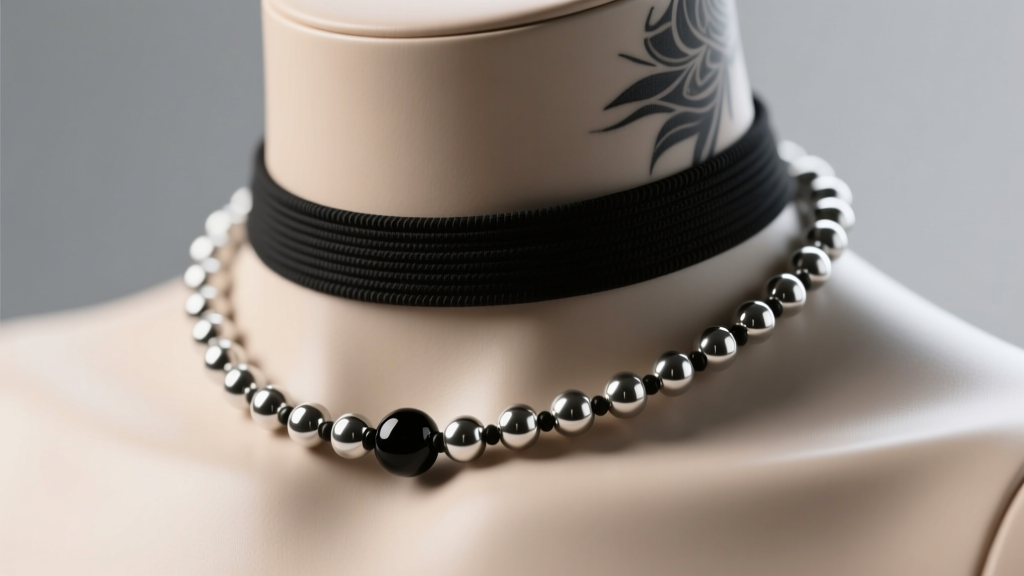
The Anatomy of a Rosary Tattoo Necklace
The rosary tattoo necklace is a striking hybrid that merges the skin-hugging, continuous-loop silhouette of the 1990s stretch choker with the rhythmic, spaced-bead aesthetic of a traditional rosary chain. As we navigate the 2026 jewelry market, the resurgence of Y2K and alternative aesthetics has pushed this specific style back into the spotlight. However, the intersection of tight-fitting cords and abrasive beads creates a unique set of material challenges. Understanding the polymer science of the base cord and the metallurgical properties of the beads is critical for both longevity and skin safety.
Base Cord Materials: Stretch Polymer vs. Memory Wire
The foundation of any tattoo-style choker dictates its fit, comfort, and lifespan. Manufacturers typically rely on three distinct base materials, each with specific physical properties and failure points.
Thermoplastic Polyurethane (TPU) and Elastane
Most mass-market rosary tattoo necklaces utilize a TPU or elastane-spandex blend cord. TPU is favored for its high elasticity and transparency, often extruded into a 0.8mm to 1.2mm diameter cord with a Shore hardness of 85A to 95A. While TPU provides an excellent, comfortable stretch that accommodates various neck circumferences without a clasp, it is highly susceptible to hydrolysis. Prolonged exposure to the slightly acidic pH of human sweat (typically between 4.5 and 7.0) breaks down the polymer chains, leading to dry rot, loss of elasticity, and sudden snapping after 6 to 12 months of daily wear.
Tempered Stainless Steel Memory Wire
For a more permanent, high-end alternative, jewelers use tempered stainless steel memory wire, typically in a 0.8mm (20-gauge) thickness. Unlike elastic, memory wire holds its coiled shape and requires no stretching. It mimics the 'tattoo' effect by resting snugly against the collarbone. The primary drawback is sizing; because it lacks stretch, it cannot be pulled over the head and requires a secure hook-and-eye clasp. Furthermore, if the temper is improperly set during manufacturing, the wire can permanently deform if stretched beyond its yield strength.
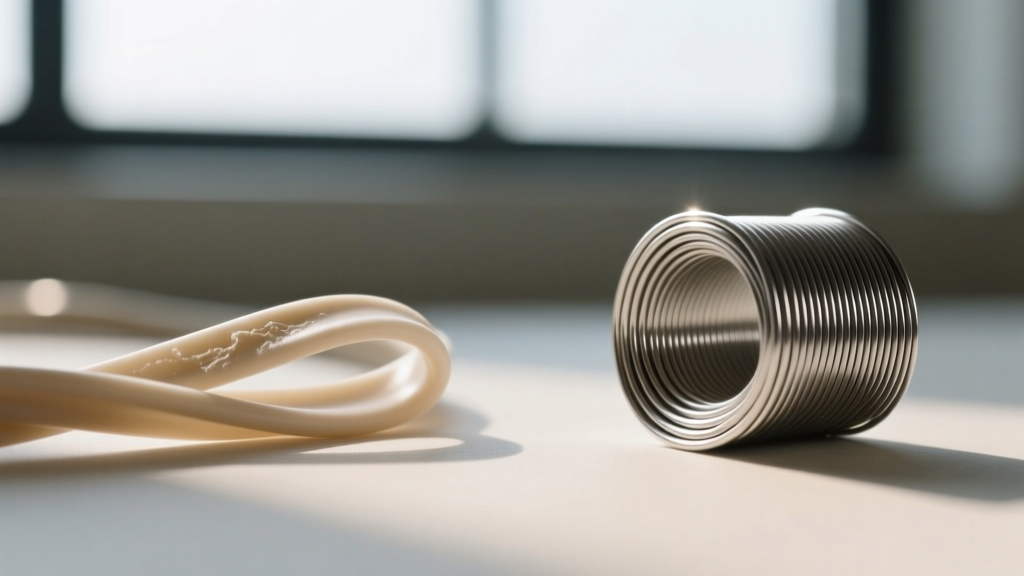
Bead Composition and the 'Cheese-Cutter' Effect
The 'rosary' element of the necklace relies on beads spaced at regular intervals (usually every 1 to 2 inches). The material of these beads directly impacts the structural integrity of the base cord through a phenomenon known in jewelry engineering as the 'cheese-cutter effect'.
Acrylic and Polycarbonate Resins
Acrylic beads are lightweight and inexpensive, making them the default for fast-fashion chokers. However, acrylic has a low Mohs hardness (around 2.5 to 3.0). The drill holes in cheap acrylic beads are often left unpolished and feature microscopic burrs. When strung on a soft TPU cord, the friction of daily movement causes these sharp burrs to slowly slice through the elastic, resulting in catastrophic failure.
Borosilicate Glass and Crystal
Glass beads offer superior weight, optical clarity, and a Mohs hardness of 6.0 to 6.5. High-quality lampwork or borosilicate glass beads feature fire-polished drill holes that are smooth and rounded, significantly reducing cord abrasion. The trade-off is mass; glass is heavy. If a heavy glass rosary choker is subjected to sudden tensile shock (e.g., being snagged on clothing), the kinetic energy transfers directly to the elastic cord, accelerating polymer fatigue.
316L Surgical Steel and Precious Metals
For premium rosary tattoo necklaces, beads are milled from 316L surgical steel or sterling silver. These metals are highly durable and can be tumble-polished to ensure perfectly smooth internal channels. To protect the cord, high-end designs often incorporate microscopic nylon or silicone 'bead bumpers' between the metal beads and the elastic cord to absorb friction and distribute tensile loads.
Material Comparison Matrix
| Component | Material Grade | Durability (Daily Wear) | Skin Safety | Price Range (2026) |
|---|---|---|---|---|
| Base Cord | TPU / Elastane | Low (6-12 months) | Hypoallergenic | $5 - $15 |
| Base Cord | 304/316L Memory Wire | High (Years) | Varies (Nickel risk) | $25 - $60 |
| Beads | Cast Acrylic | Low (Scratches/Burrs) | Safe | $2 - $10 |
| Beads | Borosilicate Glass | High (Impact resistant) | Safe | $20 - $45 |
| Beads | 316L Surgical Steel | Very High | Excellent | $40 - $85 |
Dermatological Safety and Allergens
Because a tattoo necklace sits flush against the skin, often trapping moisture and heat, material biocompatibility is paramount. The base cords (TPU, nylon, spandex) are generally inert and hypoallergenic. The risk of Allergic Contact Dermatitis (ACD) arises almost exclusively from the metallic beads and clasps.
According to the American Academy of Dermatology, nickel is the most common culprit for jewelry-induced contact dermatitis. Even trace amounts of nickel leaching from sweat-exposed alloys can trigger severe reactions.
When selecting a metal-beaded rosary tattoo necklace, avoid base metals like brass or 'Tibetan silver,' which often contain high nickel and lead concentrations. Always opt for beads and findings stamped as 316L stainless steel (which traps nickel within its crystalline matrix, preventing leaching), titanium, or solid 14k gold. The National Institutes of Health (NIH) notes that 316L steel is widely used in medical implants precisely because of its exceptional resistance to corrosive bodily fluids and minimal nickel release rates.

Common Failure Modes and Troubleshooting
Understanding how a rosary tattoo necklace breaks allows you to shop smarter and inspect your current collection for warning signs.
- Hydrolytic Degradation: The elastic cord turns cloudy, stiff, and eventually snaps without warning. Troubleshooting: Remove TPU chokers before showering or exercising. Rinse with fresh water if exposed to heavy sweat.
- UV Photodegradation: Prolonged sun exposure causes the polymer chains in elastane to become brittle. Troubleshooting: Store necklaces in opaque jewelry boxes away from direct sunlight.
- Clasp Fatigue: On memory wire versions, the glued ends of the cord often slip out of the metal end-caps. Troubleshooting: Inspect the adhesive joints monthly. If you see gaps, reinforce them with a drop of flexible cyanoacrylate (jewelry-grade super glue) or have a jeweler crimp a new mechanical end-cap.
- Internal Abrasion: The cord frays specifically inside the drill hole of a bead. Troubleshooting: Restring the necklace using a micro-crochet hook, inserting tiny silicone bead bumpers or upgrading to a nylon-coated beading wire (like 49-strand Soft Flex) for the segments between beads.
Care Protocols for Longevity
To maximize the lifespan of your rosary tattoo necklace, adopt a strict maintenance routine. For elastic versions, wash the piece weekly with a mild, pH-neutral soap and lukewarm water to remove sebum and dead skin cells that accelerate polymer breakdown. Pat dry with a microfiber cloth—never use a hairdryer, as heat warps both TPU and memory wire. For memory wire variants, use a soft polishing cloth on the steel beads to maintain their luster, and store the necklace flat or hanging to prevent the coils from overlapping and tangling. By respecting the material properties of your jewelry, you ensure that this striking, skin-hugging accessory remains a staple in your wardrobe for years to come.


