Turquoise Choker Necklace Guide: Natural vs Stabilized Stones
Discover how to choose the perfect turquoise choker necklace. Compare natural, stabilized, and dyed stones, grading systems, and care tips.

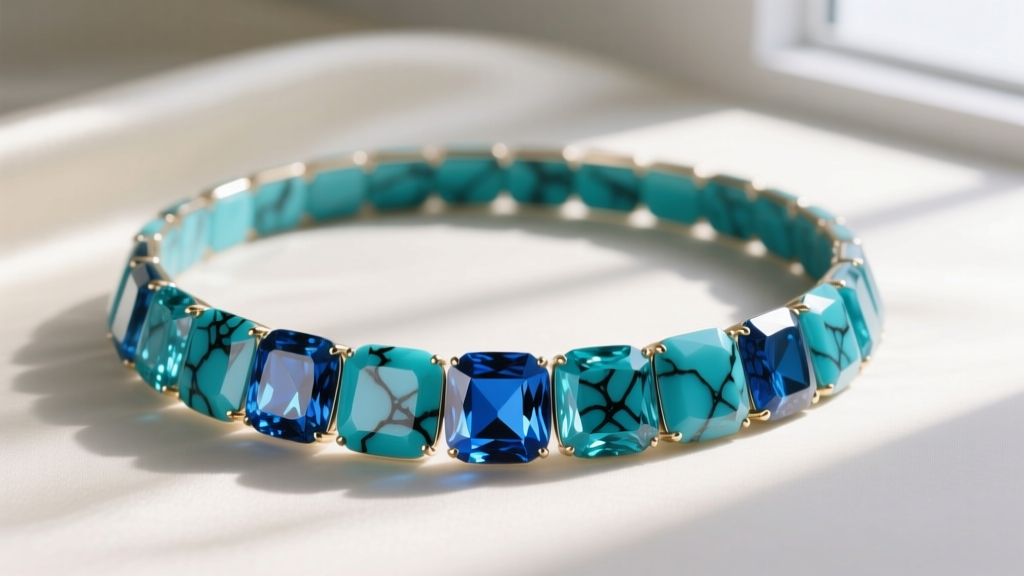
The Chemistry of Turquoise and the Choker Zone
When evaluating a turquoise choker necklace, understanding the intersection of mineralogy and human anatomy is critical. Turquoise is a hydrous phosphate of copper and aluminum, ranking between 5 and 6 on the Mohs hardness scale. Its defining characteristic—and its greatest vulnerability—is its porosity. On a microscopic level, natural turquoise is riddled with tiny voids that readily absorb liquids, oils, and chemicals.
This material property becomes highly relevant when designing or purchasing a choker. By definition, a choker sits snugly at 14 to 16 inches, resting directly over the jugular notch and carotid artery. This 'pulse point' area generates more heat and perspiration than the lower décolletage. Human skin has an average pH of 4.5 to 5.5, making it mildly acidic. When the natural oils, sweat, and acidic pH of the skin interact with the copper in untreated turquoise, a chemical reaction occurs that can permanently alter the stone's color, shifting it from a vibrant sky blue to a dull, muddy green. Therefore, the physical placement of a choker dictates strict requirements for the stone's material treatment.
Material Breakdown: Natural vs. Stabilized vs. Reconstituted
Industry estimates suggest that up to 90% of the turquoise on the commercial market has undergone some form of enhancement. According to the Gemological Institute of America (GIA), disclosure of these treatments is paramount for ethical jewelry trading. Here is how the primary material categories break down for high-wear necklaces.
1. Natural Turquoise (Untreated)
Only 3% to 5% of all mined turquoise is 'gem-grade' or 'high-grade' enough to be cut, polished, and worn without any chemical stabilization. Natural stones possess a waxy luster and a Mohs hardness of up to 6. While highly prized by collectors and purists, natural turquoise is incredibly risky for choker designs. Without a protective barrier, the constant friction and exposure to skin acids will degrade the polish and alter the color profile within months of daily wear.
2. Stabilized Turquoise (The Choker Standard)
Stabilization is not a 'fake' treatment; it is a necessary preservation process for mid-to-high-grade stones. The rough turquoise is submerged in a liquid epoxy or opticon resin and placed in a vacuum chamber. The vacuum extracts air from the stone's microscopic pores, allowing the resin to penetrate deeply. Once cured, the stone's hardness increases to a 6 or 7, its color is permanently locked in, and it becomes completely impervious to sweat and cosmetics. For a turquoise choker necklace intended for regular wear, high-quality stabilized stones are actually the superior, most durable choice.
3. Zachery-Treated & Reconstituted Block
The Zachery treatment, developed by electrical engineer James Zachery, uses a potassium silicate solution and an electrical current to enhance the stone without introducing polymers or plastics. It improves durability and reduces porosity while maintaining the stone's natural chemical profile. Conversely, 'block' or 'reconstituted' turquoise is created by binding turquoise dust and chalk with dyed resins to form a solid brick, which is then sliced. Block turquoise lacks the structural integrity and optical depth of genuine stone and should be avoided in fine jewelry.
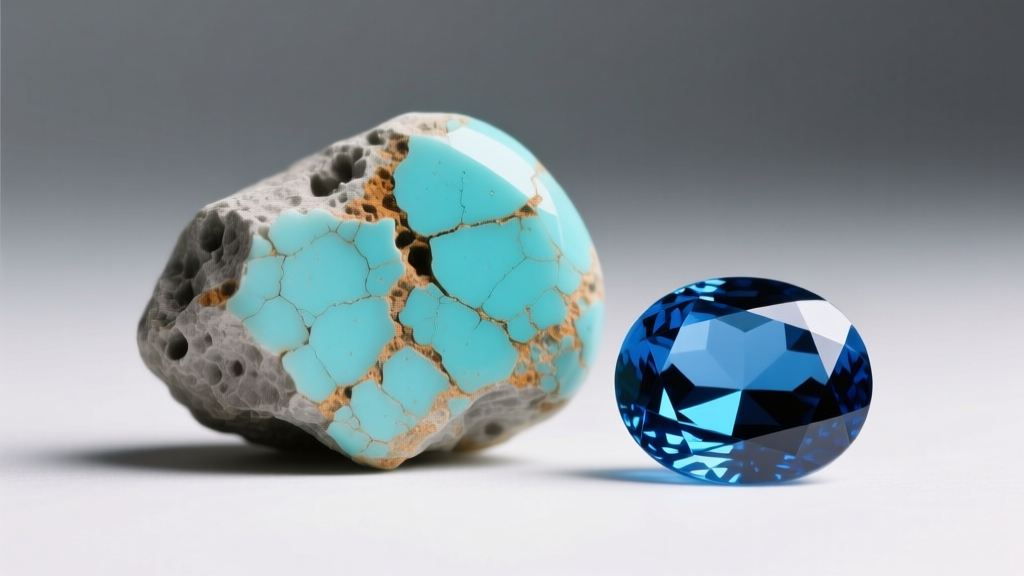
Comparative Matrix: Grading and Pricing for Choker Stones
Understanding the market value and physical properties of different turquoise grades will help you assess whether a jeweler's pricing aligns with the material reality. The following data table outlines the core metrics for 2026 wholesale and retail markets.
| Treatment Type | Porosity Level | Mohs Hardness | Avg. Price per Gram | Choker Suitability |
|---|---|---|---|---|
| Natural (Untreated) | High | 5.0 - 6.0 | $15.00 - $50.00+ | Poor (Requires strict care) |
| Stabilized (Resin) | None | 6.0 - 7.0 | $3.00 - $12.00 | Excellent (Sweat-proof) |
| Zachery-Treated | Low | 5.5 - 6.5 | $8.00 - $20.00 | Very Good |
| Reconstituted (Block) | None | 4.0 - 5.0 | $0.50 - $2.00 | Fair (Prone to chipping) |
Mine Origins: Sleeping Beauty, Kingman, and Royston
The geographic origin of the turquoise heavily influences its visual matrix and market premium. As detailed in the Mindat.org mineral database, trace elements like iron and zinc dictate the color variations found in specific regional deposits.
- Sleeping Beauty (Arizona): Famous for its pure, robin's-egg blue color with little to no matrix (the host rock webbing). The mine closed in 2012, making genuine, high-grade Sleeping Beauty turquoise increasingly rare and expensive. It is the premier choice for minimalist, matrix-free chokers.
- Kingman (Arizona): One of the oldest and most active mines, Kingman stones are celebrated for their striking black or brown 'spiderweb' matrix. The contrast between the deep blue stone and the dark webbing makes for visually arresting, bold choker designs.
- Royston (Nevada): Royston turquoise is known for its heavy brown matrix and unique two-tone color gradients, often transitioning from deep emerald green to bright sky blue within a single cabochon. It appeals to buyers seeking an organic, earthy aesthetic.
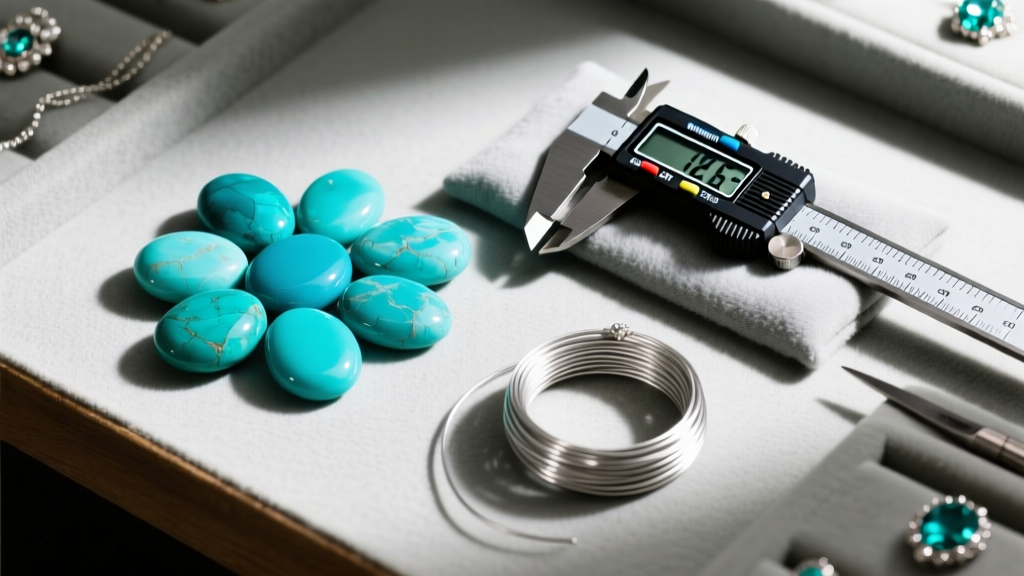
Hardware and Stringing: What Holds Your Choker Together
A turquoise choker necklace is only as durable as its stringing material and hardware. Because chokers endure high tension and frequent bending, traditional silk cord is a poor choice; silk degrades rapidly when exposed to perspiration and will eventually snap, scattering expensive stones.
For heavy stone chokers, professional jewelers rely on 49-strand beading wire (such as Soft Flex). This material consists of 49 micro-strands of stainless steel braided together and coated in a flexible nylon sheath. It offers the drape of silk but the tensile strength of steel, capable of supporting the weight of 10mm to 14mm turquoise beads without kinking or snapping. When inspecting a piece, look for wire that is crimped using sterling silver or 14k gold-filled crush beads, and ensure the clasp—preferably a secure lobster claw or a heavy toggle—is attached via reinforced jump rings rather than open wire loops.
Care and Maintenance for High-Wear Necklines
'The golden rule of porous gemstones: Turquoise should always be the last thing you put on when getting dressed, and the first thing you take off when you get home.'
Even if your turquoise choker necklace features stabilized stones, proper maintenance is required to protect the metal findings and the polish of the cabochons. Never use ultrasonic cleaners, steam cleaners, or harsh chemical dips (like silver polish) on turquoise jewelry. The vibrations can fracture internal matrices, and the chemicals can strip the resin or discolor the host rock.
Instead, clean your choker by gently wiping the stones with a soft, slightly damp microfiber cloth to remove accumulated sebum and lotion residue. Dry it immediately with a separate soft cloth. Store the choker flat in a breathable cotton pouch; sealing it in an airtight plastic bag can trap ambient moisture and promote the oxidation of the silver wire or spacers. By respecting the material science of turquoise, your choker will maintain its vibrant color and structural integrity for decades of daily wear.


