Pearl Necklace Urban Dictionary: Streetwear Care Fixes
Troubleshoot pearl necklace wear in urban environments. Learn to fix nacre damage from sweat, prevent streetwear layering tangles, and upgrade clasps.

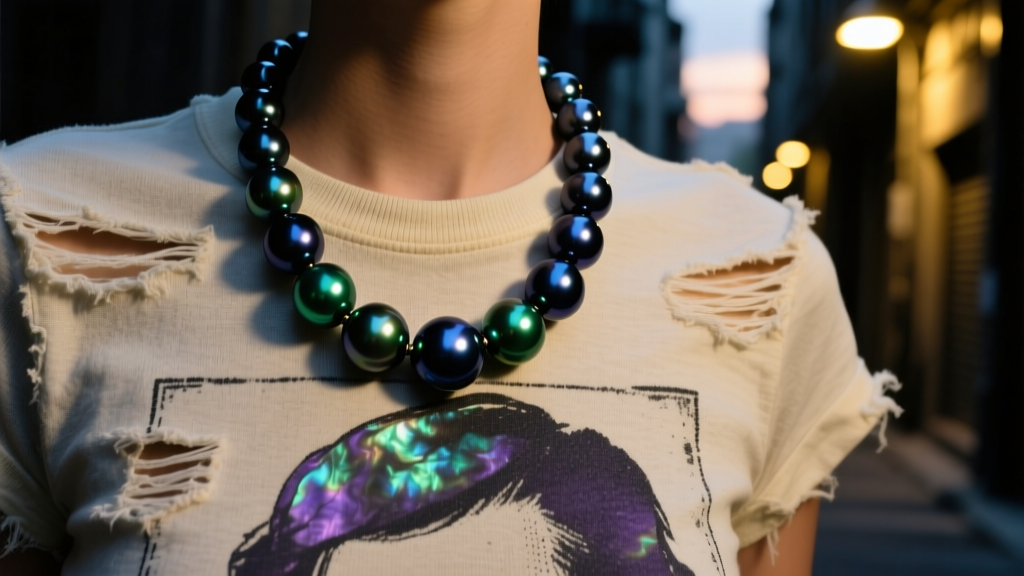
While a quick search for the pearl necklace urban dictionary definition might yield outdated slang or internet memes, the 2026 reality of high-fashion and streetwear tells a vastly different story. Today, pearls are a staple of gender-fluid urban styling, championed by hip-hop artists, skaters, and avant-garde designers. However, transitioning an organic gemstone from a climate-controlled jewelry box to the concrete jungle introduces severe mechanical and chemical hazards. Urban environments are inherently hostile to calcium carbonate. Between acidic sweat, atmospheric pollutants, and the mechanical friction of heavy streetwear layering, pearls degrade rapidly if not properly engineered and maintained.
This troubleshooting guide bypasses generic jewelry advice and dives deep into the material science of pearl care in urban settings. We will diagnose common failure modes—from nacre etching to clasp fatigue—and provide actionable, expert-level solutions to keep your strands intact.
The Chemistry of Urban Decay: Sweat, Smog, and Nacre
Pearls are not stones; they are organic composites made of aragonite (a crystalline form of calcium carbonate) bound together by conchiolin, a complex protein. This structure gives pearls their legendary luster but also makes them highly reactive to urban biological and environmental factors.
Acidic Sweat and Nacre Etching
The average pH of human sweat ranges from 4.5 to 7.0. In high-stress urban environments or during humid summer commutes, sweat becomes more acidic. When this acid contacts the pearl surface, it initiates a chemical reaction that dissolves the calcium carbonate. The result is 'etching'—a permanent dulling of the nacre that destroys the gem's orient and luster. Over time, the surface becomes chalky and pitted.
Expert Insight: Never attempt to 'polish' an etched pearl. Unlike metals, you cannot buff away damage without stripping the remaining nacre layer down to the shell bead nucleus, effectively destroying the gem's value.
Atmospheric Pollutants and Conchiolin Drying
Urban smog contains sulfur dioxide and nitrogen oxides, which can settle on the pearl surface. More dangerously, the low humidity of climate-controlled subway systems and office buildings draws moisture out of the conchiolin protein. When conchiolin dries out, it becomes brittle, leading to microscopic cracking and, eventually, the peeling or flaking of the nacre layers.
Streetwear Layering: Friction and Clasp Snap-Points
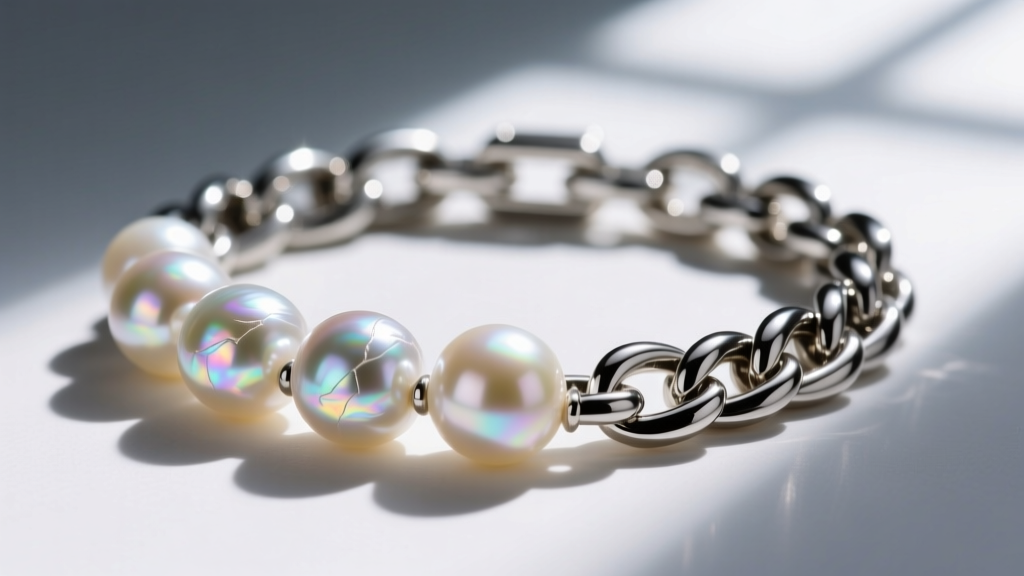
The modern urban aesthetic relies heavily on layering. Draping a delicate strand of Akoya pearls over a heavy hoodie or mixing them with 14k gold and stainless steel Cuban link chains creates a striking visual contrast, but it introduces severe mechanical vulnerabilities.
The Mohs Hardness Mismatch
Pearls rank a mere 2.5 to 3.0 on the Mohs hardness scale. By contrast, stainless steel chains rank around 5.5 to 6.5, and even 14k gold sits at roughly 3.5 to 4.0. When a pearl strand tangles with a heavy metal chain during daily movement, the metal acts like sandpaper against the nacre. This friction causes micro-abrasions that accumulate into visible, irreparable scratches.
Upgrading Findings for the Concrete Jungle
The most common point of catastrophic failure in urban pearl wear is the clasp assembly. Traditional 925 sterling silver lobster clasps and thin jump rings are designed for static, low-impact wear. The dynamic load of a heavy streetwear pendant, or the sudden tug of a chain catching on a backpack strap, will easily warp a silver jump ring, causing the strand to snap and scatter across the pavement.
- The Fix: Upgrade to 316L Surgical Steel or Grade 5 Titanium clasps. These alloys offer vastly superior tensile strength and resist tarnishing from urban sulfur exposure.
- Safety Catch: Always insist on a 'Figure-8' safety catch—a secondary wire loop that locks over a small peg on the clasp. If the primary lever fails or is pulled open, the figure-8 prevents the necklace from dropping.
Troubleshooting Guide: Pearl Type vs. Urban Durability
Not all pearls survive the city equally. Nacre thickness and origin dictate how well a pearl will withstand the rigors of daily urban wear. Use this matrix to select the right material for your lifestyle.
| Pearl Type | Nacre Thickness | Urban Sweat Resistance | Best Streetwear Application |
|---|---|---|---|
| Akoya | 0.2mm - 0.5mm | Low (Prone to etching) | Occasional evening wear; avoid heavy layering. |
| Freshwater | 1.0mm - 3.0mm (Solid) | High (Excellent durability) | Daily layering, skate/street culture, high friction. |
| Tahitian | 0.8mm - 2.0mm+ | Medium-High (Dense nacre) | Statement pieces, dark aesthetics, mixed metal layering. |
| South Sea | 2.0mm - 4.0mm | Medium (Soft, luxurious luster) | High-fashion editorial; requires careful maintenance. |
For rigorous daily urban wear, solid-nacre Freshwater pearls are the undisputed champions. Because they lack a shell-bead nucleus, they will never 'peel' to reveal a white bead underneath, even if the outer layers are heavily abraded over years of use.
The 10-Minute Post-Wear Decon Protocol
Preventative maintenance is non-negotiable. According to the Gemological Institute of America (GIA), pearls should be the last thing you put on and the first thing you take off. However, in an urban setting, a more aggressive decontamination protocol is required.
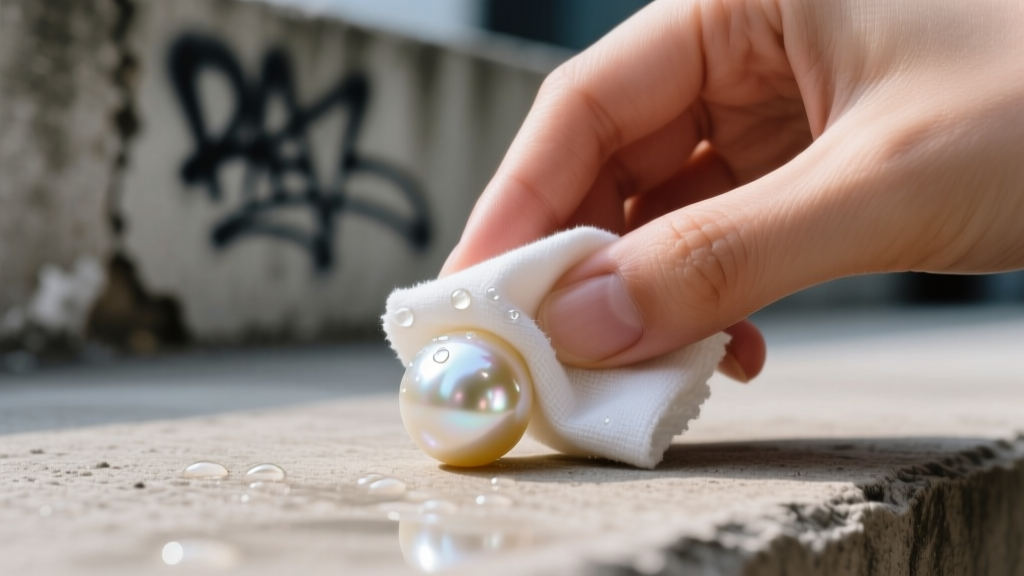
Step-by-Step Urban Decon
- Dry Wipe: Immediately upon returning home, wipe the strand with a dry, untreated microfiber cloth to remove surface smog and particulate matter.
- Damp Decontamination: If you have been sweating, lightly dampen a second microfiber cloth with distilled water (tap water contains chlorine and fluoride which can spot the nacre). Gently run the pearls through the cloth.
- Air Dry Flat: Never hang a wet pearl necklace. The moisture will stretch the stringing material. Lay it flat on a clean towel in a room-temperature environment.
- Hydration (Monthly): To prevent conchiolin drying, lightly rub the strand with a drop of pure, unrefined jojoba oil once a month, then buff off the excess. Jojoba closely mimics natural skin sebum and safely conditions the organic proteins.
Critical Warning: Never use ultrasonic cleaners, steam cleaners, or commercial jewelry dips. As noted by the American Gem Society, the high-frequency vibrations of ultrasonic baths will literally shatter the crystalline aragonite structure of the pearl, while ammonia-based dips will dissolve the conchiolin binder.
Restringing: When Silk Fails and Kevlar Succeeds
Traditional pearl stringing utilizes silk thread with French wire (gimp) at the clasp. Silk is beautiful and knots elegantly, but it is a natural protein fiber that acts like a sponge for sweat, oils, and urban humidity. In a city environment, silk thread will rot, stretch, and weaken within 12 to 18 months of regular wear.
The UHMWPE Upgrade
For streetwear and heavy urban use, demand that your jeweler strings your pearls using UHMWPE (Ultra-High-Molecular-Weight Polyethylene) thread, such as Power Pro or Beadalon. Originally developed for body armor and marine rigging, UHMWPE is impervious to sweat, UV light, and moisture. It possesses a tensile strength up to 15 times greater than steel by weight and will not stretch or rot, effectively eliminating the risk of a catastrophic strand break in the middle of a crowded intersection.
When pairing UHMWPE with heavy streetwear pendants, ensure the jeweler uses reinforced Kevlar-lined French wire at the clasp connection points to prevent the synthetic thread from sawing through the metal findings over time. By treating your pearls with the same material science applied to high-end streetwear and technical gear, you ensure they survive the urban dictionary's harshest definitions of daily life.


