Designing a Lighter Necklace: Technical Guide to Low-Weight Chains
Discover the metallurgy and engineering behind a lighter necklace. Explore hollow weaves, electroforming, and titanium alloys for maximum comfort.

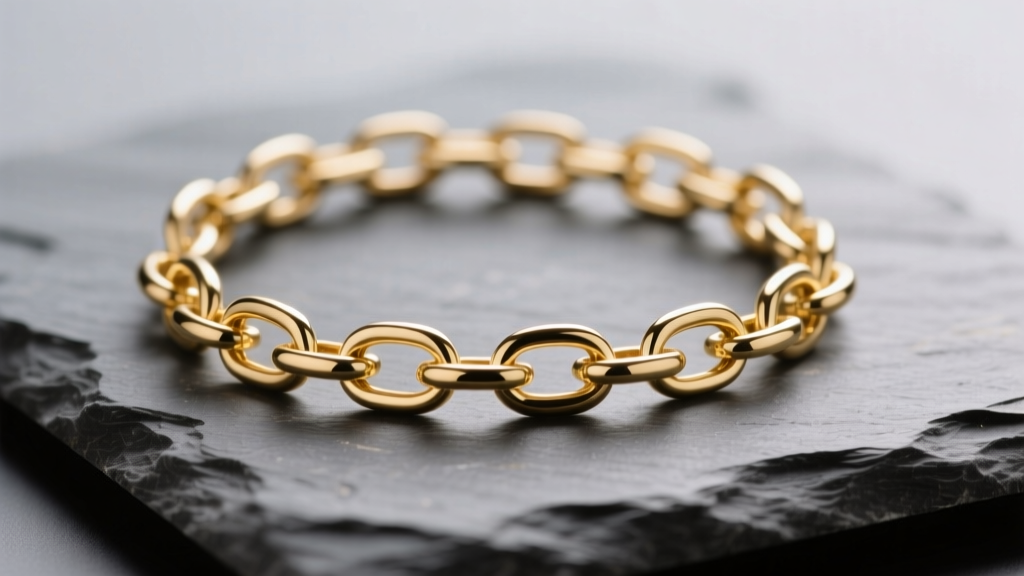
The Biomechanics of Neckwear and Sensory Load
When engineers and master jewelers set out to design a lighter necklace, the objective extends far beyond mere aesthetics. For individuals with cervical spine sensitivities, sensory processing disorders, or simply a preference for high-volume statement pieces without the oppressive drag of traditional metals, weight distribution is a critical biomechanical factor. A standard solid 18-inch 14k gold rope chain can easily weigh between 15 and 30 grams. While this may seem negligible in the hand, the sustained downward force on the trapezius muscles and the nuchal ligament over a 12-hour wear period can cause significant fatigue. Creating a genuinely lighter necklace requires a masterclass in metallurgy, structural geometry, and advanced manufacturing techniques that maximize volume while aggressively minimizing mass.
Metallurgical Approaches to Reducing Mass
The foundation of any low-weight piece begins with material density. According to data published by the Gemological Institute of America (GIA), pure 24k gold has a specific gravity of 19.3 g/cm³, making it exceptionally dense. To engineer a lighter necklace without sacrificing the visual footprint of the jewelry, manufacturers turn to advanced metallurgical processes and alternative aerospace-grade alloys.
Electroforming: The Gold Standard for Hollow Volume
Electroforming is the premier technique for creating high-volume, ultra-lightweight gold and silver structures. The process begins with a 3D-printed or hand-carved wax mandrel that is coated in a conductive layer, typically graphite or silver paint. This mandrel is submerged in an electrolyte bath, where gold or silver ions are deposited onto the conductive surface layer by layer. Once the desired thickness (usually between 0.2mm and 0.5mm) is achieved, the piece is heated, and the wax core melts away, leaving a perfectly hollow, seamless metal shell. This technique yields a 70% to 80% weight reduction compared to traditional lost-wax casting, allowing for massive, sculptural pendants that weigh less than 5 grams.
Aerospace-Grade Titanium and Aluminum Alloys
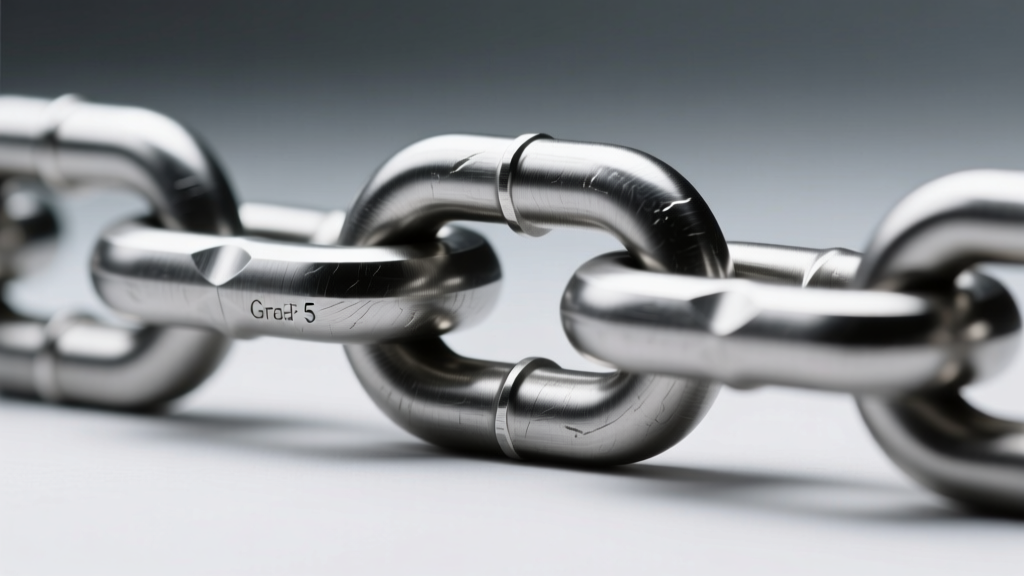
For chain links and structural components, titanium offers an unparalleled strength-to-weight ratio. As detailed by AZoM Materials Science, Grade 5 Titanium (Ti-6Al-4V) boasts a specific gravity of just 4.43 g/cm³—roughly 45% lighter than steel and nearly 75% lighter than 14k gold. While Grade 2 commercially pure titanium is softer and easier to stamp, Grade 5 provides the tensile strength necessary for ultra-thin wire drawing, allowing jewelers to create delicate, micro-gauge chain links that resist deformation despite their minimal mass.
Advanced Pendant Manufacturing: DMLS and Sintering
When a lighter necklace requires a complex, solid-looking pendant, Direct Metal Laser Sintering (DMLS) has revolutionized the manufacturing floor. DMLS uses a high-powered laser to fuse microscopic layers of metal powder (often 20 to 50 microns thick) into a 3D model. The true engineering marvel lies in the internal geometry. Using CAD software, designers can hollow out the interior of a pendant and replace the empty space with a mathematical gyroid lattice structure. This internal scaffolding provides immense compressive strength while reducing the overall metal volume by up to 60%. The outer shell remains a solid 0.8mm thick, completely indistinguishable from a cast piece to the naked eye, yet dramatically lighter on the neck.
Structural Chain Weaves That Defy Gravity
The physical weave of a chain dictates how it drapes, reflects light, and distributes weight. To achieve a lighter necklace profile, specific structural weaves are favored over solid wire constructions.
- Hollow Rope Chains: These are constructed by twisting flat, thin-gauge metal ribbons around a temporary core (often a polymer or low-melt alloy that is later dissolved). The resulting spiral structure mimics the look of a heavy, solid rope chain but traps air inside, reducing weight drastically.
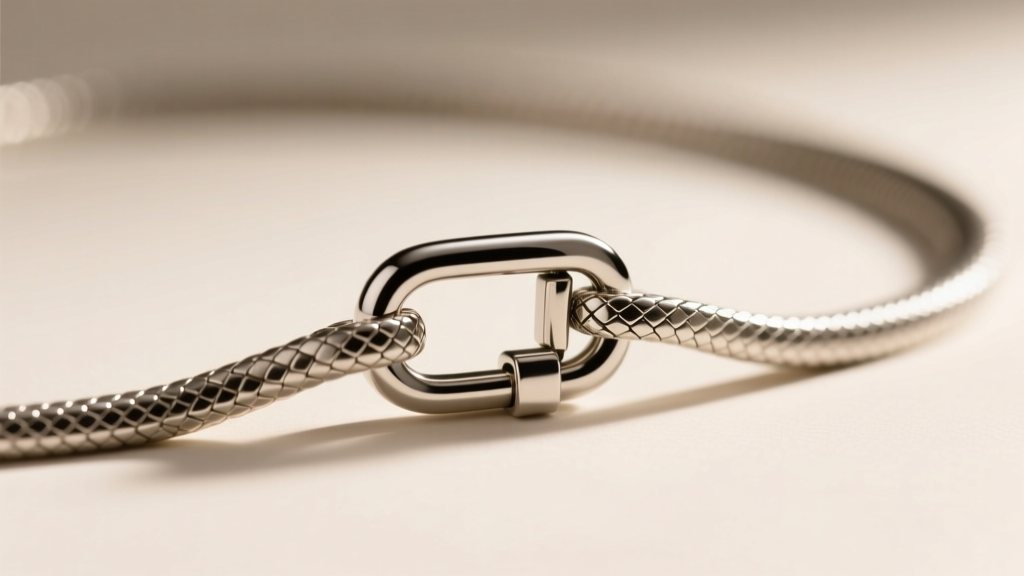
- Stamped Snake Chains: Rather than drawing solid wire, lightweight snake chains are often stamped from ultra-thin sheet metal (0.15mm to 0.25mm) into tiny interlocking cups. When compressed together, they form a fluid, serpentine tube that is remarkably light but highly susceptible to kinking if bent backward.
- Micro-Curb Weaves: Using titanium or aluminum, micro-curb chains utilize flattened, interlocking oval links. The flattening process increases the surface area and visual width of the chain without adding cross-sectional mass.
The Clasp Conundrum: Counterweight and Tension
The most overlooked element in designing a lighter necklace is the clasp. A standard solid brass or stainless steel lobster clasp can weigh between 1.5 and 3 grams. If the chain itself weighs only 4 grams, the heavy clasp will act as a pendulum, constantly migrating from the nape of the neck to the front collarbone due to gravity and movement. Solving this requires specialized, low-mass closure mechanisms.
| Clasp Type | Average Weight | Material | Best Application |
|---|---|---|---|
| Standard Lobster | 1.8g - 3.0g | Solid Brass / Steel | Heavy chains (>15g) |
| Hollow Barrel | 0.6g - 0.9g | Electroformed Gold | Medium hollow chains |
| Neodymium Magnetic | 0.4g - 0.8g | Aluminum / Titanium | Ultra-light sensory chains |
| Micro Spring Ring | 0.2g - 0.4g | Stamped 10k Gold | Delicate micro-weaves |
According to manufacturing specialists at Rio Grande Jewelry Supply, integrating neodymium magnetic barrel clasps machined from aircraft-grade aluminum is the most effective way to maintain a seamless drape on sub-5-gram chains, eliminating the counterweight issue entirely while providing accessible closure for users with limited dexterity.
Maintenance, Durability, and Failure Modes
Engineering a lighter necklace inherently introduces specific structural vulnerabilities. Jewelers must educate consumers on the difference between tensile strength and compressive strength. While a hollow electroformed gold chain might withstand 15 pounds of tensile pull before snapping, its compressive strength is near zero. Sleeping in a hollow chain, or resting a heavy pendant on a lightweight hollow link, will cause the metal to crush and crease irreparably. Furthermore, lightweight stamped chains lack the mass required to absorb kinetic impacts; a sharp blow to a thin titanium box chain can permanently distort the interlocking geometry, causing the links to bind and stiffen. Routine maintenance for these pieces involves ultrasonic cleaning at lower frequencies to prevent cavitation damage to thin-walled structures, and storing them suspended or laid perfectly flat to avoid memory-kinking.
Final Specifications for Sourcing
For buyers and designers seeking the ideal lighter necklace, the specification sheet should demand precise metrics. Look for chains with a documented gram-weight-per-inch ratio of less than 0.2g/inch for a standard 3mm width. Ensure pendants specify 'hollow-cast' or 'electroformed' rather than simply 'lightweight,' which is often a deceptive marketing term for undersized solid pieces. By prioritizing advanced metallurgy, lattice-based 3D sintering, and precision counter-balanced clasps, it is entirely possible to engineer a necklace that delivers maximum visual impact with near-zero sensory footprint.


