Ruby and Pearl Necklace Value Guide: 2026 Pricing & Buying Tips
Discover how to assess the true value of a ruby and pearl necklace in 2026. Learn pricing tiers, gem grading secrets, and how to avoid traps.

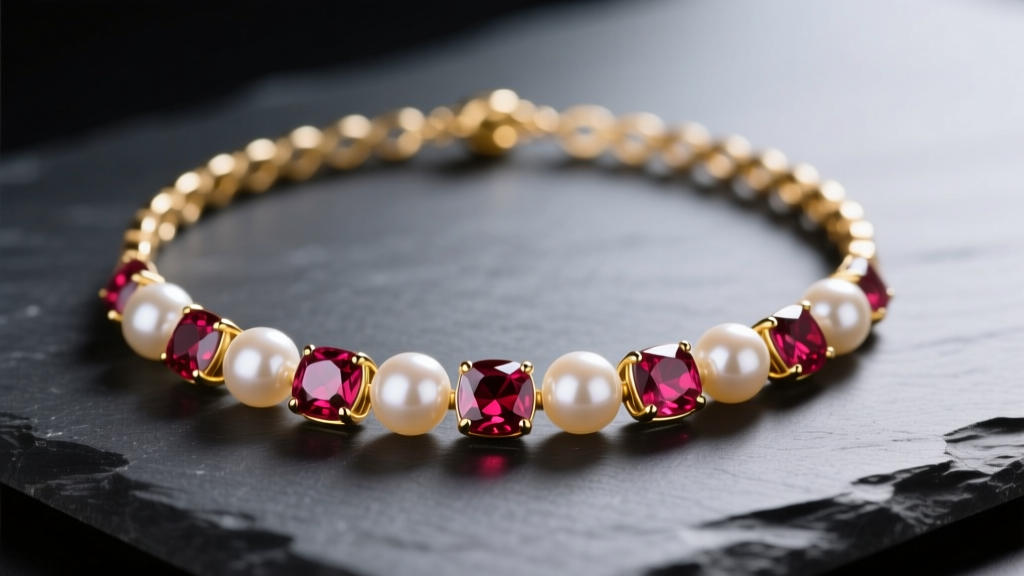
Combining the fiery passion of rubies with the understated elegance of pearls creates a striking visual contrast that has captivated jewelry collectors for centuries. However, when you are evaluating a ruby and pearl necklace from a budget and value perspective, you are essentially dealing with two completely different gemological worlds. Rubies are graded on color saturation, clarity, and carat weight, while pearls are evaluated on luster, surface quality, and nacre thickness. This duality makes pricing incredibly complex, especially in the 2026 market where supply chain shifts and advanced treatment methods have drastically altered the landscape.
Whether you are looking to spend $500 on a stylish everyday piece or $15,000 on an investment-grade heirloom, understanding where the money actually goes is critical. This guide breaks down the exact value drivers, pricing matrices, and hidden traps you need to know before purchasing a ruby and pearl necklace.
Decoding the Ruby: Origin, Treatment, and Carat Weight
In any mixed-gemstone piece, the ruby component is usually the primary driver of cost. The price per carat can range from $20 for heavily treated stones to over $50,000 for top-tier unheated Burmese specimens. For a necklace, which typically features multiple smaller rubies (often between 0.10 and 0.50 carats each), the total carat weight and origin dictate the baseline budget.
Origin: Mozambique vs. Burma
Historically, Burmese (Myanmar) rubies with 'pigeon blood' color saturation have commanded the highest premiums. However, in 2026, Mozambican rubies dominate the commercial and mid-tier luxury markets. Mozambique rubies offer exceptional clarity and a deep, slightly purplish-red hue at a fraction of the cost of their Burmese counterparts. If you are buying a ruby and pearl necklace for aesthetic beauty rather than strict investment purposes, Mozambican rubies offer the best value-to-beauty ratio.
The Treatment Trap: Heated vs. Glass-Filled
According to the Gemological Institute of America (GIA), standard heat treatment is widely accepted in the gem trade and does not severely impact a ruby's long-term value or durability. However, you must aggressively avoid fracture-filled (glass-filled) rubies. These are low-grade, opaque rubies infused with lead-glass to improve transparency. While a standard heated ruby might cost $800 per carat, a glass-filled ruby is worth less than $30 per carat. They are highly susceptible to damage from mild acids (even lemon juice or household cleaners) and represent a massive value trap in budget necklaces.
Evaluating the Pearl Component
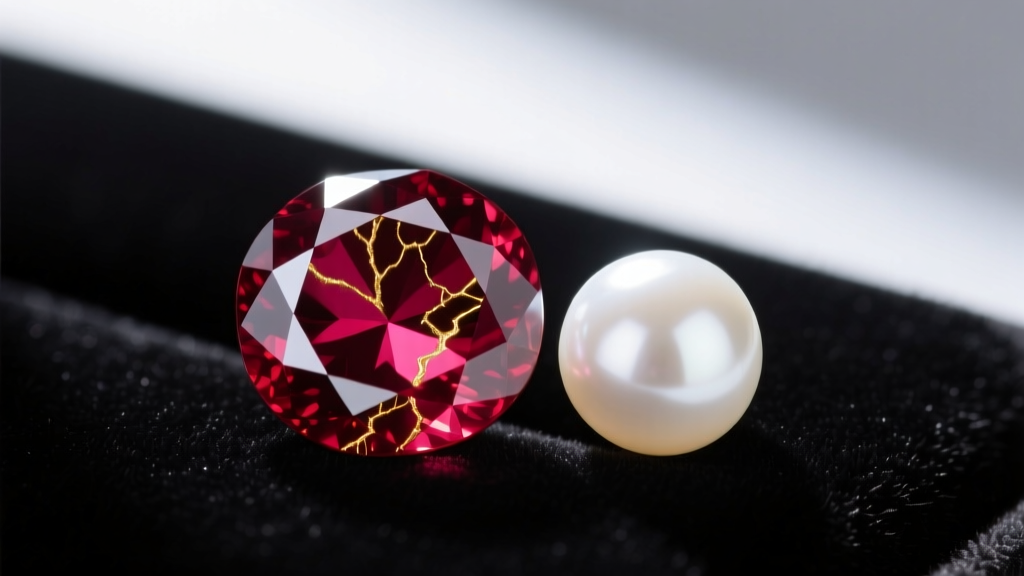
The pearls in your necklace provide the structural rhythm of the piece. The value assessment here hinges on the pearl type, luster, and matching.
Akoya vs. High-Grade Freshwater
Akoya pearls, primarily cultivated in Japan and Vietnam, are the traditional choice for fine ruby and pearl necklaces. They are prized for their mirror-like luster and perfectly round shapes. A strand of AAA-grade Akoya pearls (6mm to 7mm) can easily cost between $800 and $1,500 on its own.
Conversely, modern edison and high-grade freshwater pearls have closed the quality gap significantly. While they may lack the razor-sharp luster of Akoyas, top-tier freshwater pearls offer thicker nacre and excellent durability for roughly 30% to 40% less. If your budget is constrained, allocating funds toward smaller, high-quality rubies and pairing them with premium freshwater pearls is a smart compromise.
Luster and Matching
As noted in the GIA Pearl Description Guide, luster is the most critical value factor for pearls. In a mixed necklace, the pearls must also be meticulously matched in size, shape, and overtone. Poorly matched pearls with chalky luster will instantly degrade the perceived value of even the finest rubies in the strand.
2026 Market Pricing Matrix: Budget vs. Investment
To help you benchmark quotes from jewelers, here is a realistic pricing matrix for an 18-inch ruby and pearl necklace in the current 2026 market. Prices assume a standard alternating pattern or a pearl strand with a ruby pendant/stations.
| Tier | Ruby Quality & Origin | Pearl Type | Metal & Craftsmanship | Est. Price Range |
|---|---|---|---|---|
| Entry-Level | Mozambique (Heated, 0.15ct ea) | AA Freshwater (6mm) | 10k/14k Gold, Spring Ring | $450 - $900 |
| Mid-Tier | Mozambique (Unheated, 0.25ct ea) | AAA Akoya (6.5mm) | 14k Gold, Hand-Knotted Silk | $1,800 - $3,500 |
| Investment | Burma (Unheated, Pigeon Blood) | Hanadama Akoya (7mm+) | 18k Gold, Diamond Clasp | $8,500 - $25,000+ |
The Hardware and Craftsmanship Multiplier
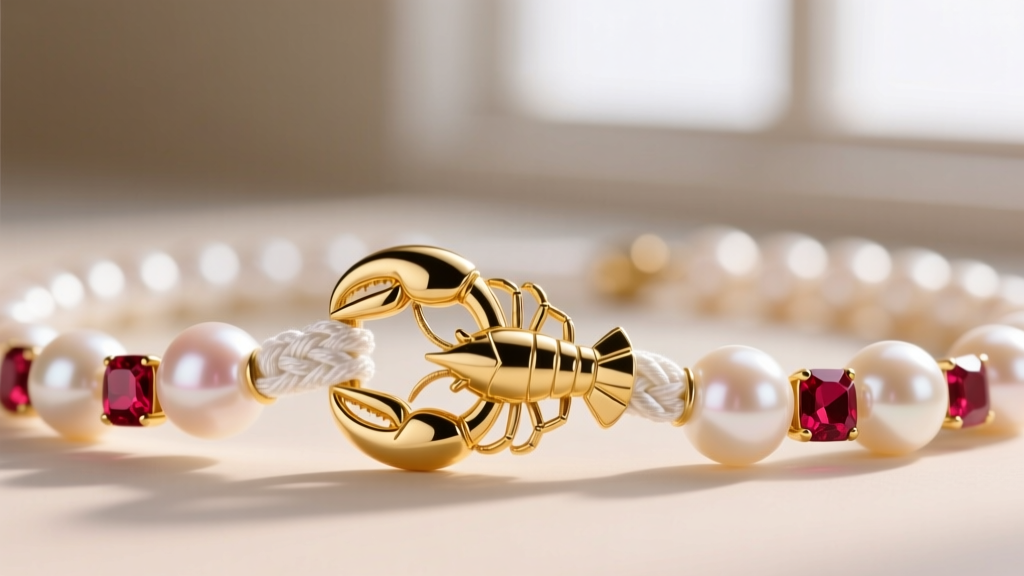
Many buyers focus entirely on the gemstones and ignore the stringing material and hardware. In a high-value ruby and pearl necklace, the craftsmanship multiplier can add $200 to $600 to the final price, but it is entirely justified.
Hand-Knotting on Silk
Pearls and rubies should never be strung on continuous synthetic wire or cheap nylon without knots. If an unknotted strand breaks, you lose every gemstone. Hand-knotting on natural silk thread between each pearl and ruby prevents total loss and prevents the gems from grinding against each other. Rubies (Mohs hardness 9) will easily scratch the nacre of pearls (Mohs hardness 2.5-3) if they are allowed to rub together. Silk knots act as essential buffers.
Clasp Integrity
A heavy ruby and pearl strand requires a secure clasp. Flimsy spring-ring clasps are a red flag on mid-tier pieces. Look for 14k or 18k gold lobster clasps, box clasps with double figure-eight safety catches, or magnetic clasps with secondary locking mechanisms. The clasp should account for at least 5% to 10% of the necklace's total metal weight.
Red Flags and Value Traps to Avoid
When shopping for a ruby and pearl necklace, particularly in the budget and mid-tier categories, keep an eye out for these common deceptive practices:
- Dyed Red Pearls: Some unscrupulous sellers use dyed red freshwater pearls alongside low-grade rubies to create a 'monochromatic' illusion, passing the dyed pearls off as rare red pearls or treating them as equivalent to the rubies.
- Composite Rubies: As mentioned, lead-glass filled rubies are prevalent in necklaces priced suspiciously low (e.g., a heavy ruby strand for $300). Always ask for a disclosure of treatments.
- Thin Nacre Akoyas: Some mass-produced Akoya pearls are harvested too early, resulting in paper-thin nacre that will peel within a few years. Look for a minimum nacre thickness of 0.4mm, or seek out Hanadama-certified strands.
- Hollowed-Back Rubies: In station necklaces, rubies are sometimes cut shallow and hollowed out from the back to save carat weight, making them fragile and prone to chipping when bumped against the pearls.
Final Verdict: Where to Allocate Your Budget
If you are working with a strict budget, prioritize pearl luster and ruby color saturation over sheer size. A necklace featuring tiny, vivid, unheated rubies paired with small but mirror-lustrous Akoya pearls will always look more expensive and hold its value better than a strand featuring large, cloudy rubies and chalky pearls. Always demand a gemological report for the rubies if the necklace exceeds $2,000, and verify that the piece has been properly hand-knotted to protect your investment for decades to come.


