Chain Choker Necklace Gold Trends: 2026 Styling Guide
Discover how to style the chain choker necklace gold trend in 2026. Expert insights on karats, link types, layering, and neckline pairings.


The Evolution of the Chain Choker Necklace Gold Aesthetic
The chain choker necklace gold trend has completely transcended its 1990s grunge and early 2010s minimalism phases, emerging in 2026 as a cornerstone of fine jewelry wardrobes. No longer relegated to costume jewelry or delicate, easily broken threads, today's gold chokers are architectural, substantial, and engineered for daily wear. Sitting precisely at the base of the neck (typically measuring between 14 and 16 inches), a choker acts as a visual anchor, framing the collarbone and drawing the eye upward. But as the demand for heavier, more sculptural gold links has surged, so too has the need for a deeper understanding of metallurgy, hardware integrity, and precise styling proportions.
In this comprehensive 2026 style analysis, we break down the exact specifications, material grades, and layering frameworks you need to master the modern gold choker aesthetic, ensuring your investment looks impeccable and withstands the rigors of daily wear.
Material Science: Why 14K Dominates the Choker Market
When investing in a chain choker necklace gold design, the karat weight is not just about color—it is a matter of structural integrity. According to the Gemological Institute of America (GIA), pure 24K gold is far too malleable for high-friction jewelry. While 18K gold (75% pure gold) offers a richer, deeper yellow hue, it remains relatively soft. A choker rests against the skin, catching on clothing, hair, and experiencing tension when the wearer turns their head.
This is why 14K gold (58.5% pure gold, alloyed with copper, silver, and zinc) has become the undisputed champion for chain chokers in 2026. The higher alloy content increases the tensile strength of the metal by nearly 30% compared to 18K, preventing the links from stretching or warping under their own weight. For chunky Cuban or Figaro links, 14K ensures the chain retains its precise geometric profile over years of continuous wear.
Pricing Realities for Solid Gold Chokers
Consumers must navigate a market flooded with misleading terminology. Here is the realistic pricing landscape for a standard 15-inch chain choker necklace gold piece in 2026:
- Gold Vermeil (Sterling Silver base, 2.5 microns gold): $85 – $180. Requires removal before showering; lifespan of 1-3 years with daily wear.
- 14K Solid Gold (Dainty, 18-20 gauge): $250 – $450. Excellent for layering anchors.
- 14K Solid Gold (Chunky, 12-14 gauge): $800 – $2,200. The sweet spot for statement streetwear and high-end casual styling.
- 18K Solid Gold (Medium weight, 16 gauge): $1,500 – $4,500+. Reserved for luxury heirloom pieces, requiring careful maintenance.
Decoding Chain Links: Profiles and Neckline Pairings
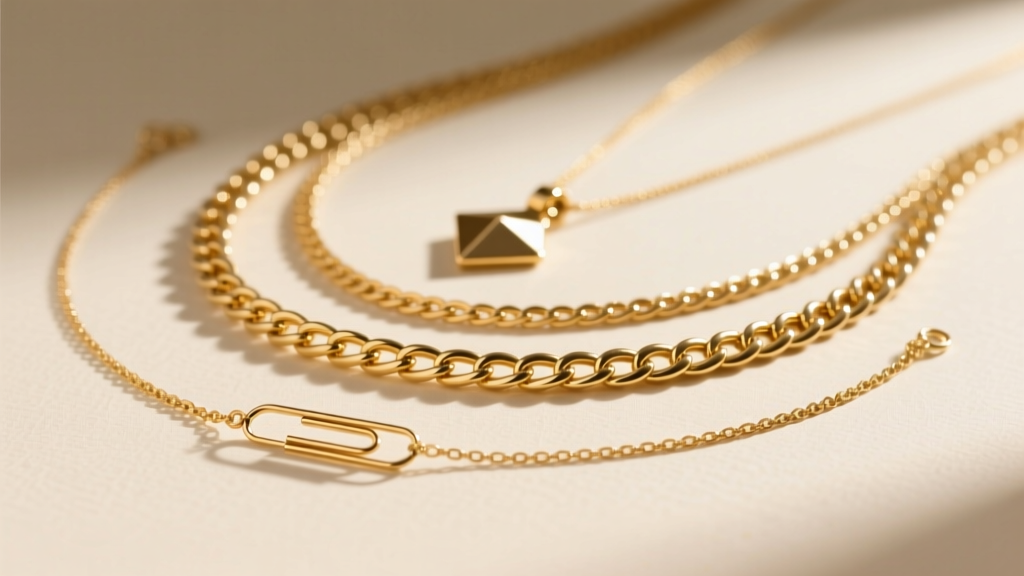
The visual weight of your chain choker necklace gold piece must harmonize with your wardrobe's necklines. A common styling failure is pairing a heavy, wide-gauge choker with a high-neck garment, which creates a cluttered, restrictive silhouette. Below is a structural guide to matching chain profiles with specific necklines.
| Chain Link Type | Ideal Gauge (Thickness) | Best Neckline Pairing | Visual Weight & Vibe |
|---|---|---|---|
| Cuban Link | 12G - 14G (2.0mm - 3.5mm) | Deep V-Neck, Strapless, Off-Shoulder | Bold, streetwear, masculine-leaning edge |
| Paperclip | 16G - 18G (1.2mm - 1.5mm) | Crew Neck, Button-Down, Square Neck | Modern, minimalist, elongating |
| Figaro | 14G - 16G (1.5mm - 2.5mm) | Scoop Neck, Asymmetrical, Cowl Neck | Classic, vintage-inspired, rhythmic |
| Rope Chain | 18G - 20G (1.0mm - 1.2mm) | Collared Shirt, Turtleneck (worn over) | Delicate, sparkling, traditional elegance |
The Architecture of Layering: Choker as the Anchor
In 2026, the single-chain look has been largely superseded by engineered, multi-strand layering. However, a haphazard approach leads to tangled chains and a messy aesthetic. The chain choker necklace gold piece must serve as the foundational anchor of your stack. To achieve a flawless cascade, jewelry stylists rely on the "Precision Drop Formula."
"The modern choker is less about restriction and more about architectural framing of the collarbone. When layering, the spatial relationship between the chains is just as critical as the chains themselves," notes a senior fashion editor at Vogue.
The Precision Drop Formula
- The Anchor (Choker): 14 to 15 inches. Sits flush against the base of the neck. Best in a textured or geometric link (e.g., Paperclip or Beaded).
- The Bridge (Princess): 17.5 to 18 inches. Drops exactly 2.5 to 3 inches below the choker. Should be a contrasting link style (e.g., if the choker is geometric, use a fluid Snake or Box chain).
- The Pendulum (Matinee): 21 to 24 inches. Anchors the entire stack with a focal point, such as a heavy gold medallion or a raw gemstone drop.
Pro-Tip: To prevent the chains from twisting and tangling throughout the day, ensure the total gram weight of the choker is slightly heavier than the bridge chain. This keeps the top layer seated firmly on the skin.
Hardware and Clasps: The Hidden Failure Points
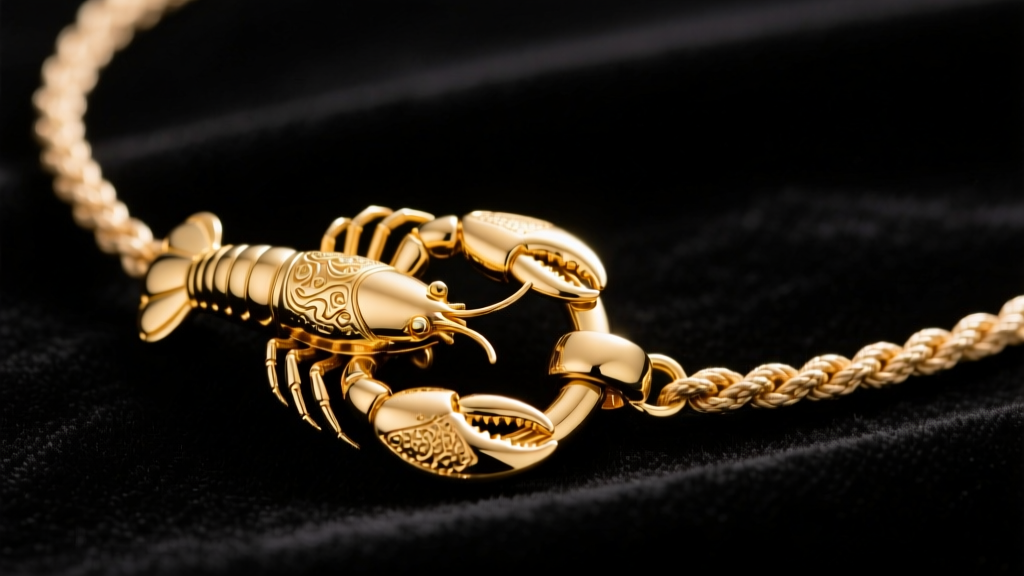
The most beautiful chain choker necklace gold design is useless if its hardware fails. Chokers endure significant lateral tension. The industry standard spring-ring clasp—common on cheaper, lightweight chains—is a notorious failure point for chokers. The internal steel spring inside a gold-plated spring ring frequently corrodes from skin contact, or the tiny lever snaps under the weight of a 14-gauge chain.
Mandatory Hardware Specifications
When evaluating a fine gold choker, inspect the findings closely:
- The Clasp: Demand a solid gold, oversized Lobster clasp (at least 12mm in length for medium chains, 15mm+ for heavy Cubans). Lobster clasps feature a robust internal mechanism that resists lateral pulling.
- The Jump Rings: The ring connecting the chain to the clasp must be soldered (fused shut with heat) or at minimum 1.5mm thick. Open, unsoldered jump rings will pull apart over time, resulting in the loss of the necklace.
- The End Caps: Look for integrated end caps rather than simple crimped loops, which can fray the final links of delicate rope or box chains.
Care and Maintenance for High-Wear Gold
Because a choker sits in the "pulse zone" of the neck, it is constantly exposed to sebum (skin oils), sweat, perfumes, and cosmetics. While solid 14K and 18K gold will not tarnish or rust, the alloy metals (copper and silver) can react to environmental chemicals, leading to a dull, matte film on the surface of the links.
Troubleshooting Tarnish and Snagging
If your chain choker necklace gold piece begins to look lackluster or feels stiff, follow this expert maintenance protocol:
- The Degreasing Bath: Mix warm water with three drops of phosphate-free dish soap (like Dawn). Submerge the choker for 15 minutes. This breaks down the lipid barrier of skin oils trapped in the link crevices.
- The Agitation Step: Use an ultra-soft baby toothbrush to gently agitate the links. Never use a hard-bristled brush, as it will create micro-scratches on the gold's polish, making it more susceptible to future dirt buildup.
- The Drying Protocol: Do not air dry. Water spots will form on the gold. Use a microfiber jewelry cloth to buff the chain dry, which simultaneously restores the high-shine finish through gentle friction.
- Snag Repair: If a link becomes stretched or snagged, do not attempt to bend it back into place with your fingers. The work-hardening of the gold will cause it to snap. Take it to a jeweler for a quick annealing and reshaping process.
Final Verdict: Investment vs. Fast Fashion
The chain choker necklace gold trend in 2026 is a testament to the shift toward "quiet luxury" and enduring wardrobe staples. While the initial investment for a solid 14K gold choker may seem steep compared to brass or vermeil alternatives, the cost-per-wear plummets when you factor in its indestructible nature and timeless silhouette. By prioritizing structural integrity—selecting the right karat, demanding robust lobster clasps, and adhering to precise layering formulas—you secure a piece of jewelry that not only defines your current aesthetic but will outlast the trend cycle entirely.


