The Necklace Plot Summary: How to Spot Paste vs Real Diamonds
Explore the necklace plot summary to learn how to distinguish vintage paste glass from real diamonds, with a step-by-step buying guide.

The Necklace Plot Summary: A Tragic Lesson in Jewelry Appraisal
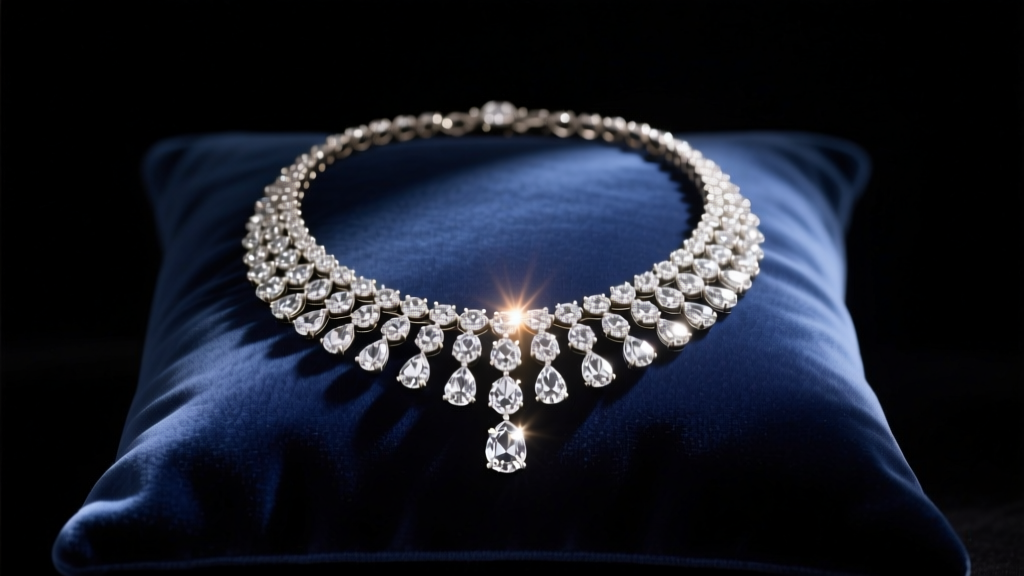
When analyzing the necklace plot summary of Guy de Maupassant’s iconic 1884 short story La Parure (The Necklace), the central tragedy hinges entirely on a catastrophic jewelry appraisal failure. Mathilde Loisel borrows what she believes to be a 40,000-franc diamond rivière necklace from her wealthy friend, Madame Forestier, to wear to a high-society Parisian ball. After losing the piece, Mathilde and her husband plunge themselves into a decade of grueling poverty to replace it with a 36,000-franc natural diamond equivalent.
The devastating twist? The original borrowed necklace was 'paste'—a high-lead glass simulant worth at most 500 francs. While Maupassant used this irony to critique 19th-century bourgeois vanity, modern jewelry enthusiasts can use the necklace plot summary as a masterclass in the critical importance of gemological identification. Today, simulant technology has advanced far beyond Georges Frédéric Strass’s 18th-century lead glass, making the ability to distinguish between natural diamonds, lab-grown diamonds, and modern simulants an essential skill for any serious collector.
Step-by-Step: How to Identify Paste vs. Real Diamonds
In the 1880s, 'paste' referred to hand-cut, high-lead glass that mimicked the sparkle of diamonds due to its high refractive index. According to historical jewelry archives like Lang Antiques, antique paste was often backed with metallic foil to increase brilliance. Today, you are more likely to encounter Cubic Zirconia (CZ) or Moissanite. Here is how to ensure you aren't paying natural diamond prices for a modern simulant.

Step 1: Inspect the Facet Edges and Girdle
Diamonds rank a 10 on the Mohs hardness scale, meaning their facet edges remain razor-sharp for centuries. Simulants like CZ (Mohs 8.5) and glass (Mohs 5.5-6) are much softer. Using a 10x triplet loupe, examine the intersections where the facets meet. If the edges appear rounded, abraded, or 'melted' (often called a 'wear-and-tear' pattern), the stone is almost certainly a simulant or paste.
Step 2: Check for Double Refraction
Diamonds are singly refractive. Moissanite, a common modern diamond alternative, is doubly refractive. If you look through the crown of a moissanite stone at the pavilion facets using a loupe, you will see a 'doubling' effect—where the facet lines appear as two distinct, slightly blurred lines. Natural and lab-grown diamonds will never show this doubling.
Step 3: Use a Thermal Conductivity Tester
For a definitive field test, use a modern electronic diamond tester. Diamonds possess uniquely high thermal conductivity. While standard testers will easily separate glass and CZ from diamonds, be aware that moissanite also conducts heat similarly to diamond. To separate moissanite from diamond, you must use a multi-tester that checks for electrical conductivity (moissanite is slightly conductive; diamond is not).
Recreating Mathilde’s Rivière: A 2026 Buying Guide
The rivière necklace—a continuous strand of uniformly sized or graduated gemstones set in a single row—remains a cornerstone of fine jewelry. If you want to recreate the breathtaking look of Madame Forestier’s necklace without risking the Loisel family's financial ruin, modern market options offer incredible alternatives. Below is a comparison of what a 15-carat total weight (ctw) graduated rivière necklace costs across different materials in today's market.
| Material | Mohs Hardness | Refractive Index (RI) | Est. Price (15 ctw Rivière) | Longevity & Wearability |
|---|---|---|---|---|
| Natural Earth-Mined Diamond | 10 | 2.42 | $35,000 - $60,000+ | Heirloom; indestructible for daily wear |
| Lab-Grown Diamond (CVD/HPHT) | 10 | 2.42 | $4,000 - $8,000 | Heirloom; identical physical properties |
| Moissanite | 9.25 | 2.65 - 2.69 | $1,500 - $3,000 | Excellent; highly durable, slight color shift over time |
| Cubic Zirconia (CZ) | 8.5 | 2.15 - 2.18 | $150 - $400 | Fair; will cloud and scratch within 2-5 years of daily wear |
| High-Lead Paste Glass (Antique) | 5.5 - 6 | 1.50 - 1.70 | $300 - $1,500 (Antique Value) | Poor; strictly for occasional, careful wear |
For the modern buyer, lab-grown diamonds offer the exact same chemical and optical properties as natural diamonds (pure crystallized carbon) at a fraction of the cost, entirely bypassing the ethical and financial pitfalls of the traditional diamond trade. The Gemological Institute of America (GIA) issues identical grading reports for lab-grown stones, ensuring you know exactly what you are purchasing.
Step-by-Step Styling: Wearing the Rivière Today
A diamond rivière is notoriously difficult to style because its continuous circle of brilliance can easily overwhelm an outfit. Here is how to wear this historic silhouette with modern elegance.

1. Match the Length to the Neckline
- 16-Inch (Choker/Collier): Sits tightly at the base of the neck. Best paired with deep V-necks, sweetheart necklines, or off-the-shoulder gowns. This length draws the eye horizontally and elongates the neck.
- 18-Inch (Princess): Rests on the collarbone. The most versatile length. It pairs beautifully with scoop necks, boat necks, and even high-quality, structured white t-shirts for a high-low daytime look.
- 20 to 24-Inch (Matinee/Opera): Graduated rivière necklaces in these lengths are rare but striking. They should be worn over solid, dark fabrics (like navy silk or black velvet) to provide maximum contrast for the stones.
2. The Rule of Solitude
Because a rivière necklace is essentially a solid band of light, it rarely plays well with other necklaces. Avoid layering a diamond rivière with delicate chains or pendants; the friction will scratch the gold settings, and the visual clutter will diminish the impact of the diamonds. Instead, let the rivière stand alone and pair it with simple diamond stud earrings or a sleek, diamond-encrusted tennis bracelet.
Care and Maintenance: Protecting Your Investment
Whether you own a $50,000 natural diamond rivière or a $2,000 moissanite replica, the physical structure of a rivière necklace makes it uniquely vulnerable to catastrophic failure. Because the stones are set in a continuous, flexible line, the metal links and prongs endure constant micro-tension every time you move your neck.
Expert Warning: Never pull a rivière necklace by the chain to unclasp it. Always support the weight of the stones in your palm while operating the clasp to prevent stretching the metal links.
Step-by-Step Maintenance Routine
- Monthly Prong Checks: Run a piece of silk fabric lightly over the stones. If the silk snags on a prong, that prong is lifted and requires immediate professional tightening to prevent stone loss.
- Safe Cleaning: While natural and lab-grown diamonds can safely be cleaned in an ultrasonic jewelry cleaner, never put moissanite, CZ, or antique paste in an ultrasonic machine. The high-frequency vibrations can shatter simulants or strip the metallic foil backing off antique paste stones.
- Proper Storage: Store the necklace flat in a lined jewelry box. Hanging a heavy rivière necklace on a standard jewelry tree will cause gravity to stretch the metal settings over time, leading to a 'gapping' effect between the stones.
Final Thoughts on Literary Jewelry
Ultimately, the necklace plot summary serves as a timeless reminder that the value of jewelry lies not just in its visual brilliance, but in its verifiable material truth. By understanding gemological properties, utilizing modern identification tools, and choosing ethically and financially sound materials like lab-grown diamonds, you can enjoy the breathtaking elegance of a rivière necklace without the haunting fear of a 500-franc deception.


