How to Clean a Boys Cross Necklace: Silver & Steel Care
Learn how to clean, polish, and maintain a boys cross necklace. Expert tips for removing tarnish from silver and stainless steel chains and pendants.

The Unique Wear-and-Tear of Active Lifestyles
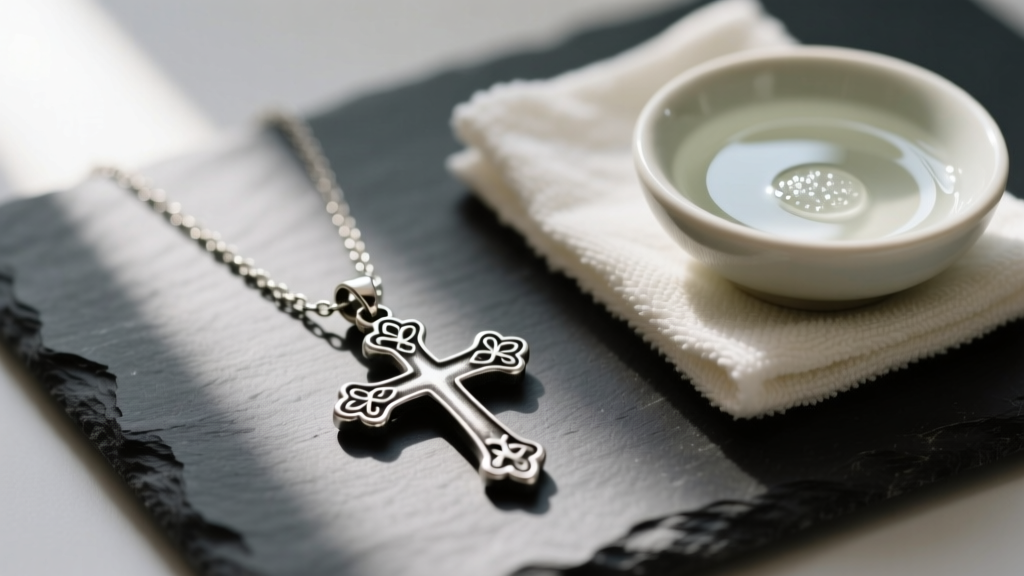
A boys cross necklace is more than just a piece of jewelry; it is often a daily-wear item that endures an incredibly active lifestyle. From the friction of t-shirts during sports to constant exposure to sweat, chlorine from swimming pools, and environmental dirt, these necklaces face harsh conditions. Human sweat has a pH ranging from 4.5 to 7.0, and its mild acidity, combined with chloride and urea, accelerates the oxidation process in copper-alloyed metals. If your son or grandson wears his cross necklace daily, establishing a rigorous yet safe cleaning routine is essential to prevent permanent pitting, chain degradation, and clasp failure.
Material Identification: What Is Your Cross Made Of?
Before applying any cleaning solution, you must accurately identify the metal. Using the wrong chemical agent can strip plating or cause irreversible micro-scratches. According to the Gemological Institute of America (GIA), proper metal identification is the first step in any jewelry maintenance protocol.
| Material Grade | Tarnish Risk | Recommended Cleaning Method | Active Wear Durability |
|---|---|---|---|
| 925 Sterling Silver | High (Copper content oxidizes) | Electrochemical bath or polishing cloth | Moderate (Prone to scratching) |
| 316L Stainless Steel | Very Low (Molybdenum prevents pitting) | Mild dish soap and soft brush | Extremely High |
| Gold-Plated Brass | Moderate (Base metal bleeds if plated) | Damp microfiber cloth only | Low (Plating wears off with friction) |
| Grade 5 Titanium | None | Ultrasonic or soap/water | Extremely High |
Deep Cleaning Sterling Silver (Without Ruining the Patina)
Sterling silver is an alloy containing 92.5% pure silver and 7.5% copper. It is the copper that reacts with sulfur in the air and sweat to form silver sulfide (tarnish). Many well-meaning parents reach for toothpaste to scrub away this black layer. Never use toothpaste. Modern toothpastes contain hydrated silica with a high Relative Dentin Abrasivity (RDA) value, which will leave permanent micro-scratches across the mirror finish of the cross pendant.
The Electrochemical Reduction Method
For heavy, uniform tarnish on a solid silver boys cross necklace, use an electrochemical reaction that reverses the oxidation without removing any base metal. The Silver Institute endorses this method for safe, deep cleaning.
- Line a glass or ceramic bowl with aluminum foil, shiny side up.
- Place the silver cross necklace directly onto the foil. Ensure the metal touches the aluminum.
- Sprinkle 1 tablespoon of baking soda and 1 tablespoon of non-iodized salt over the jewelry.
- Pour 1 cup of boiling water into the bowl. You will see bubbling and may smell a faint sulfur (rotten egg) odor.
- Let it sit for 3 to 5 minutes. The chemical reaction (3Ag2S + 2Al → 6Ag + Al2S3) transfers the sulfur from the silver to the aluminum.
- Remove with plastic tongs, rinse thoroughly in distilled water, and pat dry with a lint-free cloth.
Note: Do not use this method if the cross necklace features porous gemstones like turquoise, opal, or pearls, as the boiling water and alkaline solution will destroy them.
Routine Maintenance for Stainless Steel and Titanium
If the necklace is crafted from 316L surgical stainless steel or titanium, you are dealing with highly resilient metals. 316L steel contains molybdenum, which specifically prevents pitting corrosion from chlorides found in sweat and pool water. However, the crevices of a detailed cross design and the tight links of a curb or rope chain will trap sebum (skin oils) and dead skin cells, leading to a dull, grayish buildup.
The Soap and Brush Technique
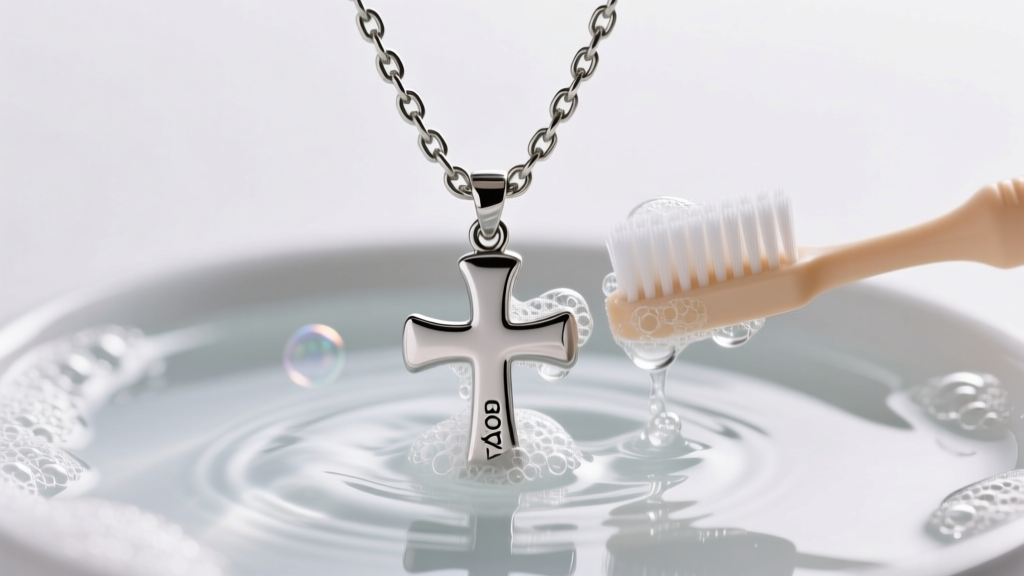
Fill a small bowl with warm water and add three drops of a mild, phosphate-free dish soap (like Dawn). Submerge the stainless steel or titanium necklace for ten minutes to loosen the sebum. Using a brand-new, extra-soft baby toothbrush, gently agitate the bristles along the edges of the cross pendant and work the brush linearly through the chain links. Avoid circular brushing on polished steel, as even soft bristles can trap microscopic dirt particles that act like sandpaper. Rinse under warm running water and dry immediately with a microfiber towel to prevent hard water spots.
Chain and Clasp Troubleshooting
The pendant might be pristine, but a boys cross necklace is only as strong as its weakest mechanical point: the clasp and the jump rings. Active boys frequently subject their chains to sudden tension, whether from catching the chain on a branch or pulling it over their heads.
Inspecting the Jump Ring
The jump ring is the small circular wire connecting the cross pendant to the chain. On mass-produced necklaces, these are often unsoldered, meaning there is a tiny vertical slit in the ring. Over time, lateral pulling causes this slit to open, resulting in a lost pendant. Inspect the jump ring monthly. If you see the gap widening, take it to a local jeweler to have it laser-soldered shut—a minor repair that usually costs under $15 and guarantees the pendant stays secure.
Clasp Mechanics and Failure Modes
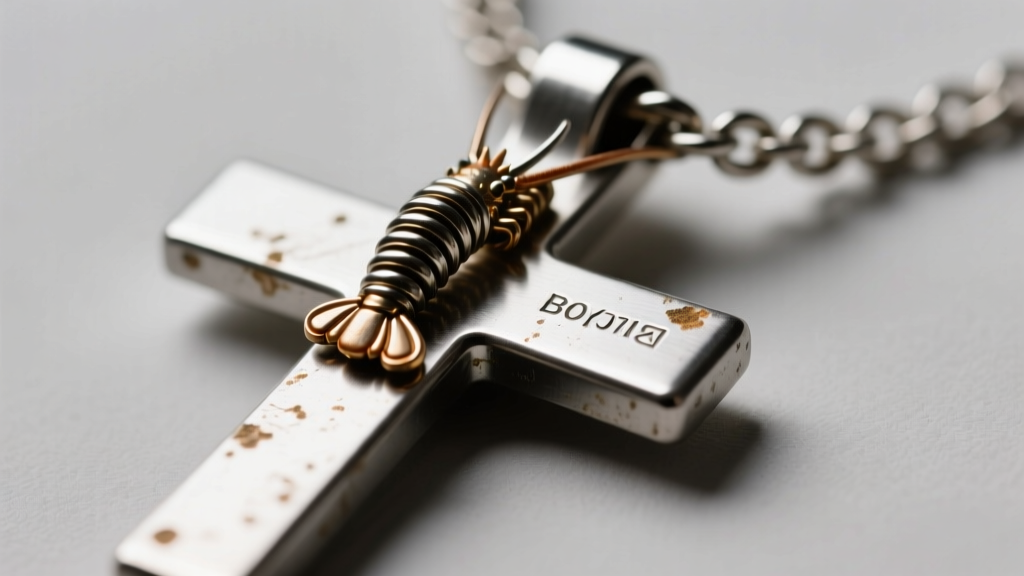
Most boys' necklaces utilize either a spring ring clasp or a lobster claw clasp. Spring rings are notorious for failing in active environments. The internal steel spring is often not stainless, meaning sweat acidity causes it to rust and snap, leaving the clasp permanently stuck open or closed. If the trigger on the clasp feels gritty or fails to snap back with a crisp click, the internal mechanism is compromised. Upgrade the chain to a solid 316L stainless steel lobster claw clasp, which features a larger, more robust internal spring and a wider surface area that resists bending under tension.
Preventative Storage and Wear Habits
Maintenance is significantly easier when preventative measures are in place. When the necklace is not being worn, it should never be tossed into a generic jewelry box where it can tangle with harder metals or scratch against other items.
- Anti-Tarnish Strips: For sterling silver, store the necklace in a sealed ziplock bag with a 3M anti-tarnish strip. These strips absorb airborne sulfur compounds and can protect the silver for up to six months.
- The Shower Rule: While 316L steel and titanium can survive the shower, the harsh surfactants and exfoliating acids found in modern body washes will degrade gold plating and accelerate the breakdown of silver polishing compounds. Train the habit of taking the necklace off before bathing.
- Sports Removal: Chlorine in swimming pools is highly corrosive to the copper in sterling silver and can cause stress-corrosion cracking in lower-karat gold alloys. The necklace must be removed before entering the water.
By understanding the specific metallurgy of the jewelry and implementing these targeted cleaning protocols, you can ensure that a meaningful boys cross necklace remains a pristine, durable staple in his daily wardrobe for years to come.


