The Tinkerbell Necklace in 2026: Fairycore Style Guide
Discover how the Tinkerbell necklace evolved in 2026. Explore material grades, chain pairings, and fairycore styling tips for this iconic Disney pendant.

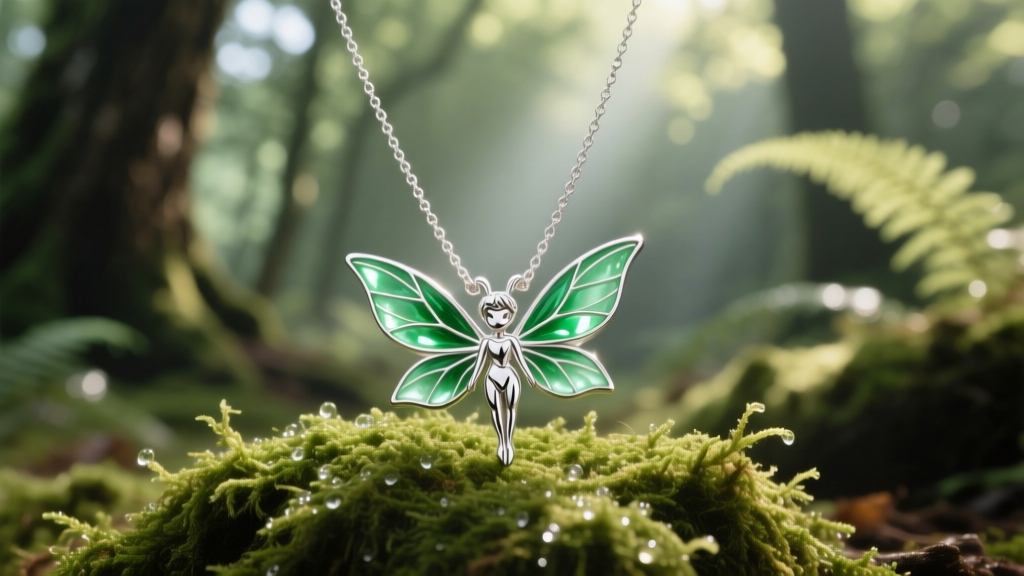
Fairycore is no longer a fleeting social media micro-trend; by 2026, it has matured into a sophisticated aesthetic subculture with deep roots in contemporary jewelry design. At the center of this whimsical yet grounded movement is the Tinkerbell necklace. Once relegated to childhood nostalgia or cheap costume jewelry, the iconic fairy pendant has been reimagined by both official licensors and independent artisans. Today, it serves as a versatile anchor piece that bridges the gap between playful Disneybounding and elevated, everyday fine jewelry.
In this comprehensive style and trend analysis, we deconstruct the modern Tinkerbell necklace. From metallurgical grades and complex enamel techniques to precise chain pairings and neckline coordination, this guide provides the actionable framework you need to master fairycore styling.
The Maturation of Fairycore Jewelry
According to trend forecasters at Vogue Business, the 'subtle magic' movement of 2026 dictates that fantasy-inspired jewelry must feel grounded and wearable. The modern consumer rejects the heavy, oversized alloy pendants of the early 2010s. Instead, the current market favors miniature, highly detailed motifs that offer a whisper of magic rather than a shout. The Tinkerbell silhouette has been scaled down, typically measuring between 15mm and 22mm in height, allowing it to function as a delicate focal point rather than a costume piece.
This shift has driven a massive upgrade in material quality. Buyers now expect heirloom-level craftsmanship, even when purchasing licensed pop-culture merchandise. The result is a surge in 925 sterling silver and 14k gold vermeil options that replace the traditional brass and zinc alloys of previous decades.
Material Grades & Enamel Techniques
The defining feature of any high-quality Tinkerbell necklace is the treatment of the wings. In 2026, the industry standard for premium fairy pendants relies on advanced vitreous and cold enamel techniques. Understanding these methods is critical for evaluating a piece's longevity and value.
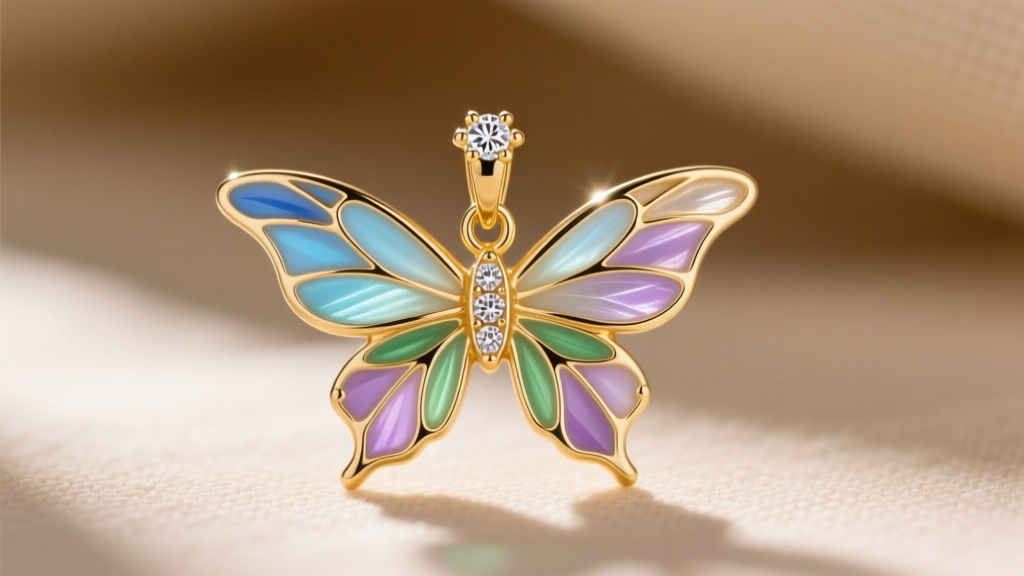
Champlevé vs. Plique-à-Jour
- Champlevé Enamel: This traditional technique involves carving troughs into the base metal (usually sterling silver or copper) and filling them with powdered glass enamel before firing. It provides excellent durability and a rich, opaque color, though it lacks transparency.
- Plique-à-Jour: As highlighted by the Gemological Institute of America (GIA), this is the 'stained glass' of enameling. The enamel is suspended in open metal cells with no backing, allowing light to pass through the Tinkerbell wings. This technique is significantly more expensive and fragile but offers unparalleled ethereal beauty.
- Cold Enamel (Epoxy Resin): Common in mass-market and entry-level licensed jewelry. While it allows for vibrant, translucent greens and golds, it is highly susceptible to UV yellowing and chemical degradation from perfumes.
Market Comparison: Mass Market vs. Artisan
The market for fairy-inspired necklaces is heavily segmented. Below is a comparative breakdown of what to expect across different pricing and manufacturing tiers in 2026.
| Tier | Base Metal | Wing Treatment | Price Range | Durability |
|---|---|---|---|---|
| Official Disney Parks | 925 Sterling Silver | Cold Enamel / Cubic Zirconia | $125 - $175 | High (with care) |
| Mass Market Fashion | Brass / Zinc Alloy | Epoxy Resin / Paint | $25 - $55 | Low (tarnishes quickly) |
| Fine Jewelry Artisan | 14k Solid Gold | Plique-à-Jour / Tsavorite | $800 - $1,500+ | Heirloom / Generational |
Chain Pairings & Gauge Specifications
A pendant is only as good as the chain that supports it. The standard bail (the loop connecting the pendant to the chain) on an official or artisan Tinkerbell necklace typically features an inner diameter of 4mm x 3mm. This specific dimension restricts your chain choices and demands precision.
Recommended Chain Styles
The Fairy Chain (1.0mm - 1.2mm): A variation of the cable chain with slightly elongated, delicate links. It offers a vintage, ethereal look that perfectly complements the wings without competing for visual attention. However, chains under 1.5mm are prone to kinking and require careful storage.
The Rolo Chain (1.8mm - 2.0mm): For a more modern, durable aesthetic, a 2.0mm rolo chain provides excellent structural integrity. The uniform, round links catch the light beautifully and easily slide through a 4mm bail.
Clasp Mechanics: Always opt for a lobster clasp over a spring-ring clasp. Spring rings are notoriously difficult to operate with one hand and are the primary failure point in delicate jewelry. A 5mm or 7mm lobster clasp ensures security while maintaining proportional aesthetics.
Neckline Coordination & Layering Framework
Styling a Tinkerbell necklace requires an understanding of spatial balance and neckline geometry. Because the pendant features complex, asymmetrical wing detailing, it needs adequate negative space to be appreciated.
The Sweetheart & Scoop Neck
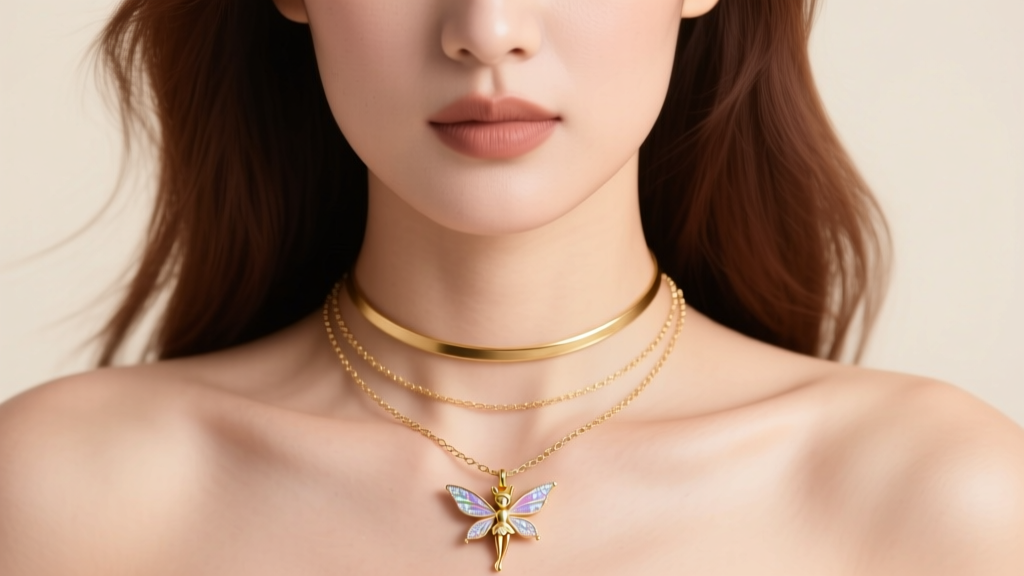
These necklines mimic the natural curve of the collarbone, creating a perfect 'frame' for a 16-inch or 18-inch fairy pendant. The Tinkerbell motif should rest exactly in the center hollow of the collarbone. Avoid heavy fabrics or ruffled collars that will obscure the intricate enamel work.
The Layering Protocol
Layering fantasy jewelry with minimalist pieces grounds the look for professional or adult environments. Follow the 'Rule of Two Inches':
- Base Layer (14 inches): A simple, solid gold or silver herringbone or snake chain choker. No pendants.
- Focal Layer (16 inches): Your Tinkerbell necklace on a delicate fairy chain.
- Anchor Layer (18 inches): A minimal celestial motif (like a tiny moon or star) or a simple solitaire diamond/gemstone pendant to draw the eye downward and elongate the neck.
Care and Maintenance of Enamel Wings
The most common failure mode for Tinkerbell necklaces is enamel degradation caused by improper cleaning. Never use ultrasonic cleaners on any piece featuring champlevé, plique-à-jour, or cold enamel. The high-frequency vibrations will shatter vitreous glass and peel epoxy resins from the metal backing.
Instead, use a lint-free microfiber cloth for daily polishing. For deeper cleaning, use a drop of pH-neutral dish soap in lukewarm water, gently agitating with a soft-bristled baby toothbrush. Dry immediately to prevent water spots on the metal, and store the necklace flat in an anti-tarnish pouch to prevent the chain from knotting and scratching the enamel surface.
Licensing, Authenticity, and the Indie Market
As noted by industry analysts at JCK, intellectual property enforcement in the jewelry sector has tightened significantly. When shopping for a 'Tinkerbell' necklace, consumers must distinguish between officially licensed Disney merchandise and independent 'fairy-inspired' designs.
Official licenses guarantee the exact silhouette and branding, but often limit the manufacturer to mid-tier materials like sterling silver and cold enamel to maintain accessible price points. Conversely, independent artisans on platforms like Etsy cannot legally use the trademarked Tinkerbell name or exact likeness, but they frequently produce superior, 14k solid gold 'woodland fairy' pendants utilizing high-end plique-à-jour enamel and ethically sourced gemstone accents. For the serious collector prioritizing material science and heirloom longevity over strict brand IP, the indie market offers the most compelling options in 2026.


