What Necklace to Wear With Neckline: A Beginner's Guide
Discover what necklace to wear with neckline styles like V-neck, crew, and off-shoulder. Master jewelry layering and proportions with our expert guide.

Figuring out what necklace to wear with neckline variations can often feel like solving a complex geometry puzzle. A beautiful piece of jewelry can easily look cluttered or get lost entirely if it fights with the architecture of your clothing. Whether you are dressing for a corporate event, a casual weekend outing, or an elegant evening gala, the relationship between your collarbone, the fabric's edge, and your chosen chain is paramount. This beginner-friendly explainer will strip away the guesswork, providing you with a precise, actionable framework for matching chains, pendants, and lengths to every major neckline.
The Golden Rule of Neckline Proportions
The foundational principle of jewelry styling is complementary geometry. Your necklace should either echo the shape of your neckline or provide a deliberate, balanced contrast. The most common beginner mistake is allowing the bottom of the pendant to rest exactly on the hem of the neckline. This creates a visual 'tangle' that draws the eye to the fabric edge rather than the jewelry or your face. As a strict rule of thumb, maintain at least a 0.5-inch to 1-inch gap between the lowest point of your necklace and the highest point of your garment's neckline. This negative space allows both the jewelry and the clothing to breathe.
Decoding Common Necklines: A Visual Framework
V-Neck and Plunging Necklines
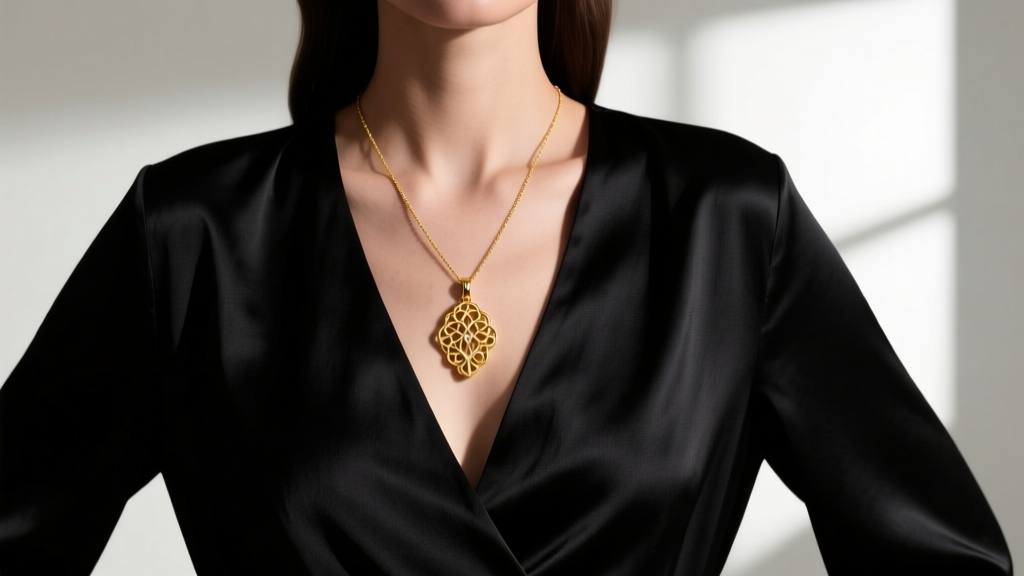
The V-neck is inherently elongating, drawing the eye downward. To complement this, you need a necklace that mimics the 'V' shape. An 18-inch princess-length chain with a medium-drop pendant (roughly 1 to 1.5 inches long) is the gold standard here. The pendant should sit roughly one inch above the fabric's deepest point. Avoid circular or wide horizontal pendants, as they will clash with the sharp, vertical angles of the V-neck. If you are layering, start with a 16-inch delicate cable chain and add a 20-inch chain with a teardrop or marquise-shaped pendant.
Crew Neck and High Collars
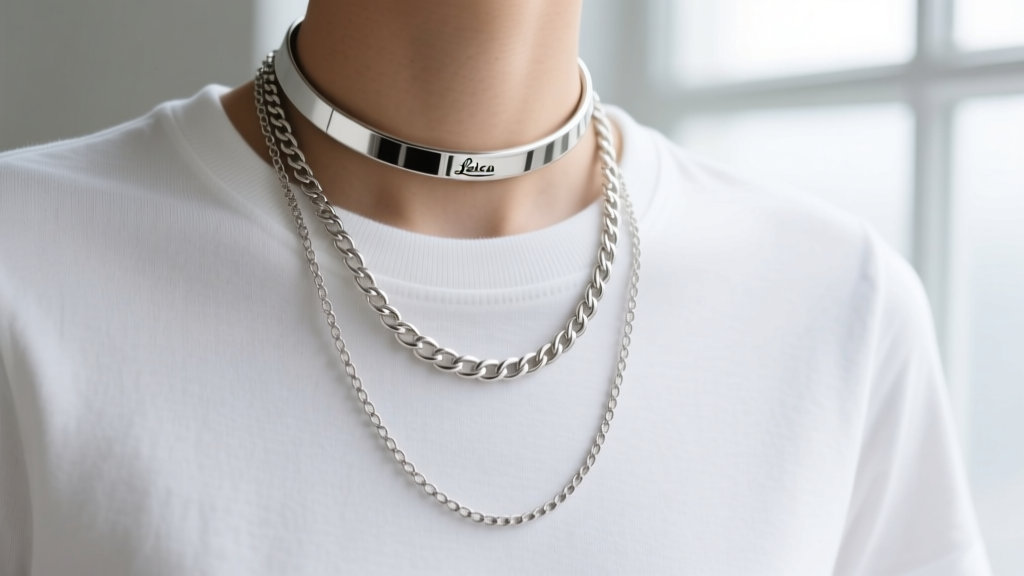
Crew necks sit high and tight against the base of the throat, creating a horizontal block of fabric. Because the neckline itself acts almost like a choker, you have two distinct styling paths. The first is to embrace contrast by wearing a long matinee-length chain (24 to 30 inches) that drops well below the fabric line, creating a vertical illusion that breaks up the horizontal block. The second path is to layer heavily above the neckline with a structured, multi-strand collar or a thick 14-inch choker that sits entirely on the skin, treating the crew neck merely as a backdrop. Never wear a standard 18-inch pendant with a tight crew neck; it will simply rest awkwardly on the fabric seam.
Off-the-Shoulder and Boat Necks
These necklines expose a vast canvas of the collarbone and shoulders while cutting horizontally across the upper chest. The goal here is to frame the face without competing with the wide horizontal line of the garment. Chokers (14 to 16 inches) are spectacular with off-the-shoulder tops, as they draw the eye back up to the neck and jawline. Alternatively, a Y-necklace (lariat style) works beautifully to introduce a vertical line that breaks the horizontal expanse of a boat neck. Avoid wide, bib-style statement necklaces, which will visually crowd the exposed skin and make the upper body look compressed.
Sweetheart and Scoop Necklines
Sweetheart necklines mimic the top of a heart, offering a romantic, curved dip in the center. The best approach is a delicate, lightweight chain (such as a 0.9mm box chain) with a small, simple solitaire pendant that nestles just inside the curve of the fabric. The pendant should not exceed 0.5 inches in width. For scoop necks, which are wider and more rounded, a curved collar necklace or a 16-inch chain with a horizontally oriented pendant (like a bar or a crescent moon) perfectly echoes the garment's gentle arc.
The Chain Gauge and Length Matrix
Understanding chain gauge (the thickness of the metal wire) is just as critical as understanding length. A heavy chain will pull down delicate silk, while a micro-thin chain will disappear against thick winter knits. Use the matrix below to match your chain specifications to your wardrobe.
| Chain Style | Gauge (mm) | Ideal Length | Best Neckline Match |
|---|---|---|---|
| Cable / Box Chain | 0.8 - 1.2 | 16 - 18 inches | V-Neck, Sweetheart, Scoop |
| Paperclip Chain | 1.5 - 2.5 | 18 - 22 inches | Crew Neck, Square Neck |
| Cuban / Curb Link | 3.0 - 5.0 | 14 - 16 inches | Off-Shoulder, Deep V-Neck |
| Rope Chain | 1.0 - 2.0 | 20 - 24 inches | Turtleneck, High Collar |
| Serpent / Snake | 1.5 - 3.0 | 16 - 18 inches | Boat Neck, Strapless |
Material Grades, Bails, and Skin Chemistry
When selecting a necklace, the material dictates not only the price but how the piece interacts with your body and clothing. According to the Gemological Institute of America (GIA), 14k gold (58.5% pure gold) is often the superior choice for everyday pendants and chains because the higher alloy content (usually copper and zinc) provides necessary tensile strength, preventing delicate gauges from stretching or snapping. Conversely, 18k or 24k gold is softer and better suited for heavier, solid cast pendants rather than micro-chains.
For silver lovers, sterling silver (92.5% silver, 7.5% copper) is the standard, but it is prone to tarnishing when exposed to the sulfur in human sweat and certain wool fabrics. The GIA notes that rhodium plating is frequently applied to sterling silver to prevent this oxidation. If you are wearing a necklace against a dark, dyed cotton or raw denim collar, ensure the piece is rhodium-plated or solid gold to avoid friction-transfer discoloration on your skin.
The Hidden Hardware: Bails and Clasps
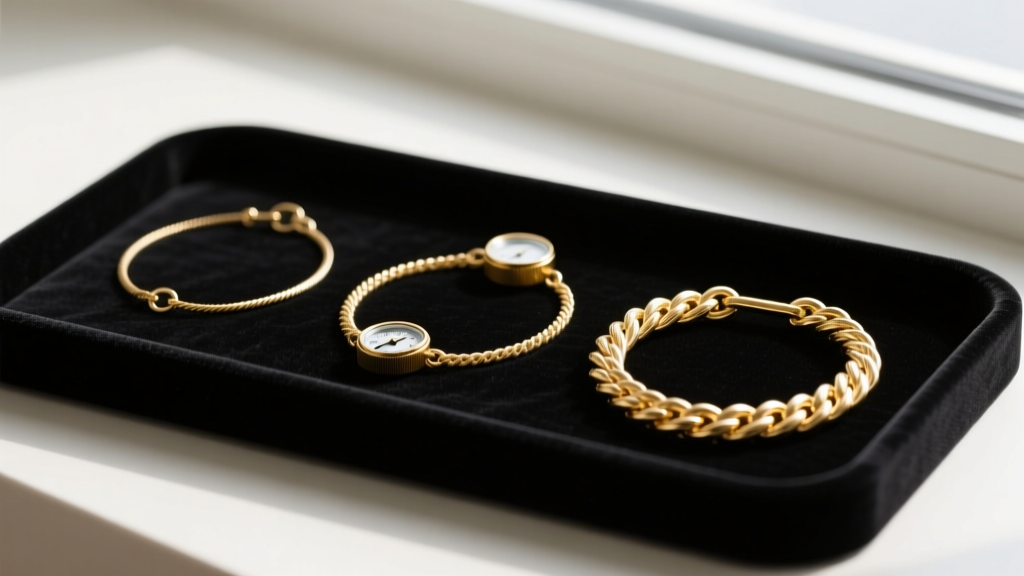
Beginners frequently overlook the pendant bail (the loop connecting the charm to the chain). If you are pairing a pendant with a 2.5mm paperclip chain, the bail's inner diameter must be at least 3.5mm to allow the chain to slide through without kinking. Furthermore, match your clasp to the chain weight. Spring-ring clasps are suitable only for chains under 1.2mm. For anything heavier, a lobster clasp is mandatory to prevent accidental unclasping and loss of the piece.
Troubleshooting Common Layering Disasters
Layering is a fantastic way to elevate a simple neckline, but it requires strict adherence to spatial rules to avoid a tangled mess.
- The 2-Inch Gap Rule: When layering two chains, there must be a minimum 2-inch difference in length between them (e.g., a 16-inch and an 18-inch). Anything closer will cause the clasps and pendants to constantly tangle and scratch each other.
- Mixing Gauges Intentionally: Never layer two chains of the exact same gauge and link style. Pair a 1.0mm delicate cable chain with a 2.5mm chunky rope chain. The contrast in texture signals intentional styling rather than accidental clutter.
- Pendant Weight Distribution: If layering a heavy pendant on a longer chain, ensure the shorter chain is completely bare or features a microscopic bezel-set diamond. Two heavy pendants will pull the neckline of your shirt outward, distorting the fabric.
Expert Insight: If your layered necklaces constantly flip over and tangle at the nape of your neck, the issue is likely your clasp weight. A heavy pendant on the front without a counterweight on the back will cause the chain to slide. Swap your standard clasp for a slightly heavier decorative toggle or add a tiny silicone necklace spacer bar at the back to anchor the chains in place.
Final Thoughts on Proportion and Balance
Mastering what necklace to wear with neckline variations ultimately comes down to respecting the boundaries of your clothing. By treating the neckline as a frame rather than a competing element, you allow your jewelry to serve its true purpose: illuminating the face and expressing personal style. Start with the foundational lengths (16, 18, and 24 inches), invest in high-quality 14k gold-filled or solid gold gauges that suit your daily wardrobe, and always prioritize the negative space between the metal and the fabric. With these precise frameworks in mind, you will never second-guess your jewelry choices again.


