Gold Ring Holder Necklace: Alloy & Chain Material Guide
Discover the best gold ring holder necklace materials. Compare 14k vs 18k alloys, chain tensile strength, and bail durability for daily wear.

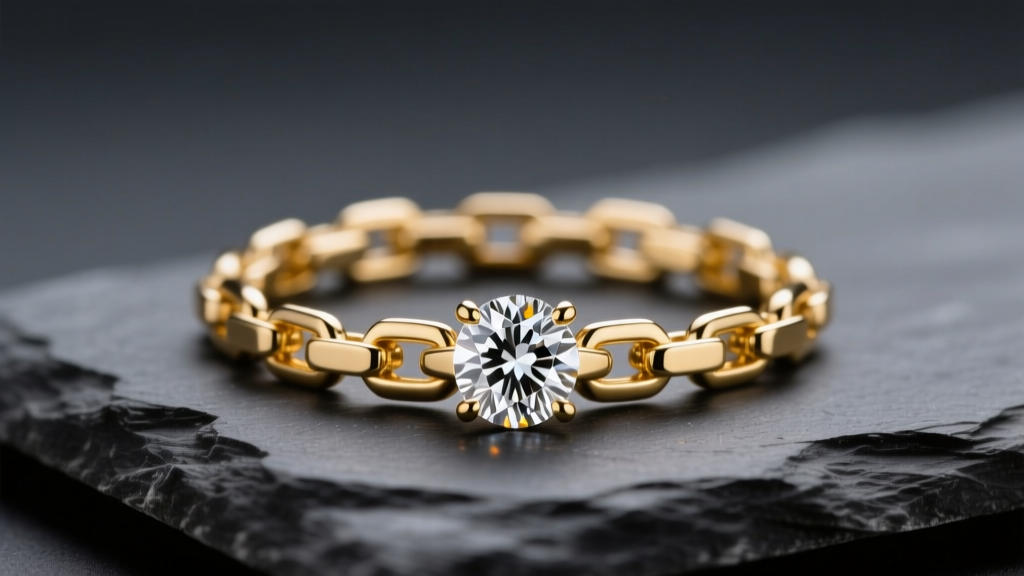
A gold ring holder necklace is more than just a sentimental accessory; it is a functional piece of engineering designed to bear the localized weight and friction of a valuable ring. Whether you are a medical professional removing your band for hygiene, an athlete protecting your finger during lifts, or a traveler securing your jewelry, the material properties of your necklace dictate its lifespan. Unlike standard pendants that sit static against the chest, a ring slides, spins, and grinds against the chain and bail. This guide breaks down the metallurgical and structural realities of choosing the right gold ring holder necklace for long-term durability.
The Physics of Ring Friction and Metal Wear
When a wedding band or engagement ring is threaded onto a chain, it creates a dynamic friction point. Metals like tungsten carbide, platinum, and even hardened steel (often found in men's bands) are significantly harder than pure gold. As the ring slides back and forth during daily movement, it acts as an abrasive file against the gold bail and the top links of the chain. According to the Gemological Institute of America (GIA), the purity of gold directly inversely correlates with its hardness and scratch resistance. Therefore, selecting the correct alloy is not just about color preference—it is about structural survival.
Solid Gold Alloys: 14k vs. 18k vs. 22k
Not all solid gold is created equal. The karat system dictates the ratio of pure gold to alloy metals like copper, silver, and zinc, which fundamentally alters the tensile strength and Vickers hardness (HV) of the metal.
14k Gold (58.5% Pure Gold)
For a gold ring holder necklace, 14k gold is the undisputed champion of durability. With a Vickers hardness of approximately 135 HV, the higher concentration of copper and zinc creates a rigid crystalline structure that resists the micro-abrasions caused by a sliding ring. It will not easily warp under the weight of a heavy platinum band, and the bail will take significantly longer to wear thin.
18k Gold (75% Pure Gold)
While 18k gold offers a richer, deeper yellow hue and is hypoallergenic for those with copper sensitivities, it is notably softer (around 110 HV). If you use an 18k gold chain to hold a heavy tungsten or diamond-encrusted ring, you will likely see visible grooving on the inside of the bail within six to twelve months of daily wear.
22k and 24k Gold
Avoid these for ring holders. Pure 24k gold is far too malleable and will stretch or snap under the dynamic load of a ring. 22k is slightly better but still lacks the tensile strength required for functional, load-bearing jewelry.
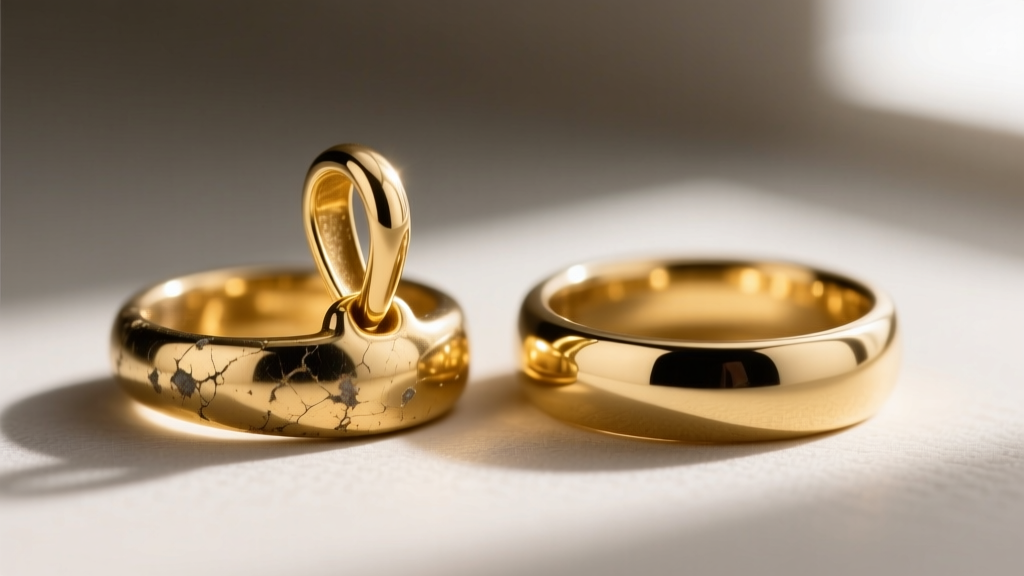
Gold Alternatives: Filled, Vermeil, and Plated
If solid gold is outside your budget, you must understand the failure modes of gold alternatives when subjected to ring friction.
- Gold-Filled (1/20 14k): This features a thick outer layer of 14k gold mechanically bonded to a brass core. It is highly durable and can last years, but once the ring friction wears through the gold layer at the bail friction point, the exposed brass will tarnish and potentially cause skin discoloration.
- Gold Vermeil: Vermeil is a thick layer of gold over sterling silver. While the silver core is precious, it is very soft. The ring will quickly wear through the gold, and the silver underneath will groove deeply, eventually leading to a structural snap.
- Gold Plated: Avoid entirely for ring holders. The microscopic layer of gold will be stripped away by the ring's friction within weeks, leaving bare base metal against your skin.
Material Comparison Matrix
| Material | Gold Content | Hardness (HV) | Friction Resistance | Best Use Case |
|---|---|---|---|---|
| 14k Solid Gold | 58.5% | ~135 | Excellent | Daily wear, heavy rings, active lifestyles |
| 18k Solid Gold | 75.0% | ~110 | Good | Occasional wear, lightweight gold bands |
| 14k Gold-Filled | 5% (Surface) | ~120 | Moderate | Budget-friendly daily wear (monitor bail) |
| Gold Vermeil | ~2.5% (Surface) | ~80 (Silver core) | Poor | Fashion wear only, no heavy rings |
Chain Link Architecture and Tensile Strength
The chain style dictates how the ring hangs and how the necklace handles tensile stress. According to manufacturing standards outlined by Jewelers of America, the solder points on chain links are the most vulnerable areas when a sudden downward force is applied.
Box Chains: The Functional Standard
Box chains are composed of square, interlocking links that create a smooth, flat surface. This is the optimal choice for a gold ring holder necklace because the ring slides effortlessly without catching. Furthermore, the geometric structure of the box link provides superior tensile strength, distributing the weight of the ring evenly across multiple links rather than stressing a single solder point.
Wheat and Rope Chains: The Snag Hazard
Wheat chains feature woven, teardrop-shaped links, while rope chains are twisted. Both are incredibly strong and resistant to snapping. However, their complex textures are a liability for ring holders. If the bail of your ring is open or slightly wide, the ring can easily snag on the woven links, causing abrupt tension spikes that can warp the chain or damage the ring's setting.
Cable and Curb Chains
Classic cable chains are prone to kinking and have relatively low tensile strength compared to their thickness. If you prefer this look, ensure you are buying a heavy-gauge cable chain (minimum 1.5mm thickness) with laser-welded links to prevent the ring's weight from pulling the links apart.
The Hidden Failure Point: Bail and Clasp Mechanics
The bail (the loop that holds the ring) and the clasp are where 90% of ring holder necklaces fail.
Bail Engineering
Never use a necklace with a thin, open-loop bail for a ring holder. The constant sliding of a hard metal ring will act like a saw, cutting through a thin gold bail in a matter of months. Look for a soldered closed bail made of solid 14k gold, or better yet, a bail lined with PTFE (Teflon) or medical-grade silicone. This lining absorbs the friction, protecting both your gold chain and the precious metal of your ring.
Clasp Security
A ring adds significant pendulum weight to a necklace. Spring ring clasps are inadequate and can easily pop open if the chain is snagged on clothing. You must insist on a reinforced lobster clasp with a heavy-duty internal spring. For chains thicker than 2.0mm, a secure hook clasp or a magnetic locking clasp with a secondary safety catch is highly recommended.
Lifestyle Matching: Which Gold Profile Fits You?
To finalize your decision, match the material properties to your specific daily environment:
- The Medical Professional: Choose a 14k white or yellow gold box chain with a silicone-lined bail. The silicone prevents the chain from scratching your ring, and the 14k gold withstands frequent sanitization and exposure to harsh hospital chemicals without tarnishing.
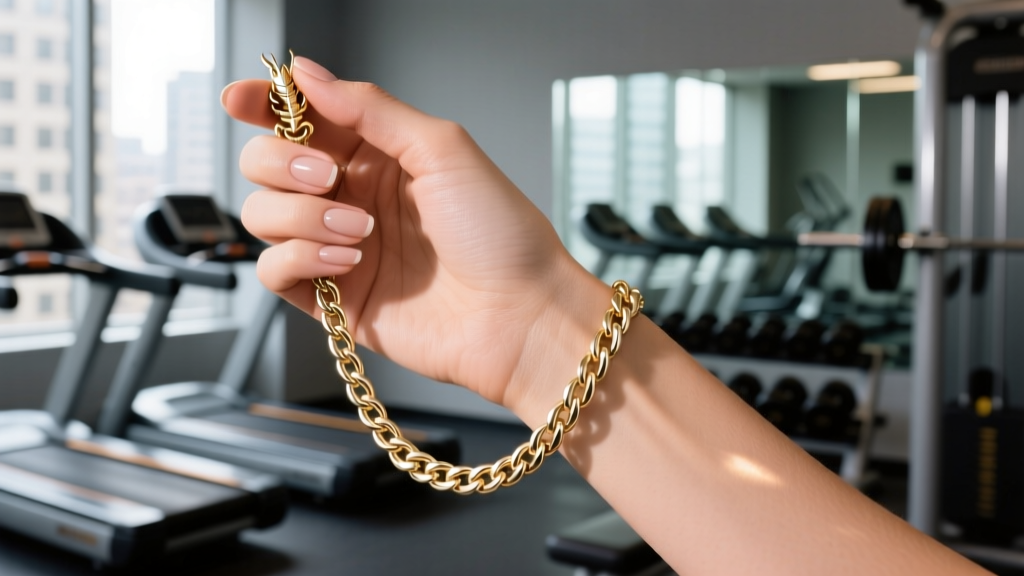
- The Gym-Goer & Athlete: Sweat is highly corrosive to copper-heavy alloys like rose gold. Stick to 14k yellow gold or platinum-tipped gold chains, and ensure the clasp is a secure lobster claw that won't catch on gym equipment or lifting straps.
- The Frequent Traveler: Opt for an 18k gold-filled wheat chain. It provides the rich look of high-karat gold for hotel dinners and excursions, while the woven wheat structure offers the tensile strength needed to survive the rigors of travel, packing, and transit without snapping.
Ultimately, a gold ring holder necklace is a vital safeguard for your most precious jewelry. By prioritizing 14k solid gold, selecting a smooth box chain, and demanding a reinforced, friction-lined bail, you ensure that your ring remains secure, pristine, and close to your heart for decades to come.


