The Pink Sapphire and Diamond Necklace Material Guide
Discover the gemological properties, durability, and value factors of a pink sapphire and diamond necklace before making your investment.

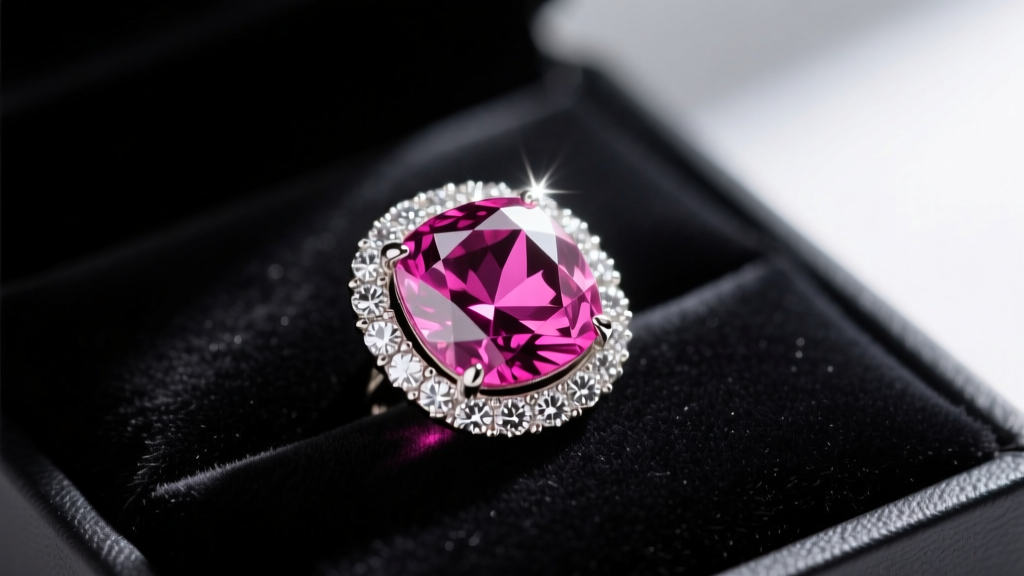
The Gemological Intersection of Corundum and Carbon
When evaluating a pink sapphire and diamond necklace, buyers are often captivated by the visual contrast between the warm, romantic hues of the sapphire and the icy brilliance of the diamonds. However, beneath this aesthetic appeal lies a complex intersection of mineralogy, crystallography, and metallurgy. Understanding the fundamental material properties of these two gemstones is not merely an academic exercise; it is a critical prerequisite for making an informed investment, ensuring long-term durability, and accurately assessing market value. In this comprehensive guide, we deconstruct the physical and chemical properties that define these precious stones and the precious metals that bind them together.
Crystallography and Hardness: Beyond the Mohs Scale
To understand how a pink sapphire and diamond necklace will wear over decades, we must look past the simplified Mohs scale of mineral hardness. Pink sapphires are a variety of corundum, composed of aluminum oxide (Al2O3). Their signature pink coloration is the result of trace amounts of chromium substituting for aluminum within the crystal lattice. Diamonds, conversely, are composed of pure carbon arranged in an isometric crystal structure. While the Mohs scale ranks diamonds at 10 and sapphires at 9, this relative scale is logarithmic and highly misleading to the uninitiated.
On an absolute hardness scale (such as the Knoop or Vickers scale), a diamond is not just 10% harder than a sapphire; it is approximately 450% harder. This immense disparity means that while a diamond is virtually impervious to scratching from everyday environmental dust (which contains quartz at Mohs 7), a pink sapphire is still susceptible to micro-abrasions over decades of continuous wear. Furthermore, toughness—the resistance to chipping and breaking—favors the sapphire. Diamonds possess perfect octahedral cleavage, meaning a sharp, precise blow to a diamond's girdle can split the stone cleanly. Corundum lacks true cleavage, exhibiting only parting, which makes the pink sapphire slightly more resilient against accidental impacts against hard surfaces.
Comparative Material Data Matrix
| Property | Pink Sapphire (Corundum) | Diamond (Carbon) |
|---|---|---|
| Chemical Composition | Al2O3 (Aluminum Oxide) | C (Carbon) |
| Mohs Hardness | 9 | 10 |
| Absolute Hardness (Knoop) | ~2000 | ~9000 |
| Specific Gravity (Density) | 3.99 - 4.01 | 3.52 |
| Refractive Index | 1.762 - 1.770 | 2.417 |
| Cleavage | None (Parting only) | Perfect (Octahedral) |
Source: Gemological Institute of America (GIA) Sapphire Guide and GIA Diamond Grading System
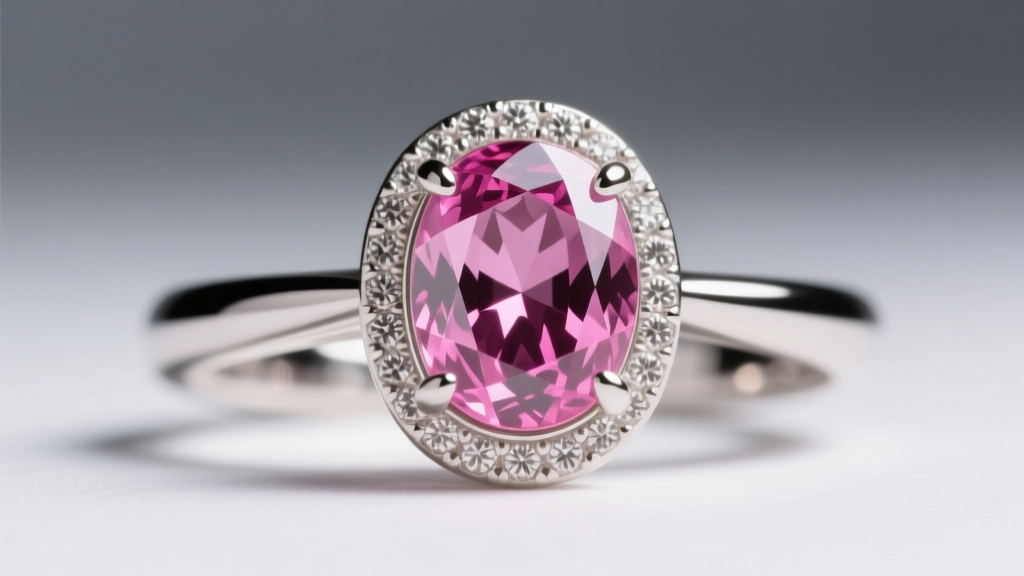
Specific Gravity and the Carat Illusion
A common pitfall when purchasing a pink sapphire and diamond necklace is assuming that carat weight translates equally to visual size across different gem species. Because pink sapphire has a specific gravity of roughly 4.00 compared to a diamond's 3.52, a 1.00-carat pink sapphire will be physically smaller in millimeter dimensions than a 1.00-carat diamond. Jewelers must cut sapphires slightly deeper to retain weight, which can lead to 'extinction' (dark, lifeless areas) if the pavilion angles are poorly calculated. When evaluating the center stone of your necklace, always prioritize the millimeter face-up spread and the precision of the facet junctions over raw carat weight. A well-cut 0.85-carat pink sapphire will outperform a poorly cut, windowed 1.20-carat stone in both brilliance and perceived size.
Treatments and Enhancements: The Value Multipliers
The material integrity of a pink sapphire is heavily influenced by post-mining treatments, which directly dictate the necklace's financial valuation and structural stability.
Heat Treatment vs. Lattice Diffusion
Standard heat treatment (typically between 1600°C and 1800°C) is universally accepted in the gemological community. It dissolves rutile silk inclusions, thereby improving clarity and stabilizing the pink hue. However, buyers must be fiercely vigilant against beryllium diffusion (lattice diffusion). This process introduces beryllium into the sapphire's crystal lattice during heating, artificially inducing or enhancing pink and orange hues. Beryllium-diffused sapphires trade at a fraction of the cost of naturally colored or merely heated stones. Under magnification, diffused stones often show color concentration at facet junctions and girdle edges. Always demand a laboratory report from a reputable institution like the GIA or AGS confirming that the pink sapphire is either unheated or subjected only to traditional heat treatment without the addition of color-causing elements.
Diamond Enhancement Red Flags
While the diamonds in a pendant halo or chain stations are typically melee-sized (under 0.15 carats each), they are not immune to treatments. Fracture filling with high-lead glass is occasionally used to mask surface-reaching feathers in lower-clarity diamonds. This treatment is highly unstable; exposure to the heat of a jeweler's torch during a simple prong repair can melt the filler, leaving the diamond permanently damaged and cloudy. Ensure your jeweler guarantees that all diamond accents are untreated.
Chain Metallurgy: Setting the Stage for Pink and White
The metal alloy chosen for the necklace chain and pendant setting profoundly affects both the optical performance of the gemstones and the tensile strength of the piece. In 2026, the market heavily favors specific alloy combinations to maximize the material synergy between the pink sapphire and the diamonds.
- 18k Rose Gold (75% Au, 22.25% Cu, 2.75% Ag): The high copper content provides a warm, pinkish undertone that optically reflects into the pink sapphire, saturating its color. However, copper can oxidize over time, requiring occasional polishing. It is softer than white alloys, making it less ideal for heavy pendant bails.
- Platinum 950 (95% Pt, 5% Ru or Co): The ultimate choice for security. Platinum's high density and lack of 'metal memory' mean that if a prong is bent, it stays bent, allowing for easy repair without snapping. Its naturally white color requires no rhodium plating and provides a neutral, high-contrast backdrop that maximizes the fire of the diamond accents.
- 18k White Gold (75% Au, Palladium/Nickel mix): A cost-effective alternative to platinum, though it requires periodic rhodium plating to maintain its bright white finish. As the rhodium wears off, the underlying yellowish-white alloy can subtly mute the icy contrast of the diamonds.

Pricing Matrices and Traceability in the Modern Market
The valuation of a pink sapphire and diamond necklace is bifurcated. The diamonds are priced according to the standardized Rapaport matrix, heavily dependent on color (D-F for melee to ensure no yellow tint muddies the pink contrast) and clarity (VS1-VS2). The pink sapphire, however, operates on a much more volatile, origin-driven matrix. Unheated pink sapphires from legendary deposits like the Mogok Valley in Myanmar or specific alluvial mines in Sri Lanka command premiums of 40% to 80% over their heated counterparts. Furthermore, modern buyers increasingly demand blockchain-verified traceability, ensuring the sapphire was mined without environmental degradation or unethical labor practices. A necklace featuring a fully traced, unheated sapphire accompanied by a Lotus Gemology or GIA origin report represents the pinnacle of material and ethical investment.
Care and Maintenance Protocols
Maintaining the structural and optical integrity of your necklace requires strict adherence to material-specific care protocols. Never clean a pink sapphire and diamond necklace in an ultrasonic cleaner if the sapphire has significant surface-reaching fractures or if the diamonds are suspected of being fracture-filled. The high-frequency vibrations can shatter included corundum and dislodge glass fillers. Instead, utilize a solution of lukewarm distilled water and a few drops of ammonia-free dish soap. Agitate gently with a soft-bristled baby toothbrush, paying special attention to the pavilion (underside) of the sapphire where skin oils and lotions accumulate, blocking light return and dulling the stone's natural brilliance. Rinse thoroughly and dry with a lint-free microfiber cloth. Store the necklace in a soft, individual pouch to prevent the diamonds from scratching the sapphire or the precious metal chain.


