The Beginner's Guide to Buying a Solid Gold Butterfly Necklace
Learn how to choose, verify, and style a solid gold butterfly necklace. Discover karat differences, chain pairings, and real pricing in this guide.

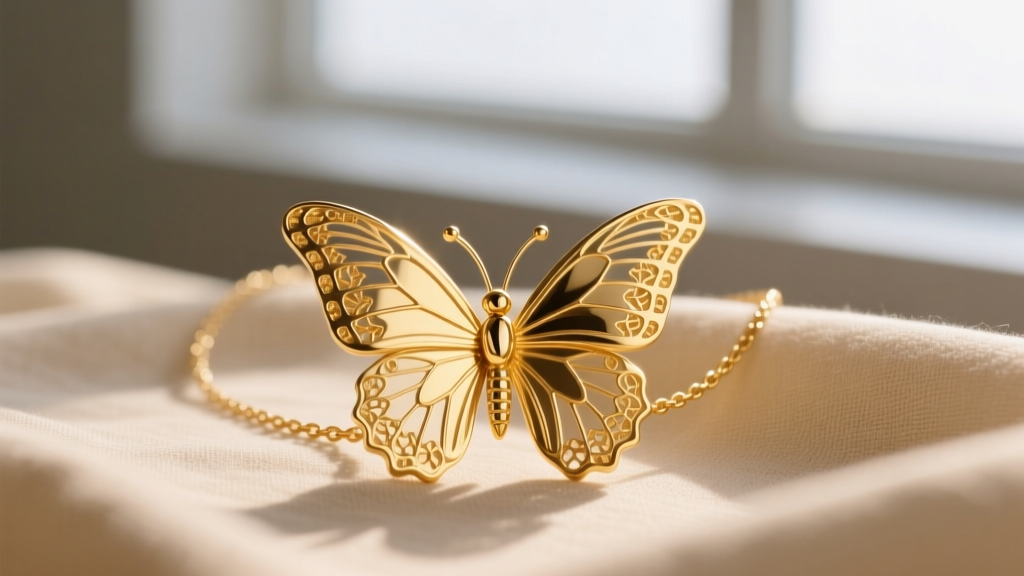
The butterfly motif has long been a staple in jewelry design, symbolizing transformation, grace, and freedom. However, when shopping for a solid gold butterfly necklace, beginners often fall into the trap of misleading marketing terms like 'gold-plated,' 'gold vermeil,' or 'gold-filled.' While these alternatives are budget-friendly, they lack the longevity required for a piece meant to be worn daily. This comprehensive guide will walk you through the exact specifications, structural details, and pricing realities of investing in a genuine solid gold butterfly pendant and chain in 2026.
Why 'Solid Gold' Matters for Intricate Pendants
The geometry of a butterfly pendant presents unique challenges for jewelry maintenance. Butterfly wings feature deep crevices, textured milgrain edges, and delicate cutouts. If you purchase a gold-plated or gold vermeil butterfly necklace, the friction from your skin and clothing will eventually wear away the microscopic outer layer of gold, exposing the brass or sterling silver core beneath.
Unlike a simple, smooth gold hoop, you cannot easily buff or polish the deep crevices of a butterfly's wings without stripping away more of the plating. Solid gold, however, is homogeneous. Whether it is 10k, 14k, or 18k, the color and integrity remain consistent all the way through. According to the Federal Trade Commission's Jewelry Guides, only items made entirely of a gold alloy of at least 10 karats can be legally marketed as 'solid gold' without qualification. This homogeneity means that even if your butterfly pendant gets deeply scratched over a decade of wear, a jeweler can easily polish it back to its original luster without fear of rubbing off a surface coating.
Decoding Karats: 10k vs. 14k vs. 18k Gold
Understanding gold purity is critical when selecting your necklace. Pure 24k gold is too soft for jewelry, so it is alloyed with metals like copper, silver, and zinc for strength. Here is how the three most common karats compare for a butterfly pendant:
| Karat | Gold Purity | Color Profile | Durability | Estimated Price Range (2g Pendant) |
|---|---|---|---|---|
| 10k | 41.7% | Pale, slightly muted yellow | Very High (Highly scratch-resistant) | $150 - $250 |
| 14k | 58.3% | Rich, warm classic yellow | High (Ideal for daily wear) | $250 - $450 |
| 18k | 75.0% | Deep, buttery, luxurious yellow | Moderate (Prone to minor scuffs) | $400 - $700+ |
For a beginner, 14k solid gold is the ultimate sweet spot. It offers the perfect balance of rich color and structural integrity. As noted by gemological experts at The Gem Society, the copper and silver alloys in 14k gold provide excellent tensile strength, ensuring that the delicate antennae and wingtips of your butterfly pendant will not easily bend or snap if caught on a sweater.
The Anatomy of a Well-Made Butterfly Pendant
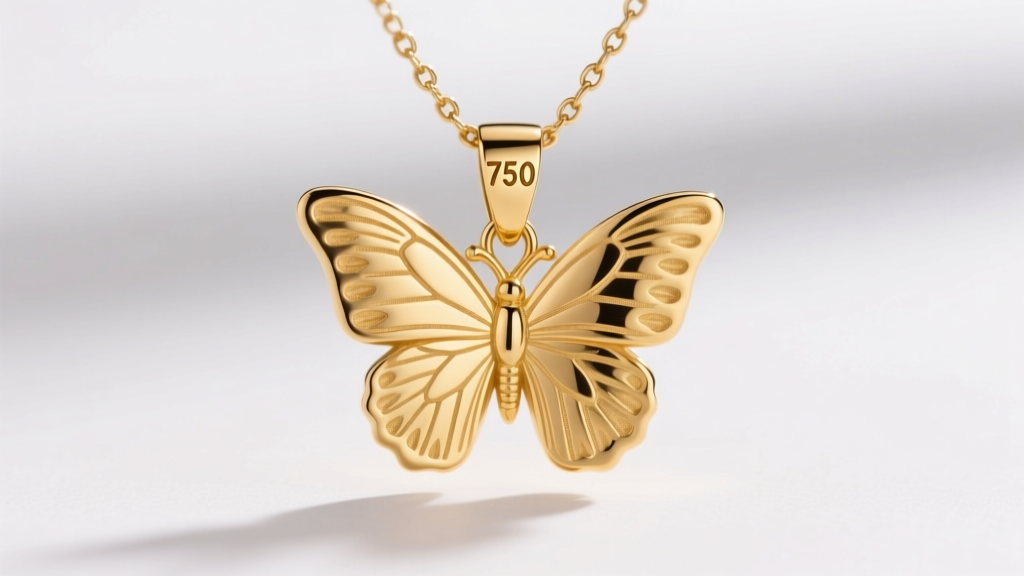
Not all solid gold butterfly necklaces are created equal. The difference between a high-end piece and a poorly manufactured one often comes down to the bail (the loop that connects the pendant to the chain).
The 'Flip' Failure Mode
A common frustration with butterfly pendants is that they tend to flip upside down or slide sideways on the chest. This happens when the bail is soldered to the very top edge of the wings, creating a top-heavy center of gravity. To ensure your butterfly lays perfectly flat against your sternum, look for a hidden bail or a soldered jump ring attached to the upper-middle back of the pendant. This distributes the weight evenly and keeps the motif facing forward.
Antennae and Wingtip Integrity
Inspect the antennae closely. In cheaper castings, antennae are thin, brittle, and prone to snapping. High-quality solid gold butterfly necklaces will feature slightly tapered, reinforced antennae, or they will omit them entirely in favor of a sleek, minimalist wing silhouette.
Choosing the Right Chain and Clasp
The chain you pair with your butterfly pendant dictates the overall aesthetic and durability of the necklace. Because butterfly pendants are typically lightweight (ranging from 1.5 to 3.5 grams), you need a chain that complements rather than overpowers the design.
- 1.2mm Box Chain: Offers a modern, geometric contrast to the organic curves of the butterfly wings. It is highly resistant to kinking and lays flat against the skin.
- 1.5mm Cable Chain: A classic, timeless choice. The uniform oval links provide a traditional look that pairs beautifully with vintage-inspired butterfly designs.
- Chains to Avoid: Rope chains or thick Figaro chains (over 2.5mm). These are too heavy and will visually swallow a delicate butterfly pendant, making it look like an afterthought.
Always ensure your chain is finished with a lobster clasp. Spring ring clasps are notoriously fragile, difficult to open with one hand, and prone to snapping under the tension of solid gold chains.
How to Verify Authenticity and Avoid Fakes
When buying a solid gold butterfly necklace, especially from independent sellers or vintage markets, you must verify the metal content. Here are three actionable steps to authenticate your piece:
- Check the Hallmarks: Look for a microscopic stamp on the jump ring or the back of the pendant. You should see '14K', '585' (the European equivalent for 14k), '18K', or '750'. If you see stamps like '14K HGP' (Heavy Gold Plated) or '14K GF' (Gold Filled), it is not solid gold.
- The Magnet Test: Gold is a non-magnetic metal. If your butterfly pendant or chain is attracted to a strong neodymium magnet, the core is made of a ferrous metal like steel or iron, meaning it is merely plated.
- Inspect the Clasp and Jump Rings: In genuine solid gold jewelry, the jump rings are usually soldered closed or feature a very tight, precise seam. Plated jewelry often features loosely wrapped, unsoldered jump rings to cut manufacturing costs.
Styling and Layering Your Butterfly Necklace
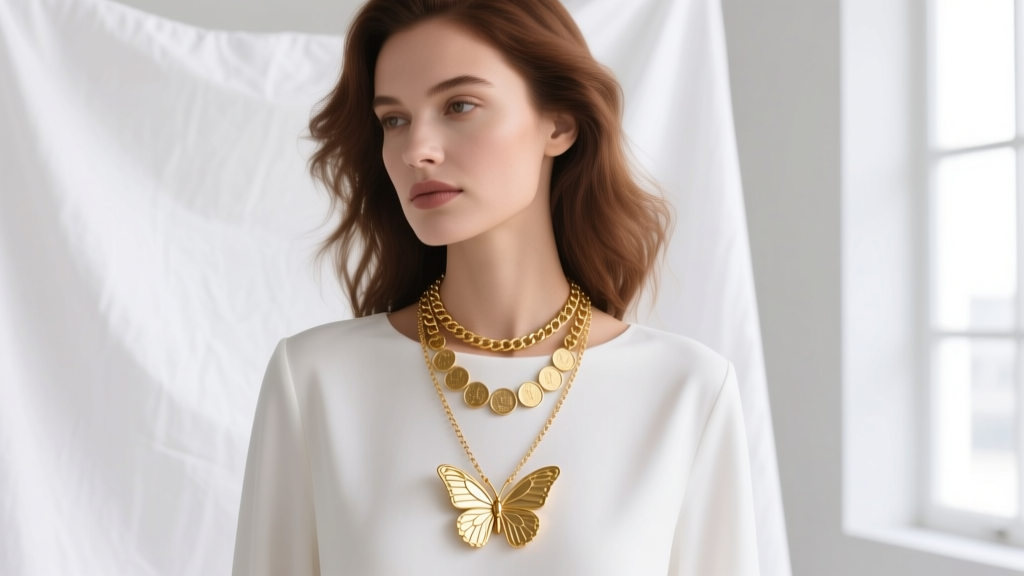
The butterfly motif is incredibly versatile, but its placement on the neckline changes the entire vibe of your outfit. Here is a quick framework for choosing your chain length:
The 16-Inch Collarbone Length (The Standard)
A 16-inch chain places the butterfly pendant right in the hollow of the collarbone. This is the most universally flattering length and allows the pendant to catch the light when wearing V-necks, scoop necks, or open button-down shirts.
The 18-Inch Chest Length (For Layering)
If you plan to layer your solid gold butterfly necklace, opt for an 18-inch chain. Pair it with a 14-inch solid gold choker or a 16-inch delicate pearl strand. The butterfly will sit lower on the chest, acting as the anchor piece of your necklace stack.
2026 Pricing Expectations and Care Routine
With gold spot prices remaining historically high into 2026, buyers must adjust their budget expectations. A genuine 14k solid gold butterfly pendant (approx. 2 grams) paired with a 16-inch 1.2mm solid gold box chain (approx. 3 grams) contains roughly 5 grams of total gold weight. Factoring in manufacturing labor, brand overhead, and retail markup, a fair market price for this setup ranges from $450 to $750. If you see a 'solid gold' butterfly necklace selling for $89, it is almost certainly mislabeled gold-plated brass.
Maintenance and Cleaning
To keep your butterfly's wings gleaming, clean the necklace once a month. Mix a few drops of mild dish soap in warm water and let the necklace soak for 10 minutes. Use a soft-bristled baby toothbrush to gently sweep away lotion and dead skin cells trapped in the wing crevices. Rinse thoroughly and pat dry with a microfiber cloth. Avoid ultrasonic cleaners if your butterfly pendant features glued-in gemstones like pearls or opals, as the vibrations can shake the stones loose from their settings.


