How to Clean and Care for a Sterling Silver Snake Chain Necklace
Learn expert techniques to clean, store, and maintain your sterling silver snake chain necklace to prevent tarnish, kinks, and link damage.

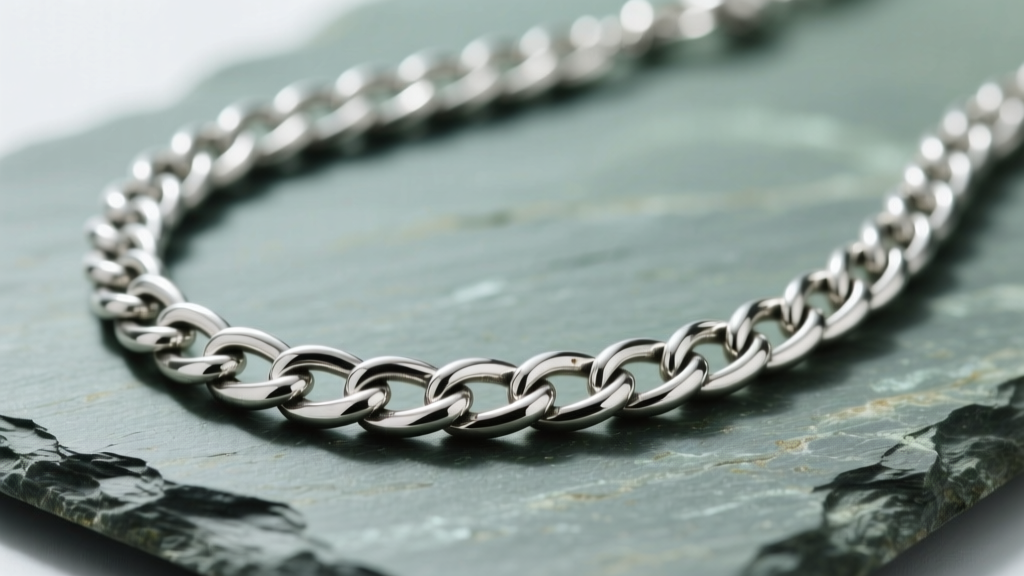
The sleek, liquid-metal drape of a sterling silver snake chain necklace makes it a staple in both minimalist and layered jewelry wardrobes. However, its unique construction—tightly interlocking rings that form a smooth, flexible tube—presents specific maintenance challenges that standard cable or curb chains do not face. If you own this elegant silhouette, understanding the metallurgy and structural vulnerabilities of your jewelry is critical for preserving its lifespan.
In this comprehensive guide, we break down the exact protocols for cleaning, polishing, and storing your sterling silver snake chain necklace, ensuring it remains pristine and kink-free for years to come.
The Anatomy of a Snake Chain: Why It Needs Special Care
To properly care for your necklace, you must first understand how it is built and what it is made of. Authentic pieces are stamped '.925', indicating they are composed of 92.5% pure silver and 7.5% alloying metals, usually copper. While pure silver is highly resistant to tarnish, the copper additive is highly reactive to sulfur and moisture in the air, leading to the black silver sulfide layer we recognize as tarnish.
Structurally, a snake chain is not a solid wire. It is composed of microscopic, slightly curved rings locked together in a continuous, tubular pattern. This creates a beautiful, seamless surface, but it also creates thousands of tiny crevices. These microscopic gaps are magnets for skin oils, lotions, airborne pollutants, and tarnish. Furthermore, because the links are packed so densely, they lack the lateral flexibility of a rolo or box chain, making them notoriously susceptible to permanent kinking if bent at a sharp angle.
Step-by-Step Cleaning Guide for Snake Chains
When cleaning a sterling silver snake chain necklace, the goal is to lift debris from the microscopic crevices without introducing harsh chemicals that can become trapped and cause delayed corrosion.
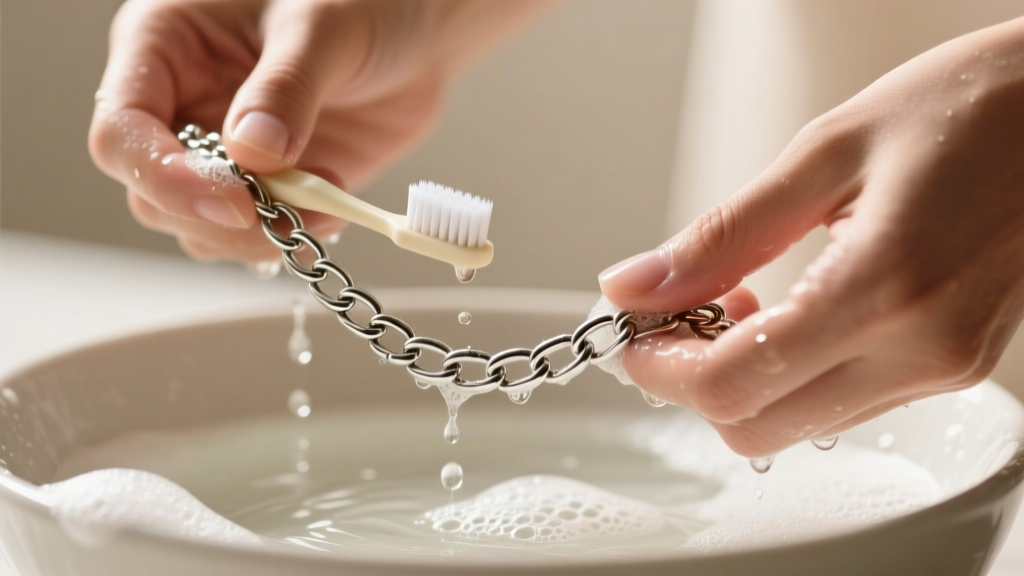
What You Will Need:
- Phosphate-free, mild dish soap (avoid soaps with moisturizers or citrus additives)
- Lukewarm distilled water (tap water contains minerals that can leave spots)
- A brand-new, extra-soft baby toothbrush
- A lint-free microfiber cloth
The Cleaning Process:
- Prep the Surface: Place a soft silicone mat or folded microfiber towel at the bottom of a glass bowl to prevent the clasp from scratching the glass or the silver from denting.
- Create the Bath: Mix a few drops of mild dish soap into the lukewarm distilled water.
- Agitate Gently: Submerge the necklace and let it soak for exactly 3 to 5 minutes. Do not exceed this, as prolonged water exposure can weaken the tension in older clasps.
- Target the Crevices: Using the baby toothbrush, gently stroke the chain longitudinally (from the clasp to the pendant loop). Never scrub in circles or side-to-side, as the bristles can catch the edge of a link and pull it outward.
- Rinse and Dry: Rinse thoroughly under a gentle stream of distilled water. Pat dry immediately with a microfiber cloth. Avoid paper towels, as their wood pulp fibers can inflict micro-scratches on the high-polish silver surface.
Tackling Tarnish: Polishing Without Damaging the Links
When your necklace develops a yellowish or blackish tint, washing alone will not remove the silver sulfide layer. You must use a mechanical or chemical polishing method. According to the Gemological Institute of America (GIA), gentle mechanical polishing is generally preferred for intricate chain weaves to avoid chemical residue buildup.
For a snake chain, use a high-quality, treated silver polishing cloth (such as a Sunshine cloth). The critical technique here is directional wiping. Always pull the chain through the cloth in one direction, matching the grain of the links. If you rub aggressively back and forth, you risk generating excess heat and friction, which can warp the interlocking rings.
A Warning on Rhodium Plating: Many modern sterling silver snake chains are flash-plated with rhodium to provide a bright, white-gold-like finish and prevent tarnish. If your chain is rhodium-plated, do not use abrasive polishing cloths or silver pastes. Rhodium is incredibly hard but very thin; aggressive polishing will strip the plating, exposing the yellowish sterling silver beneath and resulting in a patchy appearance.
Evaluating Cleaning Methods: What Works and What Destroys
Not all silver cleaning hacks found online are safe for the dense tubular structure of a snake chain. Below is an expert evaluation of common cleaning methods.
| Cleaning Method | Safe for Snake Chains? | Expert Verdict & Risk Factors |
|---|---|---|
| Mild Soap & Water | Yes | The safest daily maintenance method. Removes oils and surface dirt without chemical risks. |
| Silver Polishing Cloth | Yes | Excellent for light tarnish. Must be wiped longitudinally to avoid catching links. |
| Ultrasonic Cleaners | No | High-frequency vibrations can loosen the tight interlocking rings and strip rhodium plating. |
| Chemical Silver Dips | No | Acidic dips (like Tarn-X) get trapped in the crevices, causing delayed flaking and structural weakening. |
| Baking Soda & Foil Bath | No | The electrochemical reaction leaves a dull, matte finish on the high-polish tubular surface. |
The Kink Factor: Prevention and Reality
The most common cause of death for a sterling silver snake chain necklace is kinking. When a snake chain is bent sharply or folded under pressure (such as sleeping in it or tossing it loosely into a purse), the silver alloy undergoes plastic deformation. This means the metal stretches beyond its yield point and cannot naturally spring back.
If your chain kinks, do not attempt to bend it back into place with your fingers or pliers. Bending it back and forth will cause metal fatigue, leading to a microscopic fracture that will eventually snap. For minor, hairline kinks, a professional jeweler can sometimes use specialized mandrels and nylon-jawed pliers to gently coax the links back into alignment. Severe kinks usually require the damaged section to be snipped out and the chain re-soldered, which alters the original length.
Proper Storage Protocols to Prevent Tarnish and Kinks
How you store your necklace when it is not on your neck dictates how often you will need to clean it. The Jewelers of America emphasizes that controlling the micro-climate of your jewelry storage is the most effective way to halt oxidation.
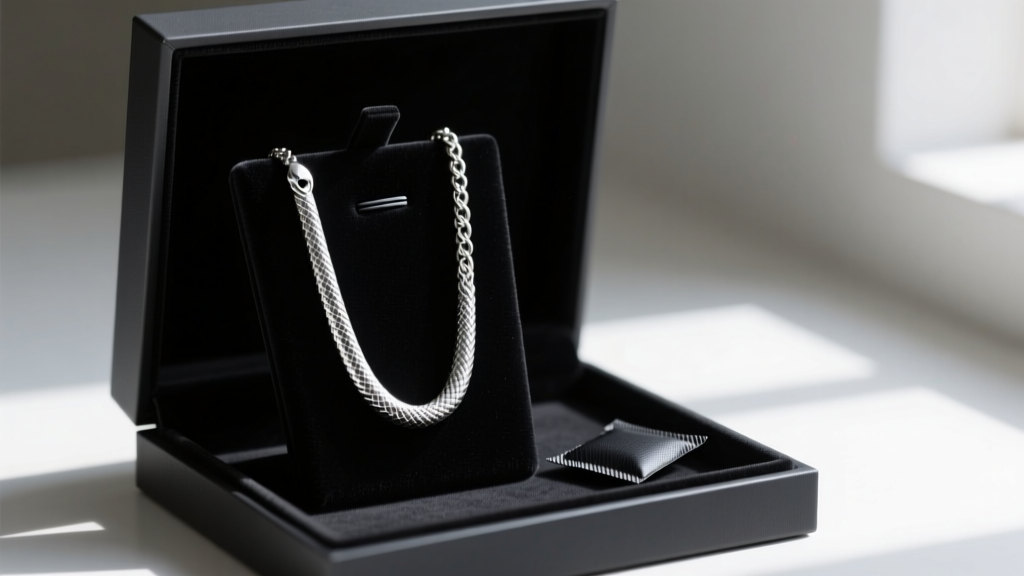
The Golden Rules of Snake Chain Storage:
- Always Hang or Lay Flat: Never toss a snake chain into a drawer or a communal jewelry box. Always hang it from a dedicated necklace bust or lay it perfectly straight in a velvet-lined tray.
- Use Anti-Tarnish Strips: Place 3M anti-tarnish strips or Pacific Silvercloth tabs in your storage area. These materials absorb airborne sulfur compounds before they can react with the copper in your sterling silver.
- Isolate from Other Metals: Store your snake chain separately. The friction from harder gemstones or heavier chains rubbing against it during storage will cause permanent surface scratching.
- The 'Last On, First Off' Rule: Always put your necklace on after applying perfumes, hairsprays, and lotions, and take it off before showering or swimming. Chlorine and sulfur-rich hot springs will rapidly destroy the finish.
When to Seek Professional Jeweler Intervention
While routine cleaning and careful storage will handle 90% of maintenance, certain issues require a professional bench jeweler. If your lobster clasp becomes stiff, the internal spring may be failing or clogged with debris; a jeweler can ultrasonically clean the clasp mechanism or replace it entirely for a minimal fee. Additionally, if you notice a 'fuzzy' or rough texture on the chain that does not wipe away, the links may be pulling apart at a microscopic level. A professional can assess the structural integrity and perform laser welding if necessary, saving your favorite piece from an inevitable break.


