What Is Necklace Anatomy? Advanced Chain Care & Cleaning Guide
Discover the chemistry behind jewelry degradation. Learn advanced cleaning protocols, ultrasonic safety, and how to maintain your precious chains.


When consumers search for basic jewelry definitions, they often ask, 'What is necklace anatomy?' Understanding the structural and chemical composition of your chains is the foundational step toward proper maintenance. A necklace is not merely a decorative loop; it is a complex assembly of metallurgical joints, mechanical clasps, and surface finishes that react dynamically to their environment. In 2026, with the rise of complex mixed-metal layering and sustainable heirloom restoration, knowing how to care for your pieces goes far beyond wiping them with a generic polishing cloth. This guide deconstructs the physical anatomy of chains and provides advanced, material-specific cleaning protocols to preserve your jewelry's structural integrity and luster.
Deconstructing the Chain: What Is Necklace Anatomy?
Before applying any chemical or mechanical cleaning method, you must understand the physical vulnerabilities of your jewelry. A standard chain necklace consists of interlocking links, soldered jump rings, and a clasp assembly. The most critical vulnerability lies in the solder points. Solder is typically a lower-karat alloy designed to melt at a lower temperature than the base metal. These joints often contain flux residues or differing metallic compositions that can create localized galvanic cells when exposed to moisture, leading to accelerated, localized tarnishing or the dreaded 'green skin' effect.
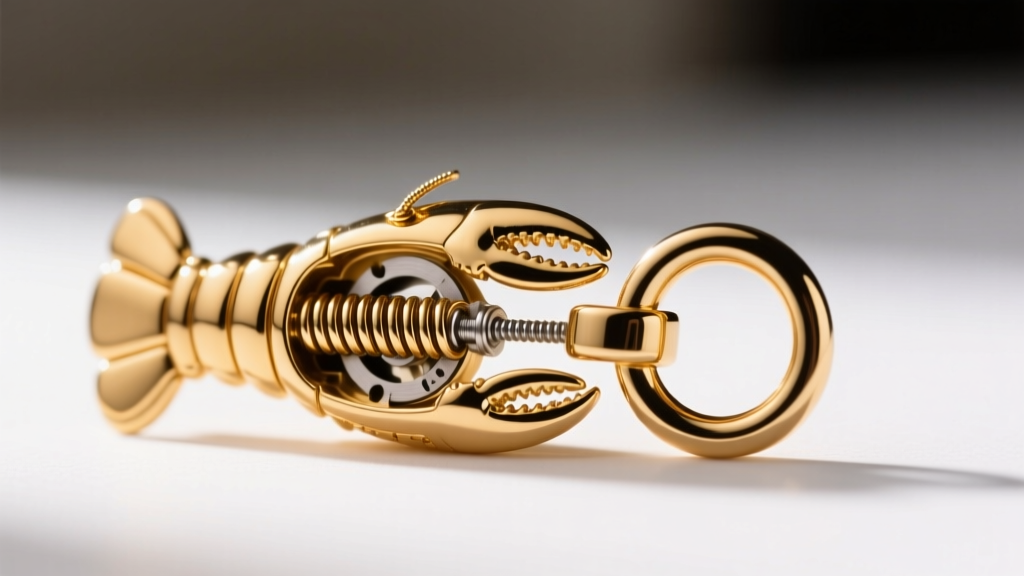
Furthermore, the clasp mechanism—particularly lobster and spring-ring clasps—houses a tiny internal steel spring. Even if the exterior of the clasp is cast in 14k gold or sterling silver, the internal spring is almost always made of carbon steel. Submerging these clasps in harsh liquid cleaners or failing to dry them thoroughly will cause the internal spring to rust, eventually seizing the clasp shut or causing it to snap under tension.
The Chemistry of Tarnish: Why Metals Degrade
Tarnish is not dirt; it is a chemical reaction. For sterling silver (92.5% silver, 7.5% copper), the primary culprit is hydrogen sulfide (H2S) in the atmosphere. When silver reacts with H2S, it forms silver sulfide (Ag2S), which manifests as a yellowish, brown, or black film on the surface. The copper alloyed within sterling silver is also highly susceptible to oxidation, forming copper oxide when exposed to humidity and sweat.
Environmental Accelerators
Several everyday factors exponentially accelerate this chemical degradation:
- Vulcanized Rubber: Materials like rubber bands or certain display mats emit sulfur gases that will blacken silver in hours.
- Cosmetics & Perfumes: Zinc oxide and titanium dioxide, common in modern sunscreens and foundations, act as mild abrasives that can scratch high-polish finishes, creating micro-crevices where tarnish embeds itself.
- Chlorine & Bromine: Found in swimming pools and hot tubs, halogens attack the copper and zinc alloys in gold and silver, causing permanent structural weakening and stress corrosion cracking.
Material-Specific Cleaning Protocols
Generic 'jewelry dips' are often highly acidic and can strip the protective rhodium plating off white gold or damage porous gemstones. Instead, utilize targeted protocols based on your necklace's specific metallurgy.
Sterling Silver (925): Electrochemical Reduction
For heavily tarnished solid silver chains without oxidized (blackened) design details or delicate gemstones, electrochemical reduction is the safest method. It reverses the chemical reaction without removing any base metal.
- Line a glass bowl with aluminum foil (shiny side up).
- Place the silver chain on the foil, ensuring direct contact.
- Add 1 tablespoon of baking soda and 1 teaspoon of non-iodized salt.
- Pour boiling water over the mixture. The resulting ion exchange transfers the sulfur from the silver to the aluminum foil.
- Remove after 3 minutes, rinse thoroughly in distilled water, and dry immediately with a microfiber cloth.
Never use this method on 'oxidized silver' (intentionally darkened crevices for contrast), as the electrochemical process will strip the intentional patina, leaving the piece looking flat and uniformly bright.
Gold Vermeil vs. Gold Plated
Gold vermeil consists of a thick layer of gold (minimum 2.5 microns) over a sterling silver base, whereas standard gold-plated necklaces use a brass or copper base with a microscopic gold flash (often under 0.5 microns). Never use abrasive polishing cloths or ultrasonic cleaners on vermeil or plated chains. The friction will strip the gold layer, exposing the base metal. Clean these pieces using only a few drops of mild, phosphate-free dish soap (like Dawn) in lukewarm water, gently agitating with a soft-bristled baby toothbrush, and patting dry.
The Ultrasonic Cleaner Debate: When to Use and When to Avoid
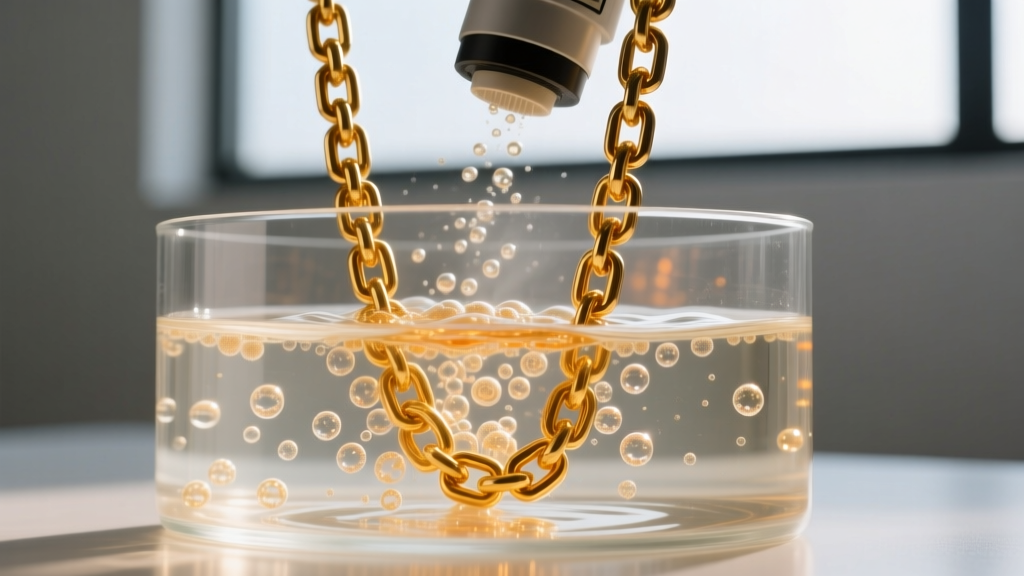
Ultrasonic cleaners use high-frequency sound waves (typically 40kHz) to create microscopic cavitation bubbles in a liquid solvent. When these bubbles collapse against the jewelry, they generate intense localized pressure that dislodges dirt and sebum from deep within chain links. However, according to the Gemological Institute of America (GIA), this process is highly destructive to certain materials.
| Material / Gemstone | Ultrasonic Safety | Reasoning |
|---|---|---|
| Solid Gold / Platinum Chains | Safe | High density and lack of porosity withstand cavitation. |
| Sterling Silver (No Stones) | Safe | Excellent for removing sebum from rope and box chains. |
| Pearls & Coral | NEVER | Organic, porous; vibrations will shatter the nacre structure. |
| Emeralds & Opals | NEVER | Emeralds are fracture-filled with oils; opals contain water. Ultrasonics will cause catastrophic cracking. |
| Gold Vermeil / Plated | Avoid | Cavitation can peel poorly bonded microscopic gold layers. |
Preventative Storage Solutions
Proper storage is the most effective form of necklace maintenance. The goal is to control humidity and neutralize atmospheric sulfur. Avoid storing jewelry in PVC plastic bags or cardboard boxes, as these materials off-gas acidic compounds and sulfur over time.
For long-term preservation, utilize Pacific Silvercloth or similar anti-tarnish flannel fabrics. These fabrics are embedded with microscopic silver particles that act as a sacrificial anode, absorbing sulfur gases before they can reach your necklace. Additionally, include a small packet of silica gel desiccant in your storage container to keep relative humidity below 40%, effectively halting the oxidation process of copper alloys. By understanding the intricate anatomy and chemical vulnerabilities of your chains, you can transition from reactive cleaning to proactive preservation, ensuring your necklaces remain pristine for decades.


