444 Necklace Guide: Material Grades, Chain Pairings & Meaning
Discover the technical details behind the perfect 444 necklace. Compare metal grades, chain pairings, and casting methods for lasting spiritual jewelry.

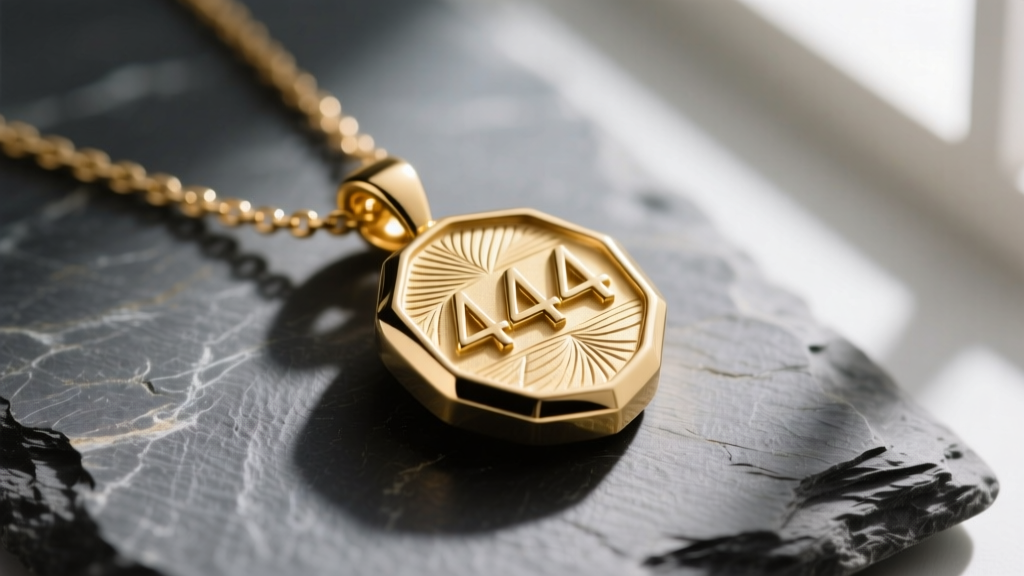
In the realm of spiritual and numerological jewelry, the 444 necklace has emerged as a powerful talisman. Representing protection, spiritual awakening, and divine alignment, the number 444 is more than just a passing trend—it is a daily anchor for mindfulness. However, as the demand for angel number jewelry surges, the market has become saturated with poorly constructed pieces that tarnish, warp, or break within months. As a jewelry specialist, I look past the symbolism to evaluate the structural integrity, metallurgy, and design mechanics of these pieces. This expert deep dive will guide you through the technical specifications of choosing a high-quality 444 necklace, ensuring your spiritual anchor is built to last a lifetime.
The Anatomy of a 444 Necklace: Casting vs. Laser Cutting
The manufacturing method of a numeric pendant dictates its weight, durability, and light reflection. When shopping for a 444 necklace, you will primarily encounter two fabrication techniques: lost-wax casting and laser cutting.
Lost-Wax Casting for 3D Depth
High-end 14k gold and heavy sterling silver 444 pendants are typically created using lost-wax casting. A 3D wax model is carved, encased in a plaster mold, and burned out, leaving a cavity where molten metal is injected. This method allows for beveled edges, varying thicknesses, and a substantial feel. For a cast 444 pendant to be durable, the thinnest points of the numerals must be at least 1.2mm thick. Anything thinner risks bending under the tension of the chain or snagging on clothing.
Laser Cutting for Minimalist Profiles
For a sleek, modern aesthetic, manufacturers use CAD-driven laser cutters to slice the 444 shape from a flat sheet of metal. While visually striking, laser-cut pendants are prone to warping if the gauge is too low. A reputable jeweler will use 14-gauge (1.6mm) or 16-gauge (1.3mm) sheet metal for laser-cut angel numbers. If a pendant feels flimsy or bends when you press it between your thumb and forefinger, it is likely stamped from thin 20-gauge sheet metal and should be avoided.
Material Grades: Which Metal Suits Your Spiritual Anchor?
The metallurgy of your 444 necklace determines its longevity, skin compatibility, and maintenance requirements. According to the Gemological Institute of America (GIA), understanding alloy compositions is critical when investing in fine jewelry. Below is a technical comparison of the most common metals used for numeric pendants.
| Metal Grade | Composition & Alloy | Durability & Tarnish | Est. Price Range |
|---|---|---|---|
| 925 Sterling Silver | 92.5% Silver, 7.5% Copper | Moderate; requires rhodium plating to prevent sulfur tarnish. | $45 - $120 |
| 316L Stainless Steel | Iron, Chromium, Nickel, Molybdenum | Exceptional; highly resistant to corrosion and skin acids. | $20 - $60 |
| 14k Solid Yellow Gold | 58.5% Gold, Copper, Zinc, Silver | Heirloom; will not tarnish, develops a soft patina over decades. | $250 - $600+ |
| Gold Vermeil | 925 Silver base, 2.5μm 14k Gold plate | Low; the gold layer will wear off friction points within 1-2 years. | $60 - $150 |
Expert Recommendation: If you intend to wear your 444 necklace daily in the shower and during exercise, 316L stainless steel or solid 14k gold are your only viable options. Sterling silver will oxidize rapidly when exposed to chlorinated water and sweat, requiring weekly polishing with a treated jeweler's cloth.
Chain Pairings: Matching the Bail and Link Style
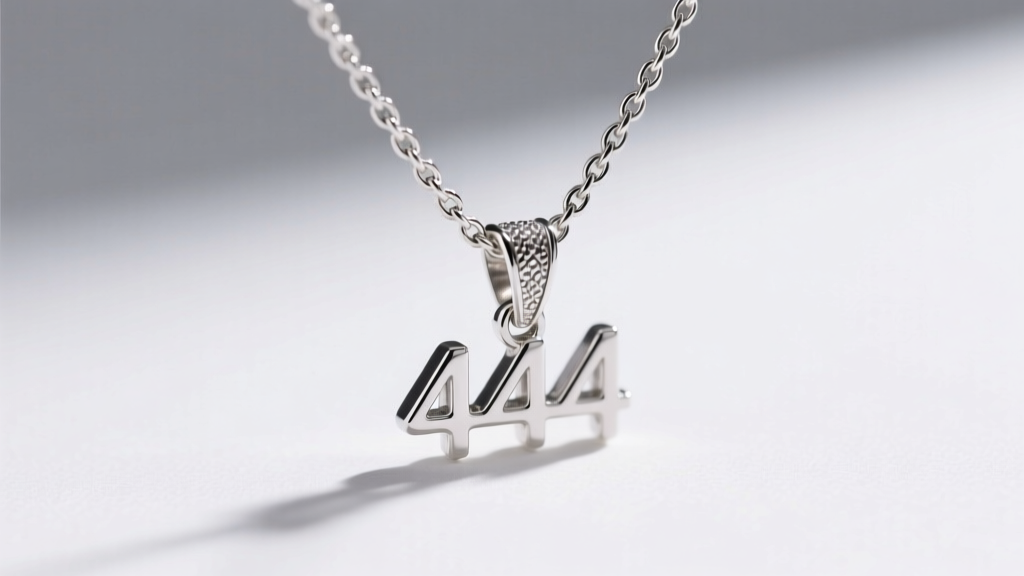
A pendant is only as secure as the chain it hangs from, and the bail (the loop connecting the pendant to the chain) is the critical failure point in necklace anatomy. The orientation of your 444 pendant dictates the chain requirements.
Horizontal 444 Pendants
When the numerals are laid out horizontally (left to right), the pendant requires either a wide, single bail or a double-bail setup to prevent it from flipping upside down during wear. A standard 1.5mm cable chain is often too narrow to provide the friction needed to keep a horizontal pendant centered. Instead, opt for a 2.5mm to 3.0mm box chain or a flattened curb chain. The wider surface area of the links grips the bail, keeping the 444 alignment perfectly level against your collarbone.
Vertical 444 Pendants
Vertical orientations (stacked top to bottom) act like a plumb line. Because the center of gravity is lower, these pendants are prone to swinging and twisting. To counteract this, look for a vertical 444 pendant that features a hidden bail (a loop soldered directly to the back of the top numeral). This allows the pendant to sit flush against the sternum. Pair this with a 2.0mm rope chain; the twisted links of a rope chain provide enough structural rigidity to prevent the pendant from tangling.
Sizing and Proportions: Getting the Drop Length Right
The visual impact of an angel number necklace relies heavily on the drop length and the physical dimensions of the numerals. A 444 pendant that is too small will look like a manufacturing error, while one that is too large can overwhelm the neckline. The Jewelers of America recommends matching pendant scale to the wearer's frame and preferred necklines.
- The 16-Inch Choker Drop: Best for pendants measuring 12mm to 15mm in width. This length sits at the base of the throat and is ideal for layering above longer, gemstone-heavy chains.
- The 18-Inch Collarbone Drop: The industry standard. Accommodates pendants between 16mm and 22mm. This length allows the 444 pendant to rest perfectly in the hollow of the collarbone, making it visible above crewneck and scoop-neck shirts.
- The 20-to-24-Inch Chest Drop: Reserved for oversized, heavy-cast medallions (25mm+). This length is designed to be worn over clothing, such as sweaters or turtlenecks, acting as a bold statement piece rather than a subtle talisman.

Care and Maintenance: Preventing Tarnish on Numeric Pendants
Because the number 4 features sharp angles and tight interior corners, it is a magnet for trapping skin oils, lotions, and environmental dust. Over time, this buildup creates a dark film in the crevices of the numerals, dulling the metal's reflectivity.
Never use harsh chemical dips or ultrasonic cleaners on laser-cut 444 pendants that feature glued-in gemstone accents (such as a small diamond dotting the 'i' or a birthstone embedded in the '4'). The high-frequency vibrations of an ultrasonic cleaner will shatter the adhesive bond.
For routine maintenance of a solid gold or sterling silver 444 necklace, use a soft-bristled baby toothbrush dipped in a solution of warm water and a single drop of mild, phosphate-free dish soap. Gently agitate the bristles in the interior corners of the numerals, rinse with distilled water to prevent hard water spotting, and dry immediately with a microfiber cloth. This mechanical cleaning method removes sebum buildup without stripping the metal's natural luster or damaging rhodium plating.
Final Thoughts on Wearing Angel Numbers
Choosing a 444 necklace is a deeply personal decision, but executing that choice requires a discerning eye for jewelry craftsmanship. By prioritizing proper metal grades, understanding the mechanics of bail and chain pairings, and selecting the correct drop length for your wardrobe, you ensure that your spiritual jewelry remains a flawless, enduring extension of your personal style. Invest in structural integrity, and the meaning behind the numbers will shine through for decades to come.


