The 7 Necklace Layering Formula: 2026 Stack Guide
Discover the 7 necklace layering formula for 2026. Learn exact chain lengths, gauge sizes, and clasp types to build the perfect multi-strand stack.
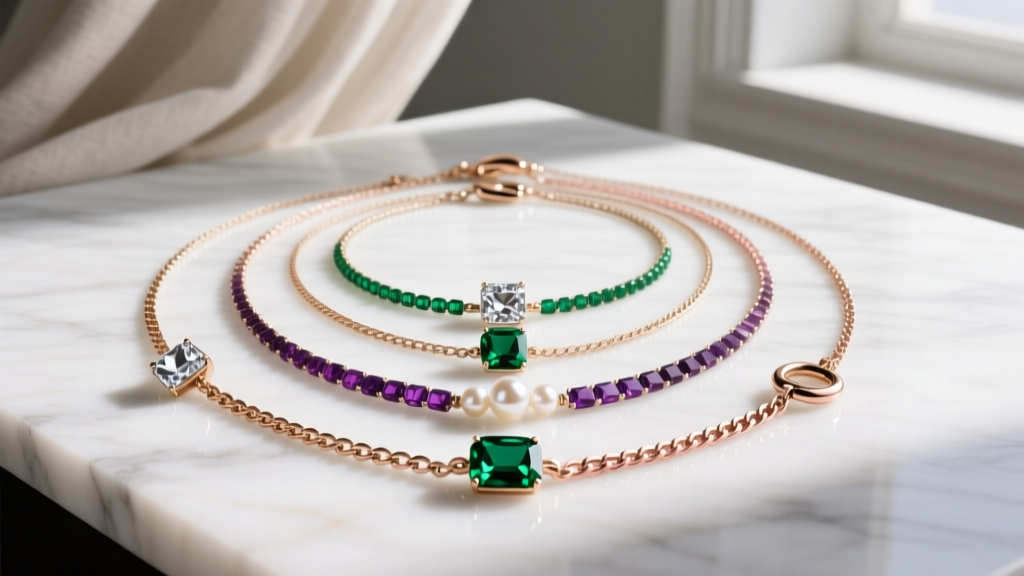

Maximalism has officially eclipsed minimalism in the contemporary jewelry landscape. As we navigate the 2026 style cycle, the undisputed champion of the décolletage is the multi-strand stack. However, throwing on a handful of random chains rarely yields a cohesive look. Enter the 7 necklace layering formula—a meticulously calculated approach to stacking that balances visual weight, prevents hardware friction, and creates a cascading silhouette that flatters every neckline. Whether you are curating a high-end fine jewelry collection or building an everyday waterproof stack, mastering the 7 necklace arrangement requires an understanding of gauge proportions, metallurgical durability, and spatial distribution.
The Anatomy of the 7 Necklace Stack
The fundamental rule of the 7 necklace stack is progressive elongation and alternating texture. If all seven chains share the same link style and thickness, the result is a heavy, tangled mess rather than a curated cascade. The formula dictates a strict two-inch minimum gap between each layer to prevent the clasps and links from interlocking during movement. Furthermore, the visual weight must anchor at the center and taper at the extremes. Below is the definitive matrix for constructing a balanced 7-layer arrangement.
| Layer | Length | Gauge / Width | Chain Style | Visual Function |
|---|---|---|---|---|
| 1 (Base) | 14 inches | 1.5mm | Herringbone or Snake | Sits flush on the collarbone; anchors the stack. |
| 2 | 16 inches | 1.0mm | Delicate Cable | Provides negative space and light reflection. |
| 3 | 18 inches | 2.5mm | Figaro or Curb | Introduces structural texture and masculinity. |
| 4 (Center) | 20 inches | 1.2mm + Pendant | Box Chain | The focal point; draws the eye to the sternum. |
| 5 | 22 inches | 3.0mm | Rope or Mariner | Adds heavy metallic volume to the lower stack. |
| 6 | 24 inches | 1.5mm | Wheat or Spiga | Creates a woven, intricate transition layer. |
| 7 (Terminal) | 30 inches | 4.0mm+ | Chunky Paperclip | Frames the torso and elongates the silhouette. |
Material Grades and the Vickers Hardness Scale
When stacking seven individual chains, friction is your greatest enemy. Every time you move, the links rub against one another, acting like microscopic files. If you use soft metals, your jewelry will degrade rapidly. To understand which metals survive the 7 necklace trend, we must look at the Vickers Hardness (HV) scale.
Why Standard 925 Sterling Silver Fails in Stacks
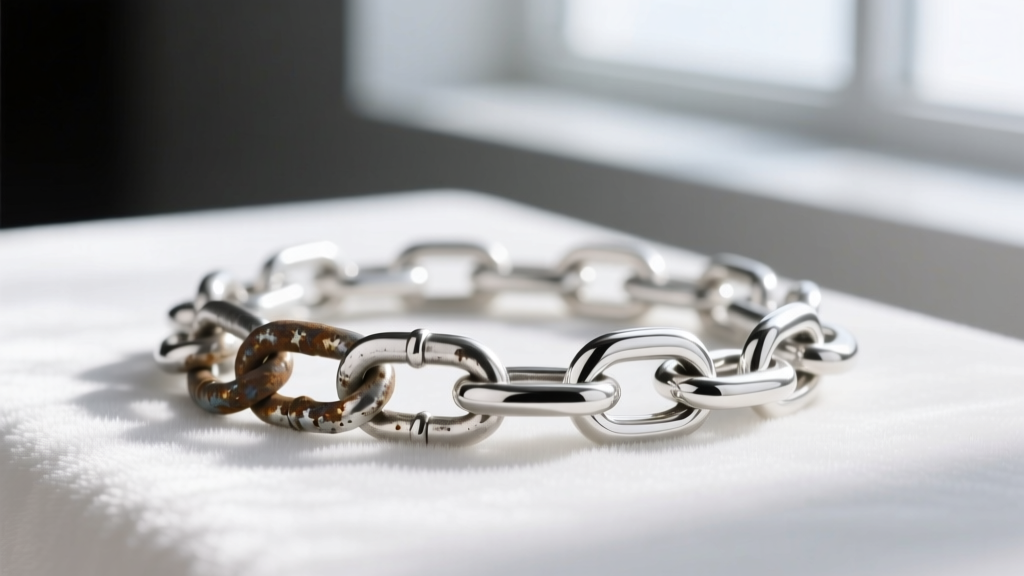
Traditional 925 sterling silver has a Vickers hardness of roughly 65 HV. While beautiful, it is incredibly soft. In a 7-layer stack, the friction from heavier chains (like a 4.0mm paperlink) will literally sand away the surface of delicate 1.0mm sterling silver cable chains within months. Additionally, sterling silver contains 7.5% copper, which oxidizes rapidly when exposed to the trapped sweat and heat generated by a dense necklace stack. If you must use silver, opt for Argentium 935, which replaces some copper with germanium, raising the hardness and providing extreme tarnish resistance.
The 14k Gold and 316L Steel Advantage
For a permanent or semi-permanent 7 necklace stack, 14k solid gold (approx. 135 HV) offers the perfect balance of malleability and scratch resistance. However, for fashion-forward stacks on a budget, 316L surgical stainless steel is the superior choice. Boasting a hardness of 150-190 HV, 316L steel is virtually impervious to the friction of multi-strand layering. It will not tarnish, bend, or snap under the cumulative weight of seven chains. According to the Gemological Institute of America (GIA), understanding the alloy composition of your gold is just as critical as the karat weight when predicting how a piece will wear over time.
The Vermeil Micron Standard
If you are buying gold vermeil for your stack, ignore the '18k gold plated' marketing jargon and demand the micron thickness. The FTC requires a minimum of 2.0 microns of gold over sterling silver to be classified as vermeil. However, for a 7-layer stack where friction is high, you need a minimum of 2.5 to 3.0 microns. Anything less will wear through to the silver base within weeks of daily stacking.
Hardware: Solving the Clasp Conundrum
Managing seven individual lobster clasps at the nape of your neck is a logistical nightmare. The hardware you choose dictates whether your stack is a joy to wear or a frustrating puzzle.
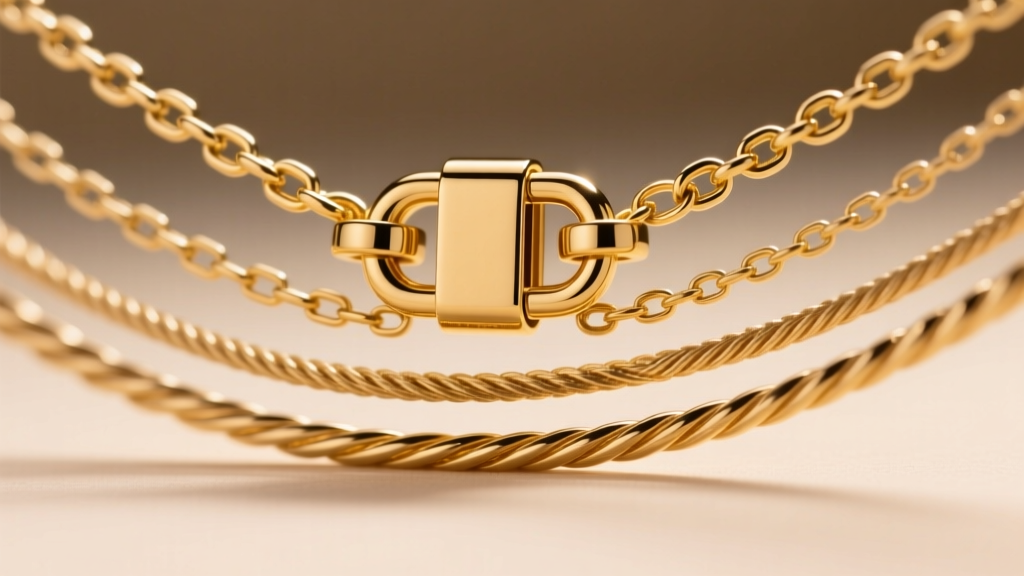
- Multi-Strand Magnetic Spacers: The ultimate 2026 solution. These clasps feature a single magnetic barrel that splits into seven distinct loops. You attach your chains to the loops once, and the magnetic barrel snaps together, aligning all seven chains perfectly at the back of the neck.
- Extender Chains with Lobster Clasps: If using individual clasps, ensure every chain has a 2-inch extender chain. This allows you to clasp all seven lobsters onto a single, heavy-duty master ring or a specialized layering clasp, turning seven closures into one.
- Spring Rings: Avoid these entirely for layers 3 through 7. The internal spring mechanism fails under the cumulative tension of a heavy stack, and the tiny tabs are impossible to operate when buried under six other chains.
Neckline Pairing Matrix
The 7 necklace formula must be adapted to the garment you are wearing. A stack that looks breathtaking over a silk camisole will look chaotic under a structured blazer.
The V-Neck and Scoop Neck
These necklines naturally frame the décolletage. Follow the geometry of the fabric. Ensure your 4th layer (the pendant) sits exactly one inch above the apex of the V-neck. Keep the 7th layer (30 inches) tucked inside the neckline to avoid clashing with the hem of the garment.
The Crew Neck and Turtleneck
High, tight necklines require a modified 7 necklace approach. The 14-inch choker will sit awkwardly on the fabric. Instead, start your stack at 16 inches and extend the terminal layer to 36 inches. The goal is to create a long, vertical line that breaks up the horizontal block of a crew neck sweater.
The Unbuttoned Oxford
The holy grail for the 7 necklace stack. Unbutton the shirt to the lower sternum. The rigid collar of the Oxford shirt acts as a natural frame, keeping the wider 3.0mm and 4.0mm chains from slipping over your shoulders and getting lost in your sleeves.
Troubleshooting Common Layering Failures
Even with the perfect lengths, multi-strand stacks are prone to specific mechanical failures. Here is how to troubleshoot them like a professional jeweler.
The Tangle Factor: Tangling is caused by chains of similar thickness catching on one another. By strictly alternating between smooth chains (snake, herringbone) and textured chains (rope, figaro), you reduce the surface friction coefficient, allowing the chains to glide past each other rather than interlock.
Weight Distribution: If your stack constantly slides to one side, your pendant layer (Layer 4) is too heavy for the chain it is attached to. A 15-gram pendant on a 1.0mm box chain will pull the entire stack off-center. Upgrade the 4th layer to a 2.0mm chain to provide adequate structural support for the focal weight.
2026 Trend Forecast: The Future of the Stack
As we move deeper into 2026, the 7 necklace trend is evolving from purely metallic stacks to mixed-media cascades. Expect to see the integration of freshwater baroque pearls on the 18-inch layer, and black onyx beads on the 24-inch layer, breaking up the monotony of solid gold or silver. Furthermore, asymmetric layering—where the chains are deliberately clasped off-center to create a diagonal drape—is emerging on high-fashion runways. Mastering the foundational 7 necklace formula gives you the structural knowledge required to break the rules intentionally, ensuring your personal style remains both avant-garde and mechanically sound.


