Styling Necklaces in the 80s Aesthetic: A Modern Guide
Discover how to style necklaces in the 80s aesthetic today. We break down power chains, MTV layering, and New Wave chokers with exact specs.


The 1980s was a decade defined by bold silhouettes, unapologetic excess, and a radical shift in how jewelry communicated identity. When we analyze necklaces in the 80s, we are not just looking at retro costume jewelry; we are examining a masterclass in semiotics. From the boardroom to the underground club scene, neckwear served as an immediate visual shorthand for subculture, economic aspiration, and musical allegiance. Today, as the 80s aesthetic experiences a massive revival in contemporary fashion, understanding the exact anatomy, materials, and proportions of these vintage pieces is crucial for authentic styling.
At Jewel Style Radar, we believe that true style requires technical knowledge. This guide deconstructs the three primary archetypes of 1980s necklaces, providing exact measurements, material grades, and modern styling frameworks to help you integrate these iconic pieces into a 2026 wardrobe.
The Semiotics of 1980s Neckwear
According to archives from The Met's Costume Institute, the 1980s fragmented fashion into distinct tribal aesthetics. The power suit demanded heavy, architectural gold, while the rise of MTV and hip-hop culture transformed the necklace from a mere accessory into a central focal point of personal branding. Unlike the delicate, hidden chains of the 1970s, necklaces in the 80s were designed to be seen from across the room. They relied on high-contrast metals, exaggerated scales, and innovative synthetic materials to command attention.
Archetype 1: The 'Power Dressing' Statement Chain
The 'Dynasty' and Wall Street influence birthed the Power Chain. This was not a subtle piece; it was an armor of success. The quintessential power chain of the decade was the Miami Cuban link or the heavy Figaro chain.
Technical Specifications
- Width: Typically ranged from 8mm to 15mm. Anything under 6mm was considered too delicate for the power-dressing silhouette.
- Weight: Authentic vintage pieces often weighed between 60 and 120 grams, providing a heavy, substantial drape that lay flat against the collarbone.
- Clasp Hardware: High-end 80s chains utilized a box clasp reinforced with a double figure-8 safety catch. Spring ring clasps were avoided on heavy chains due to the high risk of tensile failure.
- Metallurgy: While solid 14k and 18k gold were used by luxury houses, the mass market relied on Heavy Gold Electroplate (HGE). According to the Gemological Institute of America (GIA), HGE requires a minimum thickness of 100 microinches of gold, making vintage 80s HGE pieces significantly more durable than modern flash-plated alternatives.
Modern Styling Rule: To wear a power chain today without looking like you are wearing a costume, contrast the heavy metal with soft, unstructured fabrics. A 12mm gold Cuban link worn over a slouchy, oversized cashmere sweater or a minimalist silk slip dress creates a sophisticated tension between 80s aggression and modern minimalism.
Archetype 2: The New Wave & Punk Choker
While the boardroom embraced gold, the underground embraced synthetic rebellion. The New Wave and post-punk movements popularized the choker, utilizing materials that were cheap, industrial, and highly customizable.
Material Breakdown: Lucite and Hardware
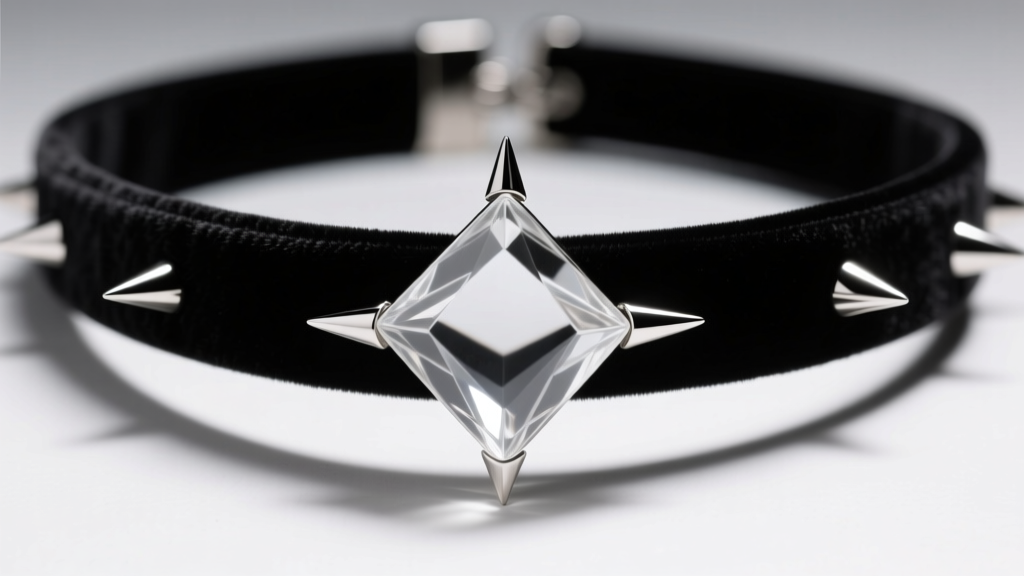
The 80s choker was defined by its rigid or semi-rigid structure. Velvet ribbons (typically 1 inch to 1.5 inches wide) were paired with geometric Lucite pendants. Lucite, a high-grade acrylic, was favored over glass because it could be molded into sharp, avant-garde shapes (like the Memphis Group design style) without shattering. Hardware was equally aggressive: cone spikes (usually 1/4 inch to 1/2 inch in length), heavy O-rings, and padlock motifs were standard. If you are sourcing vintage punk chokers, check the metal hardware for rust; many 80s pieces used untreated iron or low-grade steel alloys that oxidize heavily over time.
Material Analysis: 1980s Alloys vs. Modern Equivalents
Understanding what vintage necklaces in the 80s were actually made of helps in both authentication and restoration. Below is a comparison of common 80s materials and how they translate to modern jewelry manufacturing.
| 1980s Material | Common Use | Modern 2026 Equivalent | Durability Upgrade |
|---|---|---|---|
| Brass with HGE | Power chains, large pendants | PVD Coated 316L Stainless Steel | PVD offers 10x scratch resistance and prevents the 'green skin' reaction common with 80s brass. |
| Injection-Molded Lucite | Geometric pendants, bangles | Bio-Resin / Recycled Acrylic | Modern bio-resins are less prone to yellowing from UV exposure and micro-fracturing. |
| Vulcanized Rubber | Punk chokers, O-ring collars | Medical-Grade Silicone | Silicone does not dry-rot or crack like 40-year-old vulcanized rubber. |
| Pewter / Tin Alloys | Cast gothic pendants | Zinc Alloy with Rhodium Plating | Modern zinc alloys are lighter and less prone to bending under the weight of heavy chains. |
Archetype 3: The MTV Layered Cascade
Driven by the golden age of music television and the birth of hip-hop, the layered necklace cascade was a staple of 80s street style and rock glam. This was not a random jumble of chains; it was a calculated exercise in proportion and light reflection.
The Mathematics of the 80s Layer
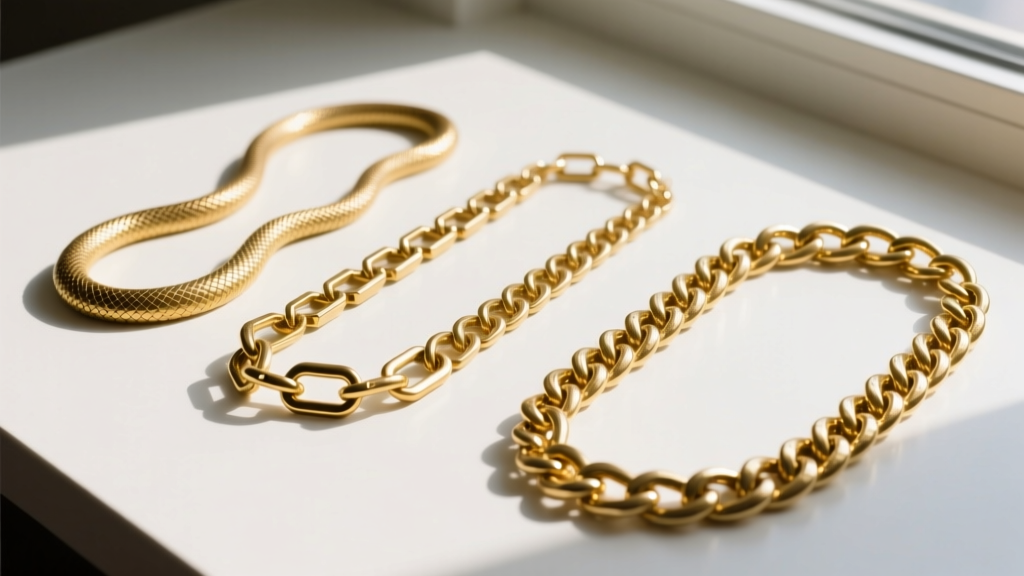
To achieve the authentic 80s cascade, you must adhere to a strict length progression to prevent the chains from tangling and to ensure each link profile is visible.
- The Base (16 inches): A tight choker, often a 2mm box chain or a velvet cord.
- The Anchor (18 to 20 inches): A medium-weight rope chain (3mm to 5mm). The twisted links of a rope chain catch studio and stage lighting brilliantly.
- The Statement (24 to 26 inches): A heavy Miami Cuban or a wide Herringbone chain (8mm+). This piece sits on the sternum and often features a large medallion or cross pendant.
- The Terminator (30+ inches): A long, lightweight snake chain ending in a tassle or small geometric weight, providing kinetic movement.
Critical Warning: The Herringbone Failure Mode
The herringbone chain was incredibly popular in the 80s for its liquid-like drape. However, it is structurally fragile. The flat, interlocking links have a severe tendency to kink if bent against their natural grain. If you are wearing a vintage 80s herringbone chain, never sleep in it, and store it laid perfectly flat. If a kink occurs, do not pull it; instead, lay it on a hard steel block and gently roll an agate burnisher over the kink to realign the links.
Sourcing and Authenticating Vintage 80s Pieces
When hunting for authentic necklaces in the 80s style at estate sales or vintage archives, hallmarks are your best tool. Look for specific stamps that denote the era's manufacturing standards:
- '14K HGE' or '18K HGE': Indicates Heavy Gold Electroplate, a hallmark of high-quality 80s costume jewelry.
- '1/20 14K GF': Gold Filled. This means 1/20th of the total weight of the item is solid 14k gold mechanically bonded to a brass core. These pieces survive decades of wear far better than plated items.
- Maker's Marks: Brands like Napier, Trifari (look for the crown mark), and Monet dominated the 80s department store market. Napier pieces from this era often feature bold, geometric, modular links that are highly sought after by modern archivists.
Conclusion: Wearing History with Intention
Styling necklaces in the 80s aesthetic is not about wearing a caricature of the past. It is about understanding the weight, material science, and cultural intent behind these pieces. By selecting the correct chain profile, respecting the mathematics of layering, and understanding the metallurgy of vintage gold plating, you can seamlessly integrate the power and rebellion of 1980s neckwear into a modern, sophisticated wardrobe.


