Mannequin Necklace Display Busts: The Ultimate Buyer Guide
Learn how to choose the ideal mannequin necklace display bust. Compare materials, neck slopes, and acid-free fabrics to protect your fine jewelry.

The Evolution of the Mannequin Necklace Display
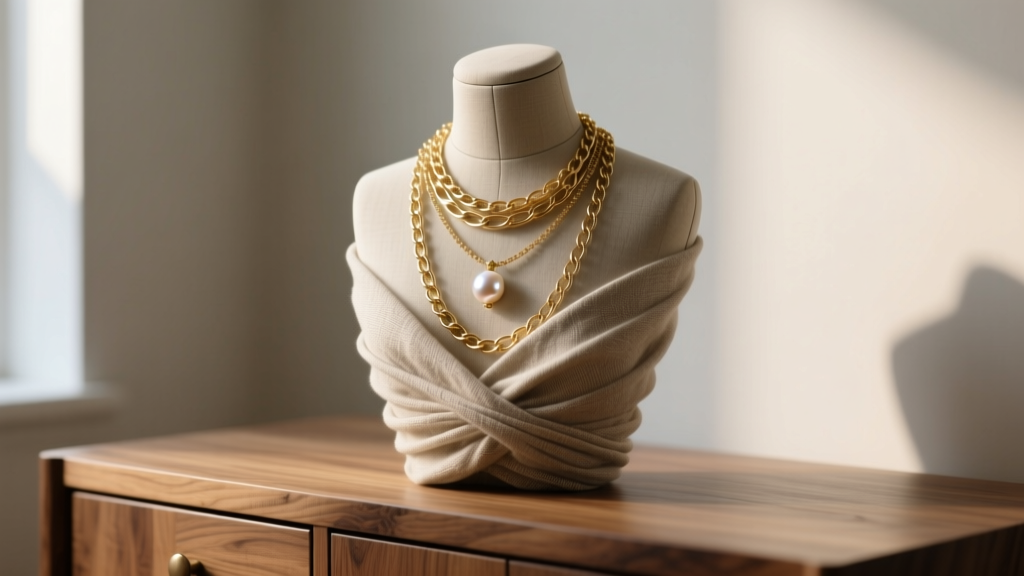
For serious jewelry collectors, storing necklaces flat in velvet-lined drawers is a recipe for tangled chains, crushed pendants, and accelerated tarnishing. The transition from flat storage to a three-dimensional mannequin necklace display bust is a critical upgrade for preserving structural integrity and visualizing layering stacks. Unlike generic retail displays, a high-quality collector’s bust mimics human anatomy to ensure that delicate chains drape naturally and heavy gemstone collars distribute their weight safely. In this comprehensive buyer guide, we break down the exact material grades, dimensional tolerances, and archival fabric standards you need to evaluate before investing in a display bust for your fine jewelry collection.
Core Materials: High-Density PU vs. Carved Wood
The internal core of your display bust dictates its longevity and how well it supports heavy jewelry. Cheap displays use Extruded Polystyrene (XPS) foam, which dents permanently under the weight of heavy pendants and degrades over time. Premium mannequin necklace busts utilize High-Density Polyurethane (PU) foam or solid carved basswood.
- High-Density PU Foam (80+ kg/m³): This is the gold standard for modern displays. At 80 kilograms per cubic meter, the foam is dense enough to resist permanent indentation from heavy clasps or sharp pendant bails, yet lightweight enough to move easily. It also absorbs minor impacts without cracking.
- Carved Basswood or Walnut: Traditional and incredibly durable, wood cores are ideal for supporting massive statement pieces, such as multi-strand pearl collars or heavy gold bib necklaces. However, wood must be properly sealed with a polyurethane varnish to prevent natural sap or acids from transferring to your jewelry.
- Avoid Standard Styrofoam (EPS): Expanded polystyrene is highly porous, off-gasses volatile organic compounds (VOCs), and will crumble when exposed to the friction of metal chains over time.
The Outer Layer: Fabric Selection and the Oddy Test
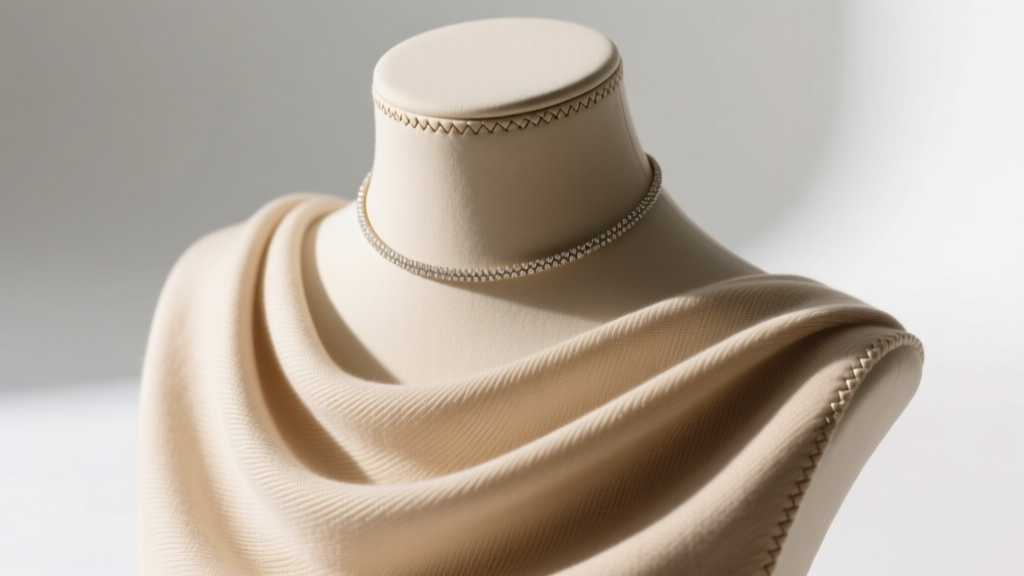
The fabric wrapping your mannequin necklace bust is the only barrier between your jewelry and the internal core. According to conservation standards outlined by the American Institute for Conservation, materials in direct contact with precious metals and organic gems must pass rigorous off-gassing evaluations, often referred to as the Oddy test. Raw polyurethane and synthetic polyesters can emit sulfur compounds and plasticizers that accelerate silver sulfide tarnishing and degrade porous pearls.
When shopping for a display bust, look for these archival-safe outer layers:
- Unbleached Muslin or Cotton: Naturally breathable and free from harsh chemical dyes. Cotton provides a slight texture that prevents slippery chains (like snake chains) from sliding off the shoulders.
- Acid-Free Linen: Offers a luxurious, high-end gallery aesthetic while maintaining a neutral pH. Linen is highly recommended for displaying antique jewelry or delicate enamel pieces.
- Micro-Suede (Polyurethane-based): While synthetic, high-grade micro-suede is often treated to be chemically inert. However, it should only be used if the manufacturer guarantees it is sulfur-free and plasticizer-free.
Anatomy of the Drape: Shoulder Slopes and Neck Drops
The geometry of the bust determines how your necklaces will hang. A mannequin necklace display designed for chokers will have vastly different dimensions than one designed for cascading lariat pendants. Understanding the shoulder slope angle and neck circumference is vital for accurate visualization.
| Dimension | Standard Retail Bust | Premium Collector Bust | Best Jewelry Use Case |
|---|---|---|---|
| Neck Circumference | 11 - 12 inches | 14 - 15 inches | Realistic fit for standard 16"-18" chains |
| Shoulder Slope Angle | 45° (Steep Drop) | 20° - 25° (Gentle Slope) | Keeps layered chains separated and visible |
| Collarbone Depth | Flat / Shallow | 1.5" Sculpted Hollow | Allows pendants to rest flat without flipping |
| Base Width | 4 inches | 7 - 9 inches | Prevents toppling from heavy front-loaded pendants |

Base Stability: Preventing the Topple Effect
One of the most common failure modes of inferior necklace displays is the "topple effect." When you drape a heavy gemstone collar or a thick Cuban link chain over the front of a lightweight foam bust, the center of gravity shifts forward, causing the entire display to tip over. This not only damages the jewelry but can also scratch the surface of your vanity.
To counteract this, premium mannequin necklace busts feature a weighted base. Look for displays that incorporate a steel plate or a solid hardwood plinth at the bottom. A general rule of thumb: the base weight should be at least 1.5 times the weight of your heaviest necklace. For collectors of heavy 22k gold or solid gemstone bib necklaces (which can easily exceed 250 grams), a bust with a wide, 8-inch solid walnut base is non-negotiable. As noted by the Gemological Institute of America (GIA), proper physical support is essential to prevent stress fractures in delicate gemstone settings caused by sudden impacts or falls.
Matching the Bust to Your Jewelry Archetype
Not all necklaces interact with a mannequin bust in the same way. Here is a quick decision framework for matching your collection to the right display geometry:
- Chokers and Collars (14" - 16"): Require a bust with a highly defined, cylindrical neck and a sharp 90-degree drop at the collarbone. This ensures the rigid structure of a collar sits flush against the "skin" of the display without gaping.
- Princess and Matinee Lengths (18" - 24"): Benefit from a 20-degree shoulder slope and a sculpted clavicle hollow. This allows the pendant to rest naturally in the center hollow, mimicking how it would lay on a human chest.
- Opera and Lariat Styles (28"+): Need a longer torso extension. Standard busts cut off at the upper chest, causing long lariats to pool awkwardly at the base. Look for an "extended torso" mannequin that reaches down to the solar plexus to showcase the full drop of a Y-necklace.
Maintenance and Archival Care
Even the best mannequin necklace display requires maintenance to remain a safe environment for your jewelry. Fabric coverings accumulate microscopic dust, skin oils (transferred from handling), and ambient humidity, all of which can transfer back to your silver and pearls.
Clean your fabric busts monthly using a lint roller and a soft, dry brush. Never apply liquid fabric cleaners or aerosol fresheners directly to the bust, as the chemical residues will cause immediate tarnishing upon contact with sterling silver. If a spill occurs or the fabric becomes heavily soiled, invest in a bust with a removable, washable slipcover made of unbleached cotton, allowing you to launder the outer layer without replacing the entire foam core. By prioritizing anatomical accuracy, archival-safe materials, and structural stability, you ensure your collection is displayed as beautifully as it is preserved.


