9ct Gold Cleopatra Necklace: Metallurgy, Mesh & Styling Guide
Discover the technical details of a 9ct gold Cleopatra necklace. Explore mesh construction, 37.5% alloy metallurgy, clasp mechanics, and care.

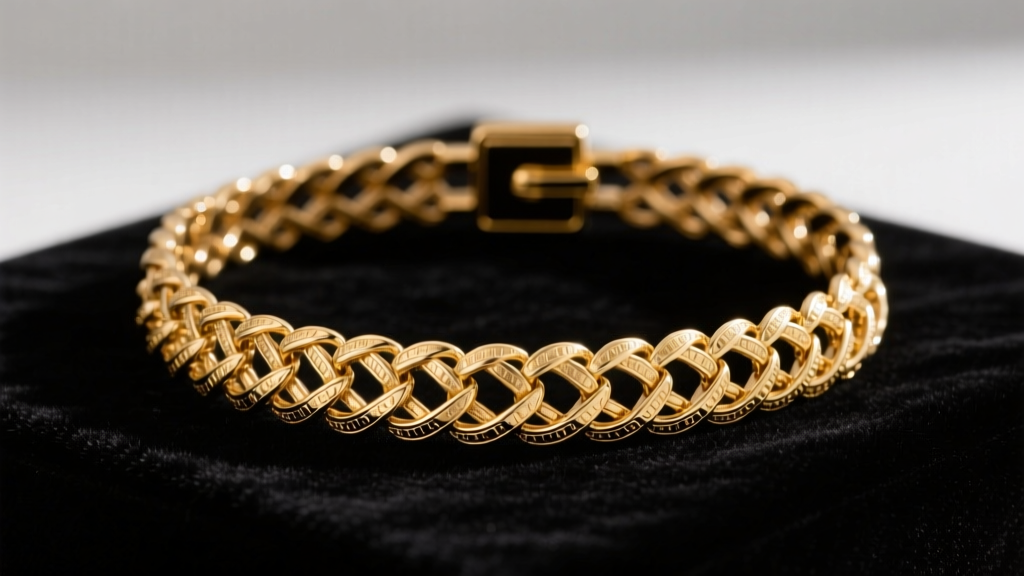
The Metallurgy of 9ct Gold in Wide Collars
The 9ct gold Cleopatra necklace is a masterclass in structural jewelry design. Often referred to as a bib, wide collar, or Egyptian revival band, this bold silhouette demands rigorous metallurgical planning. To understand why a 9ct gold Cleopatra necklace outperforms higher-karat alternatives in this specific form factor, we must examine the alloy composition. Stamped with the '375' hallmark, 9ct gold contains exactly 37.5% pure gold. The remaining 62.5% is a carefully calibrated blend of copper, silver, zinc, and occasionally palladium, as detailed by the Gemological Institute of America (GIA).
Why utilize 9ct rather than 18ct or 22ct for a wide collar? A 3-inch wide mesh Cleopatra necklace crafted in 18ct gold would weigh upwards of 150 grams. This immense weight makes the piece prohibitively expensive and, more importantly, structurally vulnerable. Pure gold and high-karat alloys possess a low Vickers hardness (HV), meaning a heavy 18ct collar would easily stretch, warp, or permanently deform under its own mass when worn. The higher alloy content in 9ct gold significantly increases the tensile strength and Vickers hardness of the metal. This provides the necessary rigidity to maintain sharp geometric Egyptian revival shapes or support dense, woven mesh without sagging. Furthermore, the copper-heavy alloy mix in 9ct yellow and rose gold yields a warm, rich hue that closely mimics the historical artifacts of antiquity, making it aesthetically ideal for the Cleopatra motif.
According to the World Gold Council, the durability and scratch resistance of 9ct gold make it the premier choice for heavy, everyday structural jewelry that requires high tensile integrity.
Construction Techniques: Mesh vs. Articulated Links
The term 'Cleopatra necklace' encompasses several distinct construction methodologies. The drape, weight distribution, and light reflection of the piece depend entirely on how the 9ct gold is manipulated. Below is a technical comparison of the three primary construction types found in vintage and contemporary 9ct gold Cleopatra collars.
| Construction Type | Weight Profile | Drape & Flexibility | Durability & Failure Modes | Price Range (USD) |
|---|---|---|---|---|
| Woven Mesh (Foxtail/Snake) | Heavy (80g - 140g) | Fluid, fabric-like drape | High. Kinking is the primary failure mode if folded sharply. | $2,500 - $5,500 |
| Stamped Bib (Solid/ Hollow) | Medium (40g - 90g) | Rigid, sits flush on the clavicle | Medium. Hollow stamped pieces can dent; solid pieces are virtually indestructible. | $1,800 - $4,000 |
| Articulated Geometric Plates | Variable (60g - 120g) | Semi-rigid, hinges at the joints | Low-Medium. Jump rings connecting plates can wear thin and snap under tension. | $3,000 - $7,000 |
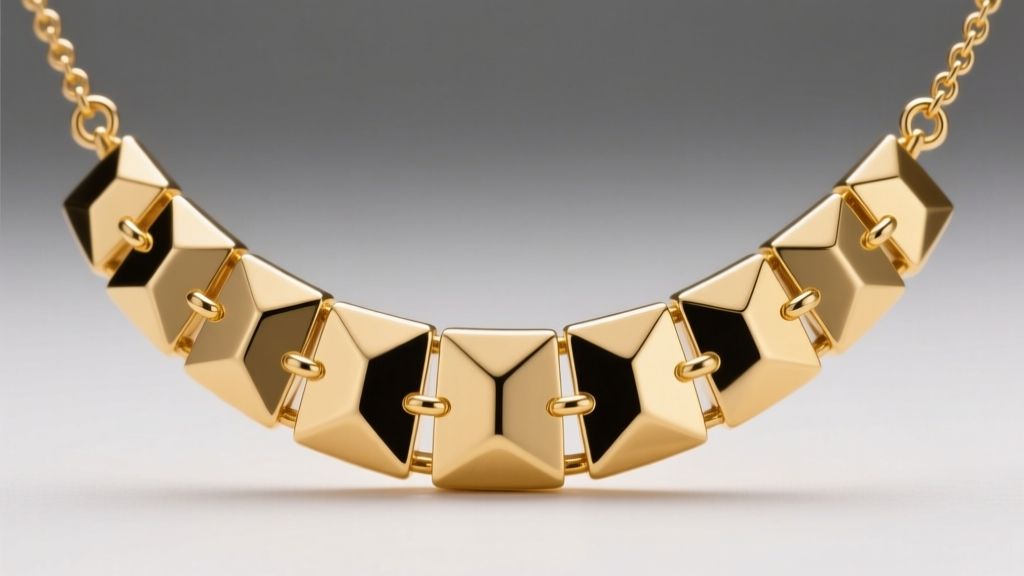
Articulated plate collars, heavily popularized during the 1920s Art Deco Egyptian revival and again in the 1970s, rely on precision-engineered jump rings. When evaluating a vintage 9ct gold Cleopatra necklace of this type, inspect the jump rings under a 10x jeweler's loupe. If the rings show thinning at the friction points or if the solder joints are cracked, the structural integrity is compromised. Woven mesh, conversely, is created by drawing 9ct gold wire through progressively smaller draw plates, then weaving it on a specialized loom before compressing it through rollers to achieve a flat, dense surface.
Clasp Mechanics and Weight Distribution
A critical, often overlooked aspect of the 9ct gold Cleopatra necklace is the clasp assembly. Because these collars sit high on the neck (typically 14.5 to 15.5 inches) and carry substantial mass, standard spring ring or lobster clasps are entirely inadequate. They will fail under the sheer weight of the gold, leading to catastrophic loss.
Hidden Box Clasps vs. Lobster Clasps
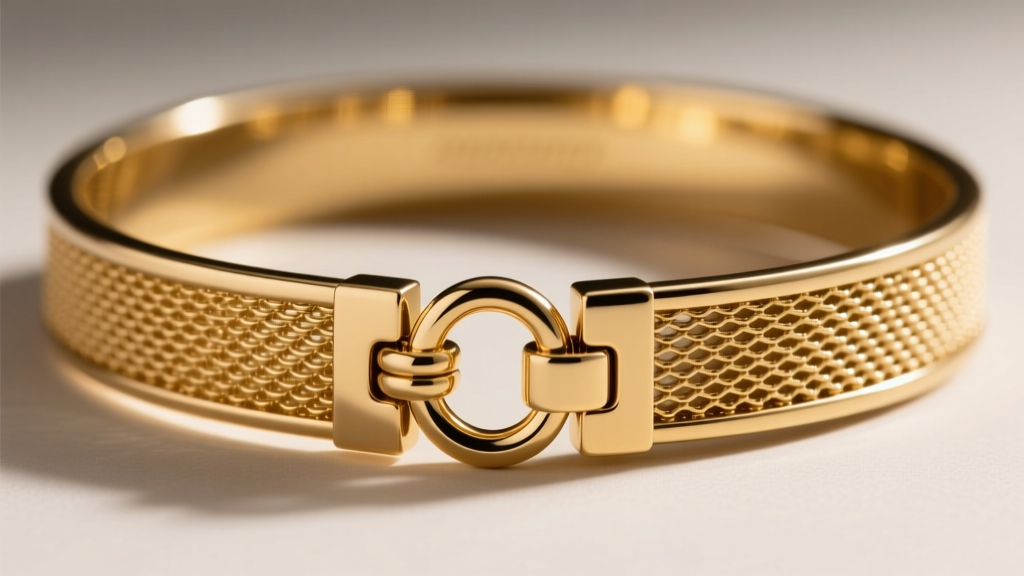
A properly engineered 9ct mesh or bib collar will utilize a hidden box clasp (also known as a tongue-and-groove clasp). This mechanism features a folded metal 'tongue' that compresses as it slides into a recessed box, snapping securely into place. For a necklace weighing over 80 grams, this box clasp must be paired with a figure-8 safety catch—a secondary wire loop that hinges over a small peg on the opposite side of the clasp. This redundancy ensures that even if the primary tongue mechanism is accidentally depressed against the wearer's neck, the necklace remains secured. When purchasing, always verify that the safety wire is not stretched and that the hinge pin is tightly seated.
Tarnish, Patina, and Maintenance Protocols
Due to the 62.5% alloy content, 9ct gold is significantly more prone to oxidation and tarnishing than 14ct or 18ct gold. The copper and zinc within the alloy react with sulfur compounds in the atmosphere, as well as the wearer's natural skin pH and cosmetics, creating a dark surface patina. While some collectors appreciate this antiqued look on Egyptian revival pieces, maintaining the original luster requires specific protocols.
- Routine Cleaning: Use a mild, phosphate-free dish soap diluted in lukewarm water. Agitate gently with a soft-bristled baby toothbrush. Avoid stiff brushes, which can leave micro-scratches on the highly polished 9ct surface.
- Ultrasonic Warnings: Never place a hollow-stamped 9ct Cleopatra bib or a tightly woven mesh collar in an ultrasonic cleaner. The high-frequency vibrations can shatter hollow components or cause microscopic fractures in the woven wire joints, leading to unraveling.
- Chemical Dips: Avoid commercial silver or gold dips containing thiourea. These harsh chemicals strip the alloyed metals unevenly, leaving the 9ct gold with a porous, matte, and unnaturally yellow appearance.
- Storage: Store the collar flat or hung on a wide, padded velvet mandrel. Folding a mesh Cleopatra necklace will result in permanent kinks that are nearly impossible for a jeweler to roll out without altering the width of the collar.
Sizing, Neckline Ergonomics, and Market Valuation
The ergonomics of a Cleopatra collar dictate that it must sit precisely at the base of the neck, resting on the clavicle. Standard lengths range from 14.5 inches to 16 inches. Because 9ct gold lacks the flexibility of a standard chain, sizing is unforgiving. A collar that is even half an inch too tight will cause discomfort and restrict the jugular vein when the wearer's neck naturally swells in warm environments or after physical exertion. The 'two-finger rule' applies strictly here: you must be able to slide two fingers comfortably beneath the center of the collar when fastened.
From a market valuation perspective, the pricing of a 9ct gold Cleopatra necklace is bifurcated. The baseline is the intrinsic melt value of the gold. However, because these pieces require specialized manufacturing techniques—such as custom stamping dies for bibs or artisanal wire-weaving for mesh—the craftsmanship premium is substantial. According to historical jewelry manufacturing data documented by Encyclopedia Britannica, the labor hours required to construct a wide, articulated gold collar often eclipse the raw material costs. Consequently, a well-preserved vintage 9ct Cleopatra collar from the 1970s will command a retail price two to three times its scrap value, reflecting the dying art of heavy, structural goldsmithing.


