Diamond Value & The Diamond Necklace by Guy de Maupassant PDF
Explore diamond necklace valuation, avoid fake pitfalls, and analyze literary themes with The Diamond Necklace by Guy de Maupassant PDF study insights.


The Literary Illusion: Why 'The Necklace' Still Matters to Modern Buyers
Every year, thousands of high school and college students search for the diamond necklace by guy de maupassant pdf to complete literature assignments on materialism, pride, and the illusion of wealth. In Guy de Maupassant's classic 1884 short story 'The Necklace' (La Parure), the protagonist Mathilde Loisel borrows what she believes to be a priceless diamond necklace, loses it, and spends ten grueling years in poverty to replace it—only to discover the original was a 'paste' fake worth a mere 500 francs.
While modern jewelry buyers are rarely borrowing from wealthy socialites, the core lesson of Maupassant's tale remains startlingly relevant in today's fine jewelry market. The gap between perceived value and intrinsic gemological value can still lead to devastating financial mistakes. Whether you are budgeting for a 1-carat solitaire pendant or assessing an estate piece, understanding the true anatomy of diamond value is the only way to avoid Mathilde Loisel's tragic fate. This guide deconstructs modern diamond necklace valuation, equipping you with the gemological data needed to separate genuine investments from expensive illusions.
Deconstructing Diamond Value: The Modern 'Paste' Equivalents
In the late 19th century, 'paste' referred to high-lead glass cut to mimic the brilliance of diamonds. Today, the landscape of diamond simulants and alternatives is vastly more complex. To accurately assess a diamond necklace's budget and value, you must understand the three primary categories of stones dominating the 2026 market:
1. Natural Mined Diamonds
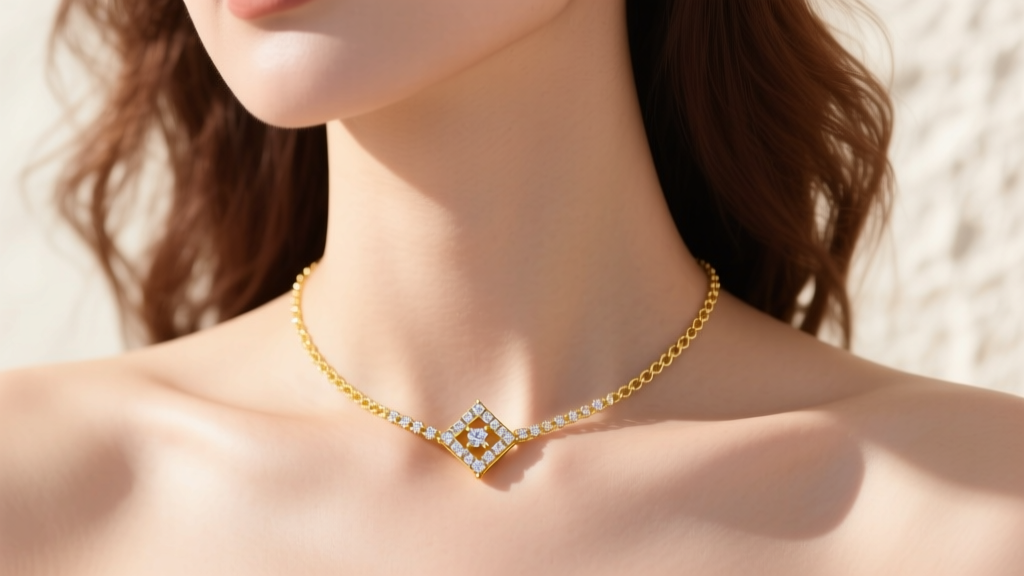
Formed billions of years ago under extreme heat and pressure, natural diamonds retain the highest resale value, though they still depreciate significantly upon retail purchase. A natural diamond's value is strictly dictated by the GIA's 4Cs (Cut, Color, Clarity, Carat). For a pendant, 'Cut' is paramount; a poorly cut 2-carat stone will face up smaller and lack the scintillation required for a necklace that sits flat against the collarbone.
2. Laboratory-Grown Diamonds (CVD and HPHT)
Chemically, physically, and optically identical to natural diamonds, lab-grown stones are the ultimate modern paradox. As noted by the Gemological Institute of America (GIA), lab diamonds possess the exact same carbon crystal structure as mined stones. However, their market value has plummeted over the last four years due to scalable production. In 2026, a lab-grown diamond necklace offers unparalleled visual luxury on a budget, but it holds virtually zero secondary market resale value.
3. Moissanite and Cubic Zirconia (CZ)
Moissanite (silicon carbide) offers double refraction and a higher refractive index than diamond, giving it a 'rainbow' sparkle. CZ is a flawless, dense simulant that scratches easily over time. Neither are diamonds, and both are strictly fashion jewelry investments.
2026 Pricing Matrix: Budget Assessment for a 1-Carat Solitaire Pendant
To build a realistic jewelry budget, you must look beyond the center stone. The setting, chain, and certification all impact the final ledger. Below is a comparative breakdown of what a buyer should expect to pay for a complete 1-carat (or equivalent) solitaire necklace in 14k solid gold.
| Stone Type | Avg. Retail Price (2026) | Resale Value Potential | Durability (Mohs Scale) |
|---|---|---|---|
| Natural Diamond (G/VS2) | $5,200 - $7,800 | 20% - 35% of retail | 10 |
| Lab-Grown Diamond (G/VS2) | $850 - $1,400 | Negligible / Pawn value only | 10 |
| Moissanite (Colorless) | $350 - $600 | Negligible | 9.25 |
| Cubic Zirconia (AAAAA) | $80 - $150 | None | 8.5 |
Budget Takeaway: If your goal is pure aesthetic brilliance and everyday wearability without the anxiety of insuring a $7,000 asset, a lab-grown diamond set in 14k gold is the most mathematically sound choice. You are paying for the optical properties of carbon, not the geological rarity.
Chain and Setting Economics: Where the Hidden Costs Lurk
Many buyers obsess over the diamond's clarity grade (e.g., VVS1 vs. VS1) while entirely ignoring the metallurgy of the necklace itself. A $6,000 diamond suspended on a poorly manufactured chain is a liability waiting to snap.
- 14k vs. 18k Gold: 18k gold (75% pure) offers a richer, warmer yellow hue but is softer and more prone to bending or snapping under the weight of a heavy pendant. 14k gold (58.5% pure) is the industry standard for durable, everyday necklace chains. It costs roughly 15-20% less than 18k and provides superior tensile strength.
- Platinum Settings: Platinum is dense, hypoallergenic, and naturally white, meaning it will never require rhodium plating like white gold. However, expect to pay a $300 to $500 premium for a platinum pendant setting and chain compared to 14k white gold.
- Clasp Mechanics: Never settle for a standard spring-ring clasp on a necklace holding a stone over 0.50 carats. Insist on a lobster clasp or a specialized box clasp with a figure-eight safety catch. The cost difference is under $20, but it prevents catastrophic loss.
The Mathilde Loisel Trap: Appraisals, Certifications, and Provenance
The fatal flaw in 'The Necklace' was not just that Mathilde lost the jewelry; it was that she never had the original piece appraised by a gemologist. She assumed its value based on the social status of the lender. In the modern jewelry market, assuming provenance is equally dangerous.
'A jewelry store appraisal is often a retail replacement estimate designed for insurance premiums, not a reflection of the stone's actual fair market value or wholesale cost.'
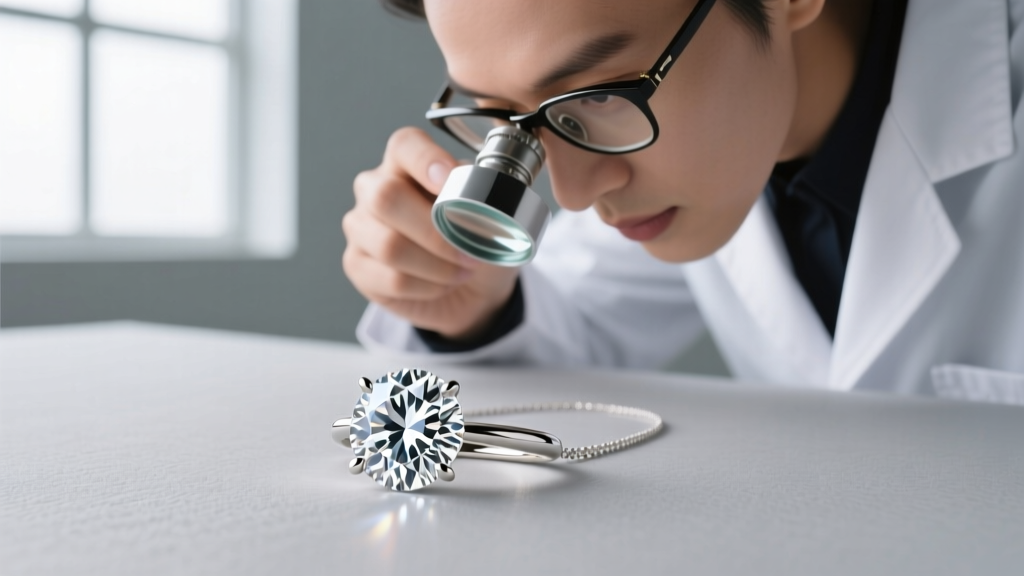
When purchasing a natural diamond necklace, you must demand an independent grading report from a top-tier laboratory. The GIA and AGS are the gold standards for natural diamonds, while the IGI and GCAL are highly respected for lab-grown stones. A grading report provides a laser inscription number on the diamond's girdle, which you can verify under a 10x jeweler's loupe. This guarantees that the stone you are paying for is the exact stone suspended on the chain.
The Danger of 'In-House' Certificates
If a retailer offers an 'in-house' certificate or a grading report from an obscure, third-party laboratory, walk away. These labs frequently inflate color and clarity grades by two or three tiers to make the diamond appear more valuable than it is. This is the modern equivalent of Madame Forestier's paste necklace: it looks the part on paper, but the intrinsic reality is vastly different.
Final Verdict: Budgeting for Reality Over Illusion
The enduring tragedy found in the diamond necklace by guy de maupassant pdf is a cautionary tale about the destructive nature of unverified assumptions. Whether you are analyzing the story's themes of 19th-century Parisian class anxiety or actively shopping for a diamond solitaire pendant, the antidote to financial ruin is rigorous, objective data.
By prioritizing cut quality over sheer carat weight, understanding the economic realities of lab-grown versus natural stones, and demanding independent gemological certification, you strip away the illusion. You ensure that the necklace resting against your collarbone is not just a symbol of status, but a verified, structurally sound, and fairly priced reality.


