Crafting a Heart Necklace With Names: Metals, Gauges & Engraving
Discover the technical details behind a custom heart necklace with names. Compare metal grades, chain gauges, and laser versus diamond engraving.

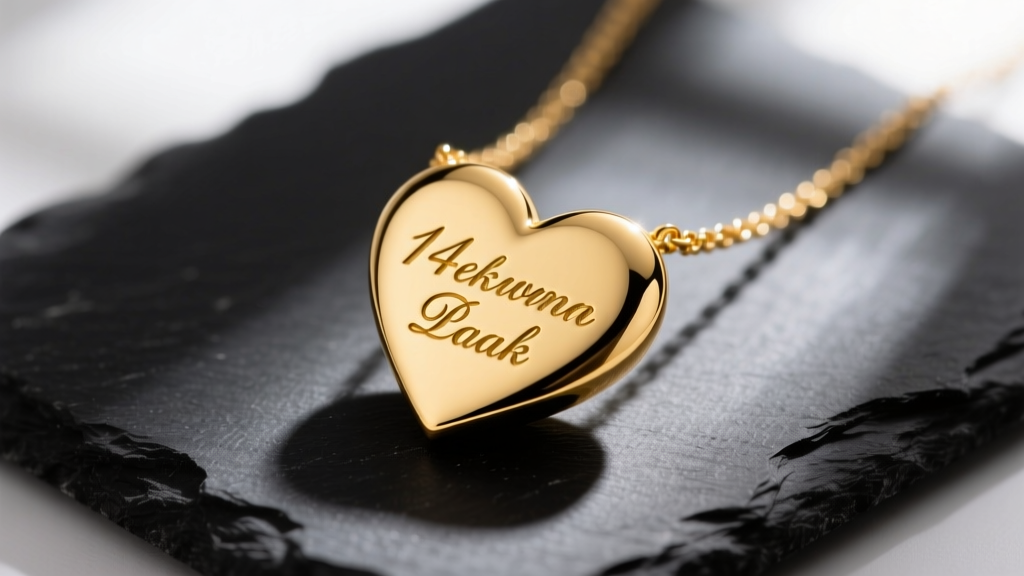
The Anatomy of a Premium Heart Name Pendant
A custom heart necklace with names is often viewed purely through a sentimental lens, but from a manufacturing perspective, it is a precise exercise in metallurgy, structural engineering, and surface finishing. When commissioning or purchasing personalized jewelry, understanding the technical specifications of the base metal, the engraving methodology, and the chain mechanics is crucial for ensuring the piece survives decades of daily wear. As of 2026, advancements in fiber laser technology and alloy formulations have drastically shifted what consumers should expect from custom name jewelry. This guide deconstructs the technical elements that separate a fragile, mass-market trinket from a master-crafted heirloom.
Base Metal Selection: Alloys, Hardness, and Tarnish
The longevity of a heart name pendant relies entirely on its Vickers hardness (HV) and its resistance to environmental oxidation. Pure gold (24k) is far too soft (approx. 25 HV) to hold detailed engraving without the edges blurring over time. Therefore, alloying is mandatory.
14k vs. 18k Gold
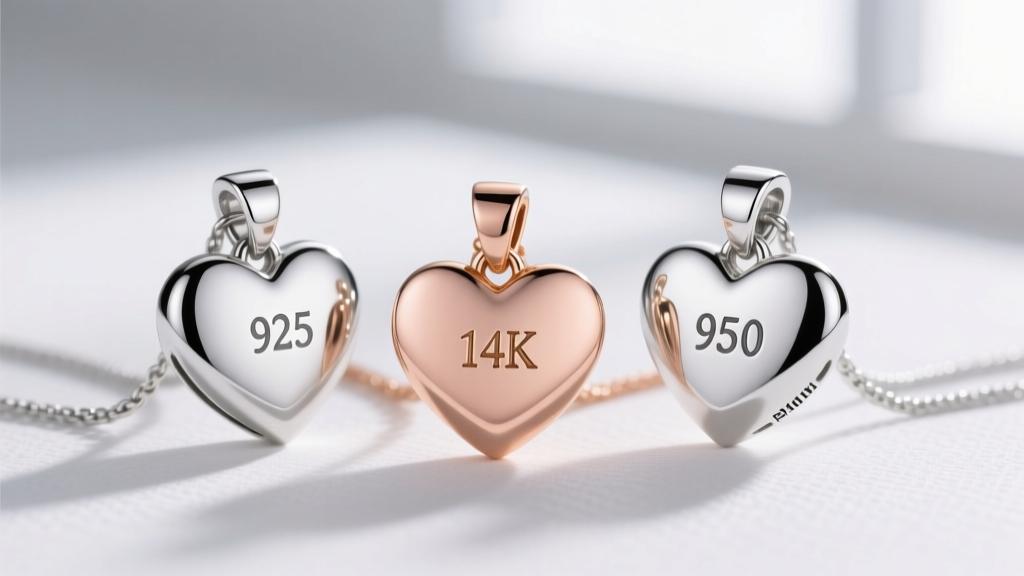
According to the Gemological Institute of America (GIA), 14k gold contains 58.5% pure gold, alloyed with copper, silver, and zinc. This composition yields a Vickers hardness of roughly 120-150 HV, making it the optimal choice for deeply engraved name pendants that will endure friction against the skin and clothing. 18k gold (75% pure gold) sits at a softer 90-110 HV. While 18k offers a richer yellow hue and superior hypoallergenic properties, the engraved lettering on an 18k heart pendant will experience edge degradation approximately 30% faster than 14k under identical wear conditions.
Sterling Silver vs. Argentium
Traditional sterling silver (92.5% silver, 7.5% copper) is notorious for tarnishing due to the copper content reacting with atmospheric sulfur. For a heart necklace with names, tarnish inside the engraved grooves can create a high-contrast, antique look, but it requires frequent chemical dipping. A superior technical alternative is Argentium silver (93.5% silver, alloyed with germanium). The germanium forms a transparent, self-healing oxide layer that makes the metal highly tarnish-resistant while increasing its hardness to roughly 75 HV after heat treatment.
Engraving Technologies: How Names Are Etched
The method used to inscribe names onto the heart pendant dictates the depth, legibility, and structural integrity of the metal. There are three primary techniques utilized by modern bench jewelers and manufacturing houses.
Fiber Laser Engraving (Ytterbium-Doped)
Operating at a 1064nm wavelength, fiber lasers are the 2026 industry standard for precious metals. Unlike CO2 lasers, fiber lasers can anneal the surface of gold and platinum without vaporizing the metal. This creates a dark, high-contrast mark by altering the metal's crystalline structure just beneath the surface, preserving the structural thickness of the pendant. For silver, the laser can be tuned to ablate (vaporize) the surface, creating deep, physical grooves that catch the light.
Diamond Drag Engraving
This mechanical method uses a non-rotating, diamond-tipped stylus dragged across the metal surface via a pantograph or CNC machine. It displaces metal rather than removing it, leaving a bright, shiny cut. While excellent for flat surfaces, diamond drag struggles with the curved topography of a domed heart pendant, often resulting in inconsistent line depths.
CNC Micro-Routing
For deep, 3D-carved names that mimic traditional hand-engraving, CNC micro-routers use physical end mills (often 0.1mm to 0.3mm in diameter) to carve away material. This requires a thicker pendant blank (minimum 1.5mm gauge) to prevent warping or puncturing during the carving process.
| Engraving Method | Depth of Cut | Best Metal Application | Durability & Wear |
|---|---|---|---|
| Fiber Laser (Annealing) | 0.00mm (Surface) | 14k/18k Gold, Platinum | Exceptional; will not fade or wear away |
| Fiber Laser (Ablation) | 0.05mm - 0.2mm | Sterling Silver, Argentium | High; deep grooves may trap oils/dirt |
| Diamond Drag | 0.02mm - 0.05mm | Flat sheet metals, Aluminum | Moderate; shallow cuts can polish out |
| CNC Micro-Routing | 0.3mm - 1.0mm+ | Thick gauge Gold/Silver | High; deep relief requires thick blanks |
Chain Mechanics and Load-Bearing Gauges
A heart pendant with multiple names can easily weigh between 4 and 8 grams, depending on the dimensions and metal density (platinum is nearly twice as dense as 14k gold). Pairing this weight with an inadequate chain is the leading cause of jewelry loss.
Calculating Tensile Strength
The chain gauge (wire thickness) must be matched to the pendant's mass. A standard 0.8mm cable chain has a tensile break strength of roughly 4 to 6 pounds, which is sufficient for a 5-gram pendant. However, dynamic stress—such as the pendant catching on a sweater—can generate momentary force spikes exceeding 10 pounds. For pendants over 6 grams, a minimum gauge of 1.1mm is recommended. According to manufacturing guidelines from Rio Grande, curb chains and box chains offer higher structural rigidity than standard cable chains, distributing the pendant's weight more evenly across the links.
Clasp Engineering
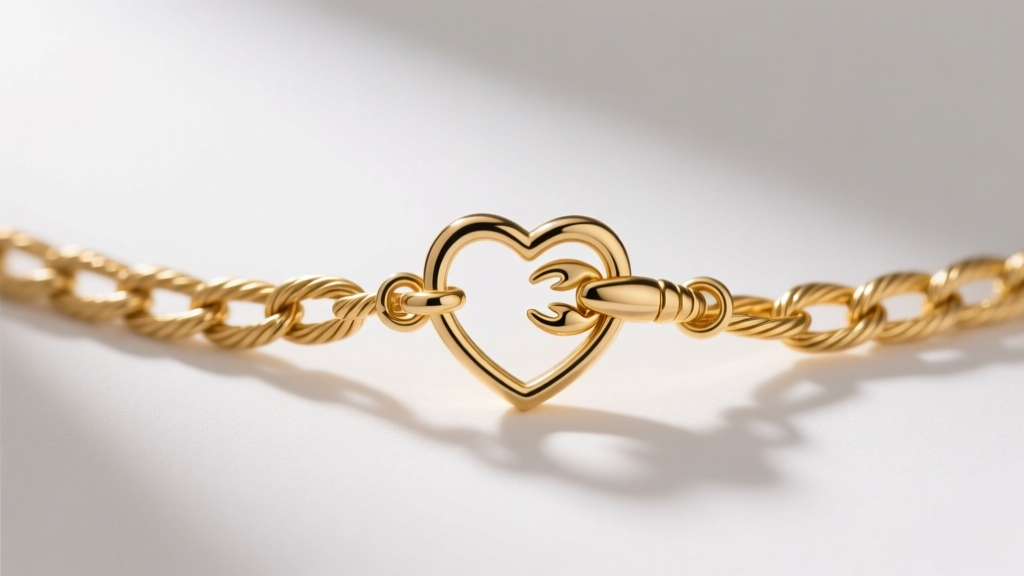
Never pair a heavy custom name pendant with a spring-ring clasp. The internal wire spring in a standard spring ring is prone to fatigue and failure under constant tension. A forged lobster claw clasp, featuring a solid internal spring mechanism and a wider jaw aperture, is mandatory for securing pendants exceeding 4 grams. Ensure the clasp is laser-welded at the jump ring, rather than soldered with traditional lead-free solder, to prevent the seam from splitting under stress.
Font Legibility and Micro-Engraving Constraints
When selecting a font for a heart necklace with names, physical constraints dictate legibility. The human eye struggles to resolve serif details smaller than 0.15mm on reflective metal surfaces.
- Sans-Serif vs. Script: While cursive script is traditional for heart pendants, overlapping loops in names like "Elizabeth" or "Christopher" can create structural weak points if the laser cuts too deeply into the intersections.
- Kerning and Tracking: Letters must be spaced (tracked) at least 0.2mm apart. If letters touch, the heat-affected zone (HAZ) from laser engraving can cause micro-fractures in lower-karat gold alloys.
- Surface Preparation: High-polish finishes will cause light scatter, making shallow engravings difficult to read. A matte or satin-brushed background inside the heart shape increases the contrast ratio of the engraved names by up to 40%.
Pricing Tiers and Value Assessment
Understanding the cost breakdown prevents overpaying for mass-produced drop-shipped items disguised as bespoke jewelry.
- Tier 1: Mass-Market (Under $80): Typically gold-plated brass or hollow-stamped sterling silver. Engraving is superficial, and the plating will wear through the engraved grooves within months, exposing base metals that cause skin discoloration.
- Tier 2: Mid-Market Bench ($150 - $400): Solid 10k or 14k gold, die-struck or cast, with fiber laser engraving. Chains are usually 0.8mm to 1.0mm. This is the sweet spot for durability and value.
- Tier 3: Master Custom ($600 - $1,500+): Hand-forged or precision CNC-milled from solid 18k gold or platinum. Features hand-engraving (using a gravermachine or hand push techniques), custom-designed bails, and heavy gauge chains (1.2mm+).
Long-Term Maintenance and Wear Patterns
Proper maintenance of an engraved heart necklace requires an understanding of how cleaning agents interact with etched metals. The Jewelers of America advises against using ultrasonic cleaners on heavily oxidized or laser-ablated silver pendants, as the high-frequency cavitation can strip the intentional darkening (patina) from the engraved lettering, reducing legibility.
Expert Insight: When polishing a gold heart necklace with names, never use a high-speed rotary buffing wheel with rouge compound. The polishing compound will pack into the engraved grooves and harden, creating a dark, muddy appearance that requires professional steam cleaning to remove. Always use a soft, untreated microfiber cloth for routine maintenance.
By prioritizing structural integrity, precise engraving methodologies, and appropriate chain mechanics, a heart necklace with names transcends its role as a simple accessory. It becomes a meticulously engineered artifact, capable of carrying personal history across generations without losing its legibility or its luster.


