Amber Necklace for Adults: Authenticity & Buying Guide
Discover how to choose a genuine amber necklace for adults. Learn to test authenticity, evaluate origins, and understand pricing in our guide.

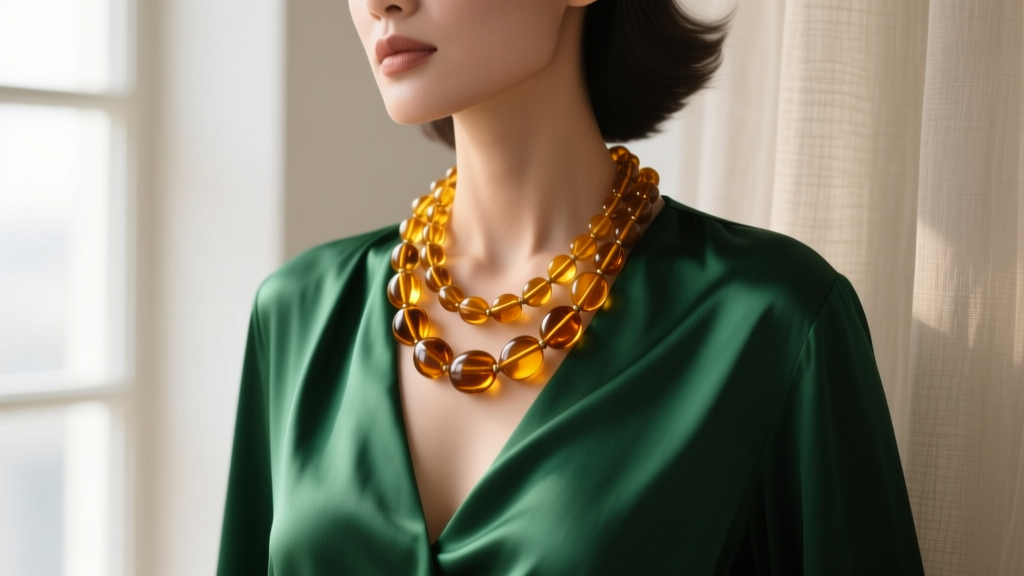
The Resurgence of Amber in Adult Jewelry
While often associated with teething infants or vintage costume jewelry, high-grade amber has experienced a massive renaissance in the adult fine jewelry market. An amber necklace for adults is no longer just a bohemian afterthought; it is a sophisticated, lightweight, and historically rich investment piece. However, the market is flooded with plastic imitations, heat-treated copal, and glass beads. This comprehensive buying guide will equip you with the gemological knowledge required to identify genuine amber, understand its origins, and select the perfect piece for your collection.
Baltic vs. Dominican: Understanding Amber Origins
When shopping for authentic amber, you will primarily encounter two distinct geological origins, each with unique chemical profiles and visual characteristics. According to the Gemological Institute of America (GIA), amber is fossilized tree resin, but its age and botanical source dictate its value.
Baltic Amber (Succinite)
Originating from the shores of the Baltic Sea, this amber is approximately 44 million years old. It is derived from the extinct Pinus succinifera tree and is famous for its high succinic acid content (typically 3-8%). Baltic amber is generally more opaque and comes in rich cognac, cherry, and butterscotch hues. It is the most common and widely available type on the market.
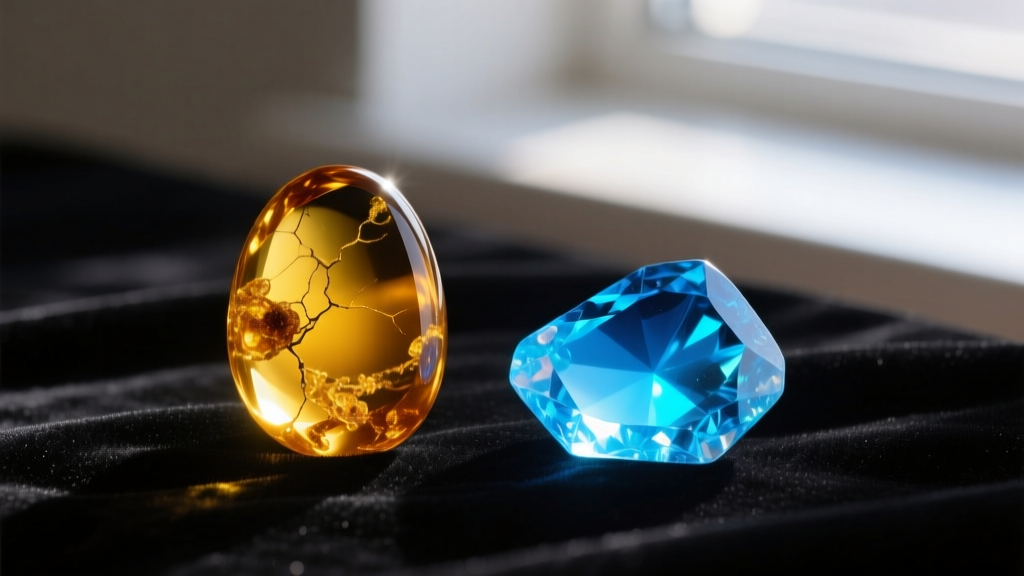
Dominican Amber (Retinite)
Mined primarily in the mountainous regions of the Dominican Republic, this amber is younger (15-40 million years) and originates from the extinct Hymenaea protera legume tree. Dominican amber is prized for its exceptional transparency and high fluorescence. Under UV light, premium Dominican amber exhibits a striking blue or green glow. It is also the most likely source for highly detailed insect and flora inclusions, which command premium prices among collectors.
Copal vs. True Amber: The Age Factor
A common trap for buyers is purchasing copal marketed as rare amber. Copal is essentially "immature" or sub-fossilized resin that is less than 2.5 million years old. While it looks nearly identical to true amber to the untrained eye, copal has not undergone the full polymerization process. According to mineralogical databases like Mindat.org, copal will become sticky when exposed to a drop of acetone or rubbing alcohol, whereas true amber will remain completely unaffected. Copal also melts at much lower temperatures and will degrade faster when exposed to body heat and cosmetics over time.
4 Reliable At-Home Authenticity Tests
Before investing in an expensive amber necklace, perform these non-destructive tests to verify its authenticity. Fakes are commonly made from glass, phenolic resin, or celluloid.
- The Saltwater Test: Mix 1 part salt to 4 parts warm water until fully dissolved. Genuine amber has a specific gravity of 1.05-1.10 and will float in this saturated solution, while glass and most plastics will sink.
- The UV Light Test: Shine a 365nm UV flashlight on the beads. Real Baltic amber will fluoresce a pale yellow-green, while Dominican amber will glow a vivid blue. Plastics and glass will show no fluorescence or a dull, milky white reflection.
- The Static Rub Test: Vigorously rub a bead against a soft wool cloth for 20 seconds. Genuine amber generates a strong static charge and will easily pick up small pieces of torn tissue paper.
- The Hot Needle Test (Use Caution): Heat a sewing needle until red hot and touch it to an inconspicuous area (like the bead hole). Real amber will emit a pleasant, piney, terpene smoke and leave a white mark. Plastic will smell acrid and melt into a black, sticky residue.
| Test Method | Genuine Amber Result | Common Fake Result |
|---|---|---|
| Saltwater Float | Floats easily | Sinks (Glass/Bakelite) |
| UV Fluorescence | Yellow-green or vivid blue | Dull or no reaction |
| Acetone Swab | No reaction, hard surface | Becomes tacky (Copal/Plastic) |
| Hot Needle | Pine/terpene scent, white mark | Acrid chemical smell, melts |
Evaluating Color, Clarity, and Inclusions
The value of an amber necklace is heavily dictated by its color grade and clarity. Butterscotch (opaque, creamy yellow) and Cherry (deep, translucent red) are currently the most sought-after colors in the adult luxury market. Cognac (rich brown) remains a timeless classic. When evaluating clarity, completely flawless amber is actually suspicious, as natural amber almost always contains microscopic flow lines, sun spangles, or tiny air bubbles. Sun spangles are beautiful, glittering internal fractures that occur when amber is heated in oil. While some purists prefer completely natural, unheated stones, high-quality heat-treated amber with large, geometric sun spangles is highly prized in modern artisan jewelry and is completely accepted in the gem trade. Inclusions of prehistoric insects, particularly mosquitoes or ants with visible anatomical details, can increase a single bead's value from $20 to over $1,000.
Stringing Hardware and Clasp Mechanics
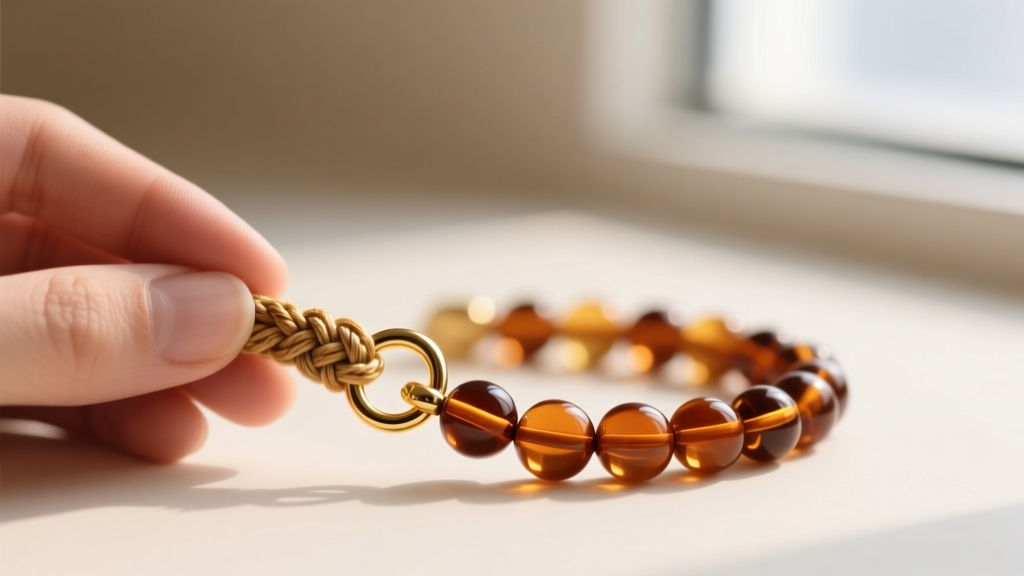
Amber is remarkably soft, registering only 2 to 2.5 on the Mohs hardness scale. This means it is highly susceptible to scratching and abrasion. A high-quality amber necklace for adults must be individually hand-knotted on silk or high-grade nylon thread. Knotting between every single bead serves two vital purposes: it prevents the beads from grinding against each other and dulling their polish, and it ensures that if the strand snaps, you only lose one bead rather than the entire necklace. Avoid necklaces strung on unknotted wire or cheap cotton, which will fray and break under the weight of large amber nuggets. For heavy, large-bead strands (12mm+), always opt for a secure gold-filled or sterling silver lobster clasp, as magnetic clasps often fail to support the weight of substantial amber pieces.
2026 Pricing Guide: What to Expect
Understanding current market valuations will protect you from overpaying for treated stones or underpaying for suspicious fakes. Prices below reflect genuine, untreated, hand-knotted necklaces (18-inch princess length).
- Standard Baltic Cognac (6-8mm beads): $45 - $90
- Premium Butterscotch (10-12mm beads): $150 - $350
- Raw, Uncut Baltic Nuggets (Freeform): $200 - $500
- Dominican Blue Amber (High Fluorescence): $400 - $1,200+
- Verifiable Insect Inclusion Pendant: $300 - $2,500+
Care and Maintenance for Longevity
To preserve the luster of your amber necklace, treat it as a delicate organic gemstone. Never expose amber to ultrasonic cleaners, steam cleaners, or harsh chemical solvents, as these will permanently cloud the surface. Always put your amber necklace on after applying perfumes, hairsprays, and lotions, as the alcohol and chemicals in cosmetics will slowly dissolve the resin's outer polish over time. Amber is also highly sensitive to extreme temperature fluctuations. Leaving your necklace on a car dashboard in the summer or near a radiator in the winter can cause the resin to dry out, leading to a network of fine surface cracks known as crazing. Store your necklace separately in a soft velvet pouch to prevent harder gemstones or metal jewelry from scratching its soft surface. With proper care, a genuine amber necklace will retain its prehistoric beauty and structural integrity for generations.


