Ultimate Care Guide for Your Sterling Silver K Necklace
Learn expert tips to clean, store, and maintain your silver K necklace. Prevent tarnish and keep your initial pendant shining bright.

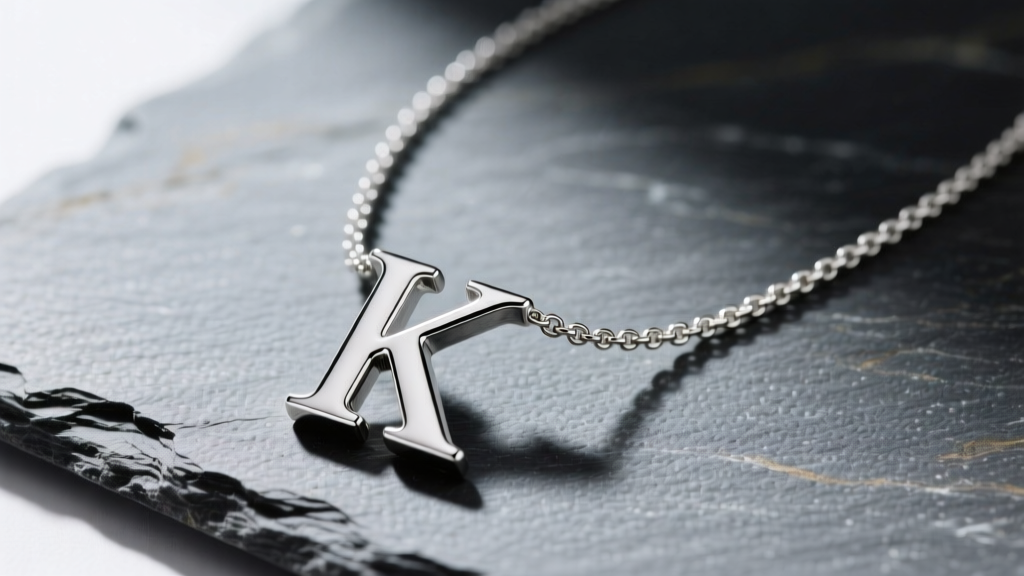
A sterling silver initial pendant is more than just a fashion accessory; it is a deeply personal statement. Whether the letter represents your first name, a loved one, or a meaningful initial, a silver K necklace is a staple in modern jewelry wardrobes. However, the very alloy that gives sterling silver its durability is also responsible for its greatest vulnerability: tarnish. To keep your initial pendant and its delicate chain looking pristine, you need a care routine grounded in metallurgical science, not just household myths.
In this comprehensive guide, we break down the exact chemistry of silver tarnish, provide a step-by-step maintenance schedule, and reveal the storage techniques used by professional jewelers to preserve the brilliant luster of your silver K necklace for decades.
The Anatomy of Tarnish: Why Your Silver K Necklace Dulls
To properly care for your jewelry, you must first understand what it is made of. Pure silver (99.9%) is too soft to be forged into a durable necklace chain or a stamped initial pendant. Therefore, jewelers use sterling silver, which is an alloy consisting of 92.5% pure silver and 7.5% other metals, almost always copper. This composition is legally required to bear the '925' hallmark.
While pure silver does not tarnish, the 7.5% copper content is highly reactive. When copper is exposed to moisture and sulfur compounds in the air—specifically hydrogen sulfide—it undergoes a chemical reaction that creates silver sulfide. This manifests as the yellowish, brown, or black film we call tarnish. According to the Gemological Institute of America (GIA), everyday environmental factors such as high humidity, urban pollution, and even the natural acidity and sulfur content of your own skin can accelerate this process. If you wear your silver K necklace while swimming in chlorinated pools or applying sulfur-based skincare products, you will notice a rapid darkening of the metal.
Daily Wear vs. Deep Cleaning: A Maintenance Schedule
Maintaining a silver K necklace requires a dual approach: daily preventative care and periodic deep cleaning. Relying solely on harsh chemical dips when the necklace turns black will eventually degrade the silver and strip away any intentional oxidation (patina) in the crevices of the letter 'K'.
The 5-Minute Weekly Wipe
The most effective way to prevent heavy tarnish buildup is through mechanical friction. Once a week, take a clean, untreated microfiber polishing cloth and gently wipe down the 'K' pendant and the entire length of the chain. Microfiber traps microscopic oils and dirt without scratching the silver. Never use paper towels or tissues; they contain wood pulp fibers that can leave micro-scratches on high-polish silver, dulling its reflective surface over time.
The Monthly Deep Clean (Step-by-Step)
For a thorough monthly clean, you need to break down the sebum (skin oils) and environmental grime that accumulate in the chain links and the bail (the loop connecting the 'K' to the chain).
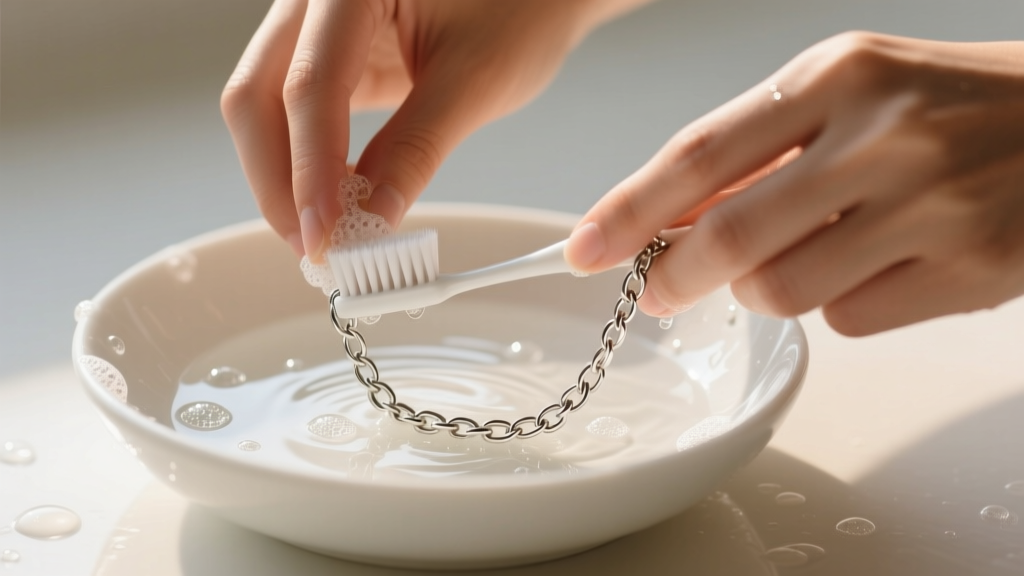
- Prepare the Bath: Fill a small ceramic bowl with warm (not hot) water and add three drops of mild, phosphate-free dish soap. Avoid soaps with heavy moisturizers or citrus extracts.
- Soak: Submerge your silver K necklace for exactly 3 to 5 minutes. This loosens trapped debris.
- Agitate Gently: Use a baby toothbrush or a specialized extra-soft jewelry brush to gently sweep the bristles over the front, back, and edges of the 'K' pendant. Pay special attention to the jump ring where the pendant meets the chain.
- Rinse and Dry: Rinse thoroughly under lukewarm running water. Immediately pat dry with a lint-free cotton cloth. Do not let the necklace air dry, as water spots will form on the silver.
Cleaning Solutions: What Works and What Ruins Silver
The internet is flooded with DIY silver cleaning hacks, many of which can cause irreversible damage to your silver K necklace. Below is a data-driven comparison of common cleaning methods, evaluated by their efficacy and risk to the metal.
| Cleaning Method | Active Ingredients | Best Used For | Risk Level | Expert Verdict |
|---|---|---|---|---|
| Mild Soap Bath | Dish soap + warm water | General dirt, oils, and lotions | Low | Highly recommended for routine monthly maintenance. |
| Baking Soda Paste | Baking soda + water | Heavy, stubborn tarnish | Medium-High | Avoid. Baking soda is highly abrasive and will cause micro-scratches on the mirror finish of the 'K'. |
| Commercial Silver Dip | Thiourea-based acids | Severe, black oxidation | High | Use only as a last resort. Strips metal layers and leaves a porous surface that tarnishes faster later. |
| Aluminum Foil Bath | Foil + baking soda + boiling water | Reversing silver sulfide via ion transfer | Medium | Effective for chains, but can loosen gemstone adhesives if your 'K' features inlaid stones. |
| Jeweler's Polishing Cloth | Impregnated jeweler's rouge | Restoring high-shine luster | Low | The gold standard for finishing touches after a soap bath. |
For authoritative guidance on what chemicals to avoid, Jewelers of America strictly advises against using toothpaste, bleach, or ammonia on sterling silver, as these compounds are either too abrasive or chemically corrosive to the copper alloy.
Chain Care: Preventing Kinks and Breaks in Delicate Links
The initial pendant often gets all the attention, but the chain is the structural backbone of your silver K necklace. Most initial necklaces utilize delicate cable chains or box chains ranging from 0.9mm to 1.2mm in thickness.
Cable Chains: These consist of uniform oval links. They are prone to kinking if stored in a tangled pile. A kinked cable chain weakens the structural integrity of the link, making it susceptible to snapping under minor tension. If a kink occurs, lay the chain flat on a hard surface and use two fine sewing needles to gently tease the twisted links apart. Never pull forcefully.
Box Chains: Made of square links that create a smooth, continuous tube. While highly resistant to kinking, the sharp interior corners of box chains act as magnets for dead skin cells and lotion buildup. Use the soft toothbrush method mentioned above, brushing along the grain of the chain to dislodge trapped debris.
The Lobster Clasp: The spring mechanism inside a sterling silver lobster clasp can become stiff over time due to microscopic dirt ingress. If your clasp feels sticky or fails to snap shut securely, apply a minuscule drop of mineral oil or rub the tip of a graphite pencil against the lever hinge. Do not use WD-40, as it contains solvents that will degrade the silver and leave a difficult-to-remove residue.
Proper Storage: The Anti-Tarnish Environment
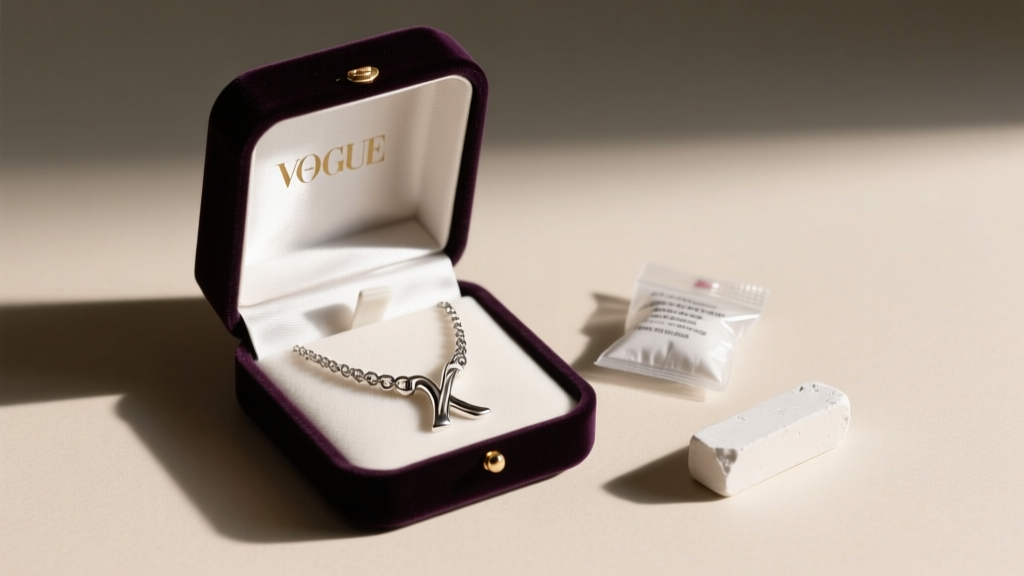
How you store your silver K necklace when it is not on your body dictates how much effort you will spend cleaning it later. The goal of proper storage is to eliminate the two catalysts for tarnish: moisture and sulfur.
- Avoid Cardboard and Wood: Never store silver in cardboard boxes or wooden jewelry armoires. Cardboard contains acidic sulfates, and raw wood emits gases that actively promote tarnishing.
- The Ziploc Method: Store your necklace in a high-quality, airtight polyethylene zip-top bag. Squeeze out as much air as possible before sealing.
- Anti-Tarnish Strips: Place a 3M anti-tarnish strip inside the bag. These strips contain copper-based particles that act as a sacrificial anode, absorbing sulfur gases before they can reach your silver.
- Moisture Control: Add a small silica gel packet to the bag to maintain the relative humidity below 50%. You can purchase indicating silica gel beads that change color when they need to be recharged in the oven.
- Pacific Silvercloth: For long-term storage, wrap the necklace in Pacific Silvercloth, a specialized cotton flannel embedded with microscopic silver particles that capture tarnish-causing gases.
Troubleshooting Common Silver K Necklace Issues
Even with meticulous care, you may encounter a few common issues with daily-wear initial jewelry. Here is how to solve them like a professional bench jeweler:
- The 'Green Neck' Phenomenon: If the back of your 'K' pendant leaves a green or black mark on your skin, it is a harmless reaction between your skin's acidity and the copper in the sterling silver. To fix this, paint the back of the pendant with a thin layer of clear nail polish to create a barrier, or have a jeweler apply a rhodium plating to the reverse side.
- Jump Ring Separation: The tiny ring connecting the pendant to the chain is a common failure point. If you notice a gap in the jump ring, do not attempt to squeeze it shut with your fingernails, as this will warp the circular shape. Take it to a jeweler to be properly soldered or replaced with a seamless split ring.
- Loss of Patina: If your 'K' pendant features a deliberately darkened background to make the letter pop (antiquing), avoid using liquid silver dips. Dips will strip the dark patina, leaving the necklace looking flat and washed out. Stick to dry polishing cloths and gently avoid the recessed areas.
Conclusion
A silver K necklace is a timeless piece of personalized jewelry that, when treated with the right metallurgical respect, will last a lifetime. By abandoning abrasive DIY hacks in favor of gentle soap baths, utilizing microfiber for weekly maintenance, and creating an airtight, sulfur-free storage environment, you ensure that your initial pendant remains as brilliant and meaningful as the day you first clasped it around your neck.


