How to Clean and Preserve a Resin Pressed Flower Necklace
Learn expert techniques to clean, maintain, and preserve your pressed flower necklace. Prevent resin yellowing and metal tarnish with our comprehensive guide.

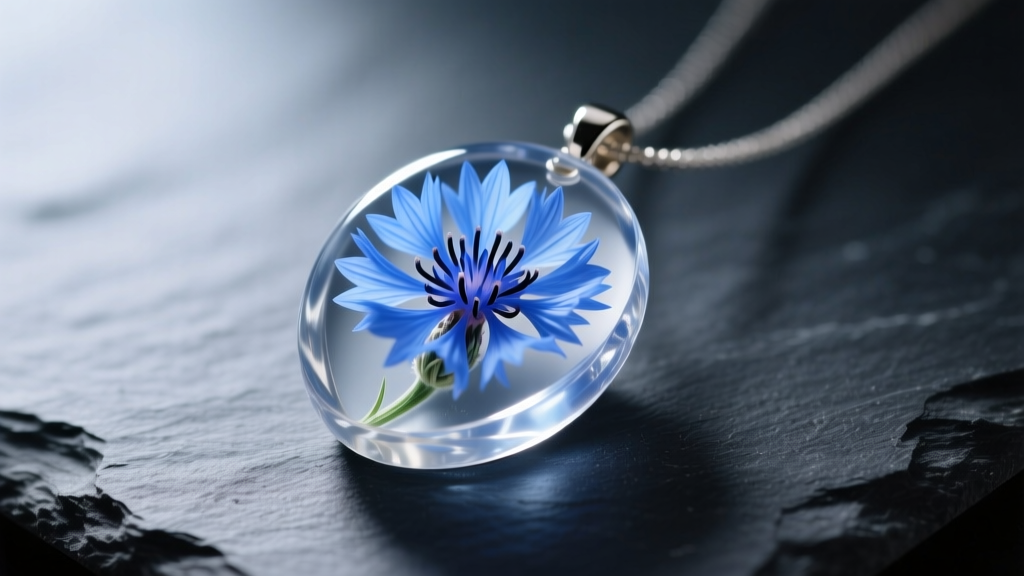
Botanical jewelry captures a fleeting moment in nature, suspending delicate petals and leaves in time. However, owning a pressed flower necklace requires a specialized approach to care and maintenance. Unlike solid gemstones or pure metals, the organic materials and encapsulating resins or glass bezels used in these pieces are highly susceptible to environmental degradation. UV exposure, moisture intrusion, and harsh chemical cleaners can rapidly ruin both the botanical specimen and the setting.
In this comprehensive guide, we break down the exact material science behind botanical pendants and provide actionable, expert-level maintenance routines to ensure your jewelry remains vibrant and intact for decades.
The Anatomy of a Pressed Flower Necklace
To properly care for your jewelry, you must first understand its construction. A typical pressed flower necklace consists of three distinct components, each with its own vulnerabilities:
1. The Encapsulation Medium
Most modern botanical pendants use either epoxy resin or UV resin. High-quality epoxy resins (like ArtResin) contain UV inhibitors and HALS (Hindered Amine Light Stabilizers) to delay yellowing, but they are not entirely immune to prolonged sun exposure. UV resin cures rapidly under ultraviolet light but tends to be more brittle and prone to micro-crazing over time. Alternatively, some artisans use glass bezel settings with a glass cabochon cover. While glass will never yellow, the adhesive seal securing the glass can fail, allowing moisture to reach the dried flower.
2. The Botanical Specimen
Dried flowers are inherently fragile. If the encapsulation seal is compromised, ambient humidity will cause the petals to reabsorb moisture, leading to mold growth, browning, and eventual disintegration. According to conservation guidelines from the Gemological Institute of America (GIA), organic inclusions require strict climate control to prevent cellular breakdown.
3. The Metal Hardware
The chain, bail, and bezel tray are typically crafted from sterling silver (.925), 14k gold-filled brass, or plated alloys. Sterling silver is prone to sulfur-induced tarnishing, while gold-filled components can accumulate sebum and lotion buildup in the crevices of the chain links.
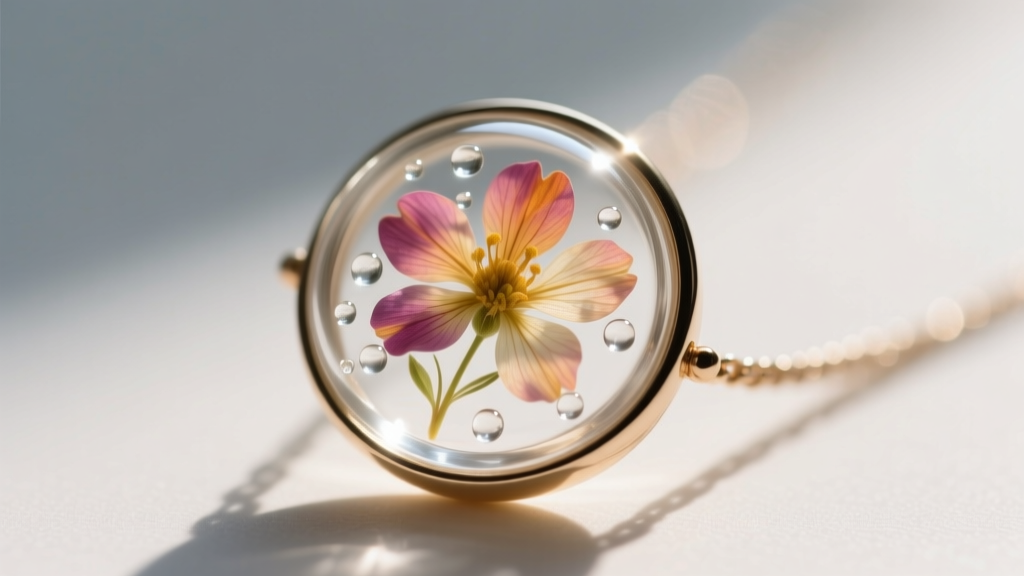
Daily Wear Rules: Preventing UV and Moisture Damage
Preventative care is vastly superior to restorative cleaning when it comes to botanical jewelry. Adopting a few strict wearing habits will exponentially increase the lifespan of your pressed flower necklace.
- The UV Limit: Even with UV-resistant epoxy, direct sunlight is the enemy. Limit direct UV exposure to under 2 hours per day. If you are spending a day at the beach or hiking in high-altitude sun, leave the necklace indoors. Once resin begins to yellow due to photo-oxidation, the chemical change is irreversible.
- The Moisture Rule: Never wear your necklace in the shower, pool, or ocean. Chlorine and saltwater are highly corrosive to metal bails and can degrade the structural integrity of the resin. More importantly, temperature fluctuations in water can cause the resin or glass to expand and contract, breaking the microscopic seal and allowing water to touch the flower.
- Chemical Avoidance: Apply perfumes, hairsprays, and lotions before putting on your jewelry. The alcohol and volatile organic compounds (VOCs) in cosmetics can cause the surface of epoxy resin to become cloudy or tacky.
Step-by-Step Cleaning Guide for Botanical Pendants
When your pendant accumulates skin oils and dust, it requires a gentle, non-abrasive cleaning process. Never use commercial jewelry dips, ultrasonic cleaners, or alcohol-based solutions on the encapsulated portion of the necklace.
The 3-Step Distilled Wash
- Prepare the Solution: Mix a few drops of pH-neutral, fragrance-free dish soap (such as Dawn Free & Clear) into a bowl of distilled water. Tap water contains trace minerals and chlorine that can leave hard water spots on resin and glass.
- The Gentle Wipe: Dip a clean, lint-free microfiber cloth into the solution and wring it out until it is only slightly damp. Gently wipe the surface of the resin or glass in circular motions. Do not submerge the pendant.
- Dry Immediately: Use a second, completely dry microfiber cloth to buff the surface and remove all moisture. Pay special attention to the area where the bail meets the resin, as trapped water here can cause the metal to oxidize.
Cleaning Agents & Their Effects
Understanding how different chemicals interact with your necklace materials is crucial for avoiding catastrophic damage. Refer to the table below before attempting to clean your jewelry:
| Cleaning Agent | Effect on Epoxy/UV Resin | Effect on Glass Bezel | Effect on Metal Hardware |
|---|---|---|---|
| Isopropyl Alcohol | Causes micro-crazing and cloudiness | Safe | Safe for silver/gold |
| Ultrasonic Waves | Shatters resin, delaminates layers | Loosens adhesive seal | Safe |
| Mild Dish Soap | Safe (surface only) | Safe | Safe |
| Baking Soda Paste | Scratches surface permanently | Safe | Removes heavy tarnish |
| Acetone / Polish | Melts and dissolves resin | Safe | Strips gold plating |
For deeper insights into resin maintenance, experts at Resin Obsession emphasize that once a resin surface is scratched by abrasive cleaners like baking soda, the only way to restore clarity is through a multi-stage wet-sanding and polishing process, which risks sanding entirely through the encapsulation layer.
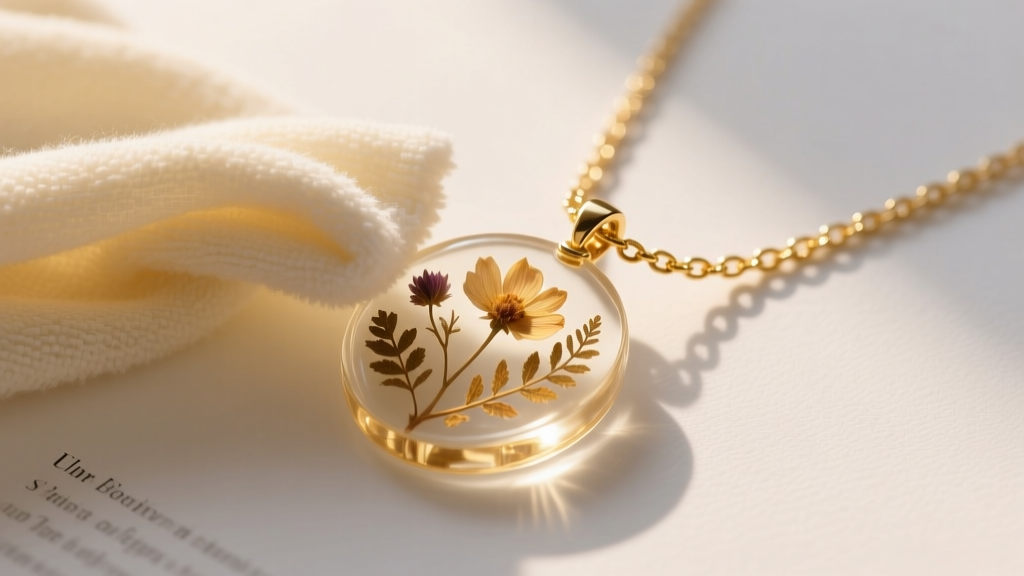
Restoring the Metal Chain and Hardware
While the pendant requires a delicate touch, the metal chain can often withstand more rigorous cleaning—provided you isolate it from the botanical element.
Cleaning Sterling Silver Chains
If your .925 sterling silver chain has developed a dark patina due to sulfur exposure, you can use a silver polishing cloth (impregnated with jeweler's rouge) to restore the shine. Critical step: Unclasp the chain and remove the pendant before polishing. If the pendant cannot be removed, carefully thread the chain through the polishing cloth while holding the bail firmly, ensuring the treated cloth never touches the resin or glass.
Deep Cleaning Gold-Filled and Brass Chains
For gold-filled chains suffering from heavy sebum buildup in the links, use a soft-bristled baby toothbrush dipped in the distilled water and mild soap solution. Gently agitate the bristles between the links. Rinse the chain by dipping only the chain into clean distilled water, then lay it flat on a paper towel to air dry completely before storing. Suppliers like Rio Grande recommend avoiding liquid silver dips entirely, as the harsh thiourea chemicals can wick up the chain and permanently stain the porous edges of the resin pendant.
Troubleshooting Common Botanical Jewelry Issues
Even with meticulous care, issues can arise. Here is how to diagnose and address the most common problems associated with pressed flower necklaces.
Issue 1: Cloudy or Foggy Resin
Diagnosis: If the cloudiness is on the surface, it is likely a buildup of cosmetic oils or minor abrasion. If the cloudiness appears to be inside the resin or under the glass, moisture has breached the seal.
Solution: Surface cloudiness can sometimes be buffed out using a plastic-safe polish (like Novus 2 Fine Scratch Remover) applied with a microfiber cloth. Internal moisture damage, unfortunately, cannot be reversed without destroying the piece to extract and re-dry the flower.
Issue 2: A Loose or Wiggling Bail
Diagnosis: The metal loop (bail) that connects the pendant to the chain is typically secured with a strong jewelry adhesive. Over time, body heat and mechanical stress can weaken this bond.
Solution: Do not use super glue (cyanoacrylate), as it dries brittle and can frost the surrounding resin with white fumes. Instead, apply a microscopic drop of E6000 Jewelry & Bead Adhesive to the base of the bail using a toothpick. Let it cure undisturbed for 72 hours in a well-ventilated area before wearing.
Long-Term Storage: Archival Methods
How you store your pressed flower necklace when it is not being worn is just as critical as how you clean it. Improper storage is the leading cause of premature metal tarnishing and resin degradation.
- Light Deprivation: Store the necklace in a dark drawer or an opaque jewelry box. Continuous exposure to ambient room light, particularly from LED or fluorescent bulbs that emit trace UV rays, will slowly yellow the resin over several years.
- Humidity Control: Place a small, jewelry-safe silica gel packet in your storage box to maintain a low-humidity environment. This is especially vital for glass bezel settings, as it prevents condensation from forming inside the bezel if the seal is micro-fractured.
- Anti-Tarnish Technology: Store sterling silver pieces in specialized anti-tarnish ziplock bags (such as those containing 3M anti-tarnish strips). These strips absorb airborne sulfur compounds before they can react with the silver.
- Physical Isolation: Never toss your necklace into a communal jewelry box. The metal components of other pieces can easily scratch the relatively soft surface of epoxy resin (which ranks around a 2 to 3 on the Mohs hardness scale). Store it individually in a soft flannel pouch.
By understanding the unique material constraints of botanical jewelry and adhering to these strict cleaning and storage protocols, your pressed flower necklace will remain a pristine, wearable piece of nature for years to come.


