Expert Care Guide: Cleaning Black Cord for Necklaces
Learn how to properly clean, maintain, and store your black cord for necklaces. Expert tips for waxed cotton, leather, and silk materials.

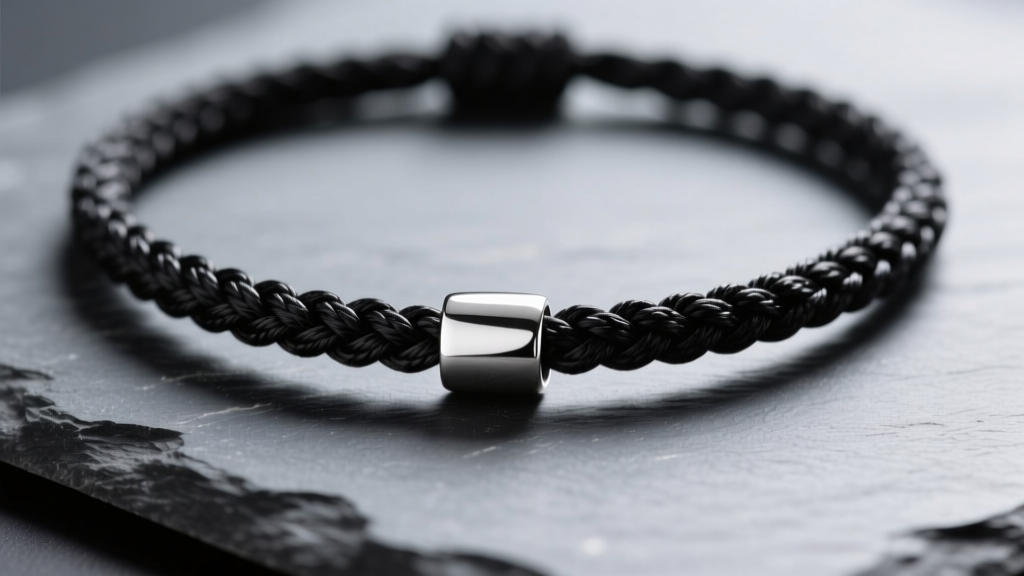
The Hidden Vulnerabilities of Corded Jewelry
While metal chains dominate traditional jewelry care guides, the black cord for necklaces has become a staple for showcasing heavy gemstone pendants, artisan ceramics, and minimalist metalwork. However, textile and organic cords present unique maintenance challenges. Unlike gold or platinum, cords are porous. They absorb sebum, environmental pollutants, and perspiration, which can degrade the structural integrity of the fibers and cause the deep black dye to fade into a murky gray.
According to the Gemological Institute of America (GIA), proper jewelry maintenance requires understanding the specific material properties of both the setting and the mounting. When your mounting is a textile or organic cord, standard ultrasonic cleaners and chemical dips will destroy the piece. This guide provides a deep-dive, material-specific protocol for cleaning, conditioning, and preserving your black cord necklaces.
Material Breakdown: What is Your Cord Made Of?
Before applying any cleaner, you must accurately identify the cord material. The term "black cord" is a catch-all that spans four distinct material categories, each with unique failure modes:
- Waxed Cotton: The most common choice for heavy pendants. The cotton fibers are coated in paraffin or beeswax to provide water resistance and a stiff, structured drape. Failure mode: Wax depletion leading to fraying and fuzzing.
- Braided Leather: Typically kangaroo or calfskin, dyed black and sometimes treated with a polyurethane topcoat. Failure mode: Drying, cracking, and delamination of the dye layer.
- Silk: Used for high-end pearl or jade pendants (often knotted). Failure mode: Alkaline degradation and loss of tensile strength when exposed to sweat.
- Nylon/Polyester (Macrame): Synthetic fibers that are highly durable and water-resistant. Failure mode: Heat melting and hardware corrosion at the crimp points.
Step-by-Step Cleaning Protocols by Material
1. Waxed Cotton Cords
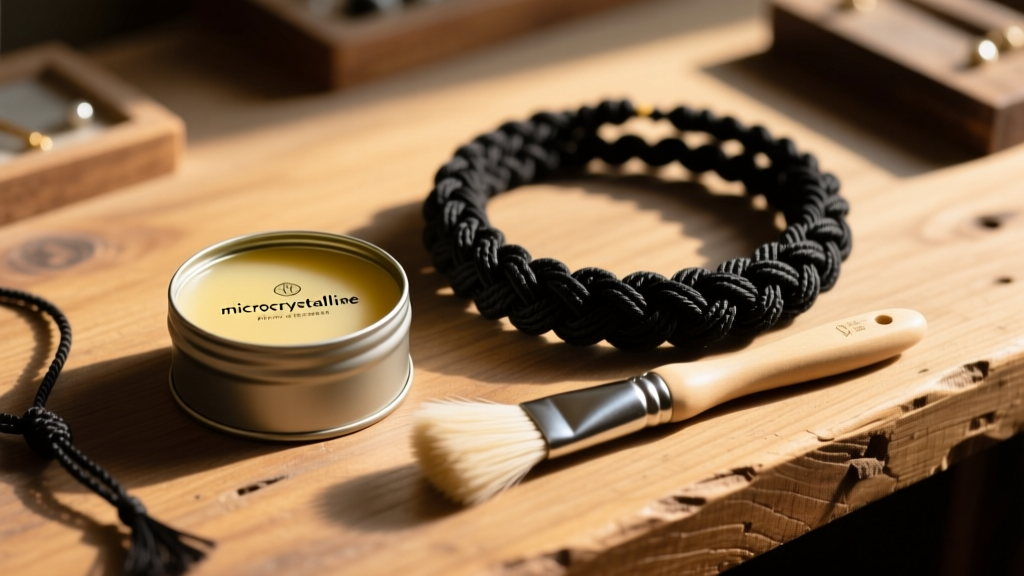
Never submerge a waxed cotton cord in water. Water strips the protective wax coating, leaving the cotton fibers exposed to moisture and dirt. To clean a waxed cord, use a dry, soft-bristled toothbrush to gently agitate surface dust from the braids. For localized stains (such as makeup or sebum buildup near the clasp), lightly dampen a microfiber cloth with distilled water and a drop of pH-neutral Castile soap. Spot-clean the affected area, then immediately dry with a separate cloth. Once clean and fully dry, you must re-wax the cord. Rub a small amount of microcrystalline wax (like Renaissance Wax) between your fingers and gently pull the cord through your pinched fingers to redistribute an even, protective coating.
2. Braided Leather Cords
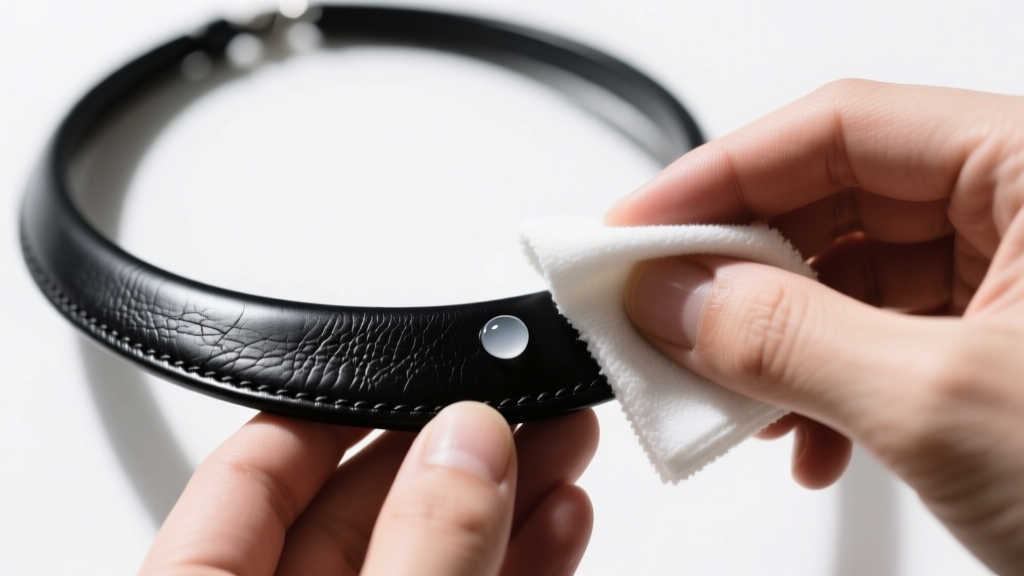
Leather is highly susceptible to the acidic nature of human sweat, which typically ranges from a pH of 4.5 to 7.0. Over time, this acidity breaks down the leather's tanning agents, leading to a brittle texture. Clean black leather cords using a specialized saddle soap or a leather-specific pH-balanced cleaner. Apply the cleaner to a cloth, never directly to the leather, and wipe down the cord. After cleaning, the leather must be re-conditioned. Use a high-quality mink oil or a dedicated leather balm to restore lipid moisture. Avoid olive oil or coconut oil, as these can turn rancid over time and degrade the leather fibers from the inside out.
3. Silk Cords
Silk is a protein fiber that is easily destroyed by alkaline substances and enzymes. Standard laundry detergents contain proteases (enzymes that break down proteins) which will literally digest a silk cord. If your black silk cord requires cleaning, use a specialized silk wash or a mild baby shampoo. Gently swish the cord in cool water, never rub or wring it, as wet silk loses up to 20% of its tensile strength and is prone to micro-tears. Rinse in cool distilled water and lay flat to dry away from direct heat. The American Institute for Conservation (AIC) emphasizes that protein fibers require meticulous climate control to prevent irreversible hydrolysis.
Hardware Maintenance: The Clasp Corrosion Factor
The most common point of failure on a black cord necklace is not the cord itself, but the metal hardware where the cord terminates. Moisture and sweat wick down the cord and pool inside the metal crimp beads, wire wraps, or lobster clasps. This creates a micro-environment for galvanic corrosion, especially if the hardware is made of brass or base metals plated with black rhodium or oxidized silver.
To prevent this, regularly inspect the termination points. If you notice green or white powdery residue (verdigris or zinc oxide), the hardware is corroding and will eventually saw through the cord fibers. Use a cotton swab dipped in isopropyl alcohol to clean the metal hardware, taking care not to let the alcohol touch leather or silk cords. For long-term durability, upgrade your cord hardware to 316L surgical stainless steel or Grade 5 titanium, which are entirely impervious to sweat-induced corrosion.
Material Care Comparison Chart
| Cord Material | Water Tolerance | Recommended Cleaner | Required Maintenance | Expected Lifespan |
|---|---|---|---|---|
| Waxed Cotton | Low (Strips wax) | Dry brush / Damp microfiber | Re-waxing every 6 months | 2-4 Years |
| Braided Leather | Very Low (Causes rot) | Saddle soap / Leather cleaner | Mink oil conditioning bi-annually | 3-5 Years |
| Silk | Moderate (Cold water only) | Silk wash / Baby shampoo | Annual professional re-knotting | 1-3 Years |
| Nylon / Polyester | High (Waterproof) | Mild dish soap | Hardware inspection only | 5-10+ Years |
Storage and UV Protection: Preventing the "Gray Fade"
The deep black dye used in textile cords is highly vulnerable to photodegradation. Ultraviolet (UV) light breaks down the chemical bonds of reactive dyes (used on cotton) and acid dyes (used on silk and nylon), causing the once-rich black cord to take on a dusty, reddish, or grayish hue. This fading is irreversible.
To preserve the color of your black cord for necklaces, never store them in direct sunlight or on open display stands near windows. Store your corded necklaces in opaque, acid-free jewelry pouches or inside a lined jewelry box. Additionally, avoid hanging heavy pendants on cords for long-term storage, as the constant gravitational pull can stretch the fibers, particularly silk and cotton, leading to permanent deformation and weakened structural integrity. Always coil cords loosely in a figure-eight pattern to prevent kinking and memory-set creases.
When to Replace Your Cord
Even with meticulous care, organic and textile cords are ultimately consumable components of your jewelry. Perform the "pinch test" every few months: gently pinch the cord near the clasp and the center back of the neck (where it absorbs the most sweat and friction). If the cord feels spongy, excessively stiff, or if you hear a faint crunching sound (indicating internal fiber breakage), it is time to replace the cord. Re-stringing a pendant onto a fresh, high-quality black cord is a minor investment that ensures the safety of your valuable centerpieces.


