Amber Necklace and Teething: Material Science & Safety Data
An expert analysis of the amber necklace and teething trend, examining succinic acid efficacy, tensile safety limits, and pediatric guidelines.

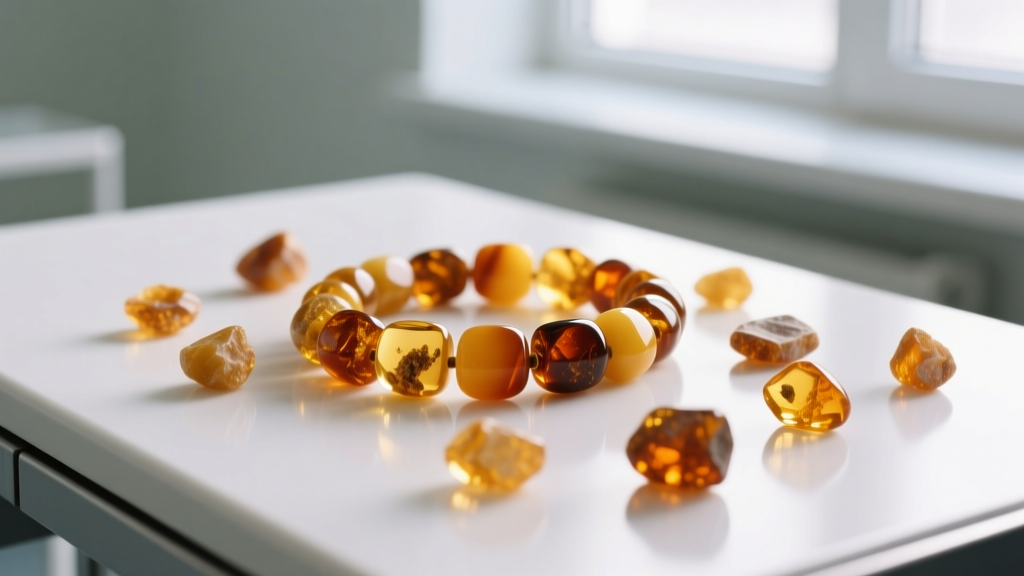
The Intersection of Amber Necklace and Teething: Claims vs. Reality
When navigating the vast market of infant care products, the intersection of an amber necklace and teething relief remains one of the most fiercely debated topics among parents, jewelers, and pediatricians. Proponents market Baltic amber as a natural, homeopathic analgesic, claiming that body heat releases therapeutic compounds into the skin. However, as jewelry engineers and material scientists, we must look past the marketing copy and evaluate these accessories based on their chemical properties, mechanical failure rates, and anatomical risk factors. In this expert deep dive, we analyze the true material science of Baltic amber and cross-reference it with current 2026 pediatric safety data to provide a definitive, evidence-based guide for consumers and designers alike.
Material Science: The Polymer Chemistry of Baltic Amber
Baltic amber is not a crystal or a gemstone; it is a fossilized tree resin, primarily composed of cross-linked diterpene polymers. The core claim surrounding the amber necklace and teething trend relies on the presence of succinic acid (butanedioic acid, C4H6O4), a compound historically used in European folk medicine. Marketers assert that an infant's body temperature (approximately 37°C or 98.6°F) is sufficient to warm the amber, causing it to release trace amounts of succinic acid onto the skin, which is then absorbed into the bloodstream to reduce gum inflammation.
Thermodynamics and Dermal Absorption Thresholds
From a strict chemical engineering perspective, this claim fails basic thermodynamic scrutiny. Succinic acid has a melting point of 185°C (365°F) and requires significant thermal energy to sublimate or break its molecular bonds. Human body heat is vastly insufficient to alter the physical state of the polymerized resin matrix. Furthermore, Baltic amber is highly insoluble in water and human sweat. According to gemological research from the Gemological Institute of America (GIA), the fossilization process takes millions of years, creating a stable, inert plastic-like structure that does not leach compounds at room or body temperature.
| Property | Baltic Amber Spec | Human Body Spec | Efficacy Verdict |
|---|---|---|---|
| Melting Point | ~200°C - 250°C | 37°C (98.6°F) | No thermal release |
| Solubility | Insoluble in H2O | Sweat/Saliva (Aqueous) | No chemical leaching |
| Succinic Acid Content | 3% - 8% by weight | N/A | Trapped in polymer matrix |
Consequently, any perceived soothing effect is largely attributed to the placebo effect on the parents, or the simple tactile distraction of the infant playing with the beads, rather than any pharmacological intervention.

Engineering and Failure Modes: The Anatomy of a Teething Necklace
Beyond the chemical inertness of the beads, the mechanical engineering of these necklaces presents severe, quantifiable risks. A standard teething necklace consists of three primary components: the beads, the stringing material, and the clasp mechanism. Each represents a critical point of failure.
Stringing Materials and Enzymatic Degradation
High-quality amber necklaces are traditionally strung on silk thread, while cheaper alternatives use nylon or polyester. Silk is chosen for its 'breakaway' properties; it is designed to snap under 2 to 4 pounds of tensile force to prevent strangulation. However, silk is a natural protein fiber that is highly susceptible to enzymatic degradation. Infant saliva contains high concentrations of amylase and other digestive enzymes. When a baby chews on the necklace—as they inevitably do—these enzymes rapidly break down the silk's molecular structure, reducing its tensile yield strength by up to 60% within just a few weeks of use. Nylon resists enzymatic breakdown but possesses a tensile strength exceeding 15 pounds, transforming an anti-strangulation feature into a severe ligature hazard.
Clasp Mechanics and Friction Failures
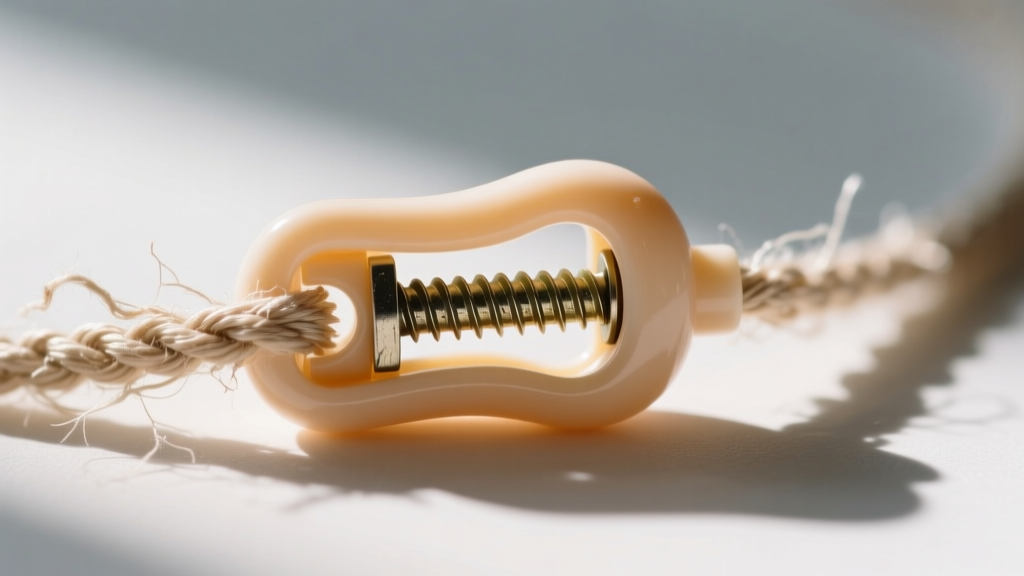
The most common closure is a plastic, threaded 'screw' clasp or a 'pop' safety clasp. Screw clasps are notoriously prone to user error. If a parent over-tightens the plastic threads, they strip the internal housing, rendering the clasp useless and allowing the necklace to unspool. If under-tightened, the infant's erratic movements will vibrate the threads loose. Furthermore, the knotting technique used between each bead (typically an overhand knot) creates localized friction points on the thread. Over time, the repetitive pulling and chewing cause the thread to abrade against the sharp inner edges of the amber bead's drill hole, leading to catastrophic, unannounced snapping.
Pediatric Airway Metrics: The Choking Hazard Data
The most alarming aspect of the amber necklace and teething phenomenon is the geometric correlation between the jewelry components and infant anatomy. When a stringing material fails, individual beads are released into the child's environment. To understand the choking risk, we must compare bead dimensions to pediatric airway metrics.
- Standard Amber Bead Diameter: 4.0mm to 6.5mm
- Infant Trachea Diameter (3-6 months): ~4.0mm to 5.0mm
- Toddler Trachea Diameter (12+ months): ~5.5mm to 7.0mm
This data reveals a terrifying 1:1 ratio. A single standard-sized amber bead is the exact geometric equivalent of an infant's trachea. If a bead is aspirated, it acts as a perfect, airtight plug, causing immediate and complete airway occlusion. Unlike rigid plastic toys that may allow air to pass around their edges, smooth, spherical amber beads create a total vacuum seal in the mucosal tissue of the airway.
'The FDA strongly warns parents and caregivers against using teething jewelry, including amber necklaces, due to the severe risk of strangulation and choking. These products have been directly linked to infant fatalities and emergency room visits.' — U.S. Food and Drug Administration (FDA)
The American Academy of Pediatrics (AAP) echoes this stance, noting that no jewelry should be placed around an infant's neck, especially during sleep, due to the risk of entanglement in crib slats or bedding. The AAP's safe teething guidelines explicitly recommend avoiding necklaces entirely in favor of mechanically safe alternatives.
Harm Reduction and Safer Alternatives for 2026
From a jewelry design and safety engineering perspective, the consensus is clear: the risks of an amber necklace and teething relief far outweigh any unproven benefits. However, understanding consumer behavior is vital. Some parents, determined to use amber, attempt 'harm reduction' strategies. It is critical to analyze the efficacy of these workarounds.
Evaluating Common Workarounds
1. The Anklet Conversion: Some parents wrap the necklace around the infant's ankle and cover it with a sock. While this eliminates the strangulation and direct choking risks, it introduces a new hazard: digital ischemia. If the silk thread wraps around a toe, it can act as a tourniquet, cutting off circulation and leading to tissue necrosis before the parent notices.
2. The Pouch Method: Placing the amber beads inside a breathable cotton pouch and pinning it to the infant's mattress. This completely negates the already flawed 'body heat' theory, as the amber is no longer in contact with the skin. Furthermore, pinning objects to a crib mattress violates modern safe sleep guidelines regarding loose objects in the sleep environment.
Engineered Alternatives
For parents seeking tactile distraction and gum relief, the jewelry industry has pivoted toward medically graded, food-safe silicone. Silicone teething pendants, designed to be worn by the *parent* (not the infant), allow the baby to chew safely while being held. These are manufactured from a single, solid piece of FDA-approved silicone, eliminating beads, strings, and clasps entirely. They can be sterilized in boiling water, possess zero choking hazards, and provide the necessary counter-pressure to soothe inflamed gingival tissue.
Final Verdict from a Jewelry Engineering Perspective
The romanticism of Baltic amber cannot override the laws of physics, chemistry, and human anatomy. The amber necklace and teething market relies on a fundamental misunderstanding of polymer science and a dangerous disregard for pediatric airway metrics. As experts in jewelry materials and design, we categorically advise against the use of any beaded necklace for infants. True innovation in infant care jewelry lies not in repurposing ancient resins with unproven efficacy, but in engineering single-piece, non-toxic, and mechanically fail-safe alternatives that prioritize the child's physiological safety above all else.


