Amber Necklaces for Babies: 2026 Safety and Style Trends
Explore the 2026 trends for amber necklaces for babies, balancing Baltic amber aesthetics with critical pediatric safety guidelines and modern alternatives.

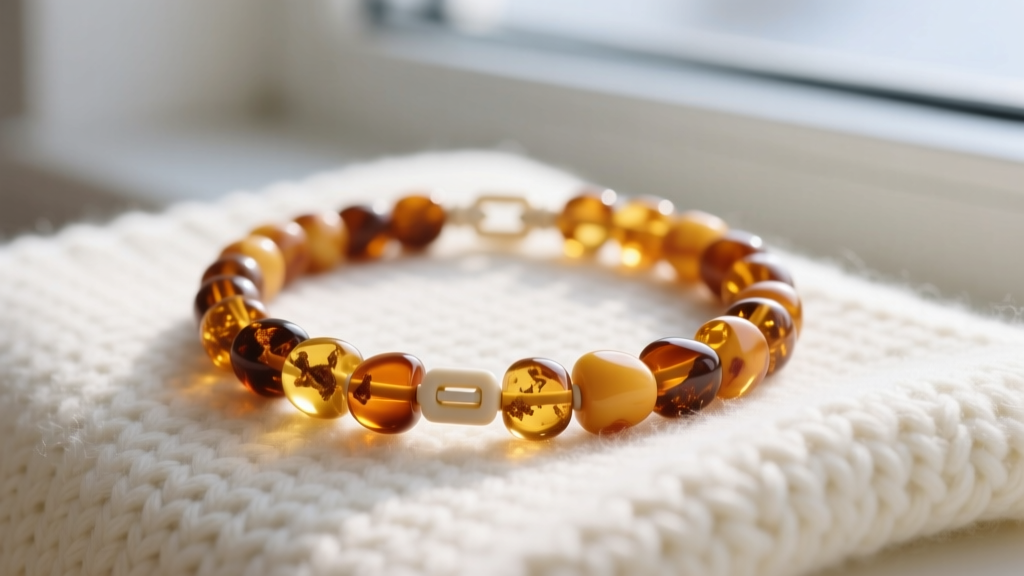
The 2026 Landscape: Aesthetic Appeal vs. Pediatric Warnings
For over a decade, amber necklaces for babies have occupied a controversial space at the intersection of natural parenting aesthetics and pediatric safety. Rooted in European folklore, these necklaces are traditionally marketed as natural teething remedies, utilizing the supposed analgesic properties of Baltic amber. However, as we navigate the jewelry and childcare trends of 2026, the market is experiencing a massive paradigm shift. The visual appeal of warm, honey-colored beads against infant clothing remains undeniably popular in bohemian and holistic parenting circles, but the medical consensus has hardened into absolute opposition.
Leading health organizations, including the American Academy of Pediatrics (AAP) and the U.S. Food and Drug Administration (FDA), have issued stringent warnings against any teething jewelry worn directly on an infant's neck. The primary risks are twofold: strangulation if the necklace catches on a crib or play equipment, and choking if the string breaks and beads are ingested. Consequently, the 2026 trend analysis reveals a jewelry industry in transition. Artisans and ethical brands are no longer marketing traditional amber necklaces for babies as 'wearable teething toys.' Instead, the market is pivoting toward 'amber-adjacent' aesthetics, parent-worn pieces, and strictly supervised decorative alternatives that honor the tradition without compromising infant safety.
Material Deep Dive: Baltic Amber and Succinic Acid Myths
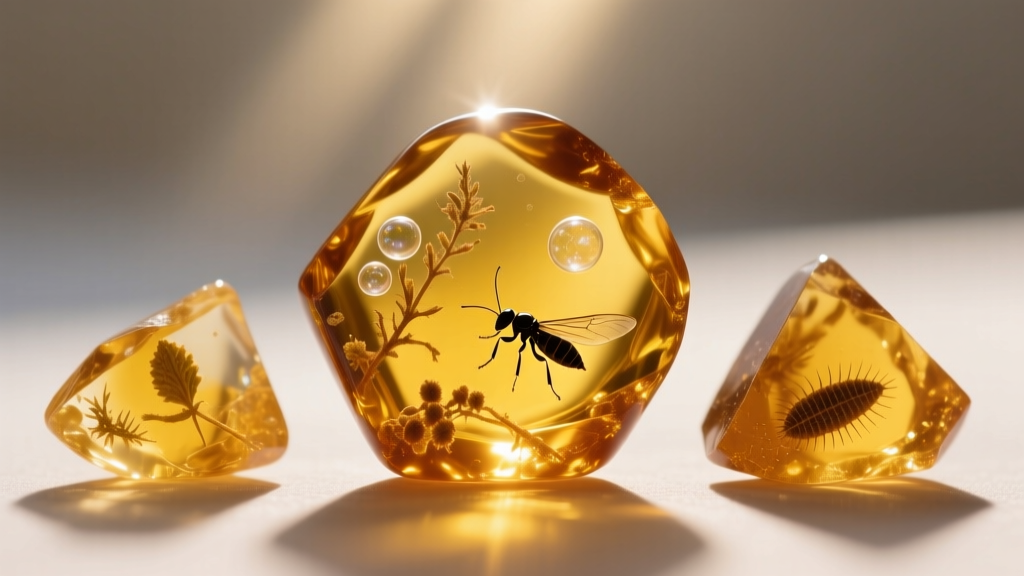
To understand the enduring appeal of amber necklaces for babies, one must examine the material itself. Genuine baby amber jewelry is crafted from Baltic amber, scientifically known as succinite. This fossilized tree resin, primarily harvested from the shores of the Baltic Sea, contains between 3% and 8% succinic acid by weight. Historically, succinic acid was recognized by the European Medicines Agency for its mild anti-inflammatory properties, which birthed the modern marketing claim that body heat warms the amber, releasing the acid into the skin to soothe inflamed gums.
Grading and Authenticity Testing
From a gemological perspective, the 2026 market is flooded with imitations. Copal (young, semi-fossilized resin), dyed plastics, and glass are frequently passed off as Baltic amber. Authenticating high-grade baby amber requires specific testing protocols:
- The Saltwater Test: Genuine Baltic amber has a specific gravity of 1.05 to 1.10. It will sink in fresh water but float in a saturated saltwater solution (approximately 1 part salt to 2 parts water). Copal and most plastics will sink.
- UV Fluorescence: Under ultraviolet light, authentic Baltic amber exhibits a distinct pale blue or greenish-yellow fluorescence. Plastics remain inert, while copal glows a milky white.
- Thermal Reaction: When heated with a pin, true amber emits a pleasant, piney, incense-like smoke and leaves a black, crumbly residue. Plastic smells acrid and melts into a sticky bead.
Despite the authenticity of the succinic acid content, modern dermatological and pediatric studies indicate that the transdermal absorption of succinic acid from a polished amber bead at human skin temperature (approx. 32°C) is scientifically negligible. The soothing effect reported by parents is largely attributed to the placebo effect or the natural timeline of teething pain subsiding.
The Safety Pivot: How the Industry is Adapting in 2026
The most significant style trend for amber baby jewelry in 2026 is the structural pivot away from the neck. Ethical jewelry designers are re-engineering the traditional amber necklace to align with modern safety standards while retaining the visual warmth and organic texture of the resin. Below is a comparative analysis of how the market is adapting traditional designs into safer formats.
| Jewelry Format | Design Characteristics | Safety Profile & 2026 Trend Status |
|---|---|---|
| Traditional Necklace | 11-13 inch length, worn directly on infant's neck. | High Risk. Strongly discouraged by pediatricians. Declining in ethical retail markets. |
| Amber Anklet | 4-5 inch length, worn on the ankle, often hidden under socks. | Moderate Risk. Eliminates strangulation risk, but poses a choking hazard if beads detach and reach the mouth. |
| Parent-Worn Pendant | 28-32 inch chain, large amber pendants worn by the caregiver. | Safe & Trending. Baby can touch and chew on the pendant while held, zero independent wear risk. |
| Amber-Infused Silicone | Food-grade silicone beads with a central amber core or dust. | Safe Alternative. Provides the teething texture with unbreakable, choke-safe materials. |
Anatomy of a Compliant Amber Baby Necklace
For parents who still choose to utilize amber necklaces for babies strictly for photographic props or highly supervised, awake-time wear, understanding the precise anatomy of a safely constructed piece is non-negotiable. In 2026, master jewelers adhering to European safety standard EN 71-1 for toys apply rigorous construction metrics to these pieces.
- Bead Sizing: Beads should range between 4mm and 6mm. While smaller beads look delicate, they pose a severe aspiration hazard if swallowed. Beads larger than 8mm become heavy and uncomfortable for an infant's delicate neck.
- Individual Knotting: Every single bead must be individually knotted on both sides using high-tensile, hypoallergenic nylon or silk thread. This ensures that if the necklace snaps, only one bead is released, not the entire strand.
- The Clasp Paradox: There are two main clasps used: the screw clasp and the pop-open safety clasp. The screw clasp prevents a baby from unfastening the necklace and putting the beads in their mouth, but it will not break under tension, increasing strangulation risk. The pop-open clasp (which releases at roughly 3-5 lbs of pressure) prevents strangulation but can be easily opened by a curious toddler. Modern safety guidelines heavily favor the pop-open magnetic or friction clasp to prioritize airway safety over choking hazards, as airway obstruction is immediately fatal.
- Thread Welding: The ends of the nylon thread should be thermally welded or melted into the clasp housing, not merely tied, to prevent the knot from slipping through the clasp loop over time.
Style Alternatives: The Rise of Parent-Worn Amber
The most elegant solution to emerge in the 2026 style landscape is the 'Parent-Worn' amber movement. Recognizing that babies explore the world through tactile sensation and oral fixation, jewelry designers have created stunning, multi-strand amber necklaces intended exclusively for the mother or father. These pieces feature oversized, raw, or lightly polished Baltic amber beads (often 10mm to 15mm in diameter) strung on reinforced, bite-proof Kevlar or steel-core cords.
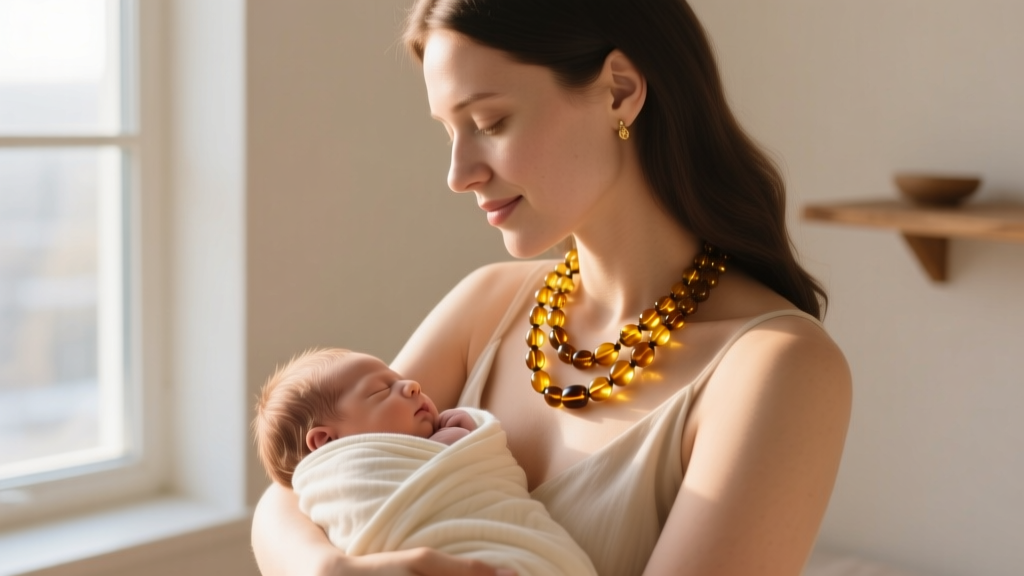
When the parent holds or nurses the infant, the baby can safely grasp, rub, and chew on the amber beads. This satisfies the infant's sensory needs and maintains the aesthetic tradition of amber in the family, entirely bypassing the risks of independent infant wear. Brands are now pairing these parent-worn amber necklaces with matching, solid silicone teething rings, creating a cohesive 'nursing and teething' collection that appeals to style-conscious, safety-minded modern parents.
'The safest teething necklace is one worn by the parent, not the child. We strongly urge caregivers to avoid placing any jewelry, including amber, on an infant's neck, wrists, or ankles due to the unpredictable nature of infant movement and the catastrophic risks of entanglement.' — Summary of Pediatric Safety Guidelines on Infant Jewelry.
Final Verdict for Modern Parents
The narrative surrounding amber necklaces for babies has fundamentally shifted from a 'natural remedy' to a 'managed aesthetic risk.' As a style and trend radar, we observe that the raw beauty, historical significance, and warm color palette of Baltic amber remain highly desirable in 2026. However, genuine expertise in modern parenting requires prioritizing physiological safety over tradition. By transitioning to parent-worn amber designs, amber-infused silicone alternatives, or reserving traditional necklaces strictly for supervised photography, families can honor the legacy of Baltic amber while adhering to the uncompromising safety standards demanded by modern pediatric science.


