How Long a Necklace Should Be for Every Neckline & Trend
Discover exactly how long a necklace should be for your neckline, body type, and layering goals. Expert proportion guides and styling matrices.


The question of how long a necklace should be is rarely a matter of simple preference; it is an exercise in visual geometry, anatomical proportion, and material physics. A standard 16-inch chain might rest elegantly on the collarbone of a 5'9" model, but function as a restrictive choker on a 5'2" wearer with a broader neck. In 2026, as the trend shifts heavily toward curated, multi-length layering and architectural pendants, understanding the exact drop, gauge, and visual weight of your chains is critical for both comfort and style.
This guide moves beyond generic size charts to provide a structural analysis of necklace lengths, pairing them with specific necklines, body proportions, and advanced layering matrices to ensure your jewelry sits exactly where it should.
The Anatomy of Necklace Lengths and Visual Landing Zones
Before pairing a chain with a garment, you must understand where standard measurements actually land on the human body. According to industry standards outlined by Jewelers of America, chain lengths are measured end-to-end, including the clasp. However, the "visual drop" is dictated by neck circumference and shoulder slope.
- 14 Inches (Collar/Choker): Sits tightly at the base of the neck. Ideal for open necklines and summer wear. Best suited for 1.5mm to 2.0mm widths to prevent snapping under the tension of neck movement.
- 16 Inches (Princess High): Rests directly on the collarbone. This is the most common default length, acting as a frame for the face. Opt for 0.8mm to 1.2mm cable or box chains for a delicate, modern look.
- 18 Inches (Princess Low): Drops just below the collarbone, hitting the upper chest. This is the universal sweet spot for pendants weighing between 2 and 5 grams, allowing the focal point to rest in the sternal notch.
- 20 to 24 Inches (Matinee): Falls between the bust line and the top of the cleavage. Essential for business wear and high-necked garments. Chains in this range require a heavier gauge (1.5mm+) to drape properly without kinking.
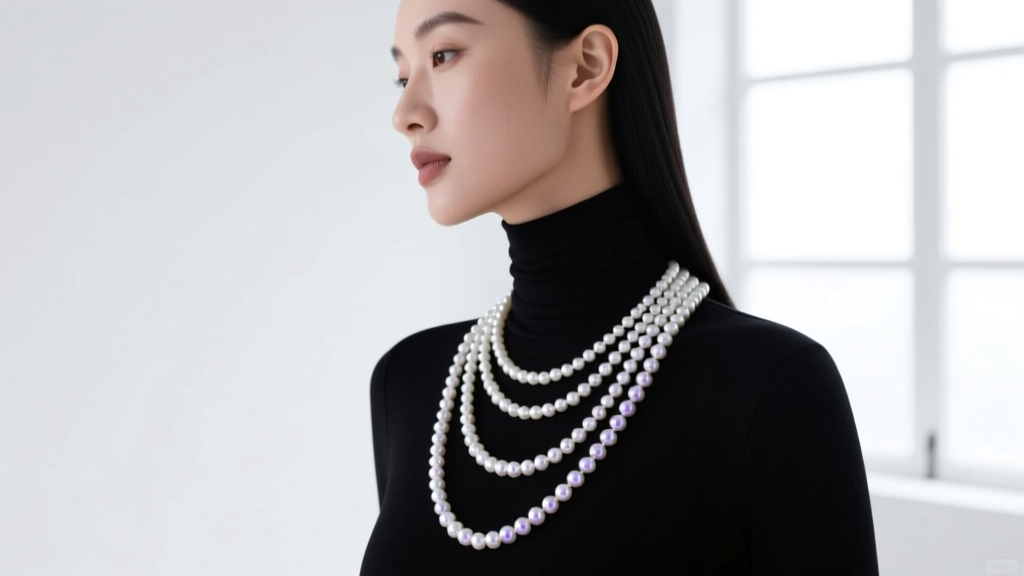
- 28 to 36 Inches (Opera/Rope): Drops well below the bust. Often worn doubled or knotted. According to the Gemological Institute of America (GIA), long pearl or gemstone strands in this category require specialized silk knotting or wire reinforcement to withstand the pendulum stress of walking.
Neckline Pairings: A Structural Approach
Mismatching a necklace length to a garment's neckline creates visual friction. The goal is to either parallel the garment's lines or intentionally intersect them to create a focal point. Below is a data-driven matrix for pairing chain lengths with common necklines.
| Neckline Type | Ideal Length | Chain Style & Gauge | Pendant Strategy |
|---|---|---|---|
| Crew Neck | 16" or 20"+ | 1.0mm Rope or Figaro | Avoid 18" (creates a tangent line). Use a 16" choker or drop to 20" to cross the fabric line. |
| V-Neck | 18" to 20" | 0.9mm Box Chain | Match the V-angle with a Y-drop or a single geometric pendant that floats in the negative space. |
| Sweetheart | 14" or 16" | 1.2mm Cable Chain | Keep it short. A longer chain will bisect the sweetheart curve and ruin the garment's architecture. |
| Turtleneck | 24" to 30" | 2.0mm Snake or Curb | Requires heavy visual weight to stand out against the fabric. Layer a 24" chain with a 30" lariat. |
| Scoop Neck | 16" to 18" | 0.8mm Thread or Bezel | Follow the curve of the scoop with a graduated diamond or gemstone station necklace. |
The 2026 Layering Matrix: Calculating the Perfect Drop
Layering is no longer about throwing on three random chains; it is a calculated exercise in spacing and friction. The most common failure mode in layered necklaces is tangling, which occurs when chains of similar gauge and link structure interlock during movement.
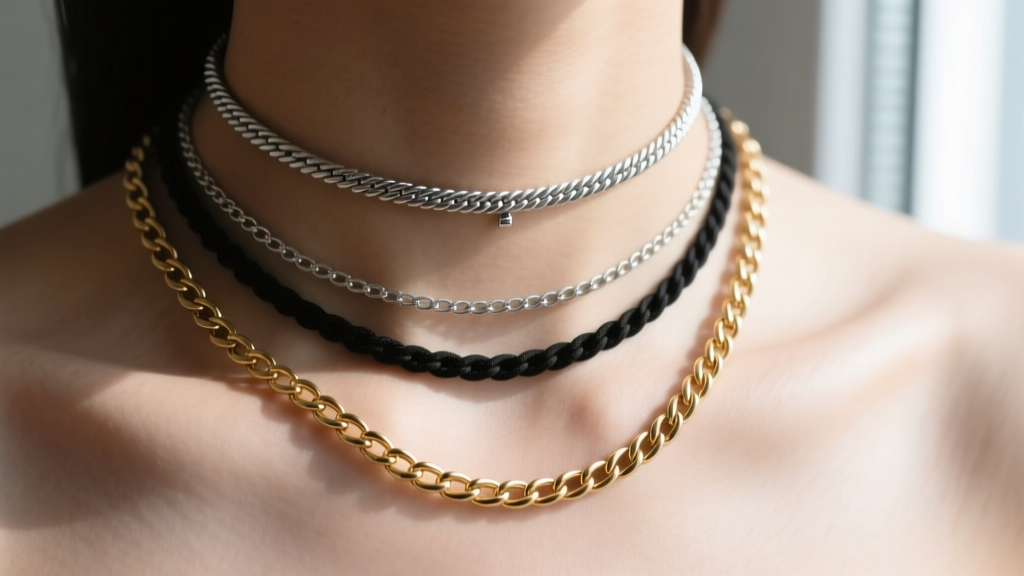
To achieve the highly curated "cascade" look popular in current styling, adhere to the Two-Inch Rule. Each subsequent layer must be exactly 2 inches longer than the one above it (e.g., 14", 16", 18"). This specific gap prevents the clasps from overlapping and reduces the surface area where links can catch one another.
Friction and Link Compatibility
Not all chains play well together. A high-friction chain (like a rope or herringbone) will easily snag the open loops of a low-friction chain (like a standard cable or figaro). If you are layering a 16" pendant chain with a 14" choker, ensure one is a smooth, closed-link design (like a snake or box chain) while the other features open, textured links. This variance in surface topology drastically reduces the mechanical interlocking that leads to knots.
Adjusting for Height and Bust Proportions
The physical measurement of a chain is static, but its visual impact is entirely relative to the wearer's morphology. When determining how long a necklace should be for your specific body type, you must account for vertical torso length and bust projection.
The Height Variable
For individuals under 5'4", an 18-inch chain will often drop much lower on the chest than it does on a taller person, sometimes crossing into the 20-inch visual zone. If you are petite and want a true collarbone-grazing princess length, you may need to size down to 15 or 15.5 inches. Conversely, those over 5'8" with longer necks will find that a standard 16-inch chain sits uncomfortably close to the throat; sizing up to 17 inches provides the intended visual breathing room.
Bust Clearance and the Pendulum Effect
For women with a larger bust, chains in the 20 to 22-inch range are notorious for the "pendulum effect." Because the chain rests on the slope of the bust, gravity and body movement will constantly pull the pendant to the side, or cause the chain to ride up the incline. To bypass this, bypass the 20-22" danger zone entirely. Opt for a shorter 18" chain that rests above the bust line, or commit to a 24"+ matinee length that hangs freely in the negative space below the bust.
Troubleshooting Common Length and Fit Failures
Even when you select the mathematically correct length, mechanical failures can ruin the drape of your jewelry. Here is how to troubleshoot the most common structural issues:
Expert Insight: "The spinning necklace is rarely a chain issue; it is a center-of-gravity issue. If your pendant weighs less than your clasp, the clasp will inevitably migrate to the front of your neck. Always ensure the pendant is at least 30% heavier than the clasp assembly."
- Clasp Migration: If your clasp keeps spinning to the front, your chain is too heavy or your pendant is too light. Solution: Add a small silicone counterweight bead near the clasp, or swap the bulky lobster clasp for a lightweight spring-ring or magnetic neodymium clasp.
- Pendant Flipping: Flat pendants on thin, round chains (like snake chains) will constantly flip backward. Solution: Use a flat-profile chain (like a box or flattened curb chain) which provides a wider surface area, forcing the pendant bail to remain facing forward.
- The Choker Choke: Neck circumference fluctuates throughout the day due to hydration, temperature, and posture. If a 14" choker feels tight by the afternoon, utilize a chain with a 1-inch extender, or opt for a flexible, woven mesh choker that expands with your anatomy rather than a rigid, solid-link collar.
Ultimately, understanding how long a necklace should be requires looking past the tag on the jewelry box. By analyzing your wardrobe's necklines, calculating the friction of your layering combinations, and adjusting for your unique physical proportions, you can transform a simple chain into a masterclass of personal styling.


