How to Layer and Care for an Amber and Pearl Necklace
Learn how to expertly layer, clean, and restring your amber and pearl necklace with our step-by-step guide on material care and styling techniques.

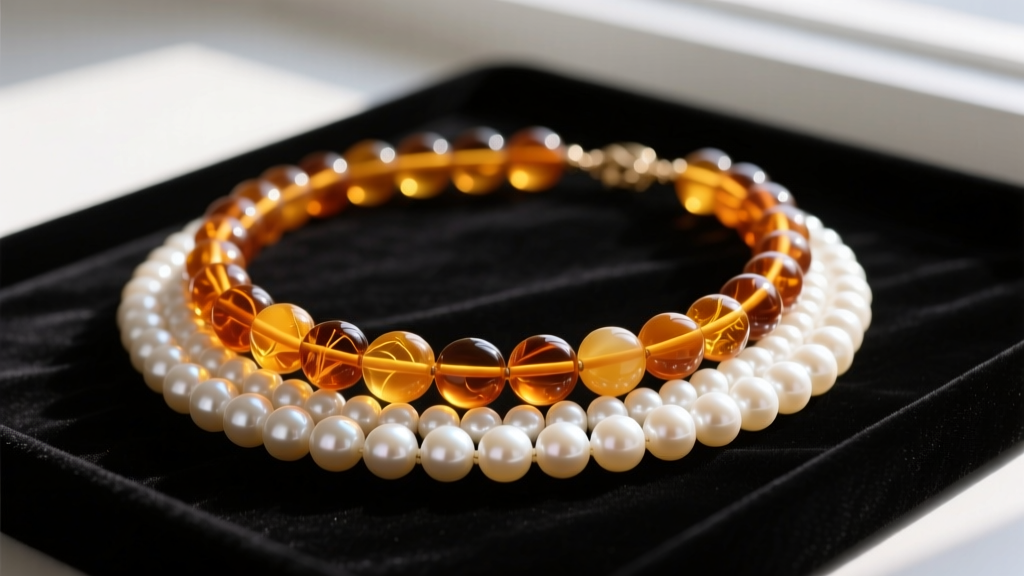
Combining the prehistoric warmth of fossilized tree resin with the oceanic elegance of nacre creates a striking visual contrast. An amber and pearl necklace is a staple of organic jewelry, but styling and maintaining these two vastly different materials requires specialized knowledge. Unlike faceted diamonds or durable sapphires, both amber and pearls are soft, porous, and highly reactive to their environment. This comprehensive guide will walk you through the exact steps to layer these pieces for modern aesthetics, restring them using professional lapidary techniques, and preserve their structural integrity for decades.
The Organic Paradox: Mohs Scale and Porosity
Before attempting to layer or restring your jewelry, you must understand the physical limitations of the materials. According to the Gemological Institute of America (GIA), amber ranks between 2.0 and 2.5 on the Mohs hardness scale. Pearls are slightly harder, ranging from 2.5 to 4.5, depending on their nacre thickness and origin. Because both materials fall below the 5.0 threshold, they are highly susceptible to scratching from everyday dust, which contains quartz particles (Mohs 7).
When designing or wearing an amber and pearl necklace, direct bead-on-bead friction is a primary failure mode. If a strand of unknotted amber beads rubs against freshwater pearls, the amber's rougher inclusions or irregular drill holes can micro-scratch the pearl's nacre, leading to permanent dullness. Therefore, professional stringing protocols dictate that every single bead must be separated by a hand-tied silk knot.
Step-by-Step Layering Framework
Layering organic gems requires balancing visual weight and varying lengths to prevent the strands from tangling and abrading one another. Follow this three-tier framework to style your amber and pearl necklace collection effectively.
Step 1: The Base Choker (15 to 16 Inches)
Start with a high-luster pearl choker. Akoya or high-grade Hanadama pearls (7.0mm to 8.0mm) work best here because their mirror-like luster reflects light upward toward the face. Ensure the clasp is a secure lobster or magnetic barrel clasp, as silk cord degrades faster at the high-friction clasp connection point.
Step 2: The Mid-Length Amber Strand (20 to 22 Inches)
Your amber strand should sit at least four inches below the pearl choker. Opt for larger, chunkier amber beads (10mm to 14mm) in cognac or cherry hues. The larger mass of the amber provides an anchoring visual weight that contrasts beautifully with the delicate, uniform sizing of the pearl base layer.
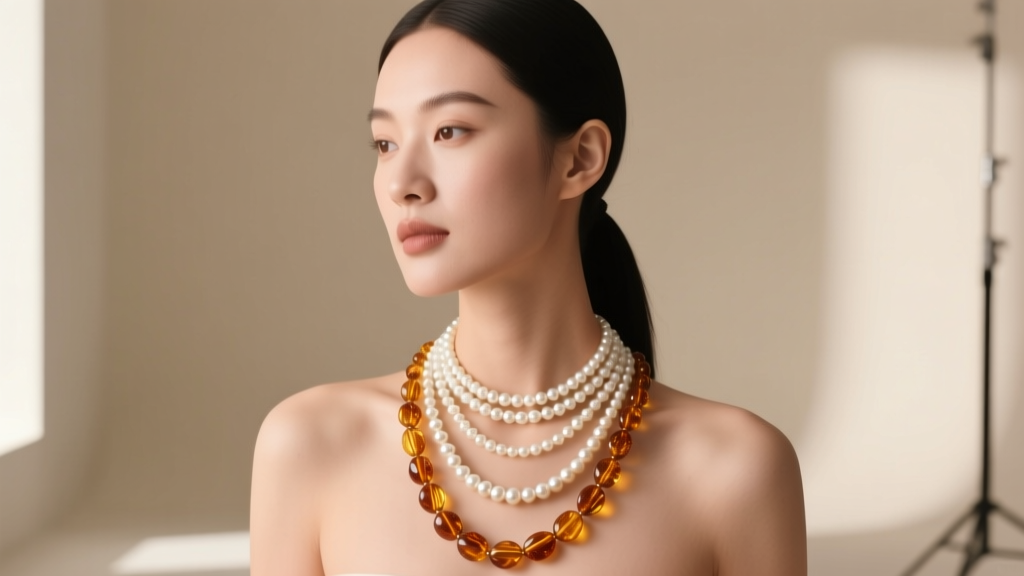
Step 3: The Pendant or Lariat (26 to 30 Inches)
Complete the stack with a long lariat featuring a single, large amber drop or a carved pearl pendant. This elongates the torso and draws the eye downward. Avoid mixing heavy metal chains into this specific organic stack, as the metal links will inevitably grind against the soft amber and pearl surfaces during movement.
The Restringing Protocol: Cord Selection and Knotting
If you are assembling or repairing an amber and pearl necklace, choosing the correct cord is critical. Synthetic cords like nylon or polyester are too rigid and can saw through the soft drill holes of Baltic amber over time. Always use 100% natural silk cord, specifically sized to the bead holes.
| Cord Material | Recommended Thickness | Best Use Case | Failure Mode |
|---|---|---|---|
| 100% Silk (Griffin) | Size #4 (0.35mm) | Akoya Pearls (3mm-6mm) | Fraying if bead holes are sharp |
| 100% Silk (Griffin) | Size #6 (0.45mm) | Amber & Freshwater Pearls | Stretching under heavy bead weight |
| Waxed Cotton | 1.0mm | Chunky, unknotted Amber | Stiffness damages pearl nacre |
The French Wire Technique
Never tie silk directly to a metal clasp. The metal will act like a blade, cutting the silk within months. Instead, use French wire (also known as gimp or bullion). Thread a 1-inch piece of fine silver or gold-filled French wire onto the silk, pass the silk through the clasp ring, and tie a secure overhand knot. The French wire absorbs the metal-on-cord friction, extending the lifespan of your amber and pearl necklace by years.
Cleaning and Preventative Maintenance
Standard jewelry cleaning solutions are catastrophic for organic gems. Ammonia, ultrasonic waves, and steam cleaners will instantly strip the nacre off a pearl and cause severe crazing (spiderweb cracking) in amber. The GIA's pearl care guidelines emphasize that pearls are highly sensitive to acids, including human perspiration.
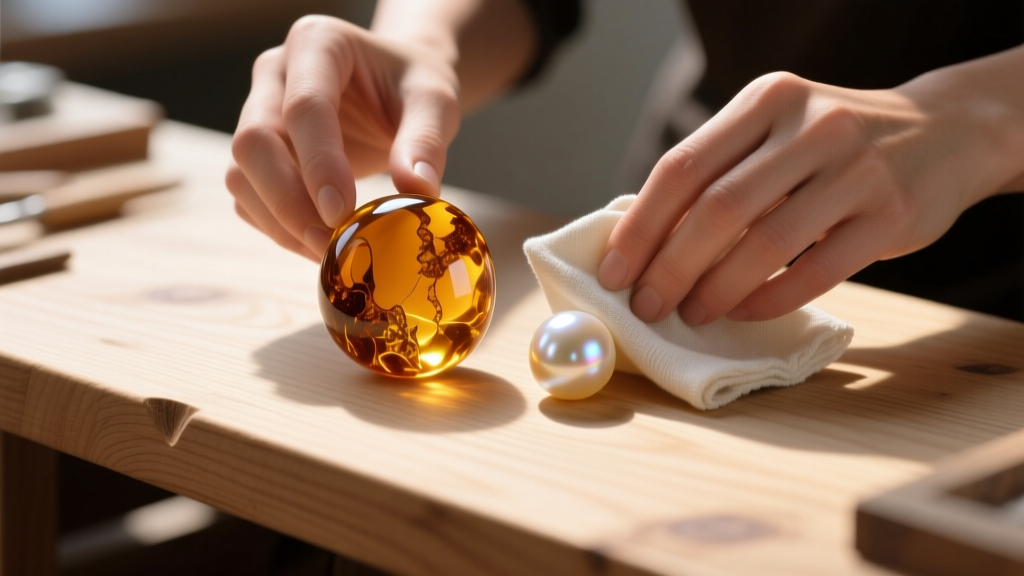
- Daily Wipe-Down: After every wear, gently wipe both the amber and pearls with a dry, untreated microfiber cloth to remove skin oils and cosmetic residue.
- Deep Cleaning: If the beads become visibly soiled, lightly dampen a soft cloth with distilled water. Never submerge the necklace, as water will weaken the silk knots and cause the interior of the amber beads to cloud.
- Storage Humidity: Amber requires a stable environment. Store your necklace in a soft cotton pouch (never airtight plastic) in a room with 40% to 50% relative humidity. Extreme dryness causes amber to craze, while extreme humidity promotes mold growth on the silk cord.
Troubleshooting Common Organic Gem Issues
Even with meticulous care, vintage and antique amber and pearl necklaces can develop specific issues. Here is how to diagnose and address them:
Expert Insight: If your amber beads feel sticky or emit a sharp, pine-like odor when rubbed vigorously, you likely have Copal (immature tree resin) rather than true fossilized amber. Copal melts at much lower temperatures and requires specialized conservation techniques.
Pearl Delamination
If you notice the outer layer of your pearls flaking or peeling, this is known as delamination. It is usually caused by prolonged exposure to harsh chemicals, extreme heat, or severe dehydration. Once nacre peels, it cannot be repaired. The affected pearls must be removed and replaced by a professional jeweler to maintain the symmetry of the strand.
Amber Crazing and Clouding
Crazing appears as a network of fine, internal fractures. This occurs when amber is exposed to rapid temperature fluctuations or direct, prolonged sunlight. While crazing cannot be reversed, you can stabilize the beads by storing them in a temperature-controlled environment and occasionally applying a microscopic drop of pure mineral oil to the surface to prevent further moisture loss. Clouding, often caused by trapped moisture inside the drill holes, can sometimes be resolved by a lapidary professional who will carefully re-drill and polish the interior channels.
By respecting the organic origins of these materials and adhering to strict layering and maintenance protocols, your amber and pearl necklace will remain a luminous, structurally sound heirloom for generations.


