Troubleshooting Your Amber and Turquoise Necklace: Care & Repair
Learn how to troubleshoot, clean, and repair your amber and turquoise necklace. Expert advice on authentication, restringing, and stone care.

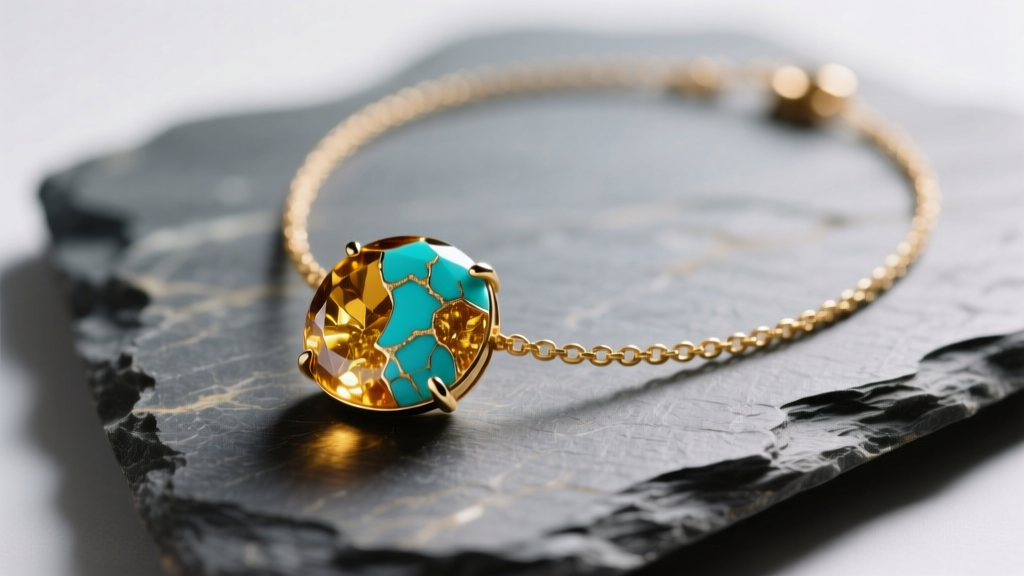
Owning an amber and turquoise necklace is a masterclass in balancing organic warmth with striking mineral contrast. However, combining a fossilized tree resin (amber) with a porous hydrous phosphate (turquoise) creates a unique set of maintenance challenges. Because these two materials sit on opposite ends of the gemological spectrum in terms of porosity, hardness, and chemical reactivity, standard jewelry care routines will quickly ruin them. Whether you have inherited a vintage piece or purchased a contemporary artisan design, understanding the specific failure modes of these stones is critical for long-term preservation.
The Gemological Friction Problem: Hardness Mismatches
The most common structural failure in mixed-material beaded necklaces is friction damage. On the Mohs scale of mineral hardness, natural turquoise ranges from 5.0 to 6.0, while amber is exceptionally soft, rating between 2.0 and 2.5. If your necklace is strung with the beads resting directly against one another without protective knots or spacer beads, the turquoise will act like sandpaper against the amber. Over months of wear, this friction will grind flat spots into the amber beads, permanently destroying their polish and spherical shape.
Troubleshooting Friction Damage
If you notice dull, flat patches on your amber beads, the necklace requires immediate restringing. To solve this, a professional jeweler must introduce 2mm to 3mm spacer beads—ideally in 14k gold-filled or .925 sterling silver—between every amber and turquoise stone. Alternatively, traditional Japanese silk knotting between each bead provides a soft buffer, though silk degrades faster when exposed to skin oils and perfumes.
Chemical Reactivity: Discoloration and Crazing
Turquoise and amber are both highly reactive to their environments, but they fail in entirely different ways when exposed to chemicals, oils, and UV light.
Turquoise: The Porosity Trap
Natural, unstabilized turquoise is highly porous. It readily absorbs sebum (skin oils), lotions, and cosmetics. Over time, this absorption alters the copper oxidation state within the stone's chemical structure (CuAl6(PO4)4(OH)8·4H2O), often shifting the color from a vibrant sky blue to a murky, chalky green. According to the Gemological Institute of America (GIA), if your turquoise has turned chalky and opaque, it has likely suffered irreversible oil saturation. Stabilized turquoise (treated with epoxy or the Zachery method) resists this, but natural stones require strict barriers against cosmetics.
Amber: UV Degradation and Crazing
Amber is an organic polymer that continues to oxidize long after it is excavated. Prolonged exposure to direct UV light and arid environments causes the surface to dry out and shrink faster than the interior, resulting in "crazing"—a network of fine, spiderweb-like cracks on the surface. Furthermore, exposing amber to alcohol-based cleaners, perfumes, or ultrasonic jewelry baths will cause the surface to cloud and melt, as copal (young amber) softens at temperatures as low as 150°C (302°F).
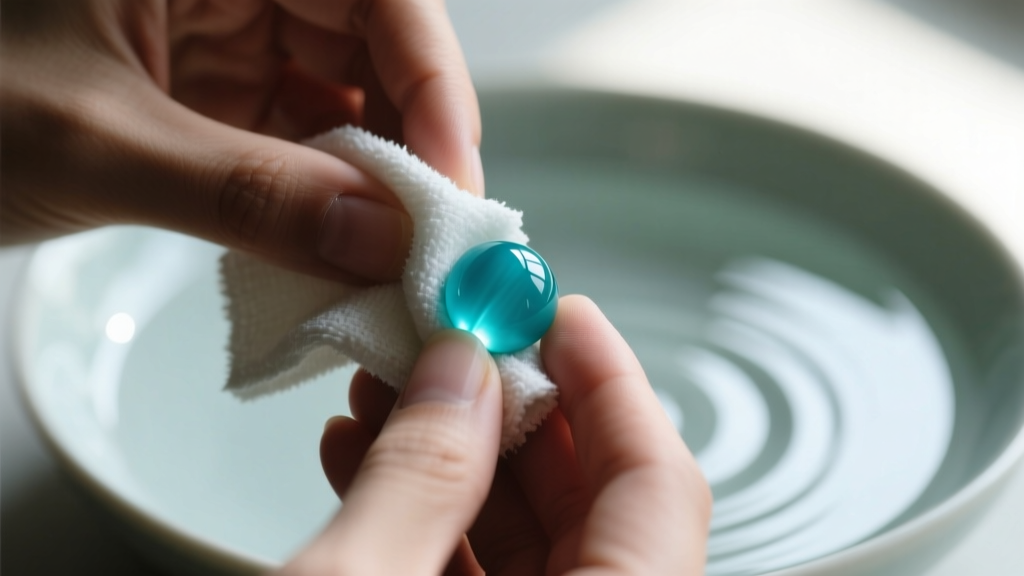
Step-by-Step Cleaning Protocol (What NOT to Do)
The cardinal rule of maintaining an amber and turquoise necklace is to completely avoid commercial jewelry dips, ultrasonic cleaners, and steamers. The high-frequency vibrations of an ultrasonic bath will shatter amber inclusions, while the heat and chemicals will strip the natural waxes from turquoise. Below is a definitive guide to safe versus destructive cleaning agents.
| Cleaning Agent | Effect on Amber | Effect on Turquoise | Verdict |
|---|---|---|---|
| Ultrasonic Cleaners | Shatters internal inclusions | Vibrations loosen matrix | NEVER USE |
| Mild Dish Soap & Water | Safe if wiped immediately | Safe if wiped immediately | USE WITH CAUTION |
| Alcohol / Hand Sanitizer | Melts surface, causes clouding | Strips natural waxes | NEVER USE |
| Jewelry Polishing Cloths | Abrasives scratch Mohs 2 surface | Chemicals alter copper color | AVOID |
| Dry Microfiber Cloth | Safe, removes dust | Safe, removes dust | HIGHLY RECOMMENDED |
Expert Tip: Always put your necklace on after applying perfume, hairspray, and lotion. When removing it at night, wipe each bead individually with a clean, dry microfiber cloth to remove acidic skin oils before storing.
Authentication Checks: Spotting Fakes in Vintage Pieces
Vintage and estate markets are flooded with simulated amber (plastic, glass, or copal) and dyed howlite passed off as turquoise. Before investing in professional repairs for an heirloom amber and turquoise necklace, verify the authenticity of the materials using these non-destructive and micro-destructive tests.
Authenticating Amber
- The UV Light Test: Under a standard 365nm UV flashlight, genuine Baltic amber will fluoresce a pale, milky blue or greenish-yellow. Copal (immature resin) glows bright white, while plastics remain inert.
- The Static Test: Vigorously rub a bead on a wool cloth for 20 seconds. Genuine amber generates a static charge strong enough to pick up small pieces of torn tissue paper. Glass and heavy plastics will not.
- The Hot Needle Test (Micro-Destructive): Heat a sewing needle until red-hot and touch it to an inconspicuous area (like the inside of the drill hole). Real amber emits a pleasant, piney, resinous smoke. Plastic smells acrid and toxic; glass will not melt.
Authenticating Turquoise
- The Acetone Swab: Dip a cotton swab in pure acetone (nail polish remover) and rub a hidden area of the stone. If the swab turns blue, the stone is dyed howlite or magnesite. As noted by the GIA's amber and gemstone identification protocols, dye bleeding is a definitive sign of a simulant.
- The Matrix Inspection: Examine the brown or black veining (matrix) under a 10x jeweler's loupe. In natural turquoise, the matrix is deeply integrated and follows organic, jagged patterns. In dyed howlite, the dark veins often look like superficial surface cracks where the dye has pooled.
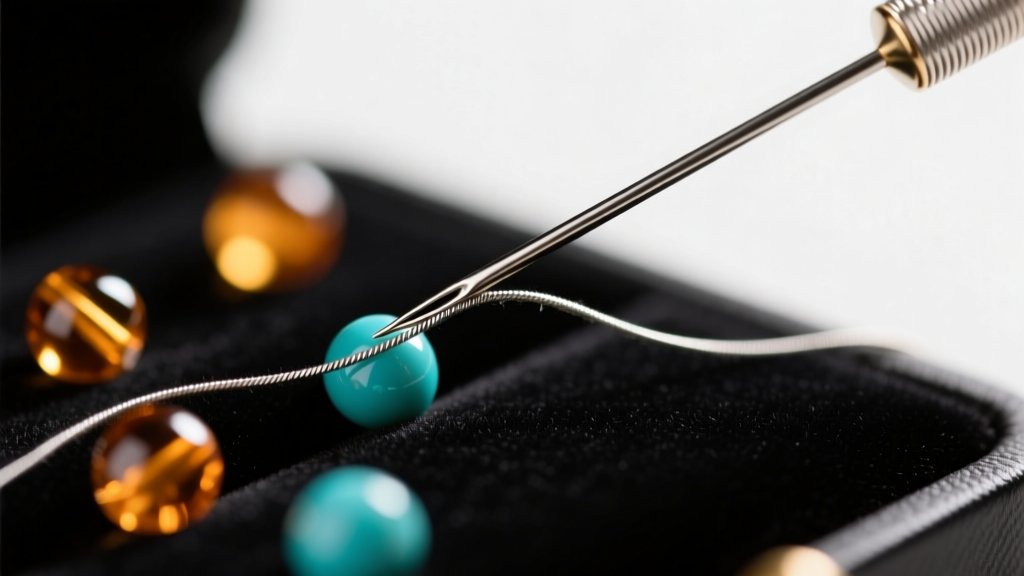
Professional Restringing: Wire vs. Silk for Heavy Beads
If your necklace exhibits bead gapping (visible string between the stones) or the clasp is failing, it requires immediate restringing to prevent a catastrophic break. The choice of stringing material dictates the drape and longevity of the piece.
Why Silk Fails Heavy Stones
Traditional silk thread, while beautiful and historically accurate, is highly susceptible to stretching and rotting from human sweat. For an amber and turquoise necklace featuring beads larger than 8mm, the weight of the stones will stretch silk within six months of regular wear, leading to severe gapping and eventual snapping.
The Modern Standard: 49-Strand Micro-Wire
For heavy, mixed-material necklaces, master jewelers recommend 49-strand stainless steel micro-wire (such as Beadalon) coated in nylon. A 0.018-inch diameter wire provides the flexibility of silk but possesses a tensile strength capable of supporting heavy turquoise cabs. When restringing, ensure the jeweler uses 2x2mm sterling silver crimp tubes, crushed and finished with crimp covers, and protects the wire ends at the clasp with French wire (bullion) to prevent the metal clasp from sawing through the steel wire over time.
Preventative Storage Framework
How you store your necklace when it is not being worn is just as critical as how you clean it. Never hang a heavy beaded necklace on a standard jewelry hook; the constant gravitational pull will permanently stretch the stringing material and stress the drill holes. Instead, lay the necklace completely flat in a lined jewelry box. Keep amber away from direct sunlight to prevent UV-induced crazing, and store turquoise in a slightly humid environment (a small, sealed container with a barely damp cotton ball placed in the corner) to prevent the hydrous phosphate from dehydrating and cracking in arid winter climates.


