How to Clean and Care for Your Amethyst Crystal Necklace
Learn expert techniques to clean, protect, and store your amethyst crystal necklace. Discover safe washing methods and UV protection tips.

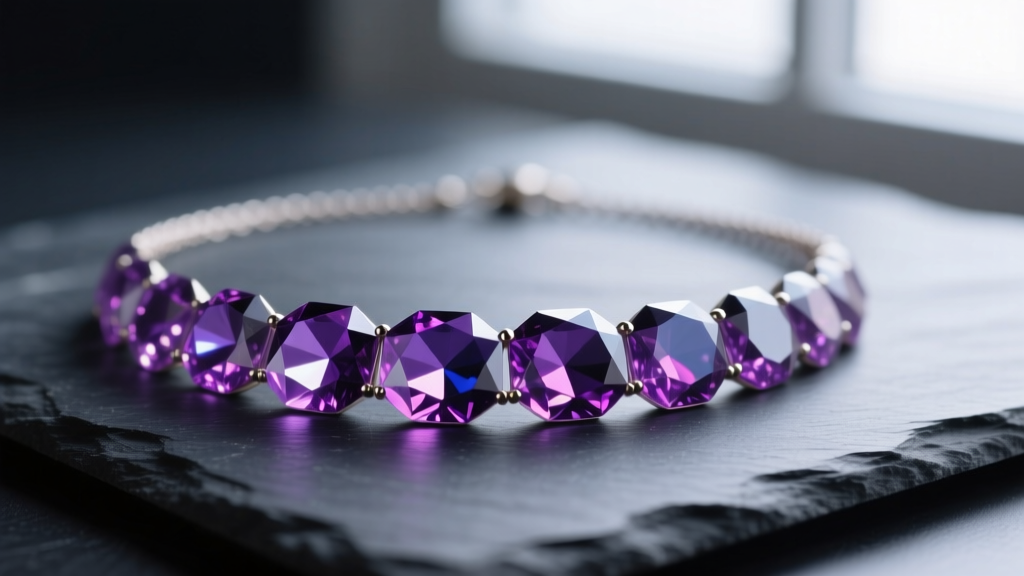
The Vulnerability of Amethyst: What You Need to Know
Amethyst, the beloved purple variety of quartz, is a staple in gemstone jewelry. However, treating an amethyst crystal necklace with the same aggressive cleaning methods you might use for diamonds or sapphires is a recipe for disaster. According to the Gemological Institute of America (GIA), amethyst ranks at a 7 on the Mohs hardness scale. While this makes it relatively durable against everyday scratches, it introduces specific vulnerabilities regarding thermal shock, chemical exposure, and ultrasonic cavitation.
The rich violet hue of amethyst is caused by iron impurities and natural irradiation within the crystal lattice. These 'color centers' are notoriously sensitive to prolonged ultraviolet (UV) light and extreme heat. Furthermore, many commercial amethysts contain microscopic liquid inclusions or internal fractures. As of 2026, while jewelry cleaning technology has advanced, the fundamental physics of quartz means that sudden temperature changes can cause these inclusions to expand or contract, leading to catastrophic structural failure—a phenomenon known as thermal shock.
Step-by-Step Cleaning Guide for Amethyst Pendants
To maintain the optical clarity and vibrant color of your amethyst crystal necklace, you must adopt a gentle, methodical approach to cleaning. Skin oils, lotions, and environmental dust naturally accumulate on the pavilion (the back facets) of the stone, drastically reducing its light return and making it appear cloudy.
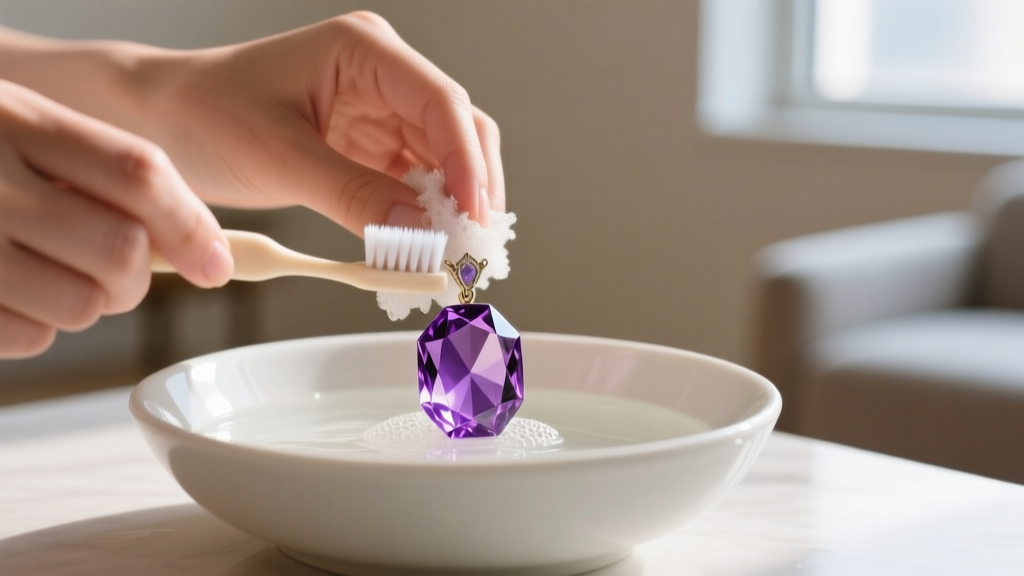
1. Preparation and Soaking
Fill a small glass bowl with lukewarm distilled water. Avoid tap water, as the dissolved minerals and chlorine can leave stubborn hard-water spots on the stone's table facet. Add two drops of a pH-neutral, ammonia-free dish soap (such as original Dawn). Submerge the necklace and let it soak for exactly 3 to 5 minutes. Do not exceed this time, especially if your necklace features porous accent stones like pearls or turquoise.
2. Gentle Agitation
Remove the necklace from the solution. Using a brand-new, extra-soft baby toothbrush, gently brush the stone. Focus specifically on the pavilion and the gallery (the metal basket holding the stone). Use light, circular motions. Never apply heavy pressure, as abrasive dust particles trapped against the brush bristles could theoretically microscratch the quartz surface over time.
3. Rinsing and Drying
Rinse the necklace thoroughly under a gentle stream of lukewarm distilled water. Pat the metal chain and the stone dry with a clean, lint-free microfiber cloth. Allow the necklace to air dry completely on a paper towel for at least two hours before storing it. Trapping moisture against the metal settings can accelerate oxidation and tarnishing.
The Chain Factor: Silver vs. Gold Vermeil
Cleaning the gemstone is only half the battle; the metal chain requires equal attention. The Federal Trade Commission (FTC) outlines strict standards for jewelry metals, and understanding your chain's composition dictates your maintenance strategy.
- Sterling Silver (925): Prone to sulfur-induced tarnishing. Use a dedicated silver polishing cloth on the chain links, but keep the cloth away from the amethyst stone. Polishing compounds can build up in the prongs and dull the gem.
- Gold Vermeil: By definition, vermeil requires a base of sterling silver coated with at least 2.5 microns of 10k (or higher) gold. Never use abrasive polishing cloths or silver dips on vermeil, as you will strip the gold layer and expose the silver core.
- Solid Gold (14k/18k): Highly resistant to tarnish. The mild soap and water method used for the amethyst is perfectly safe for solid gold chains.
Amethyst Cleaning Safety Matrix
Use this quick-reference table to determine which cleaning methods are safe for your specific necklace configuration. Data synthesized from Mindat.org gemological profiles and industry standards.
| Cleaning Method | Amethyst Stone | Sterling Silver Chain | Gold Vermeil Chain |
|---|---|---|---|
| Mild Soap & Distilled Water | Highly Safe | Safe | Safe |
| Ultrasonic Cleaner | Risky (if included/fractured) | Safe | Risky (vibration can flake gold) |
| Steam Cleaner | Unsafe (thermal shock risk) | Safe | Unsafe (heat damages vermeil) |
| Commercial Silver Dip | Unsafe (chemical etching) | Safe (rinse immediately) | Unsafe (strips gold layer) |
Proper Storage to Prevent Fading and Scratches
How you store your amethyst crystal necklace when it is not being worn is just as critical as how you clean it. The primary enemy of amethyst's color is prolonged UV exposure. Leaving your necklace on a vanity table near a sunlit window will gradually bleach the violet color centers, turning your vibrant gem into a pale, washed-out stone. This photochemical reaction is entirely irreversible.
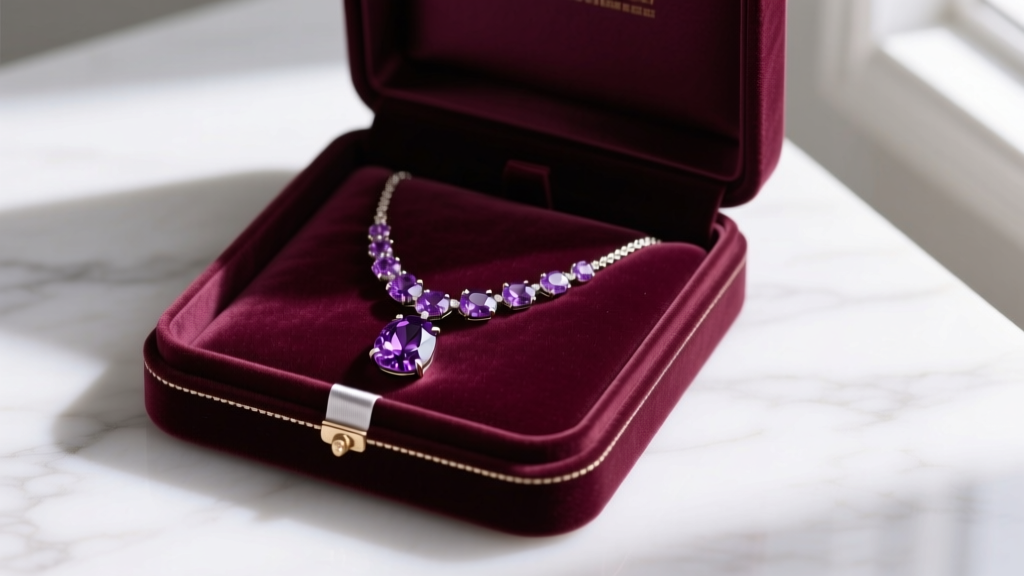
Always store your necklace in a dark, enclosed environment. A velvet-lined jewelry box with individual compartments is ideal. Because amethyst is a 7 on the Mohs scale, it can easily scratch softer organic gems like pearls (Mohs 2.5) or opals (Mohs 5.5), but it can be scratched by diamonds, sapphires, or topaz. Store it in isolation. Additionally, place a 3M anti-tarnish strip inside the jewelry box drawer to absorb ambient sulfur gases and protect the metal chain from oxidizing.
Troubleshooting Common Amethyst Issues
Cloudiness and Loss of Sparkle
If your amethyst looks dull immediately after cleaning, you likely have hard water mineral deposits or soap residue trapped in the setting. Re-soak the pendant in a 50/50 mixture of distilled water and white vinegar for exactly 60 seconds, then rinse with pure distilled water. Do not use vinegar on pearls or opals if they are set as accent stones.
Loose Prongs and Rattling
Quartz is relatively heavy compared to its volume. Over time, the weight of a large amethyst pendant swinging on a chain can stress the metal prongs. If you hear a faint rattling sound when you gently tap the stone, the prongs have lifted. Stop wearing the necklace immediately and take it to a professional jeweler for a prong retipping or bezel burnishing.
Surface Scratches
While amethyst is durable, it is not impervious. If your stone develops visible surface abrasions from years of wear, a professional lapidary can repolish the table and crown facets. This process removes a microscopic layer of the stone, restoring its optical clarity without compromising the structural integrity of the gem.
Final Thoughts on Gemstone Longevity
An amethyst crystal necklace is a dynamic, organic-feeling piece of jewelry that requires a mindful owner. By avoiding ultrasonic cleaners, protecting the stone from UV radiation, and adhering to a gentle, pH-neutral cleaning regimen, you ensure that the deep violet hues remain as captivating as the day you acquired it. Treat your gemstone with the respect its geological history demands, and it will remain a vibrant staple in your jewelry collection for decades to come.


