Anatomical Heart Necklace Gold: Troubleshooting Cast & Chain Flaws
Is your anatomical heart necklace gold pendant tarnishing or tangling? Discover expert troubleshooting for casting flaws, chain snags, and deep cleaning.

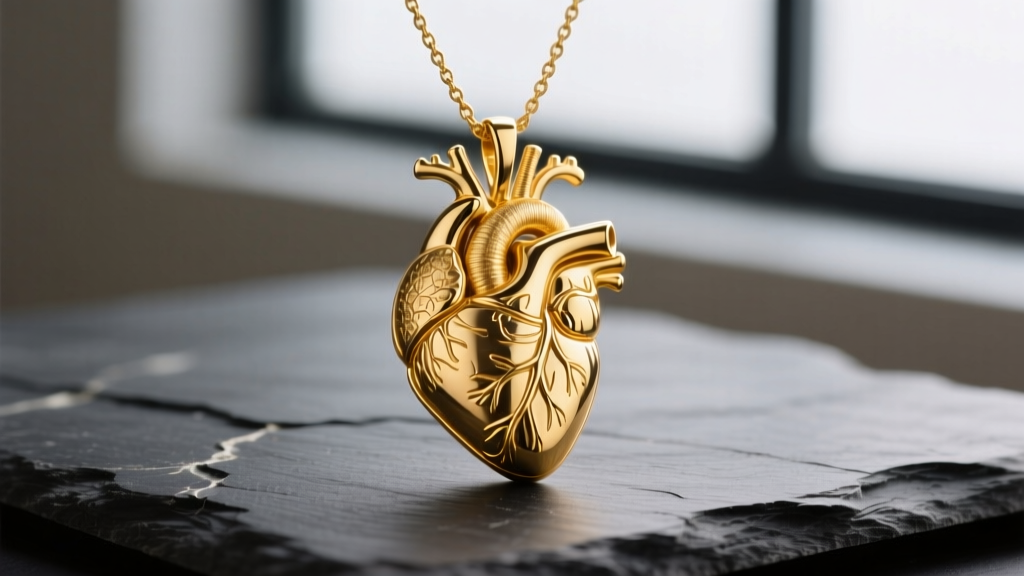
The anatomical heart necklace gold pendant has evolved from a niche gothic staple into a mainstream symbol of passion, medical pride, and raw vulnerability. However, the very complexity that makes this jewelry piece so captivating—the intricate network of the aorta, vena cava, and textured ventricles—also makes it a magnet for manufacturing defects, chain tangling, and accelerated tarnishing. As a senior jewelry specialist, I frequently see clients struggling to maintain these elaborate castings. In this comprehensive troubleshooting guide, we will dissect the most common structural and chemical failures associated with anatomical heart pendants and provide actionable, metallurgical solutions to restore and protect your investment.
Diagnosing Casting Flaws: Porosity and Surface Pitting
Creating a highly accurate anatomical heart requires advanced lost-wax casting techniques. In modern jewelry manufacturing, master models are often 3D-printed using castable photopolymer resins to capture microscopic arterial details. While this yields stunning results, it introduces a specific failure mode: shrinkage porosity.
When molten gold is poured into the flask, it cools from the outside in. The thickest sections of the anatomical heart—typically the center mass between the left and right ventricles—cool last. If the sprue (the channel feeding the molten metal) solidifies before the main body of the heart, the shrinking gold has no reservoir to pull from, resulting in internal voids or surface pitting. You will often see this as tiny, dark pinholes near the base of the pulmonary artery.
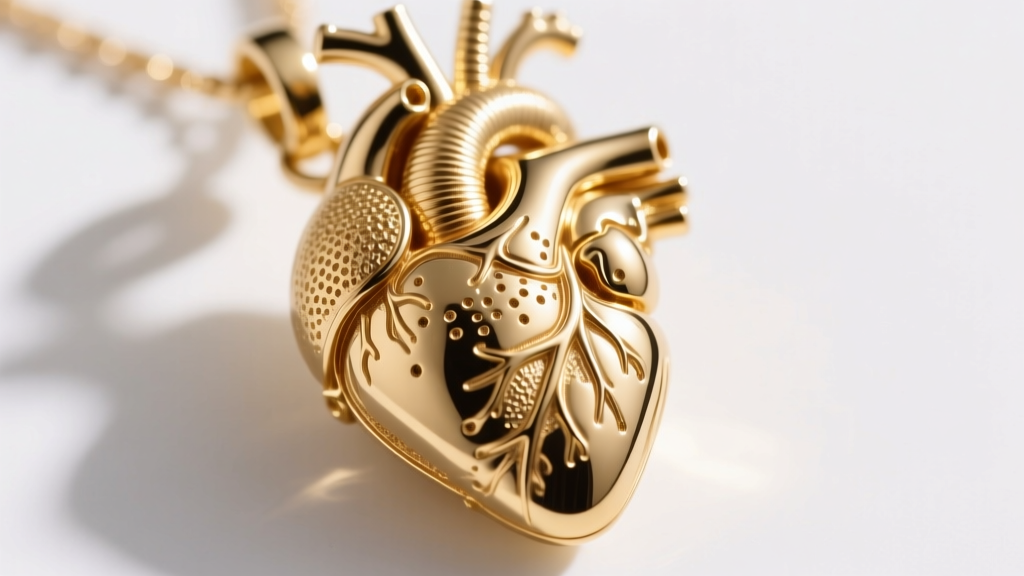
The Fix: If your pendant exhibits surface porosity, traditional polishing will only widen the pits. A professional jeweler must use a laser welder to fuse matching gold wire into the voids. Laser welding concentrates heat into a microscopic 0.2mm spot, preventing thermal damage to the delicate surrounding arteries. After filling, the piece is polished using a split-lap wheel with rouge compound to restore the high-shine finish without rounding off the sharp anatomical edges.
The Tangling Nightmare: Chain Gauges and Bail Solutions
The most frequent complaint I hear regarding the anatomical heart necklace gold design is chain tangling. The protruding aortic arch and the superior vena cava act as natural hooks. If your chain is too thin or the bail (the loop connecting the pendant to the chain) is improperly sized, the chain will constantly wrap around the arterial extensions, leading to kinked links and frustrating knots.
To solve this, we must look at the physics of the bail clearance. A standard 3mm bail forces a thin chain to articulate sharply right above the heart's complex topology. Upgrading the chain and bail is mandatory for a frustration-free experience.
| Chain Type | Recommended Gauge | Snag Risk | Optimal Bail Size |
|---|---|---|---|
| Box Chain | 2.0mm - 2.5mm | Low | 5.0mm x 8.0mm |
| Rope Chain (Hollow) | 3.0mm | Medium | 6.0mm x 10.0mm |
| Curb Chain | 2.5mm | Low | 5.5mm x 9.0mm |
| Serpent / Snake Chain | 1.5mm | High (Avoid) | N/A |
The Fix: Abandon snake chains entirely; their stiff, tubular structure prevents them from draping naturally, forcing the pendant to flip and catch on the heart's ventricles. Opt for a 2.0mm to 3.0mm Box Chain. The rigid, 90-degree links of a box chain prevent it from wrapping tightly around small protrusions. Furthermore, have a jeweler solder a heavy-duty 5x8mm fixed bail onto the pendant. This lifts the chain's articulation point a full 10mm above the aorta, eliminating 90% of snagging incidents.
Chemical Reactions: Why Your Gold is Turning Green or Black
Pure 24k gold is highly unreactive, but an anatomical heart pendant cast in 24k gold would be too soft to hold the intricate details of the coronary arteries. Therefore, these pieces are typically cast in 14k or 18k gold. According to The London Assay Office, 14k gold contains only 58.5% pure gold, with the remaining 41.5% composed of alloy metals like copper, silver, and zinc.
When you wear the necklace, the deep crevices of the anatomical heart trap sweat, dead skin cells, and cosmetics. The lactic acid and salts in your sweat react with the copper in the alloy, creating copper chloride—a green compound that rubs off onto your skin and tarnishes the deep recesses of the pendant black.
The Fix: For severe tarnish in the deep undercuts of the ventricles, do not use a standard polishing cloth, as it cannot reach the crevices. Instead, create a mild chemical bath. Mix warm water with a few drops of phosphate-free dish soap (like Dawn). Submerge the pendant for 15 minutes to loosen the lipid and salt buildup. Then, use a soft-bristled baby toothbrush to gently agitate the bristles into the arterial grooves. Rinse with distilled water and dry with a microfiber cloth. As recommended by the Gemological Institute of America (GIA), avoid harsh chlorine or ammonia-based cleaners, which can cause stress-corrosion cracking in lower-karat gold alloys.
Structural Weak Points: Bail Breakage and Soldering Fixes
A solid gold anatomical heart is surprisingly heavy. While a simple gold disc pendant might weigh 2 to 3 grams, a detailed, solid 14k gold anatomical heart typically ranges from 8 to 15 grams. This concentrated mass puts immense sheer stress on the bail, especially if the wearer is active or frequently catches the pendant on clothing.
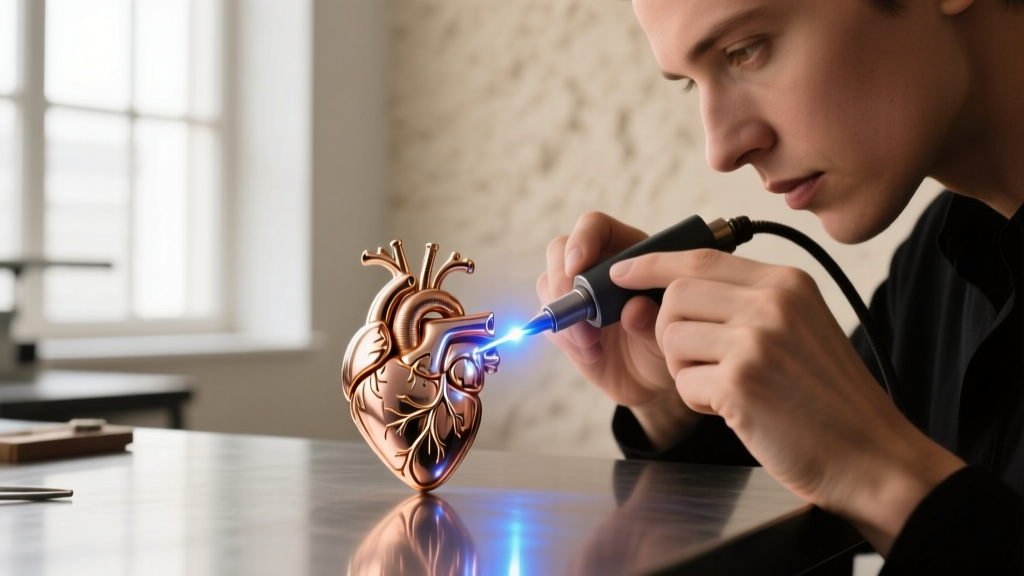
The most common failure point is the solder joint where the bail meets the top of the aorta. Traditional torch soldering requires heating a large area of the gold, which can melt or warp the delicate, thin-walled arterial tubes near the top of the heart. If your bail has snapped or is pulling away from the pendant, traditional torch repair is highly risky.
The Fix: Insist on laser welding for bail reattachment. Laser welding uses a concentrated pulse of light to melt the metal only at the exact point of contact, leaving the surrounding 14k or 18k gold completely cool and unaffected. If the original bail was a simple wire loop, upgrade to a cast V-bail or a tab bail that solders flat against the back of the aorta, distributing the 15-gram weight across a wider surface area and preventing future tear-outs.
The 2026 Preventative Maintenance Protocol
To ensure your anatomical heart necklace gold pendant remains a pristine heirloom rather than a tarnished headache, implement this strict maintenance framework:
- The Ultrasonic Warning: Never place a porous or laser-welded anatomical pendant in an ultrasonic cleaner. The high-frequency cavitation can fracture micro-thin gold walls in the pulmonary veins.
- Cosmetic Sequencing: Always put your necklace on after applying perfumes, lotions, and hairspray. The alcohol and oils in cosmetics will pool in the heart's ventricles and accelerate copper oxidation.
- Storage Isolation: Store the pendant flat in a dedicated anti-tarnish pouch. Hanging it in a jewelry box allows it to swing and scratch against other pieces, while tossing it in a drawer guarantees the chain will knot around the vena cava.
- Annual Professional Detailing: Once a year, take the piece to a bench jeweler for a steam clean and a microscopic inspection of the bail solder joints to catch metal fatigue before a catastrophic break occurs.
Conclusion
Owning an anatomical heart necklace gold pendant is a commitment to wearing a piece of functional art. By understanding the metallurgical realities of gold alloys, the physics of chain articulation, and the specific vulnerabilities of complex lost-wax castings, you can easily troubleshoot and prevent the most common issues. Whether you are dealing with shrinkage porosity, persistent tangling, or copper-induced tarnish, the solutions lie in precise, professional interventions and mindful daily wear. Treat the piece with the care its intricate craftsmanship deserves, and it will remain a striking, flawless statement for decades to come.


