The Anatomy of an Authentic Navajo Silver Bead Necklace
Discover the technical details of an authentic Navajo silver bead necklace. Learn about silver purity, bead stamping, and hallmarking.

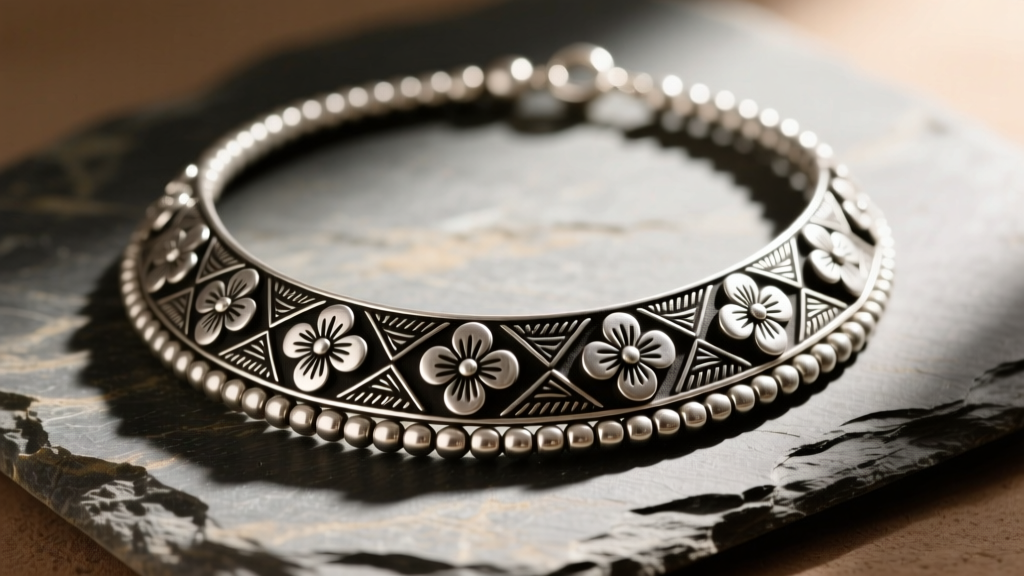
The Navajo (Diné) silversmithing tradition is one of the most revered metallurgical arts in North America. When collectors and enthusiasts seek out an authentic Navajo silver bead necklace, they are not merely purchasing jewelry; they are acquiring a piece of functional history. However, the market is saturated with mass-produced imitations and ambiguous 'tribal-style' pieces. To truly appreciate and accurately evaluate these necklaces, one must understand the technical nuances of their construction, metallurgy, and hallmarking.
Metallurgy: Sterling Silver vs. Coin Silver
The foundation of any high-quality Navajo silver bead necklace lies in its alloy. While modern pieces predominantly use Sterling Silver, vintage and traditionalist pieces often utilize Coin Silver. Understanding the difference is critical for assessing both value and structural integrity.
- Sterling Silver (.925): Composed of 92.5% pure silver and 7.5% copper. This is the modern standard for Native American jewelry. It offers excellent tensile strength, making it ideal for drawing into the wire used to thread the beads, and it takes a brilliant, high-polish finish.
- Coin Silver (.900): Composed of 90% silver and 10% copper. Historically, Navajo smiths melted down US silver coins (minted before 1965) to create their jewelry. The higher copper content lowers the melting point, making it easier to work with in traditional outdoor forges. Coin silver oxidizes more rapidly, developing a deeper, richer patina that is highly prized by collectors.
According to the Gemological Institute of America (GIA), the copper content in these alloys directly dictates the metal's work-hardening rate. Coin silver requires more frequent annealing (heating to soften) during the dapping process to prevent the silver from cracking.
Construction: Hand-Stamped vs. Liquid Silver
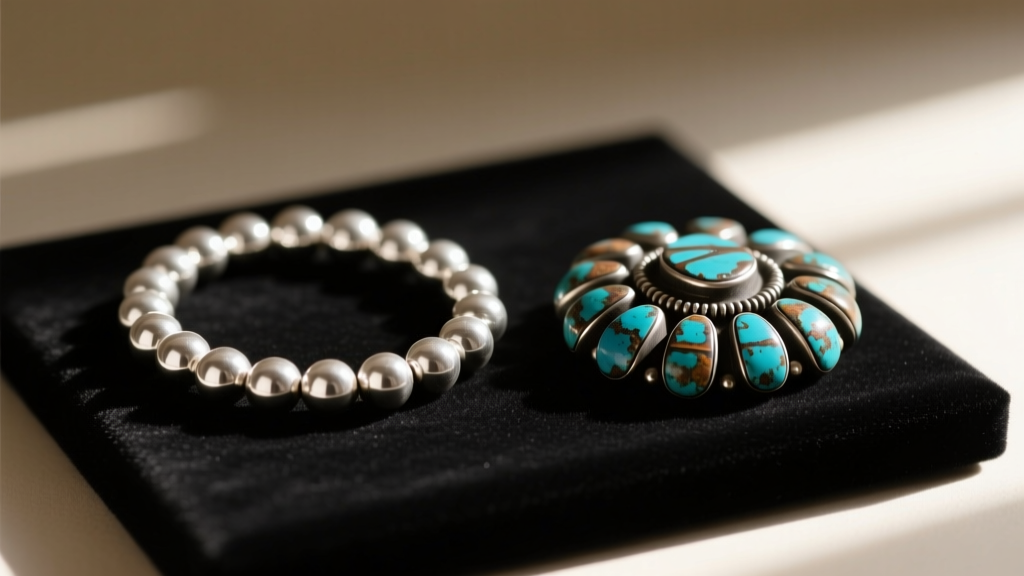
A major point of confusion for buyers is the distinction between hand-stamped bench beads and 'liquid silver.' Both are authentic Navajo techniques, but their structural properties and price points differ vastly.
The Anatomy of a Bench Bead
Authentic hand-stamped beads are created through a labor-intensive process. A silversmith cuts two flat discs of silver, anneals them, and uses a steel dapping block and punch to dome them into perfect hemispheres. The two halves are then soldered together. The exterior is stamped using custom steel tools featuring motifs like the thunderbird, bear claw, or floral rosettes. Because each bead is individually soldered and stamped, slight asymmetries are present—these are hallmarks of human craftsmanship, not flaws.
Liquid Silver Construction
Liquid silver necklaces consist of dozens of tiny, machine-extruded silver tubes or smooth beads strung closely together on multiple strands. While the silver is genuine and the stringing is often done by Navajo artisans, the beads themselves are not hand-stamped. Liquid silver drapes like fabric and is significantly less expensive per gram than hand-stamped bench beads.
Sizing, Weight, and Clasp Mechanics
The drape and wearability of a Navajo silver bead necklace depend heavily on the bead diameter. Because solid silver is dense, larger beads add substantial weight, which dictates the necessary clasp mechanics and stringing material.
| Bead Diameter | Approx. Weight (18' Strand) | Stringing Material | Ideal Clasp Type |
|---|---|---|---|
| 4mm - 6mm | 45 - 70 grams | Nylon-coated steel wire | Small Lobster or Hook-and-Eye |
| 7mm - 9mm | 90 - 130 grams | Heavy-duty nylon wire | Box Clasp with Safety Latch |
| 10mm - 14mm | 160 - 250+ grams | Multi-strand steel cable | Heavy Navajo Hook-and-Eye |
Expert Warning: Never purchase a heavy, large-bead necklace strung on traditional cotton or silk thread. The friction of the silver bead holes will eventually sever natural fibers, leading to catastrophic failure and loss of the beads. Always look for modern, nylon-coated beading wire with crimped metal ends.
Authentication and Hallmarking
The Indian Arts and Crafts Board (IACB) strictly enforces the Indian Arts and Crafts Act of 1990, which makes it illegal to falsely market jewelry as Native American-made. To ensure your Navajo silver bead necklace is authentic, you must know how to read the hallmarks.
Authentic Navajo hallmarks are typically stamped into the silver clasp, a dedicated hallmark bead, or a small silver tag attached near the closure. They usually consist of the artist's initials, a clan symbol, or a full name stamp.
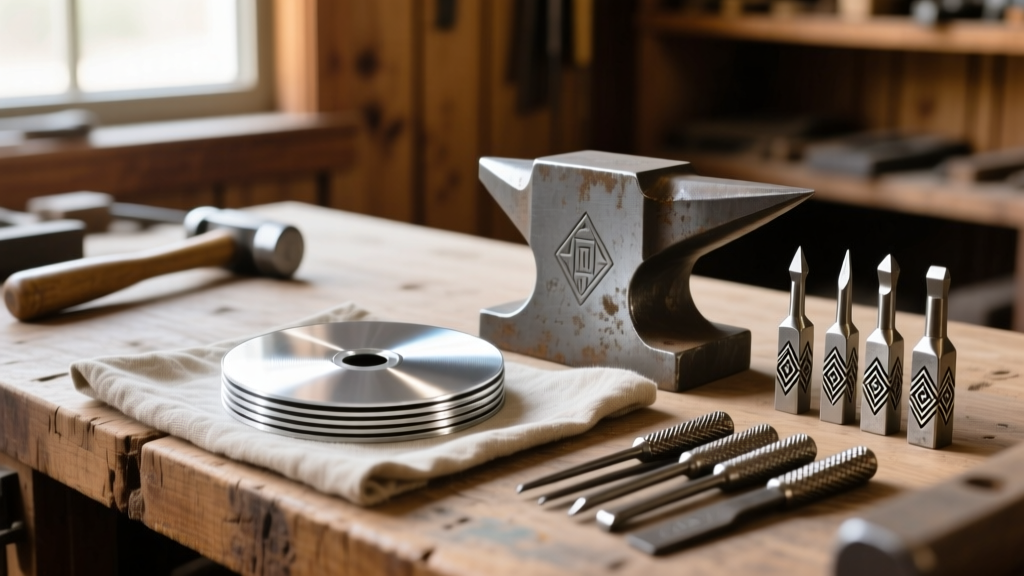
Beware of stamps that read 'Native American Style,' 'Tribal,' 'Southwest Style,' or 'Indian.' These are legal loopholes used by overseas manufacturers to sell imported, mass-produced jewelry. Furthermore, genuine Navajo silver will always be marked 'Sterling,' '.925,' or 'Coin.' If the piece lacks a silver purity stamp and an artist hallmark, its authenticity is highly suspect.
For deeper historical context on Diné metalwork evolution, the Smithsonian National Museum of the American Indian offers extensive archives detailing how early Navajo smiths transitioned from melting coins to utilizing commercial sheet silver and wire in the mid-20th century.
Maintenance and Patina Preservation
The dark oxidation in the recesses of the stamped motifs is called patina. It provides contrast and highlights the artisan's stamping work. Never use harsh chemical silver dips (like Tarn-X) on a Navajo silver bead necklace. These chemicals strip the patina entirely, leaving the beads flat and chalky-white, and can permanently damage any turquoise or coral accents. Instead, use a treated polishing cloth, gently rubbing only the raised, high-polish areas of the beads while leaving the dark crevices intact.


