How to Clean an Anthropologie Charm Necklace Safely
Learn how to safely clean and store your Anthropologie charm necklace. Expert tips for preserving gold plating, enamel, and resin charms.

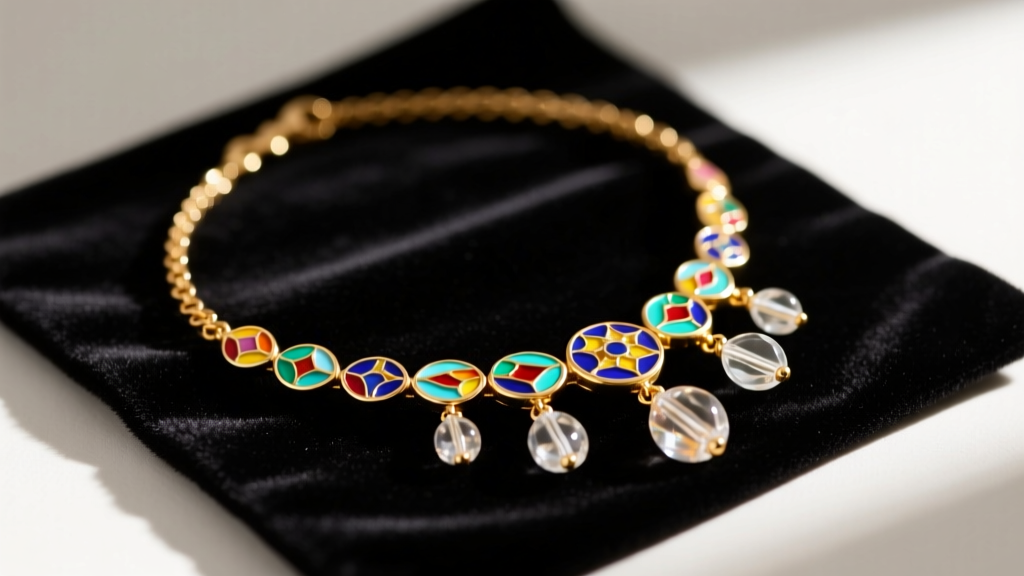
The Anatomy of an Anthropologie Charm Necklace
Anthropologie charm necklaces are beloved for their whimsical, bohemian, and vintage-inspired aesthetics. However, to properly care for these pieces, you must first understand their material composition. Unlike fine jewelry crafted from solid 14k gold or platinum, most Anthropologie charm necklaces fall into the fashion or semi-fine jewelry category. According to the Federal Trade Commission (FTC) Jewelry Guides, fashion jewelry typically features a base metal—often brass or a zinc alloy—coated with a microscopic layer of gold or silver plating.
This plating, known as flash plating, is usually less than 0.5 microns thick. The charms themselves are a mixed-media collage, frequently incorporating vitreous enamel, poured resin, acrylic, glass, and occasionally porous semi-precious stones like turquoise or agate. Because of this complex material matrix, standard jewelry cleaning methods can cause catastrophic, irreversible damage. Treating a plated brass and resin necklace like a solid gold chain will strip the finish, cloud the acrylic, and shatter the enamel.
The Danger Zone: What NEVER to Do
Before discussing proper maintenance, we must establish the strict boundaries of fashion jewelry care. The following common cleaning hacks will ruin your Anthropologie charm necklace:
- Ultrasonic Cleaners: The high-frequency cavitation bubbles generated by ultrasonic machines will violently strip flash plating from brass bases and cause micro-fractures in glass and enamel charms.
- Baking Soda and Toothpaste: Baking soda has a Mohs hardness of roughly 2.5, and toothpaste contains abrasive silica. While gold is relatively soft, flash plating is incredibly thin. These abrasives will scratch the surface, creating a dull, cloudy finish that exposes the base brass to rapid oxidation.
- Ammonia and Bleach: Harsh chemicals will instantly dissolve the metallic salts used in gold and silver plating, leaving behind a mottled, patchy base metal.
- Alcohol and Acetone: While safe for solid diamonds, rubbing alcohol and nail polish remover will melt acrylic charms, dissolve the protective topcoat on resin, and cause painted details to bleed.
Step-by-Step Wet Cleaning Method for Plated Brass
When your necklace has accumulated skin oils, lotion residue, and environmental dust, a gentle wet wash is required. The Gemological Institute of America (GIA) recommends mild, pH-neutral detergents for delicate gemstones and plated metals.
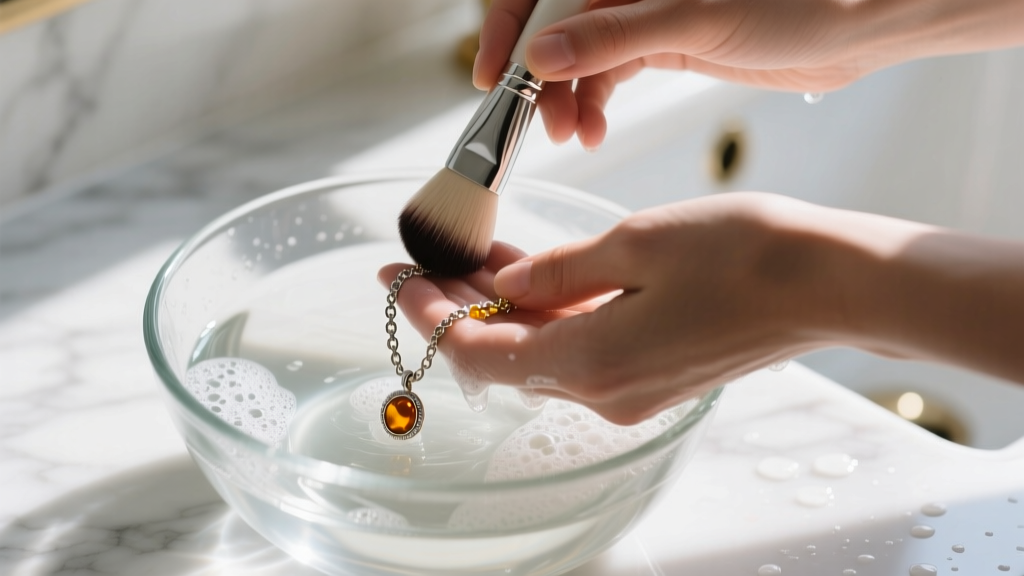
- Prepare the Solution: Fill a glass bowl with lukewarm distilled water. Avoid tap water, as the dissolved minerals and chlorine can leave hard water spots on glass charms and accelerate brass tarnishing. Add two drops of a pH-neutral, dye-free dish soap (such as original blue Dawn).
- The Soak: Submerge the necklace for exactly 3 to 5 minutes. Do not exceed this time, as prolonged water exposure can weaken the adhesive bonding the charms to their metal bails.
- Agitation: Using a clean, ultra-soft makeup brush or a baby toothbrush, gently sweep the bristles over the metal chain and the crevices of the charms. Never scrub; use a light, circular motion to lift oils.
- The Rinse: Dip the necklace into a second bowl of clean distilled water to remove all soap residue.
- Drying: Immediately lay the necklace flat on a lint-free microfiber cloth. Use a hairdryer on the 'cool' setting to blow water out of the tiny jump rings and charm loops. Air-drying trapped moisture leads to rapid verdigris formation.
Dry Polishing & Dusting Techniques
For routine maintenance between deep cleans, dry polishing is your safest option. However, you must segregate your tools based on the material you are addressing.
For the plain metal chain and the back of the pendants, use a treated jeweler's cloth (such as a Sunshine Cloth). These cloths are impregnated with micro-abrasives and anti-tarnish agents that safely lift oxidation from the gold or silver plating without scratching. Crucial Warning: Never rub a treated polishing cloth over enamel, resin, or painted charms. The micro-abrasives will permanently dull the glossy finish of the charms. For the decorative charms, use a clean, dry, untreated microfiber cloth or a soft goat-hair brush to gently whisk away dust and skin oils.
Storage & Tarnish Prevention Framework
Brass base metals are highly reactive to sulfur and humidity in the air, which causes the gold or silver plating to tarnish from the outside, and the copper in the brass to oxidize from the inside out. Proper storage is 90% of the battle in jewelry maintenance.
| Storage Method | Pros | Cons | Best For |
|---|---|---|---|
| Open Jewelry Stand | Prevents chain tangling; visually appealing. | Exposes plating to airborne sulfur and humidity; high tarnish risk. | Only for solid gold or stainless steel pieces. Avoid for Anthropologie necklaces. |
| Standard Ziploc Bag | Keeps dust away; inexpensive. | Traps ambient humidity inside; PVC plastics can off-gas and damage resin. | Short-term travel storage only. |
| Anti-Tarnish Flannel Pouch | Treated fabric absorbs sulfur; soft interior prevents scratching. | Does not control moisture; chains can still tangle if not laid flat. | Everyday drawer storage for plated brass and enamel charms. |
| Sealed Bag + 3M Strip + Silica | Blocks sulfur, absorbs moisture, and prevents chain tangling. | Requires periodic replacement of strips and silica packets. | Long-term archival storage; preserving vintage or highly delicate pieces. |
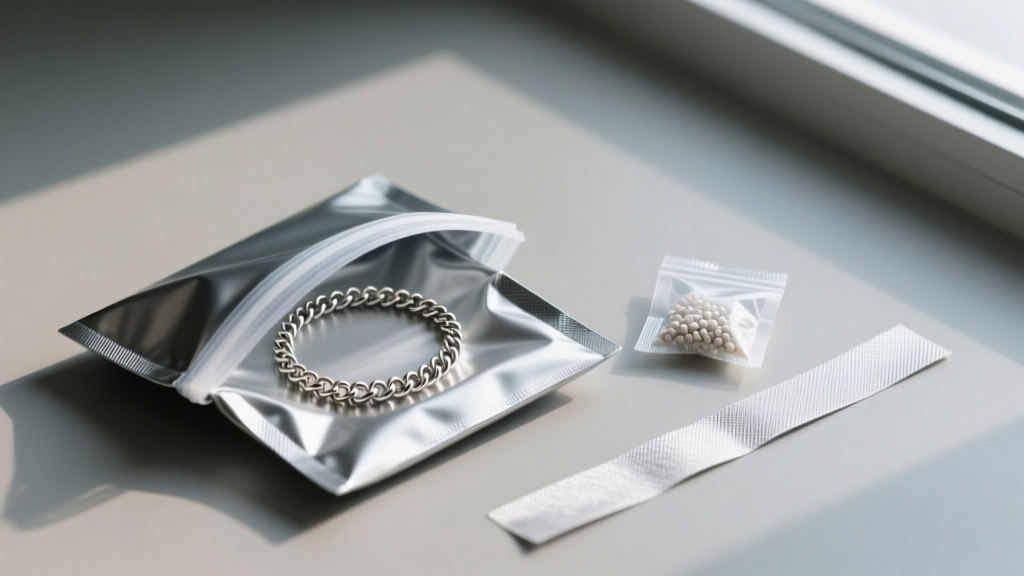
For the ultimate protection of your Anthropologie charm necklace, coil the chain loosely (never fold it, which creates permanent kinks in the base metal), place it inside an anti-tarnish flannel pouch, and store it in a dark drawer away from direct sunlight to prevent UV yellowing of the resin charms.
Troubleshooting Common Charm Necklace Issues
1. Verdigris (Green Crust on Jump Rings)
If you notice a powdery green or blue crust forming around the jump rings connecting the charms, this is verdigris (copper acetate). It occurs when the copper in the brass base reacts with sweat, lotions, and oxygen. The Fix: Do not use liquid cleaners. Take a dry, pointed wooden toothpick and gently scrape the crust away. Wood is softer than metal and will not scratch the remaining plating. Once removed, wipe the area with a dry microfiber cloth and apply a microscopic dab of mineral oil to the joint to inhibit future moisture ingress.
2. Cloudy Acrylic or Resin Charms
Acrylic and resin are essentially hard plastics. Over time, contact with skin oils and accidental bumps will create micro-scratches, making the charms look cloudy. The Fix: Do not use glass cleaner. Instead, apply a drop of Novus Plastic Polish (specifically the #2 Fine Scratch Remover) to a cotton swab and gently buff the surface of the acrylic charm in circular motions. This fills and smooths the micro-scratches, restoring optical clarity without damaging the material.
3. The 'Green Skin' Reaction
If the back of the pendant leaves a green mark on your chest, the gold plating has worn thin, exposing the reactive brass to your skin's natural acidity. The Fix: Clean the back of the pendant thoroughly with rubbing alcohol (avoiding the front charms) to remove all oils. Let it dry completely, then paint a thin, even coat of jeweler's lacquer, such as ProtectaClear, onto the skin-facing side of the pendant. This creates an invisible, biocompatible polymer barrier that prevents the copper reaction while preserving the necklace's outward appearance.


