Troubleshooting Your Necklace for Sports: Safety, Materials & Rules
Solve common athletic jewelry issues. Learn how to choose a safe, durable, and league-compliant necklace for sports with our expert troubleshooting guide.

The Core Problems: Why Standard Jewelry Fails in Athletics
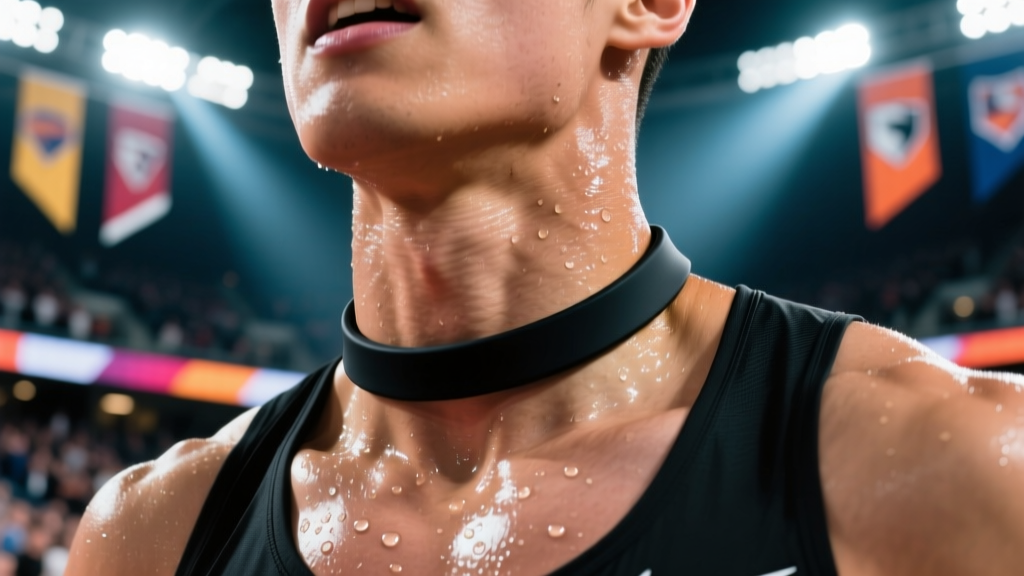
Wearing standard jewelry during physical exertion is a liability. When athletes search for a reliable necklace for sports, they are usually trying to solve three critical problems: choking hazards from snagging, skin degradation from acidic sweat, and blunt force trauma from heavy pendants. Standard sterling silver or gold-plated chains possess high tensile strength but lack a controlled failure point. If a standard chain catches on a basketball hoop or a wrestling mat, the kinetic energy transfers directly to the cervical spine, risking severe trachea or vertebrae injury. Furthermore, the micro-abrasions caused by friction during high-cardio output compromise the skin barrier, turning cheap metal alloys into breeding grounds for contact dermatitis. Troubleshooting your athletic jewelry setup requires a fundamental shift in how you view metallurgy, clasp mechanics, and league compliance.
Material Troubleshooting: Sweat, Friction, and Tarnish
Human sweat is not just water; it is a complex electrolyte solution containing lactic acid, urea, and salts, with a pH ranging from 4.5 to 7.0. This acidic environment accelerates galvanic corrosion in multi-metal chains, particularly those with copper or brass cores. If your current necklace leaves a green or black residue on your chest, you are experiencing rapid copper oxidation. To solve this, you must upgrade to bio-inert materials.
The Titanium vs. Silicone Debate
For non-contact sports like running, cycling, or weightlifting, Grade 23 Titanium (Ti-6Al-4V ELI) or ASTM F136 Implant-Grade Titanium is the gold standard. It is entirely impervious to sweat corrosion, hypoallergenic, and weighs roughly 45% less than stainless steel, reducing pendant bounce. However, for contact sports like rugby, martial arts, or basketball, rigid metals are a liability. In these scenarios, a medical-grade silicone necklace (rated at Shore A 50-70 durometer for optimal flexibility and tear resistance) is mandatory. Silicone eliminates the risk of degloving injuries and blunt force trauma, acting as a shock absorber rather than a rigid pendulum.
Metals to Avoid at All Costs
Never wear white gold, brass, or nickel-containing alloys during athletics. Nickel is the leading cause of metal-induced contact dermatitis. When mixed with sweat and friction, nickel ions leach into the epidermis, triggering severe allergic reactions. The Mayo Clinic explicitly warns against prolonged skin contact with nickel-releasing alloys, a condition exacerbated by the heat and moisture of athletic performance.
Chain and Clasp Mechanics: Preventing Snags and Choking
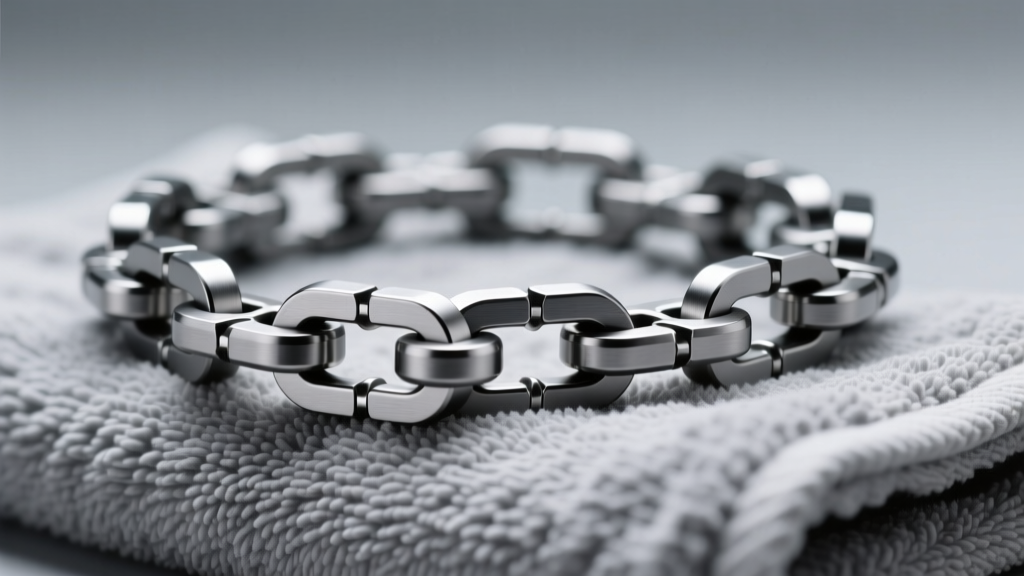
The most dangerous component of any necklace for sports is the clasp. Standard lobster claws and spring rings are designed to hold 50+ pounds of tensile force. In an athletic snag event, the chain will not break; the clasp will not yield. You must engineer a controlled failure point into your setup.
Upgrading to Breakaway Mechanics
Replace all traditional clasps with magnetic breakaway toggles or silicone tension beads. A properly calibrated athletic breakaway clasp should release between 5 to 15 pounds of lateral force. This ensures the necklace drops safely if grabbed by an opponent or caught on equipment, without sacrificing security during normal movement. Additionally, pay attention to the jump ring connecting the clasp to the chain. Always use a soldered jump ring for the clasp connection, and an unsoldered split ring for the pendant. This guarantees that if extreme force is applied, the pendant detaches rather than the chain whipping back.
Chain Style vs. Snag Risk Matrix
| Chain Style | Snag Risk | Sweat Retention | Best Sport Application |
|---|---|---|---|
| Rope Chain | High (Catches fingers/equipment) | High (Deep grooves trap bacteria) | Avoid in all sports |
| Curb / Cuban | Medium (Flat but wide edges) | Medium | Weightlifting (Non-contact) |
| Box Chain | Low (Smooth, geometric edges) | Low | Running, Cycling, Gymnastics |
| Snake Chain | Very Low (Flush surface) | Very Low | Swimming, Track & Field |
| Silicone Cord | Zero (Yields under tension) | Zero (Non-porous) | Basketball, Soccer, Rugby |
Navigating League Regulations and Compliance
Even if you have engineered the safest necklace for sports, you must contend with governing bodies. The National Federation of State High School Associations (NFHS) and the NCAA maintain strict, often zero-tolerance policies regarding jewelry on the court or field. For example, NFHS basketball rules explicitly prohibit all jewelry, with no exceptions for religious or medical alert items unless they are securely taped to the body.
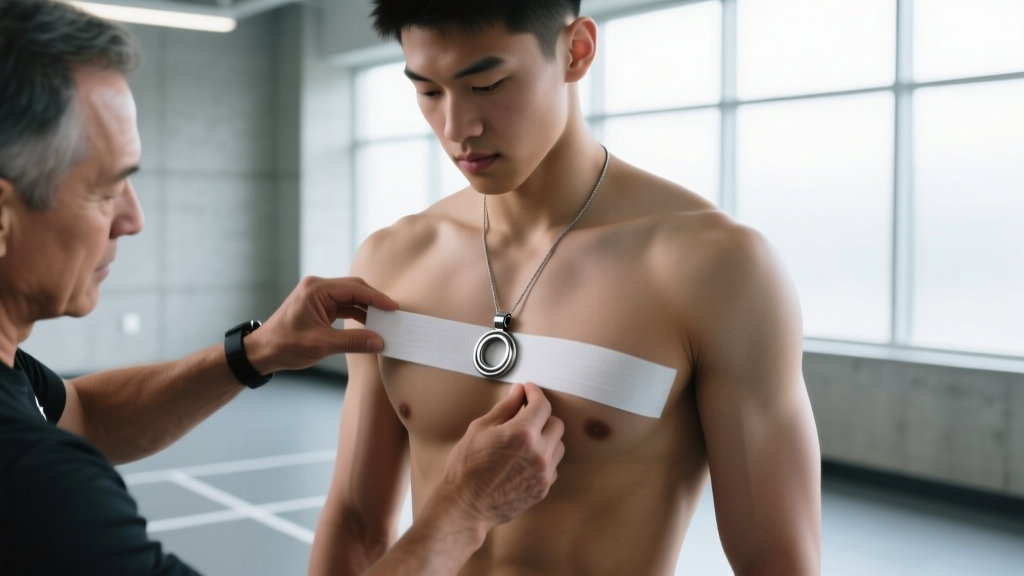
The 'Tape Over' Myth: Many athletes believe that wrapping a hard metal pendant in athletic tape makes it legal and safe. This is a dangerous misconception. Taping a titanium or steel pendant to your sternum does not eliminate the mass of the object. Upon impact (e.g., taking a charge in basketball or a tackle in soccer), the kinetic energy of the dense metal transfers through the tape directly into the xiphoid process or ribs, risking severe bruising or fractures. If a league requires taping, switch to a flat, flexible silicone dog tag instead.
Step-by-Step Troubleshooting Matrix
Use this diagnostic guide to solve your specific athletic jewelry failures:
- Problem: The chain keeps snapping at the jump ring.
Solution: You are using an open, unsoldered jump ring that is being pulled apart by lateral tension. Replace it with a laser-welded or soldered closed jump ring, or upgrade to a thicker gauge (e.g., 18-gauge instead of 22-gauge). - Problem: Skin turning green or developing a rash under the pendant.
Solution: Your pendant is likely gold-plated brass or copper. The plating has worn off due to friction, exposing the reactive base metal to your sweat. Switch to a solid ASTM F136 titanium or 316L surgical steel pendant. - Problem: The pendant bruises my chest during running.
Solution: The pendant's mass is too high, acting as a pendulum. Limit athletic pendants to a maximum of 5 grams. Alternatively, use a silicone pendant slider that grips the cord, preventing the pendant from sliding up and down the chest during vertical movement. - Problem: The magnetic breakaway clasp keeps opening during weightlifting.
Solution: The bench press or overhead movements are creating lateral tension that exceeds the 5lb release threshold of the magnet. Swap the magnetic clasp for a silicone toggle clasp, which requires manual manipulation to unthread, preventing accidental chest-expansion releases.
Final Verdict: Building Your Athletic Setup
Finding the perfect necklace for sports is not about aesthetics; it is an exercise in risk mitigation and material science. For high-contact and league-regulated sports, abandon metals entirely in favor of a Shore A 60 durometer silicone cord with a breakaway tension bead. For non-contact endurance sports, invest in an 18-gauge Grade 23 titanium box chain paired with a sub-5-gram laser-engraved titanium plate. By understanding the metallurgical realities of sweat corrosion, the physics of snag hazards, and the strict parameters of athletic governing bodies, you can maintain your personal style without compromising your physical safety or your eligibility to compete.