The Anatomy of a Cloud Necklace: Casting, Settings & Chain Mechanics
Explore the technical anatomy of a cloud necklace. We analyze lost-wax casting for motifs, micro-pavé cluster settings, and optimal chain tensile strengths.

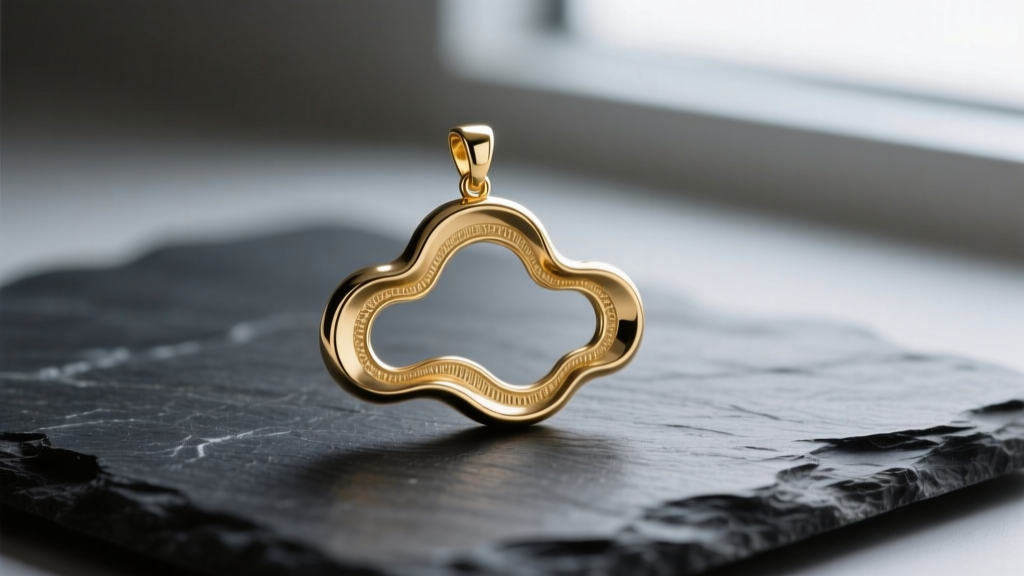
When evaluating a cloud necklace, most consumers focus purely on the whimsical aesthetic of the cumulus motif or the sparkle of a gemstone cluster. However, from a master jeweler’s perspective, the cloud shape presents unique structural and metallurgical challenges. Whether you are looking at a solid sculptural gold cloud pendant or a micro-pavé diamond cloud cluster, the geometry of intersecting spheres and organic curves demands precise engineering. In this expert deep dive, we deconstruct the technical anatomy of cloud necklaces, exploring the lost-wax casting mechanics, alloy yield strengths, and the tensile load limits required to keep these top-heavy pendants secure.
The Metallurgy of Sculptural Cloud Motifs
A true 3D cloud pendant is essentially a series of intersecting convex domes. In jewelry manufacturing, this geometry creates deep "undercuts"—areas where the mold material cannot be pulled away in a single direction without tearing. As of 2026, advanced CAD/CAM resin printing has largely mitigated the mold-tearing issues associated with traditional vulcanized rubber molds, but the physics of molten metal flow remain a critical factor in the final piece's integrity.
Lost-Wax Casting vs. Die-Struck Clouds
You will rarely find a high-quality, fully three-dimensional cloud pendant that is die-struck. Die-striking requires "draft angles" (slight tapers) so the metal can be ejected from the steel hub. A cloud motif, with its bulbous overhangs, defies this requirement. Therefore, premium cloud necklaces are exclusively produced via lost-wax casting.
- Sprue Gating: The sprue (the channel through which molten metal enters the mold) must be attached to the thickest "puff" of the cloud. If gated incorrectly, the thinner trailing edges of the cloud will suffer from shrinkage porosity as the metal cools and contracts.
- Surface Tension: Molten gold and platinum have high surface tension. Filling the tight, concave valleys between the cloud's domes requires precise centrifugal force or vacuum-assisted casting to prevent incomplete fills (misruns).
Alloy Selection: Yield Strength and Protrusions
Many cloud designs feature delicate, wispy tails or lightning bolt accents. The choice of karatage directly impacts the structural survival of these thin protrusions. According to metallurgical data from Rio Grande, 14k gold alloys (58.5% pure gold) possess a significantly higher yield strength (approx. 250-300 MPa) compared to 18k gold (approx. 150-200 MPa). For a cloud necklace that will be worn daily and subjected to accidental snags, 14k gold or Platinum 950/Ruthenium offers the necessary rigidity to prevent the delicate edges from bending or snapping.
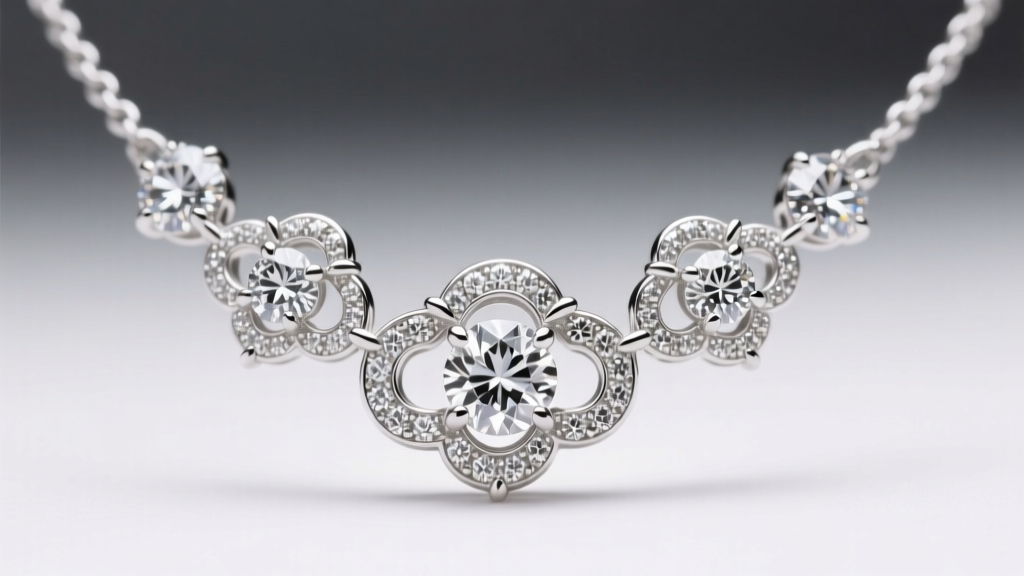
Gemstone "Cloud" Clusters: Micro-Pavé Mechanics
The second interpretation of a cloud necklace is the "cloud cluster"—a grouping of 10 to 30 melee diamonds arranged to mimic a cumulus shape. This relies heavily on micro-pavé setting techniques. The setter must carve seats into the metal, place stones ranging from 0.01 to 0.05 carats, and raise microscopic beads of metal to secure them.
Navigating Diamond "Cloud" Inclusions
Ironically, when sourcing diamonds for a cloud cluster, jewelers must be wary of actual "cloud" inclusions within the stones. As detailed by the Gemological Institute of America (GIA), a cloud is a cluster of tiny pinpoints inside a diamond that can give the stone a hazy appearance. While an SI1 or I1 diamond with a large cloud inclusion might be rejected for a solitaire pendant, master setters often utilize these slightly included melee stones for the bottom layers of a multi-tiered cloud cluster to reduce costs, reserving VS-clarity stones for the top layer to maximize light return without compromising the overall brilliance of the necklace.
| Setting Style | Metal Security | Light Return | Best For |
|---|---|---|---|
| Bright-Cut Pavé | High (4 beads per stone) | Moderate | Heavy wear, active lifestyles |
| Shared Prong | Moderate (2 beads per stone) | High | Delicate, high-end cloud clusters |
| Bezel Cluster | Very High (Full rim) | Low to Moderate | Modern, geometric cloud designs |
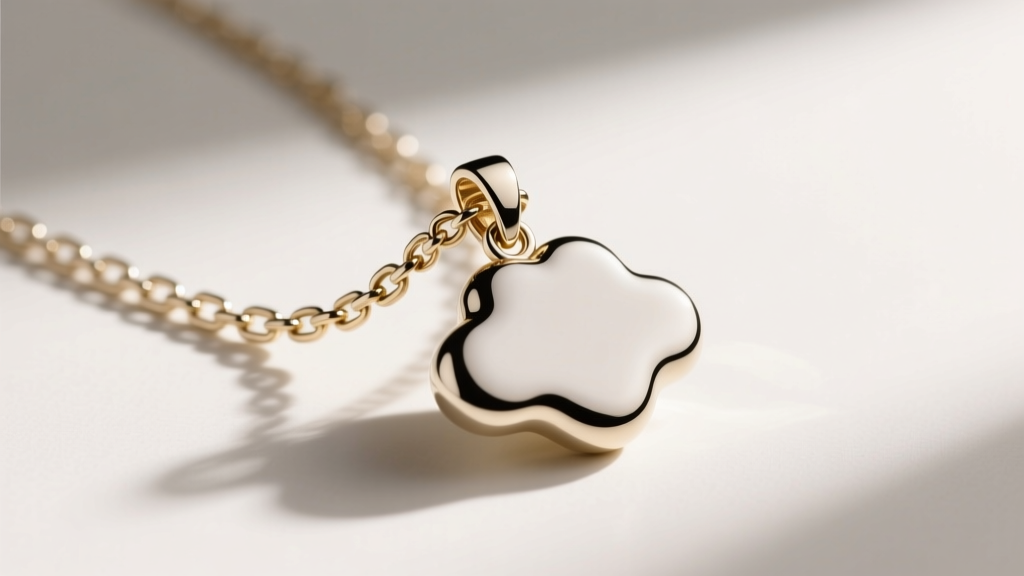
Chain Pairing and Tensile Load Limits
A solid cast 14k gold cloud pendant of moderate size (approx. 20mm x 15mm) typically weighs between 4.5 and 7.2 grams. Pairing this with an inadequate chain is the leading cause of cloud necklace failure. The jewelry industry standard dictates that a chain's breaking strength should be at least five times the weight of the pendant to account for dynamic shock loads (e.g., the pendant swinging and suddenly stopping).
Calculating the Pendant-to-Chain Ratio
A standard 0.8mm cable chain has a tensile breaking strength of roughly 2.5 kg. While this technically supports a 6-gram pendant statically, the repetitive friction of the bail rubbing against the unsoldered links of a cable chain will eventually cause the link to open. For heavy sculptural cloud pendants, we mandate the following chain specifications:
- 1.2mm to 1.5mm Box Chains: The square links distribute the weight of the pendant bail evenly, reducing localized stress points.
- Laser-Welded Rolo Chains: Unlike traditional soldered links, laser-welded links have a continuous grain structure at the weld point, increasing tensile strength by up to 40%.
- Bail Engineering: The pendant must feature a "hidden bail" or a properly lined tube bail. A simple jump-ring loop on a heavy cloud pendant will cause the chain to kink and eventually snap due to restricted articulation.
Maintenance and Structural Failure Modes
The organic, undulating surface of a cloud necklace makes it a magnet for lotions, perfumes, and skin oils, which accumulate in the deep valleys between the domes or beneath the micro-pavé stones. However, the standard cleaning method—ultrasonic cleaning—poses a severe risk to cloud cluster necklaces.
Expert Warning: Never place a micro-pavé cloud cluster necklace in an ultrasonic cleaner without first checking the prongs under 10x magnification. The high-frequency cavitation bubbles can easily dislodge melee diamonds if the bright-cut beads have worn down by even 0.1mm. For routine maintenance, use a low-pressure steam cleaner or a soft-bristled brush with warm, mild soapy water, ensuring you brush with the grain of the metal polishing lines.
Conclusion
A beautifully crafted cloud necklace is a triumph of metallurgical engineering and precise lapidary work. By understanding the necessity of lost-wax casting for 3D motifs, the yield strength requirements for delicate cloud tails, and the strict tensile limits for chain pairing, you can select or design a piece that is not only visually captivating but structurally immortal. Whether you opt for the bold geometry of a solid 14k gold cumulus or the intricate brilliance of a platinum pavé cluster, respecting the technical anatomy of the design ensures your necklace will weather any storm.


