Fixing & Authenticating Your Ancient Egypt Necklace: A Repair Guide
Troubleshoot common issues with your ancient Egypt necklace. Learn how to authenticate stones, restring faience beads, and fix heavy collar clasps.

The Enduring Allure and Structural Challenges of Egyptian Jewelry
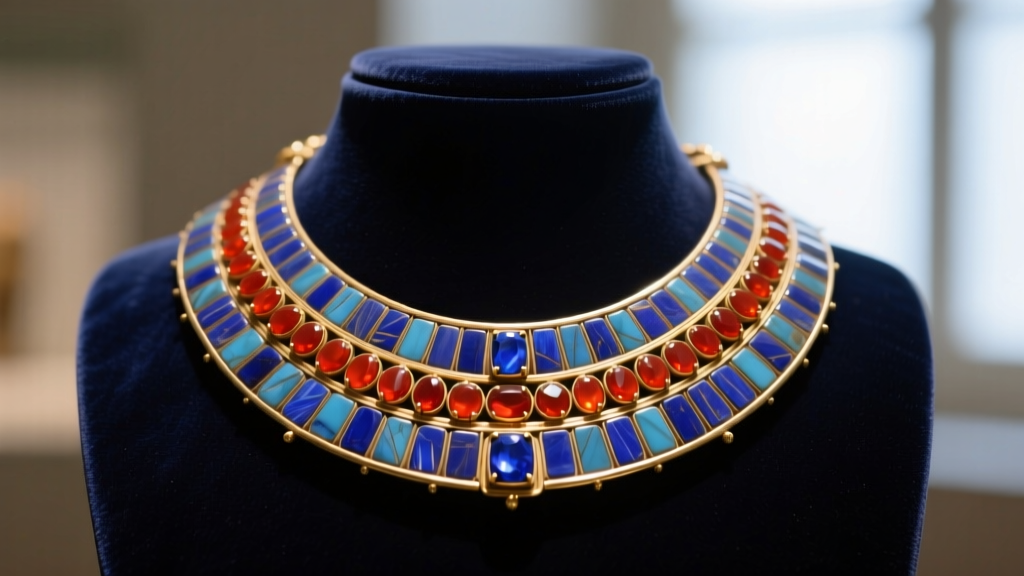
The fascination with the ancient Egypt necklace has never truly faded. From the archaeological boom of the 1920s that birthed the Art Deco Egyptian Revival movement to the meticulous artisan replicas crafted today, these pieces remain highly coveted. However, whether you own a genuine antiquity, a high-end 20th-century revival piece, or a modern interpretation, Egyptian-style necklaces present unique structural and material challenges. The iconic broad collars, heavy scarab pendants, and intricate faience beadwork were originally designed for ceremonial use, not necessarily for the rigors of modern daily wear.
As a jewelry specialist, I frequently encounter collectors and enthusiasts struggling with slipping clasps, snapped beading threads, skin reactions from base metals, and the pervasive issue of counterfeit gemstones. In this comprehensive troubleshooting guide, we will break down the most common problems associated with Egyptian necklaces and provide actionable, expert-level solutions to restore, authenticate, and comfortably wear these historical masterpieces.
The Weight Problem: Fixing Collar Necklace Clasps & Balance
The most iconic of all Egyptian necklaces is the Usekh collar—a broad, multi-stranded piece that sits wide across the clavicle. The primary issue with the Usekh collar, both in ancient times and today, is front-heaviness. A collar made of genuine stone, glass, or dense faience can easily weigh between 8 to 16 ounces. This extreme frontal weight causes the necklace to slide forward, choking the wearer and putting immense stress on the clasp.
The Historical Solution: The Menat Counterweight
Ancient Egyptians solved this engineering flaw by attaching a heavy counterweight, known as a menat, to the back of the collar. This piece, often shaped like a bead cluster or a solid bronze ingot, rested between the shoulder blades, perfectly balancing the front panel. If you own a modern replica or a revival piece that lacks this counterweight, the clasp will inevitably fail or slip.
Modern Troubleshooting & Retrofitting
If your collar necklace constantly slips to the front, you have three practical solutions:
- Retrofit a Counterweight: Attach a 40-60 gram decorative metal drop or a cluster of heavy hematite beads to the back of the chain near the clasp. This mimics the historical menat and instantly rebalances the piece.
- Upgrade the Clasp: Standard lobster clasps are insufficient for collars over 6 ounces. Upgrade to a heavy-duty neodymium magnetic clasp with an integrated safety chain, or a solid sterling silver toggle clasp with a thicker ring diameter (minimum 15mm) to prevent accidental unhooking.
- Use a Silicone Necklace Stay: For temporary fixes on costume pieces, apply a small dab of clear, museum-grade silicone wax to the inside of the back chain to increase friction against the skin and fabric.
Stone Authentication: Lapis, Carnelian, and Turquoise vs. Fakes
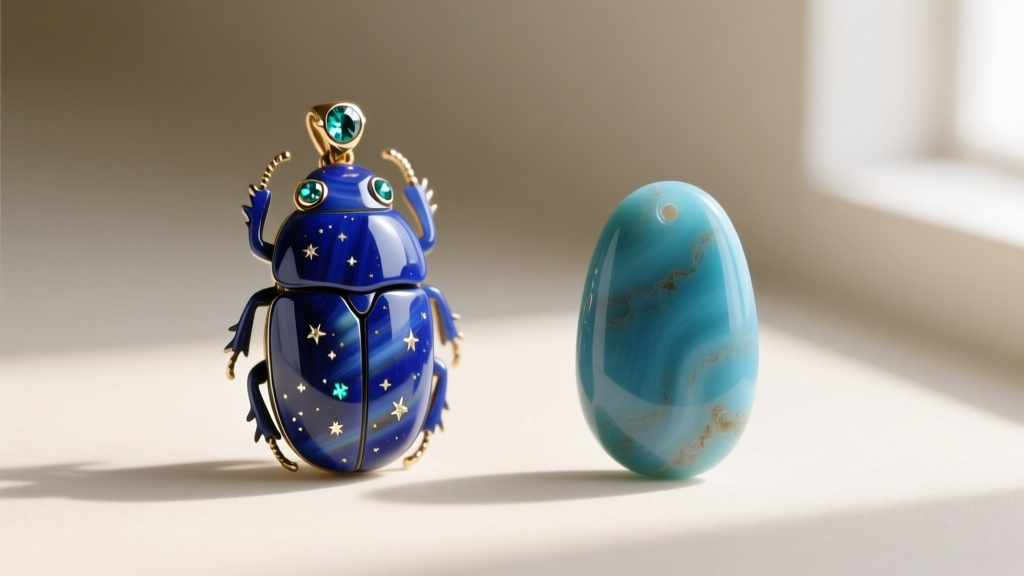
The sacred triad of Egyptian jewelry consists of Lapis Lazuli (representing the heavens), Carnelian (representing blood and life), and Turquoise (representing joy and the earth). Because these stones were highly prized in antiquity, they have been faked for centuries. When troubleshooting a suspected ancient Egypt necklace, identifying the authenticity of these inlays is paramount.
Lapis Lazuli vs. Dyed Howlite or Sodalite
Genuine Afghan lapis lazuli is a rock, not a single mineral, meaning it contains calcite (white streaks) and pyrite (gold flecks). According to the Gemological Institute of America (GIA), genuine lapis has a Mohs hardness of 5 to 5.5. The Acetone Test: Many modern fakes use dyed howlite or magnesite. Dip a cotton swab in pure acetone (nail polish remover) and rub an inconspicuous area of the blue stone. If the swab turns bright blue, the stone is dyed and therefore not authentic historical lapis. Furthermore, under UV light, some synthetic dyes will fluoresce, whereas natural lapis will generally show a weak, mottled fluorescence due to its calcite content.
Carnelian vs. Dyed Agate and Glass
Ancient carnelian was often heat-treated to enhance its red-orange hue, a practice that continues today. However, modern fakes frequently use dyed gray agate. The Light Test: Hold the carnelian up to a strong LED flashlight. Genuine carnelian will show a cloudy, organic distribution of color with subtle internal banding. Dyed agate will reveal sharp, concentrated color veins along the microscopic fractures of the stone where the dye pooled during the manufacturing process. Glass imitations, common in cheap tourist-market replicas, will often contain tiny, perfectly round air bubbles visible under a 10x jeweler's loupe.
Turquoise vs. Reconstituted Dust and Magnite
Because natural turquoise is incredibly porous and rare, the market is flooded with reconstituted turquoise (turquoise dust mixed with epoxy) and dyed howlite. The GIA's Turquoise Guide notes that natural turquoise often features a brown or black matrix (host rock). If the matrix looks like perfectly uniform, painted spiderwebs, it is likely a synthetic imitation. A hot point test (touching a heated needle to an inconspicuous spot) will melt the epoxy in reconstituted stones, emitting a distinct plastic odor, whereas natural turquoise will not melt.
Restringing Faience and Glass Beads: Wire vs. Thread
Egyptian faience is not clay; it is a sintered-quartz ceramic that displays a bright, glassy surface, usually in vibrant blues and greens due to copper oxide. While beautiful, vintage and antique faience beads often have rough, sharp edges around the drill holes from ancient or rudimentary drilling techniques. When strung on traditional silk or nylon thread, these sharp edges act like tiny saws, eventually cutting through the fiber and causing catastrophic necklace failure.
The Modern Restringing Protocol
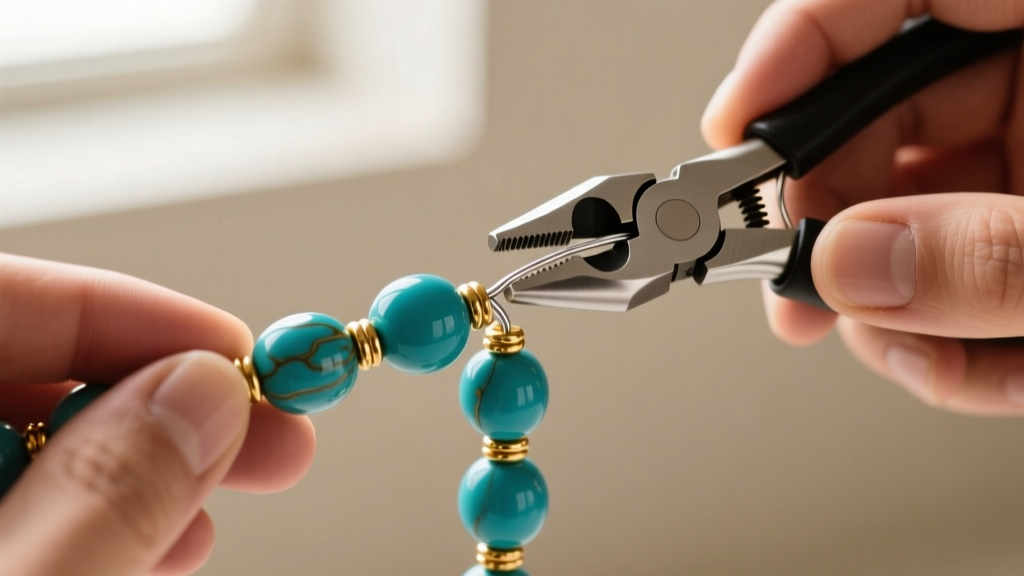
If your faience or heavy glass bead necklace is stretching, sagging, or snapping, you must transition from thread to micro-fused stainless steel beading wire. Here is the exact specification for restringing heavy Egyptian-style beads:
- Wire Selection: Use a 49-strand stainless steel beading wire. For standard 4mm-6mm faience beads, use a 0.018-inch gauge. For heavy, chunky stone or large scarab beads, upgrade to a 0.024-inch gauge for maximum tensile strength.
- Abrasion Protection: You must use French wire (also known as bullion or gimp wire) or wire protectors (horseshoe-shaped metal findings) where the wire loops through the clasp. This prevents the metal clasp from sawing through the steel wire over time.
- Crimping Technique: Use a micro-crimping tool to fold a sterling silver or copper crimp tube into a neat, rounded bead. Do not simply flatten the crimp with flat-nose pliers, as the sharp folded edges can weaken the wire.
Metal Tarnish and Skin Reactions in Revival Pieces
While ancient Egyptian royalty wore high-karat gold and electrum, the majority of historical pieces—and almost all modern revival or costume pieces—are crafted from copper, bronze, or brass. These base metals are highly reactive. When exposed to the acids in human sweat, humidity, and modern cosmetics, they develop verdigris, a green or blue patina of copper carbonate and copper chloride.
The Danger of Verdigris
Not only does verdigris stain the skin and clothing, but it can also cause contact dermatitis and localized skin irritation. Furthermore, if verdigris builds up in the crevices of a scarab pendant or a bead cap, it can expand and crack the surrounding porous stone or faience.
Safe Cleaning and Sealing Methods
To troubleshoot severe tarnish without damaging delicate stone inlays, avoid commercial silver dips or ultrasonic cleaners, which will strip the dye from fake stones and shatter micro-fractured antiquities.
- The Paste Method: Create a thick paste using equal parts baking soda and distilled water. Apply it strictly to the metal components using a soft-bristled toothbrush, avoiding the stones. Rinse quickly with distilled water and dry immediately with a microfiber cloth.
- Preventative Sealing: Once the copper or bronze is polished, seal the metal to prevent future skin reactions. Apply a thin coat of microcrystalline wax (such as Renaissance Wax, widely used by the Metropolitan Museum of Art for artifact preservation) or a jewelry-specific nano-ceramic coating. This creates an invisible barrier between the reactive metal and your skin, preserving the historical look of the bronze without the green stain.
Troubleshooting Quick-Reference Chart
Use the matrix below to quickly diagnose and resolve the most frequent issues encountered with ancient Egyptian style necklaces.
| Problem | Root Cause | Expert Solution |
|---|---|---|
| Collar necklace slips forward / chokes | Front-heavy design lacking a historical counterweight. | Add a 40-60g counterweight (menat) to the back chain near the clasp. |
| Beading thread keeps snapping | Sharp, rough drill holes in faience or stone beads cutting the fiber. | Restring using 49-strand, 0.018" or 0.024" stainless steel beading wire. |
| Lapis lazuli looks flat or leaves blue residue | Dyed howlite, magnesite, or low-grade sodalite imitation. | Perform an acetone swab test; replace with genuine Afghan lapis if desired. |
| Green skin staining / metal tarnish | Oxidation of copper/bronze alloys reacting to sweat and humidity. | Clean with baking soda paste; seal with microcrystalline museum wax. |
| Clasp fails under heavy weight | Lobster clasps cannot support the tensile load of broad collars. | Upgrade to a heavy-duty neodymium magnetic clasp with a safety chain. |
Final Thoughts on Preservation and Wear
Owning and wearing an ancient Egypt necklace is an exercise in balancing historical aesthetics with modern material science. Whether you are meticulously restringing a strand of 3,000-year-old faience beads or troubleshooting the clasp on a 1920s Art Deco scarab collar, the key to longevity lies in understanding the physical properties of the materials involved. By upgrading your structural components, rigorously testing your gemstones, and properly sealing reactive metals, you can ensure your Egyptian jewelry remains as timeless and enduring as the civilization that inspired it.


