Ancient Roman Necklace Trends: 2026 Style & Reproduction Guide
Explore the 2026 neo-classical revival with our ancient roman necklace trend analysis, covering materials, styling, and ethical sourcing.

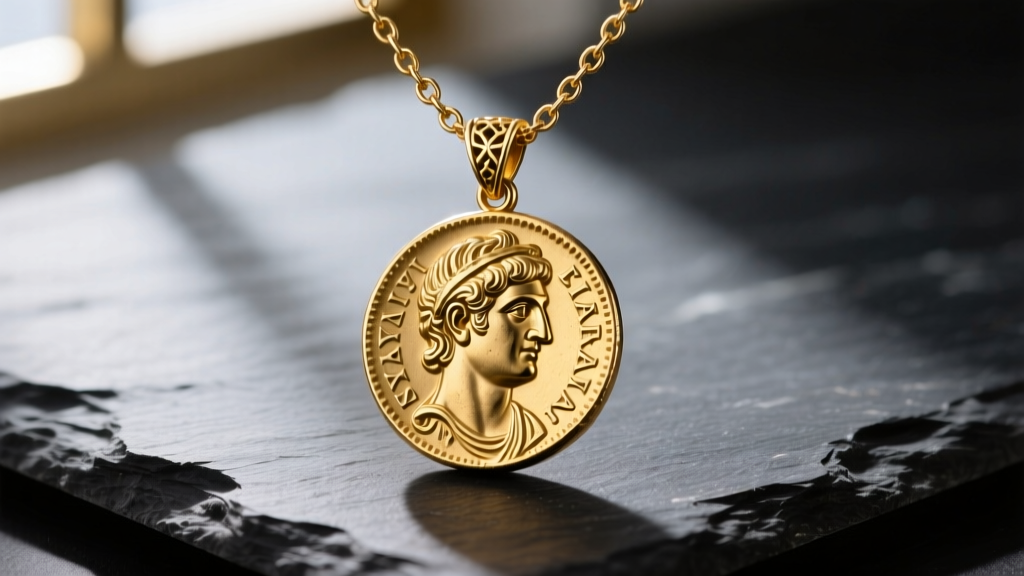
The Neo-Antiquity Revival: Why Roman Jewelry Dominates 2026
The fashion cycle has officially pivoted from the ultra-minimalist aesthetics of the early 2020s toward a rich, historically grounded movement known as "Neo-Antiquity." At the forefront of this shift is the ancient roman necklace, a category that bridges archaeological fascination with modern wearable art. In 2026, collectors and style enthusiasts are no longer treating historical jewelry as mere costume pieces; they are investing in museum-grade reproductions and ethically sourced antiquities that serve as focal points in contemporary wardrobes.
According to the World History Encyclopedia, Roman jewelry was fundamentally a display of status, citizenship, and spiritual protection. Today, the appeal lies in the tactile weight, the imperfect hand-forged textures, and the narrative depth these pieces carry. However, navigating the market requires a deep understanding of metallurgy, historical accuracy, and modern styling frameworks. This guide deconstructs the anatomy, materials, and 2026 trend forecasts for Roman-inspired neckwear.
Anatomy of the Classics: Bullae, Lunulae, and Coin Bezels
To authenticate a design or evaluate a high-end reproduction, one must understand the three primary pendant silhouettes that defined the Roman Empire's neckwear.
1. The Bulla (The Amulet of Protection)
Originally adopted from the Etruscans, the bulla was a hollow, locket-like pendant worn primarily by freeborn Roman boys to ward off evil spirits. Modern 2026 reproductions of the bulla are masterclasses in metalsmithing. High-tier artisans use 2mm-thick CuSn8 (phosphor bronze) sheet metal, employing traditional Etruscan granulation techniques where microscopic spheres of metal are fused to the surface using colloidal solder. When shopping for a bulla, check the hinge and clasp mechanism; authentic-feeling replicas utilize a friction-fit bayonet closure rather than cheap modern spring rings.
2. The Lunula (The Crescent of Vitality)
The lunula (crescent moon) was traditionally worn by young Roman girls. In contemporary jewelry design, the lunula has been reimagined as a unisex symbol of cyclical renewal. The best modern iterations are cast in solid 925 sterling silver and treated with a mild Liver of Sulfur solution to darken the recesses, highlighting the hand-chased celestial motifs while leaving the high-polish edges bright.
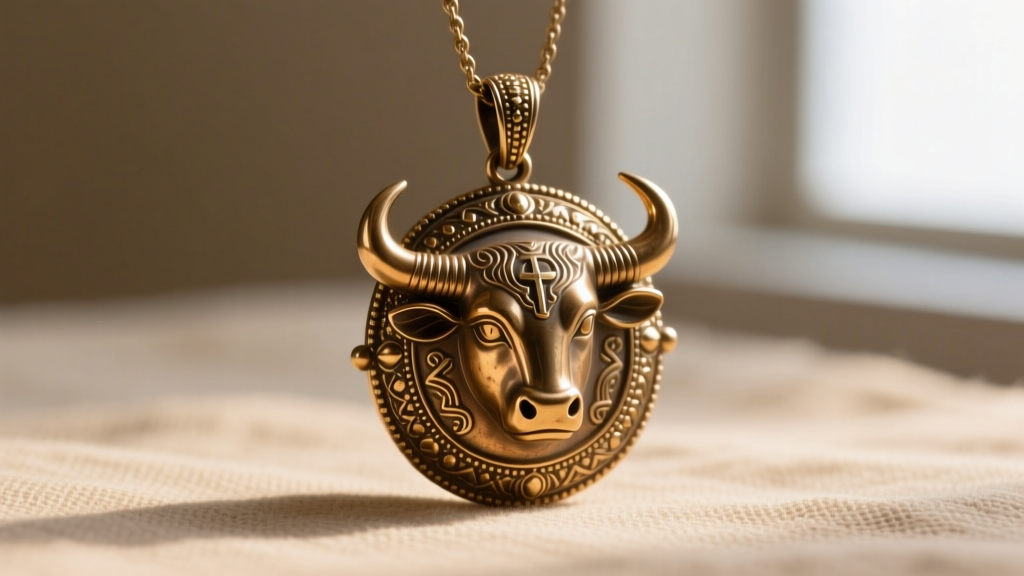
3. The Aureus and Denarius Coin Mounts
Coin jewelry was the ultimate flex of imperial loyalty and wealth. Today, sourcing authentic aureus (gold) or denarius (silver) coins requires navigating strict international heritage laws. Therefore, the 2026 market is dominated by "electroform" replicas and lost-wax castings. A premium reproduction will capture the microscopic die-cracks and edge-stresses of the original minting. Look for bezels that use a "fold-over" or "soldered tab" setting rather than glue, ensuring the replica coin is secured using traditional metalsmithing tension.
Metallurgy and Patina: Material Grades Explained
The longevity and skin-reactivity of an ancient roman necklace depend entirely on its alloy composition. Mass-market fast-fashion brands often use zinc-alloys disguised as bronze, leading to rapid dezincification and skin discoloration. Here is the material hierarchy for 2026:
- Phosphor Bronze (CuSn8): The gold standard for historical accuracy. It possesses a warm, golden-brown hue that naturally oxidizes into a rich, dark umber patina. To prevent the "green neck" effect caused by copper reacting with skin acidity, premium brands seal the bronze with microcrystalline wax (such as Renaissance Wax).
- 18k Gold Vermeil over Brass: For those desiring the look of imperial gold without the $50,000 price tag of an authentic aureus. Ensure the plating is at least 2.5 microns thick; anything less will wear through the high-friction areas of the coin bezel within months.
- Oxidized Sterling Silver: Used primarily for Lunulae and fibula-inspired pendants. The intentional oxidation (blackening) mimics the look of excavated silver hoards documented by The Metropolitan Museum of Art's Heilbrunn Timeline of Art History.
Chain Selection: Matching Weaves to Historical Eras
A common styling mistake is pairing a historically accurate Roman pendant with a modern, machine-stamped cable chain. To maintain the aesthetic integrity of the piece, the chain weave must reflect ancient wire-drawing techniques.
| Chain Weave | Historical Equivalent | Visual Profile | Best Pendant Pairing |
|---|---|---|---|
| Spiga (Wheat) | Roman woven wire | Textured, 3D, braided appearance | Heavy Bronze Bullae |
| Foxtail | Byzantine/Roman mesh | Smooth, V-shaped links, highly flexible | Silver Lunulae |
| Rope | Twisted torc wire | Helical twist, catches light dynamically | Gold Vermeil Coin Bezels |
| Snake | Articulated scales | Flat, tubular, fluid drape | Delicate intaglio cameos |
2026 Styling Frameworks: The Art of Contrast Layering
The prevailing trend for 2026 is "Anachronistic Layering"—the deliberate mixing of ancient, raw textures with hyper-modern, precision-milled jewelry. This creates a visual tension that elevates the ancient roman necklace from a historical artifact to a high-fashion statement.
The Asymmetric Drape (For Structured Tailoring)
When wearing a structured blazer or a sharp boatneck top, utilize a 28-inch opera-length bronze Spiga chain. Allow a heavy, 40-gram bronze bulla to hang off-center, resting against the lapel. The asymmetry breaks the rigidity of the tailoring, while the dark patina of the bronze contrasts beautifully against navy, charcoal, or cream wools.
The Mixed-Metal Choker Stack (For Silk and Linen)
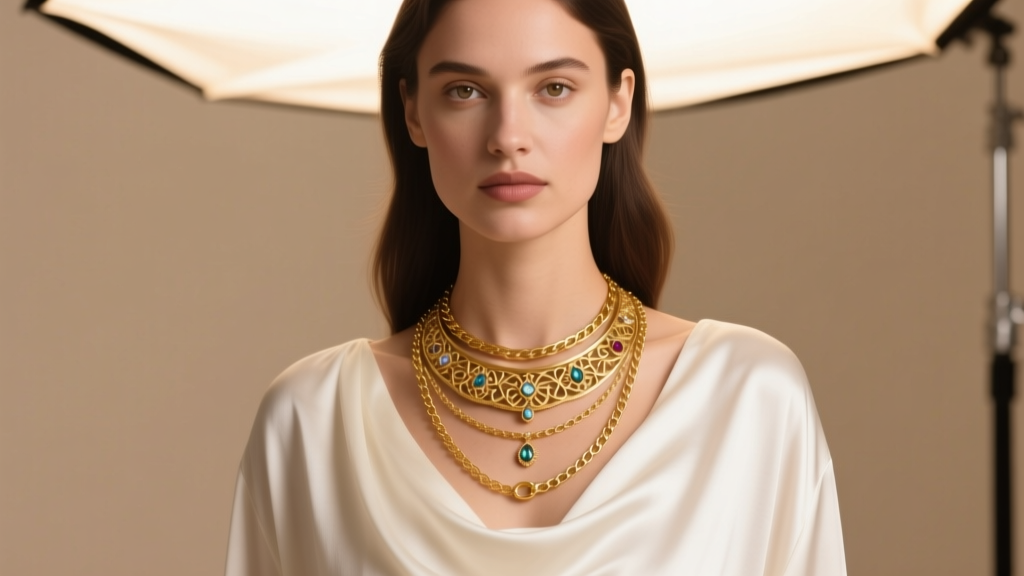
For V-necklines and open collars, build a three-piece stack. Start with a 16-inch modern 14k white gold Figaro chain (providing a bright, contemporary anchor). Add an 18-inch oxidized silver Roman lunula. Finish with a 20-inch brass rope chain holding a small, raw-stone intaglio pendant. The varying lengths prevent the pendants from tangling, while the mixed metals (white gold, oxidized silver, raw brass) create a curated, collected-over-time aesthetic.
Ethical Sourcing: Authentic Antiquities vs. Museum Replicas
As the demand for historical jewelry surges, ethical sourcing has become a critical conversation in the gemological and antiquities markets. The 1970 UNESCO Convention strictly regulates the trade of cultural property. Purchasing an authentic ancient roman necklace on the open market requires exhaustive provenance documentation, often dating back to pre-1970 private collections. Without this paperwork, buyers risk funding illicit excavation and trafficking.
For 95% of collectors and fashion enthusiasts, museum-grade reproductions are the superior choice. They offer several distinct advantages:
- Durability: Authentic 2,000-year-old bronze is often suffering from "bronze disease" (a destructive chloride-induced corrosion). Modern replicas use stable alloys safe for daily wear and exposure to moisture.
- Weight and Comfort: Replicas can be engineered with modern ergonomic clasps and optimized pendant bails that prevent the necklace from flipping backward.
- Ethical Peace of Mind: Supporting artisan foundries that utilize lost-wax casting preserves traditional metalsmithing skills without depleting global archaeological heritage.
Final Thoughts on the Neo-Classical Wardrobe
The ancient roman necklace is not a fleeting micro-trend; it is a permanent addition to the lexicon of fine jewelry. By focusing on historically accurate silhouettes, demanding high-integrity metallurgy like CuSn8 bronze and thick vermeil, and mastering the art of anachronistic layering, you can integrate the gravitas of the Roman Empire into your 2026 personal style. Whether you choose the protective embrace of a bronze bulla or the imperial nod of an aureus replica, these pieces offer a tangible connection to history, forged for the modern era.


