The Egyptian Cross Necklace: Metallurgy, Sizing, and Chain Pairing
Discover the technical details behind the Egyptian cross necklace. Explore Ankh metallurgy, casting methods, bail sizing, and chain pairing.

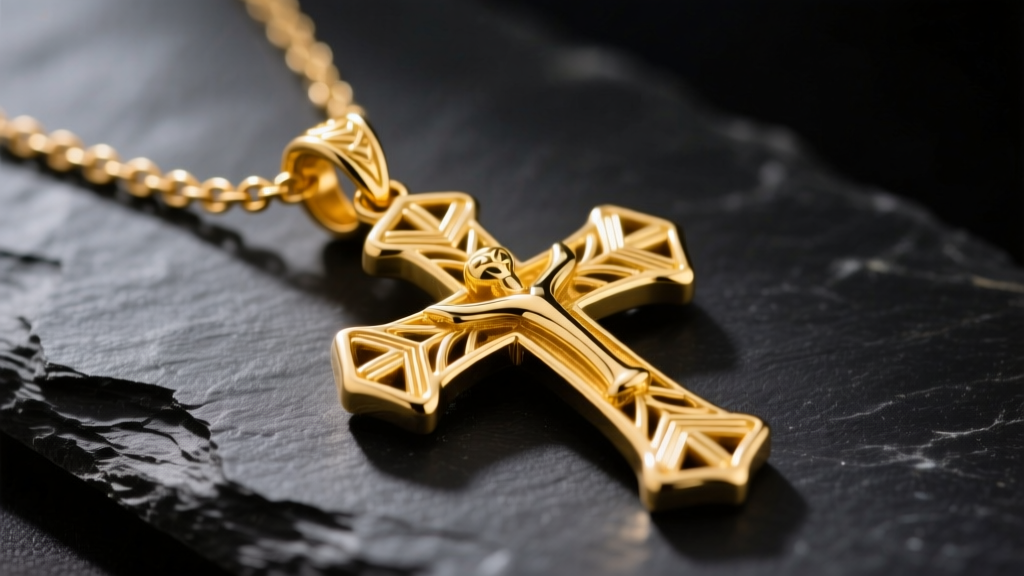
The Anatomy of an Authentic Egyptian Cross Necklace
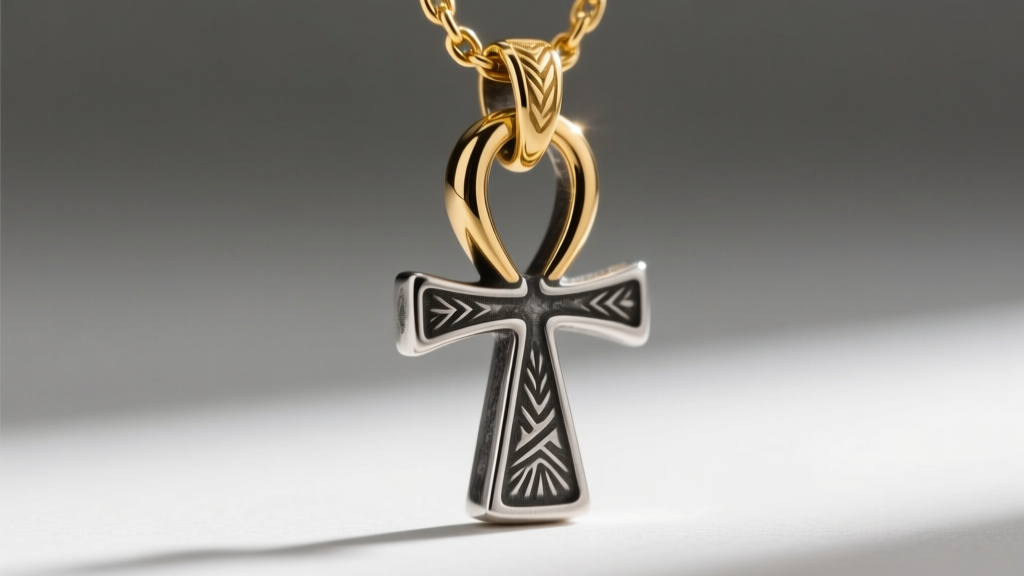
The Egyptian cross necklace, universally recognized as the Ankh, is far more than a simple geometric pendant. From an expert jewelry design perspective, the Ankh is a complex study in proportional balance and structural engineering. Historically, as documented by Britannica's historical breakdown of the Ankh, the symbol represents eternal life, comprising three distinct anatomical zones: the teyet (the upper loop), the horizontal crossbar (representing the arms or the horizon), and the vertical shaft (the path of life).
In mass-market jewelry, the teyet is often rendered as a perfect circle to simplify CAD modeling and casting. However, a technically accurate, high-end Egyptian cross necklace features a slightly teardrop or oval loop, mimicking the original sandal-strap shape believed to be the symbol's origin. The transition from the loop to the crossbar must feature a subtle fillet (a rounded interior corner) rather than a sharp 90-degree angle. Sharp interior angles act as stress concentrators in cast metals, making the pendant highly susceptible to snapping at the neck if subjected to sudden tensile force.
Metallurgy and Material Grades: Beyond Basic Plating
When evaluating an Egyptian cross necklace, the metallurgical composition dictates both the longevity of the piece and its structural integrity. The slender vertical shaft of the Ankh is a known failure point, meaning the choice of alloy is critical.
Sterling Silver (925) and Oxidation
Sterling silver (92.5% silver, 7.5% copper) is a standard choice, but the copper content makes it prone to sulfur-induced tarnishing. For an Ankh pendant featuring deep hieroglyphic relief casting, intentional oxidation (using liver of sulfur) is often applied to recessed areas to enhance contrast. If you prefer a high-polish finish, ensure the silver is plated with a minimum of 0.1 microns of rhodium to delay tarnishing.
Vermeil vs. Flash Plating
The market is flooded with cheap 'gold' Ankh pendants that fail within months. According to the Federal Trade Commission's Jewelry Guides, true gold vermeil must consist of a sterling silver base plated with a minimum of 2.5 microns of gold (usually 14k or 18k). Many fast-fashion brands use 0.5-micron flash plating over brass or zinc alloys. This thin layer wears through rapidly, especially at the bail friction point, exposing the base metal to skin acids and causing rapid corrosion.
Solid Gold: 14k vs. 18k Tensile Strength
For solid gold Egyptian cross necklaces, 14k gold (58.5% pure gold) is technically superior to 18k gold (75% pure gold) for the lower shaft. The Vickers hardness (HV) of 14k yellow gold is approximately 120-140 HV, whereas 18k gold sits around 90-110 HV. Because the vertical shaft of the Ankh acts as a lever if caught on clothing, the higher alloy content in 14k gold provides the necessary rigidity to prevent permanent bending in shafts thinner than 2.5mm.
Casting Techniques: Lost-Wax vs. Die-Struck
The manufacturing method fundamentally alters the density and finish of the pendant. Lost-wax casting is the preferred method for artisan and historical reproduction pieces. It allows for deep undercuts, intricate hieroglyphic engravings on the shaft, and organic, asymmetric loops. However, cast metal is slightly more porous than wrought metal.
Conversely, die-striking involves stamping a sheet of metal under immense pressure (often exceeding 50 tons). This compresses the grain structure of the metal, resulting in a denser, harder, and more highly polished surface. Die-struck Egyptian cross necklaces are typically flatter, featuring beveled edges and mirror finishes, making them ideal for modern, minimalist interpretations of the Ankh.
Bail Engineering and Chain Weight Distribution
The most common design flaw in poorly engineered Egyptian cross necklaces is the bail placement. Threading a chain directly through the teyet (the loop) ruins the visual silhouette of the symbol and causes severe mechanical wear. The chain acts as a flexible file, slowly grinding away the inner top curve of the loop. Over 3 to 5 years of daily wear, this friction can wear completely through a 2mm solid gold loop.
Expert jewelers solve this by utilizing a hidden bail or a soldered tapered bail. A hidden bail is laser-welded to the back of the horizontal crossbar, allowing the chain to pass behind the pendant. This preserves the unbroken outline of the Ankh while shifting the center of gravity, ensuring the pendant lays flat against the sternum rather than flipping outward.
Pendant Weight to Chain Gauge Matrix
Pairing the correct chain gauge with the pendant's weight is crucial to prevent 'clasp slide'—a phenomenon where a heavy pendant pulls a lightweight chain forward, causing the clasp to migrate to the front of the neck.
| Pendant Weight | Recommended Chain Type | Minimum Gauge (mm) | Clasp Requirement |
|---|---|---|---|
| Under 5g | Cable or Wheat | 1.0mm - 1.2mm | Standard Spring Ring |
| 5g - 12g | Box or Figaro | 1.5mm - 1.8mm | Lobster Claw (5x8mm) |
| 12g - 20g | Rope or Franco | 2.0mm - 2.5mm | Heavy Lobster (7x10mm) |
| Over 20g | Curb or Mariner | 3.0mm+ | Toggle or Locking Clasp |
Common Failure Modes and Troubleshooting
Even high-quality Egyptian cross necklaces can experience specific mechanical failures if not properly maintained. Understanding these failure modes allows collectors to inspect vintage or antique pieces accurately.
- Shaft Lever-Bending: As mentioned, if the vertical shaft is caught in a door or pulled by a child, the lever action will bend the metal just below the crossbar. Always inspect the shaft for microscopic stress fractures or slight deviations in straightness when buying second-hand.
- Loop Thinning (Friction Wear):strong> If a previous owner threaded a chain directly through the teyet, check the inner apex of the loop. If the metal is visibly thinner or shows a bright, polished groove, the structural integrity is compromised and requires laser welding reinforcement.
- Solder Joint Fatigue: On pieces with applied decorative elements (such as small lapis lazuli or turquoise cabochons set into the crossbar), the prong or bezel solder joints can fatigue from thermal expansion and contraction. Ensure settings are checked annually.
Sourcing and Pricing Tiers in 2026
The market for the Egyptian cross necklace is heavily stratified. Knowing what to expect in terms of pricing helps identify genuine craftsmanship from overpriced dropshipped goods.
Tier 1: Mass-Produced / Fast Fashion ($20 - $60)
Typically die-struck brass or zinc alloy with 0.5-micron flash plating. Bails are usually simple jump rings threaded through the loop. Expect a lifespan of 6 to 18 months before plating failure or tarnish occurs.
Tier 2: Artisan Sterling & Vermeil ($90 - $250)
Lost-wax cast 925 sterling silver, often featuring intentional oxidation and genuine 2.5-micron vermeil. These pieces usually feature reinforced, soldered bails and historically accurate teardrop loops.
Tier 3: Fine Jewelry Solid Gold ($450 - $1,500+)
Crafted in solid 14k or 18k gold, weighing between 8 and 25 grams. These pieces feature hidden bails, laser-welded joints, and precise CNC-milled bevels. High-end iterations may incorporate channel-set diamonds or custom-cut hardstones like lapis lazuli and carnelian, honoring traditional Egyptian color palettes.
Conclusion
Selecting the right Egyptian cross necklace requires looking past the surface aesthetics and evaluating the structural engineering of the piece. By prioritizing accurate anatomical proportions, verifying FTC-compliant vermeil or solid gold alloys, and ensuring the use of hidden bails to protect the teyet, you can secure an Ankh pendant that is not only historically resonant but mechanically built to last generations.


