The Gemologist's Guide to Buying a Ruby and Emerald Necklace
Discover the technical nuances of selecting a ruby and emerald necklace. Learn about gem treatments, clarity grades, and optimal metal settings.

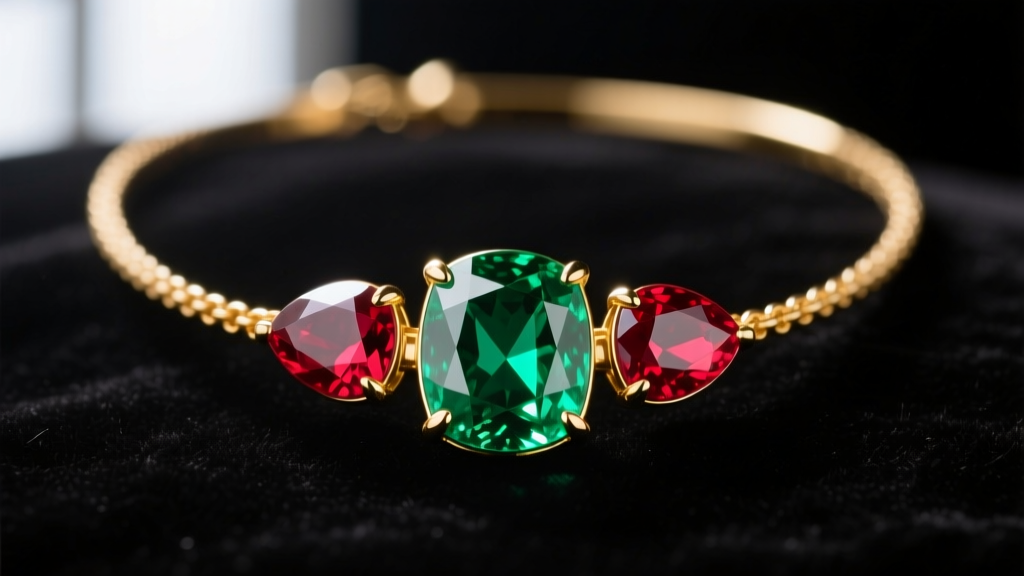
The Gemological Reality: Corundum vs. Beryl
Designing or purchasing a high-caliber ruby and emerald necklace requires navigating two vastly different gemological profiles. While both are prized for their vivid saturation, ruby (corundum) and emerald (beryl) possess distinct refractive indices, specific gravities, and structural vulnerabilities. Ruby boasts a Mohs hardness of 9 and a refractive index (RI) of 1.762–1.770, yielding exceptional brilliance and durability. Emerald, conversely, sits at 7.5–8 on the Mohs scale with an RI of 1.577–1.583, and is inherently characterized by its jardin—the network of internal fractures and inclusions that dictate its toughness.
When these two stones are combined in a single necklace pendant or station chain, the lapidary and jeweler must account for their differing light return properties. A master cutter will adjust the pavilion angles of the emerald to be slightly steeper than those of the ruby to compensate for beryl’s lower refractive index, ensuring both stones exhibit matched scintillation under ambient lighting.
Treatment Disclosures and Stability
The most critical technical factor in evaluating any ruby and emerald necklace is the treatment matrix. According to the GIA Ruby Guide, over 95% of rubies on the market are heat-treated to dissolve rutile silk and improve clarity. While traditional heat treatment is stable and permanent, buyers must aggressively screen for beryllium lattice diffusion, which artificially introduces color into the crystal lattice and drastically reduces the stone's investment value.
Emeralds present a more complex stability challenge. Because of their natural fracturing, nearly all emeralds undergo clarity enhancement. The industry standard involves filling surface-reaching fractures with oils, resins, or polymers. Cedar oil is the traditional, reversible filler, whereas modern epoxies (like Opticon) offer better durability but can discolor under prolonged UV exposure. A necklace worn daily is subject to temperature fluctuations and skin oils, which can degrade minor oil treatments over time, requiring professional re-oiling every 3 to 5 years.
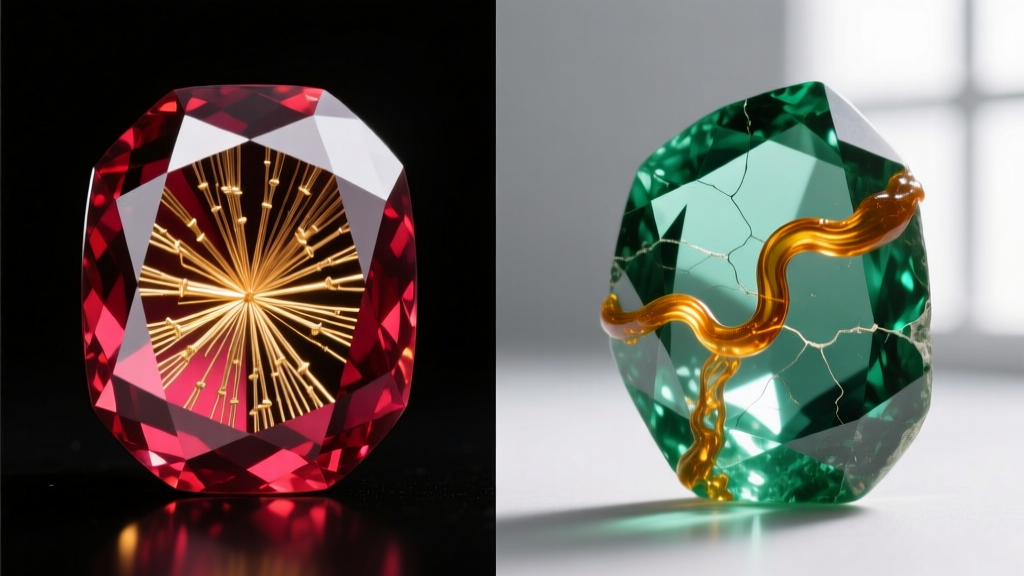
Evaluating Color and Clarity: The Technical Matrix
Color grading for these gems relies on distinct terminologies and laboratory standards. The juxtaposition of red and green on the color wheel creates a high-contrast visual effect, meaning even slight deviations in tone or saturation will cause one stone to visually overpower the other. Below is the technical matrix used by gemologists to balance these stones in a unified piece of jewelry.
| Parameter | Ruby (Corundum) | Emerald (Beryl) |
|---|---|---|
| Top Color Grade | Pigeon’s Blood (Vivid Red, Strong UV Fluorescence) | Muzo Green (Vivid to Deep Green, No Blue/Gray Modifiers) |
| Clarity Standard | Eye-Clean (Loupe clean is rare but expected in premium) | Eye-Visible Inclusions (Jardin is accepted and expected) |
| Treatment Tolerance | Unheated (Investment) vs. Heated (Commercial) | Minor Oil (F1) to Moderate Resin (F2) |
| Origin Premium | Burmese (Mogok) commands 50-100% premium | Colombian (Muzo/Coscuez) commands 30-50% premium |
Structural Integrity: Setting Mechanics
The physical setting of a ruby and emerald necklace must address the stark contrast in toughness between the two gems. Hardness (scratch resistance) is often confused with toughness (resistance to chipping and breaking). While ruby is incredibly tough, emerald is notoriously brittle due to its internal inclusion networks.
Prong Configurations and Metal Fatigue
Standard four-prong or six-prong settings are perfectly adequate for rubies, provided the prongs are adequately thick (minimum 0.8mm for stones over 2 carats). Emeralds, however, require protective settings. If an emerald is cut in a classic rectangular emerald cut, the truncated corners are the weakest points and highly susceptible to chipping from a single impact against a hard surface.
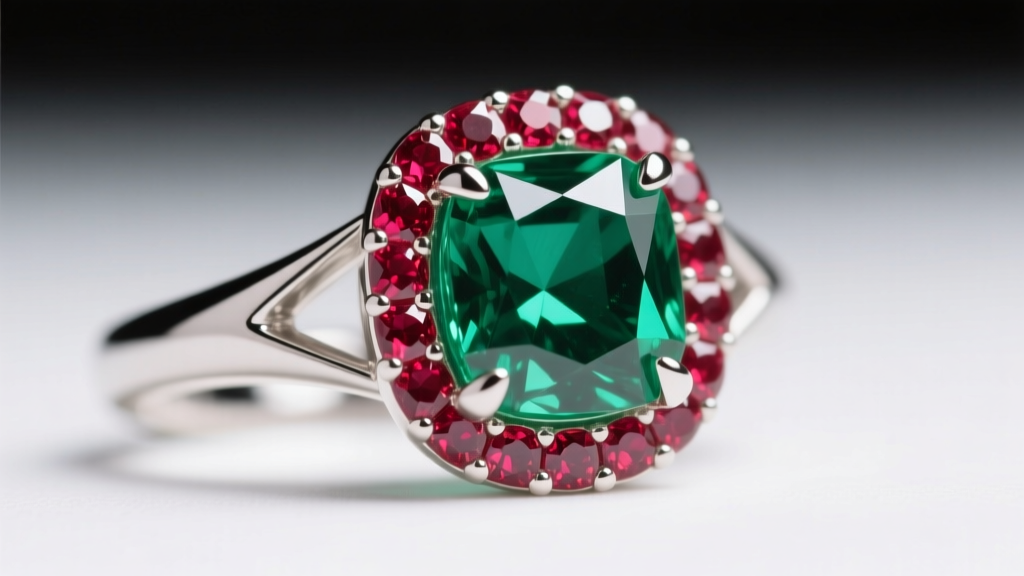
For an emerald center stone, a V-prong configuration at the corners or a full bezel setting is mandatory. A bezel not only protects the girdle and corners but also creates a structural cage that prevents the stone from flexing under pressure. When designing a multi-stone necklace, jewelers often use a shared-prong or channel setting for the rubies to maximize light exposure, while reserving a secure bezel or heavy V-prong halo setting for the emerald.
Metallurgy and Alloy Pairing
The choice of precious metal alloy fundamentally impacts both the structural longevity of the necklace and the optical performance of the gems. For high-end ruby and emerald necklaces, 18-karat gold (75% pure gold) or Platinum (95% pure) are the only acceptable standards.
- 18k Yellow Gold: Enhances the warm, secondary undertones in both Burmese rubies and Colombian emeralds. However, 18k gold is softer than 14k, requiring thicker prongs and more frequent maintenance checks to prevent metal fatigue and stone loss.
- 18k White Gold / Platinum: Provides a neutral, high-contrast backdrop that makes the red and green saturation appear more vivid and icy. Platinum is highly recommended for heavy pendant drops (over 10 grams total gem weight) due to its superior tensile strength and resistance to wear.
- Rose Gold: Can introduce a pinkish hue that may clash with the blue-modifiers sometimes found in Zambian emeralds. It is generally avoided in high-end bi-color designs unless specifically requested for bespoke aesthetic reasons.
Pricing Tiers and Investment Grades
Understanding the pricing architecture of a ruby and emerald necklace is essential for buyers navigating the luxury market. Prices are dictated by the intersection of origin, treatment, and carat weight. The following ranges reflect the 2026 wholesale-to-retail market for calibrated, high-quality stones:
- Tier 1 (Investment Grade): Unheated Burmese Ruby (3+ carats) paired with Minor-Oil Colombian Emerald (3+ carats). Price range: $45,000 to $120,000+ per carat. Requires AGL or Gübelin certification.
- Tier 2 (Fine Jewelry Grade): Heated Mozambique Ruby paired with Minor-to-Moderate Oil Zambian or Brazilian Emerald. Price range: $2,500 to $8,500 per carat. Excellent for daily-wear luxury necklaces.
- Tier 3 (Commercial Grade): Beryllium-diffused rubies and heavily resin-filled (F3) emeralds. Price range: $150 to $600 per carat. Lacks long-term value retention and structural stability for heirloom pieces.
Sourcing and Certification Requirements
Never purchase a high-value ruby and emerald necklace without independent laboratory verification. The American Gemological Laboratories (AGL) is widely considered the gold standard for colored gemstone origin and treatment reporting, providing a clarity enhancement scale specifically tailored to emeralds. The GIA provides exceptional identification and color origin reports, particularly for Burmese rubies.
"When combining corundum and beryl in a single mounting, you are marrying two entirely different geological histories. The jeweler's primary job is not just aesthetic balance, but structural diplomacy—ensuring the setting protects the fragile beryl without compromising the optical fire of the corundum." — Master Lapidary & GIA Graduate Gemologist
By prioritizing treatment transparency, precise setting mechanics, and appropriate alloy selection, collectors can secure a ruby and emerald necklace that is not only visually arresting but structurally engineered to endure for generations.


